United Airlines has completed two significant additions to its Newark long-haul operation within four days, launching daily service to Seoul on September 4 and restoring twice-daily flights to Tel Aviv on September 8.

The additions put three daily Boeing 787 departures into Newark’s international schedule. They are distinct developments: Seoul is a new route for United from Newark, while Tel Aviv is the return of an established service after another suspension prompted by conditions in the Middle East.
The 16-hour description applies principally to the westbound Newark-Seoul sector. Tel Aviv is a shorter mission, generally scheduled at roughly 11 to 12 hours depending on direction and seasonal winds.
Read our stories in your inbox
Two aviation newsletters. Zero fluff.
United Adds Its Second Seoul Gateway
United’s new service links Newark (EWR) with Seoul Incheon (ICN) once daily using a Boeing 787-9. The airline first disclosed the route in its summer 2026 international schedule, setting a September 4 launch and describing it as the only nonstop between the New York area and South Korea operated by a U.S. airline.
That distinction does not mean United has the market to itself. Air Premia also operates between EWR and ICN, while Korean Air serves the wider New York-Seoul market from New York JFK. United’s advantage is the combination of a daily schedule, its Newark connecting network and a substantial local MileagePlus customer base.
The Seoul flight is scheduled for close to 16 hours from Newark, placing it among United’s longest services. The return benefits from prevailing winds and carries a materially shorter block time. United already flies twice daily between San Francisco (SFO) and ICN, so Newark gives the carrier a second mainland U.S. gateway to South Korea rather than opening an entirely new country market.
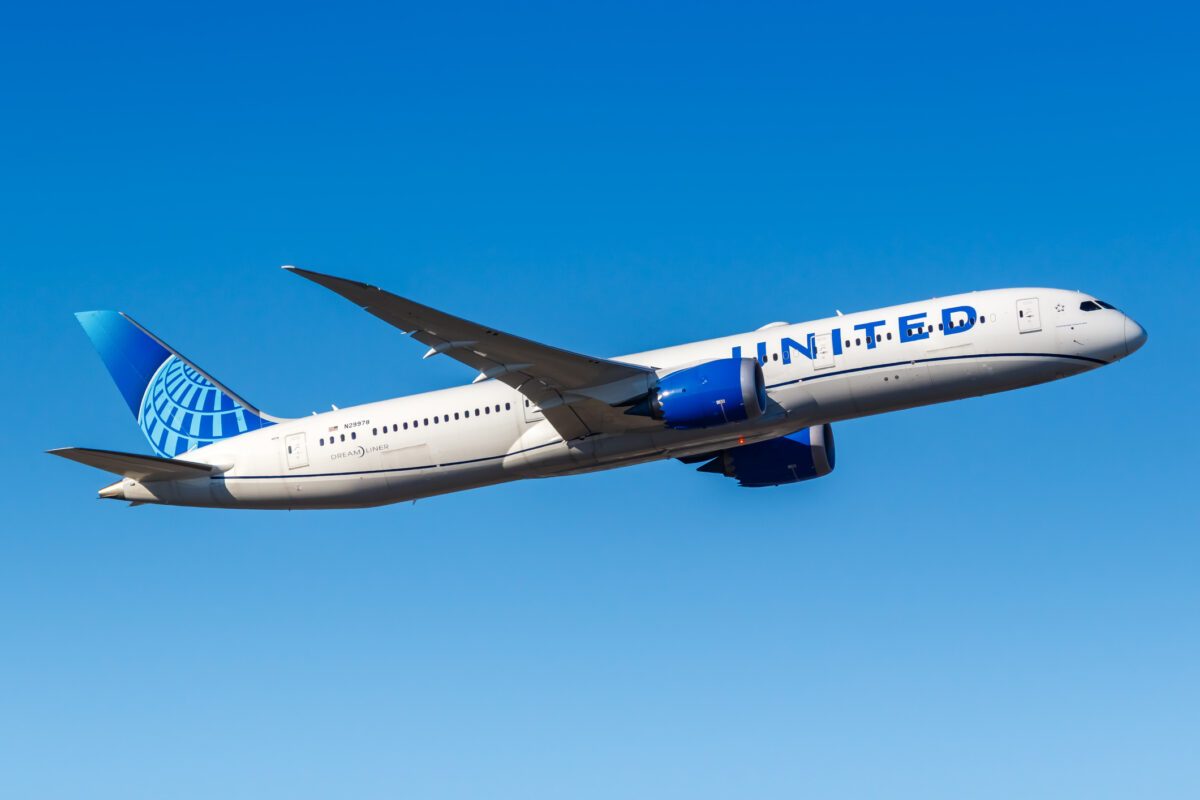
The route is operated by United’s standard 257-seat Boeing 787-9, with 48 United Polaris seats, 21 Premium Plus seats and 188 economy seats, including Economy Plus. That produces approximately 1,799 seats in each direction per week before substitutions or schedule changes.
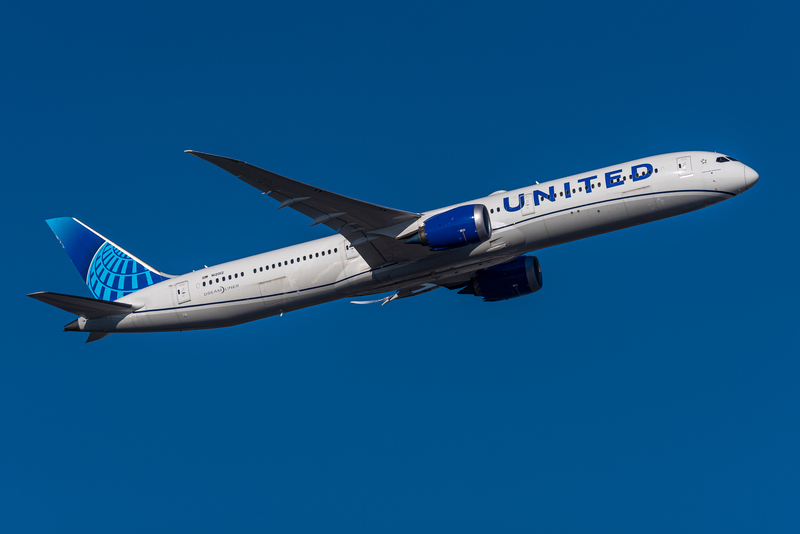
The 787-9 is the logical aircraft for the mission. Boeing lists the model with range of up to 8,300 nautical miles and emphasizes its combination of long-range capability and midsize capacity. The manufacturer says the 787’s composite structure, aerodynamics and more-electric systems reduce fuel use while giving airlines greater flexibility to open long nonstop routes.
For United, the -9 provides enough payload-range capability for a westbound transpacific sector approaching 16 hours without requiring the capacity of a Boeing 777-300ER. Its 48-seat Polaris cabin also gives the airline meaningful exposure to corporate, premium leisure and connecting demand without making the route dependent on economy volume alone.
Tel Aviv Returns With the Larger 787-10
Four days after the Seoul launch, United restored its twice-daily link between EWR and Tel Aviv Ben Gurion (TLV). The flights are scheduled with the Boeing 787-10, the largest member of the Dreamliner family and United’s highest-capacity 787 variant.
United configures the 787-10 with 318 seats: 44 in Polaris, 21 in Premium Plus and 253 in economy, including Economy Plus. Two daily rotations therefore provide as many as 4,452 seats in each direction per week. Combined with Seoul, the three Dreamliner departures represent approximately 6,251 weekly one-way seats from Newark.
The 787-10 trades some of the -9’s extreme range for additional seats and cargo volume. Boeing lists capacity of 300 to 375 passengers in typical two-class layouts and range of up to 7,500 nautical miles. That makes the aircraft well suited to a dense EWR-TLV market, where the mission is comfortably inside the jet’s capability and higher gauge is more valuable than maximum range.
Tel Aviv has repeatedly moved in and out of United’s schedule as the carrier has reassessed conditions in the region. United has consistently said that its Israel operation follows a detailed review of operational, safety and security factors, including when it outlined earlier resumptions from Chicago and Washington.
The September return rebuilds Newark as the core of United’s Israel network. Before the latest interruption, the airline had planned to supplement its two daily EWR flights with additional service and had positioned itself as the largest U.S. carrier in the market. United has also announced that San Francisco-Tel Aviv will return in March 2027 as part of its next international expansion.
More Long-Haul Capacity Under Newark’s Operating Cap
The timing is notable because United is adding valuable widebody capacity while Newark remains schedule-constrained. The Federal Aviation Administration capped EWR at 72 hourly operations, divided between no more than 36 arrivals and 36 departures, through the end of the summer 2026 scheduling season.
In that environment, gauge and network value matter. A single Seoul departure provides a new long-haul spoke and access to United’s domestic feed without consuming more than one departure opportunity. Restoring Tel Aviv with 318-seat 787-10s similarly puts substantial capacity into two movements rather than relying on additional frequencies.
United has made Newark’s recent operational performance part of its case for continued international growth. In June, the carrier said EWR had recorded its best April and May on-time performance while handling nearly 5.8 million United passengers across the two months.
Bottom Line
Seoul is the more strategically durable of the two developments. It adds a new long-haul spoke to Newark, gives United a second U.S. gateway to South Korea and uses the 787-9 in exactly the type of market for which the aircraft was designed: long enough to reward nonstop service, but not necessarily large enough for a higher-capacity 777 throughout the year. The route also strengthens United’s ability to sell South Korea itineraries from cities across the eastern United States without routing passengers through San Francisco.
Tel Aviv carries greater short-term uncertainty because its continuity depends on security and operating conditions outside the airline’s control. When it does operate, however, the 787-10 schedule shows United’s confidence in the underlying volume of the Newark-Israel market. The next indicators will be whether both daily frequencies remain stable through the winter schedule and whether United proceeds with its planned March 2027 restoration from San Francisco.
Together, the additions illustrate how United is using Newark’s constrained departure inventory: not simply to add flights, but to assign high-capacity, premium-heavy widebodies to routes capable of drawing from both the New York market and the airline’s connecting network.