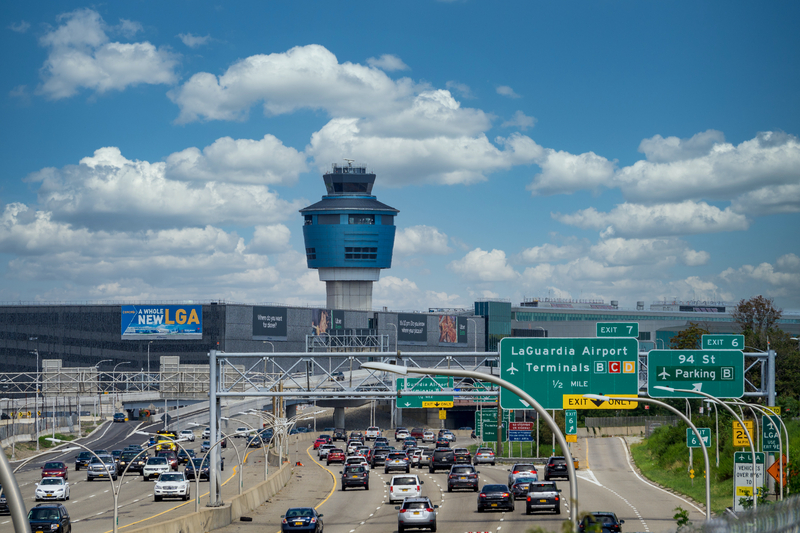
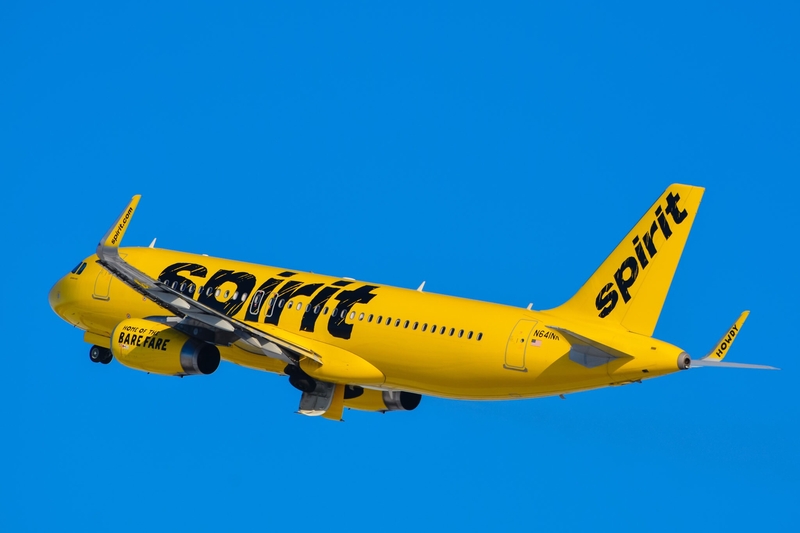
Spirit Airlines’ collapse has now put one of its most valuable remaining assets on the block: its operating rights at New York LaGuardia Airport (LGA).
The bankrupt airline’s estate is preparing to auction 22 slot pairs at LaGuardia, an asset package recently valued at roughly $86.7 million. In practical terms, those rights are valuable enough to support about 12 daily round-trip flights at one of the most constrained airports in the United States.
For aviation readers, this is not just a bankruptcy asset sale. It is a high-stakes decision about who gets to grow in one of the country’s most tightly controlled and commercially powerful markets.
Read our stories in your inbox
Two aviation newsletters. Zero fluff.
LaGuardia Slots Are Valuable Because They Are Scarce
The reason this matters starts with simple economics: LaGuardia is slot-controlled.
At airports like LGA, access is not just about wanting to fly there. It is about having the legal right to take off and land during controlled periods. That makes slot pairs scarce, tradable, and extremely valuable, especially for airlines that want to grow in New York without waiting for slots to appear naturally.

That scarcity is why Spirit’s slot portfolio has become such a prized asset in liquidation.
The Big Question Is Who Gets Them
The auction itself may be straightforward in theory — highest and best bid wins — but in practice the story is more complicated.
A range of airlines have strategic reasons to want those slots. For some, the appeal is obvious market share growth in New York. For others, it is about replacing the low-fare competition that disappeared when Spirit collapsed. The broader concern from regulators is that if the slots go to an already powerful incumbent, New York could become even more concentrated and even less competitive for price-sensitive travelers.
That is why the buyer matters almost as much as the price.
The FAA Clearly Does Not Want A Legacy Carrier Windfall
One of the most revealing parts of the story is the FAA’s position.
Current public reporting indicates the FAA would strongly prefer to see another low-cost carrier take over Spirit’s former LaGuardia position rather than allowing the slots to strengthen one of the already dominant players. FAA Administrator Bryan Bedford has reportedly gone further, suggesting that if no suitable lower-cost operator acquires them, the agency would rather see the slots retired than handed over in a way that worsens market concentration.
That is a very unusual and very important signal.
It means the auction is not just a commercial event. It is also a competition-policy event.

Frontier Looks Like The Most Obvious Fit
Of all the possible buyers, Frontier appears to be the most natural strategic match.
Its business model is the closest surviving equivalent to Spirit’s old role in the market, and it already operates at LaGuardia on a much smaller scale. Expanding there with Spirit’s former slots would give Frontier a real chance to become the low-cost replacement the FAA appears to prefer, while preserving at least some of the fare pressure Spirit historically created.
That does not mean Frontier will win. It means the strategic logic in its favor is unusually strong.
Why These Slots Matter Beyond New York
This sale matters well beyond LaGuardia itself because of what Spirit represented.
The so-called “Spirit effect” was real: when Spirit entered markets, average fares on overlapping routes often dropped significantly. That mattered to travelers even if they never flew Spirit, because the airline’s presence forced others to respond. With Spirit gone, that pressure has weakened, and legacy carriers now have more pricing power than before.
That is why the slot auction matters so much. Whoever acquires those rights could shape not just capacity at LaGuardia, but fare competition in the broader New York market.
Terminal A Adds Another Layer Of Importance
Spirit’s value at LaGuardia was not only in the slot pairs. It was also in its strong identity at the airport’s Marine Air Terminal (Terminal A).
That does not automatically transfer the same way a slot does, but it reinforces how established Spirit had become at the airport. The airline was not just operating occasional flights into New York. It had a recognizable footprint, and unwinding that footprint creates both risk and opportunity for every airline now circling the asset sale.
If A Low-Cost Carrier Does Not Win, The FAA May Prefer Less Flying
The most striking implication in all of this is that the federal government may genuinely prefer fewer flights at LaGuardia rather than more flights by the wrong airline.
That is unusual, but it makes sense in context. If the only likely buyers are large incumbent carriers that would use the slots to deepen already dominant positions, regulators may decide that reducing congestion is the better outcome. In that scenario, the slots stop being only a commercial resource and become a policy lever.
That possibility gives the auction a much bigger significance than its dollar value alone.
Bottom Line
Spirit’s 22 LaGuardia slot pairs, valued at about $86.7 million, are now one of the most important assets in the airline’s liquidation. They are valuable not just because LaGuardia is scarce, but because whoever wins them could meaningfully reshape low-cost competition in New York.
The real battle is not simply over price. It is over what kind of airline should replace Spirit — and whether the FAA is willing to let a major incumbent grow if that means weakening competition even further.