Air Calédonie is edging toward a major operational pivot on March 2, 2026: shifting its core domestic operation from **Nouméa Magenta Airport (GEA) to **Nouméa – La Tontouta International Airport (NOU). On paper, it’s a consolidation play. In practice, it’s a structural change to how residents of **New Caledonia access healthcare, education, government services, and onward international connectivity—especially for travelers from the Loyalty Islands.

Officials from the Loyalty Islands province are now urging a pause, arguing the operational and social “readiness conditions” for the transfer have not been met. The debate isn’t just political; it’s deeply aviation-specific: airport geography, turboprop economics, turn performance, passenger friction, and network resilience all collide here.
Why Magenta matters operationally
Magenta (GEA) isn’t simply “another airport.” It’s a purpose-built domestic gateway located close to central **Nouméa—a key advantage in an island environment where a short ground leg can be the difference between a viable day trip and an overnight.
Read our stories in your inbox
Two aviation newsletters. Zero fluff.
From an operator’s standpoint, GEA is optimized for rapid regional flying:
-
Runway length is about 1,250 meters—short by jet standards, but well within the comfort zone for modern regional turboprops when managed properly.
-
Domestic infrastructure and passenger flows are typically simpler than at a combined international facility, supporting quick turns and predictable block times.
For Air Calédonie’s turboprop-heavy operation, that matters. Every extra minute on the ground—whether caused by longer transfers, mixed terminal complexity, or passenger misconnects—bleeds into schedule integrity across a network where frequencies are limited and recovery options are thin.
The case for La Tontouta: scale, integration, and cost discipline
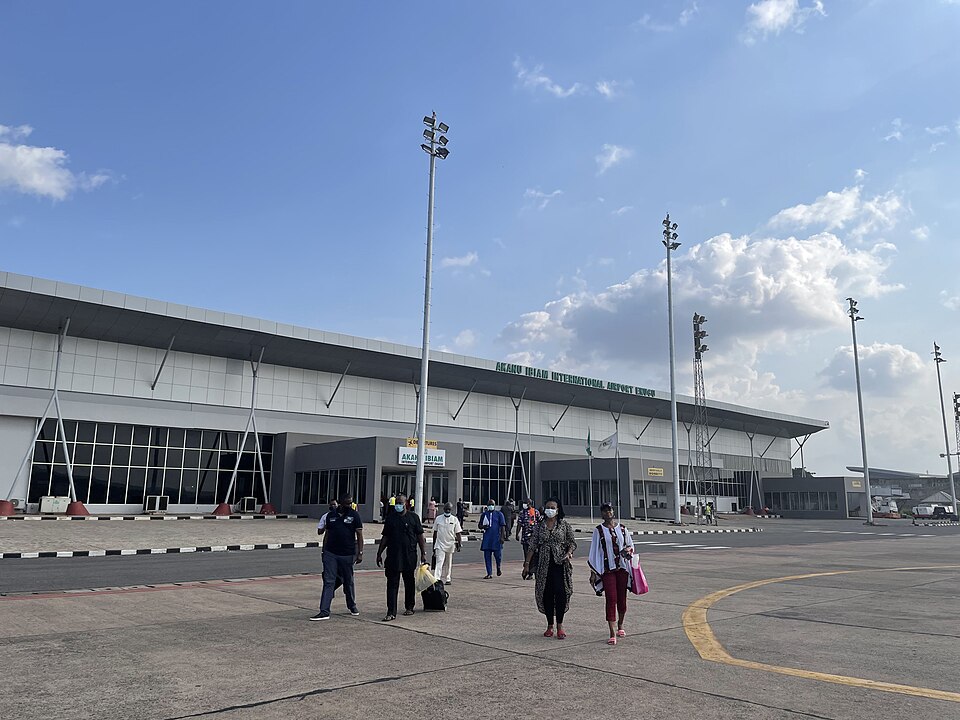
La Tontouta (NOU) is the territory’s principal international gateway, with a 3,250-meter runway and far more physical capacity than Magenta. From a consolidation perspective, shifting domestic operations to NOU can unlock several “airline ops” advantages:
Better domestic–international connectivity
If timed properly, a single campus can reduce connection anxiety between domestic sectors and long-haul departures—particularly important when inbound island flows feed international flights on **Aircalin.
Reduced duplication
Operating two primary terminals can mean duplicated staffing, equipment, contracts, and compliance overhead. Consolidation can simplify ground handling, security coordination, and station management—especially for a carrier under financial pressure.
More flexibility for irregular ops
In adverse weather or diversion scenarios, NOU’s infrastructure and services may offer more options than a tight domestic airfield.
But the operational logic only holds if the passenger experience doesn’t fracture—because demand elasticity on small-island routes is real. When air travel becomes harder, some trips disappear entirely rather than “shift.”
The friction point: distance and access
The biggest critique is straightforward: NOU is roughly 40 kilometers (about 25 miles) from Nouméa, and that surface leg is not trivial for:
-
patients traveling for appointments
-
students and educators
-
government and professional services
-
same-day business trips
-
island residents traveling with cargo or time-sensitive freight
For an airline, added ground friction often shows up in the data as:
-
higher no-show rates
-
weaker day-trip demand
-
softened yields (especially if the carrier must discount to retain volume)
-
more misconnections during IRROPS because passengers need extra buffer time
Aircraft reality: why the ATR 72-600 is central to this story
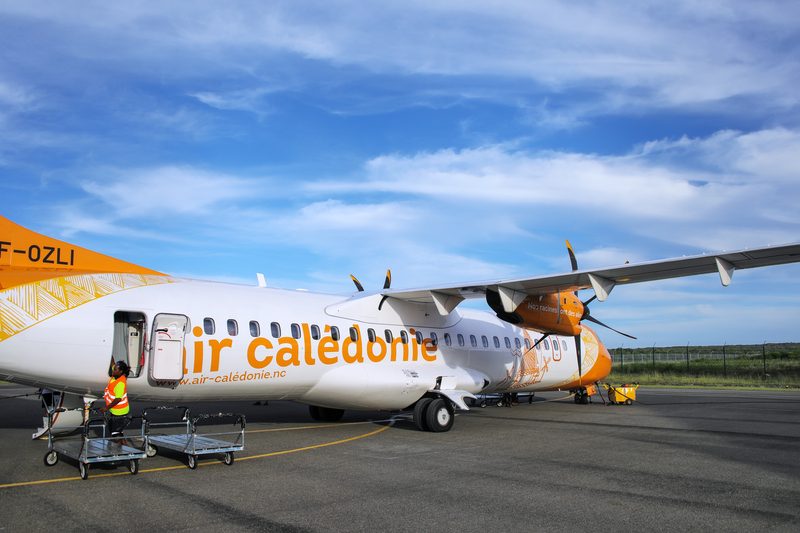
Air Calédonie’s current fleet is built around the ATR 72-600, a workhorse for thin, short-stage networks. In professional terms, it’s a near-ideal tool for New Caledonia’s domestic geography: high cycle capability, strong economics on sectors where jets would be oversized, and performance suited to island runways.
Key operational traits (why fleet planners love it on these missions):
-
Efficient seat-mile economics on short sectors with relatively high fixed costs per departure
-
Short/medium runway suitability, particularly compared with regional jets
-
Cargo flexibility for mixed passenger/freight demand typical of island economies
-
High dispatch utility for frequent island hops—assuming spares, maintenance planning, and parts logistics are stable
From a network standpoint, the airplane isn’t the constraint—ground access and passenger friction are. An ATR can make a domestic schedule work. A 40 km surface transfer can undermine it.
Domestic network implications: where the pain concentrates
If the move proceeds as planned, the day-to-day impact will be most acute for travelers flowing between NOU and the Loyalty Islands, where aviation is less “optional transport” and more “essential infrastructure.”
Air Calédonie’s core domestic points—often served with limited daily frequencies—include:
When schedules are tight and frequencies limited, passengers rely on predictable access. Moving the hub can force earlier departures from home, longer waits, and added expense—especially for those connecting onward or traveling for non-leisure reasons.
Government mitigation: shuttle service, but the question is scale
Authorities have announced a shuttle bus intended to link domestic passengers to La Tontouta’s terminal at a fare of XPF 500 per trip—an acknowledgement that the access gap is real.
In aviation terms, that’s a mitigation layer—but not automatically a solution. The real test is operational:
-
frequency of service and schedule alignment to banks of domestic departures/arrivals
-
baggage handling realities (especially for inter-island freight-like passenger loads)
-
reliability and redundancy when roads, weather, or events disrupt traffic
-
clear wayfinding, rebooking processes, and misconnect protections
Shuttles can work brilliantly when engineered like an airside process: timed, resilient, and treated as part of the itinerary—not an afterthought.
Bottom Line
The planned shift from Magenta (GEA) to La Tontouta (NOU) is more than an address change—it’s a network redesign that changes passenger behavior, operational recovery options, and the “true cost” of travel for island communities.
From a pure airline operations perspective, consolidation at NOU can make sense: integrated connectivity, reduced duplication, and infrastructure depth. But for a domestic turboprop network that functions as essential infrastructure, access friction is not a side issue—it’s a demand driver.
Whether the move succeeds will hinge on execution details aviation professionals care about: bank structure, transfer reliability, station processes, IRROPS playbooks, and whether surface transport is treated with the same rigor as a connecting flight.
Keep reading FlyMag
Get the Daily Brief in the morning or the Route Watch weekly recap on Fridays. Or both.