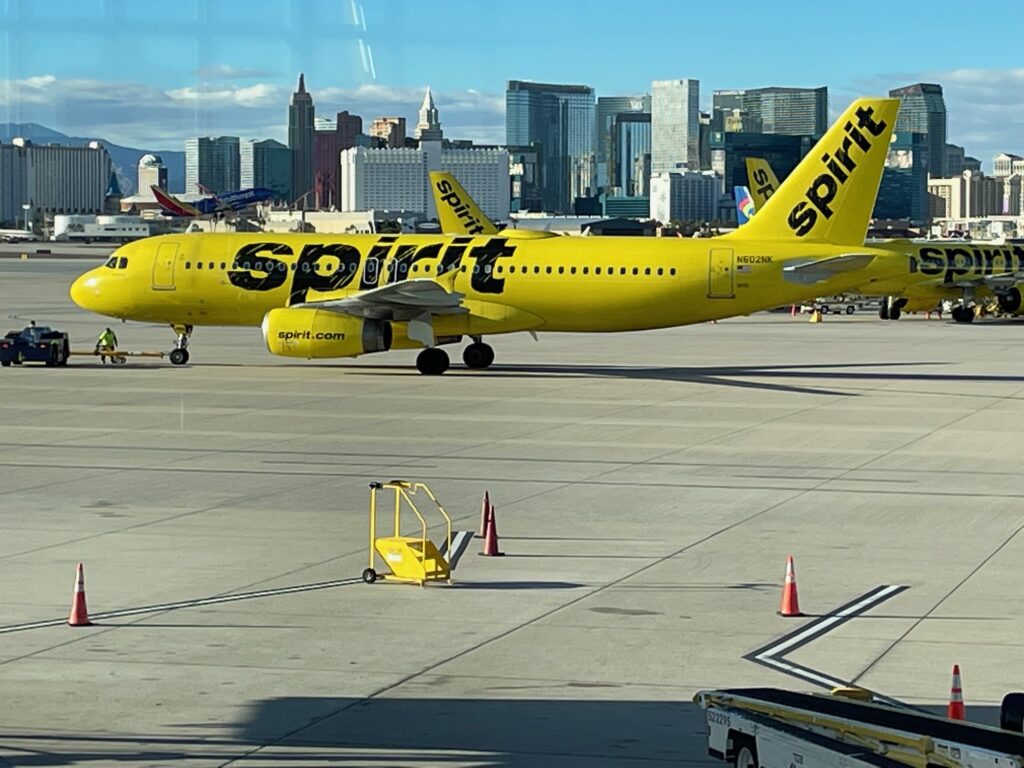
Spirit Airlines (NK) says it expects to emerge from Chapter 11 in late spring to early summer 2026, after reaching an agreement in principle with key creditor groups that clears a path toward court approval and a formal exit.
For a carrier that has spent the past few years fighting headwinds on multiple fronts—soft off-peak leisure demand, rising costs, and intense price competition from larger network airlines—this is the most concrete signal yet that Spirit intends to keep flying as an independent ultra-low-cost carrier, even if it’s a smaller one.
Spirit’s headquarters are in Dania Beach, effectively Fort Lauderdale (FLL) territory, and the airline’s identity as a value-driven operator is deeply tied to the Florida leisure machine. But the next version of Spirit is being built around a different premise: stay low-fare, but reduce complexity, cut fixed obligations, and lean harder into premium upsell that travelers actually buy.
Read our stories in your inbox
Two aviation newsletters. Zero fluff.
The deal: debt and lease obligations targeted for a steep reset
Spirit’s parent company, Spirit Aviation Holdings, has reached a restructuring support framework with debtor-in-possession lenders and secured noteholders—exactly the groups that matter most in Chapter 11 negotiations because they hold the keys to post-bankruptcy liquidity and fleet financing terms.
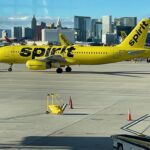
The headline number is the balance-sheet shrink: Spirit has said it expects to reduce debt and aircraft lease obligations from roughly $7.4 billion to about $2.1 billion when it exits. That kind of reduction is not cosmetic. It’s an attempt to restore the airline’s ability to operate profitably in a market where “cheap fares” no longer guarantee a sustainable margin.
CEO Dave Davis has described the goal as exiting Chapter 11 as a “strong, leaner competitor,” still focused on low fares but with more flexible seating options—a blunt acknowledgement that the ULCC model has had to evolve as legacy carriers have flooded the market with competitive basic-economy pricing.
Why this is happening now: the ULCC squeeze got real
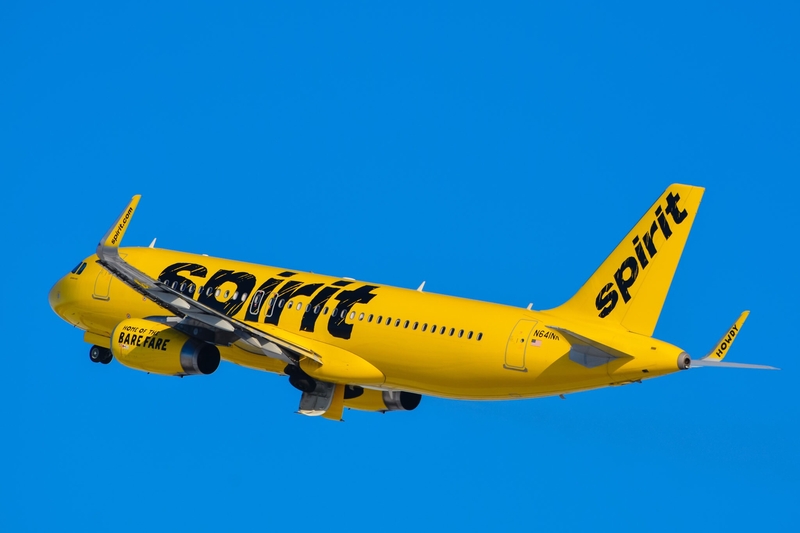
Spirit helped define the modern U.S. ULCC playbook: very low base fares, unbundled add-ons, and a high-density Airbus narrowbody fleet designed to keep unit costs down.
The problem in 2026 is that the low-fare battlefield has changed:
-
Legacy carriers can undercut on price more easily than before, especially on leisure-heavy routes, because they have diverse revenue streams and massive loyalty ecosystems.
-
Customer expectations have shifted—not everyone is chasing the absolute cheapest fare if the product feels punitive, especially on longer domestic sectors.
-
Cost pressures didn’t stay “temporary.” Labor, maintenance, parts, and airport costs have been stubborn, and ULCC economics are less forgiving when costs rise faster than yields.
Spirit’s solution isn’t to abandon its model—it’s to tighten the network and lighten the fixed-cost load so the model can survive in today’s pricing environment.
Fleet strategy: fewer aircraft, fewer expensive leases, more flexibility
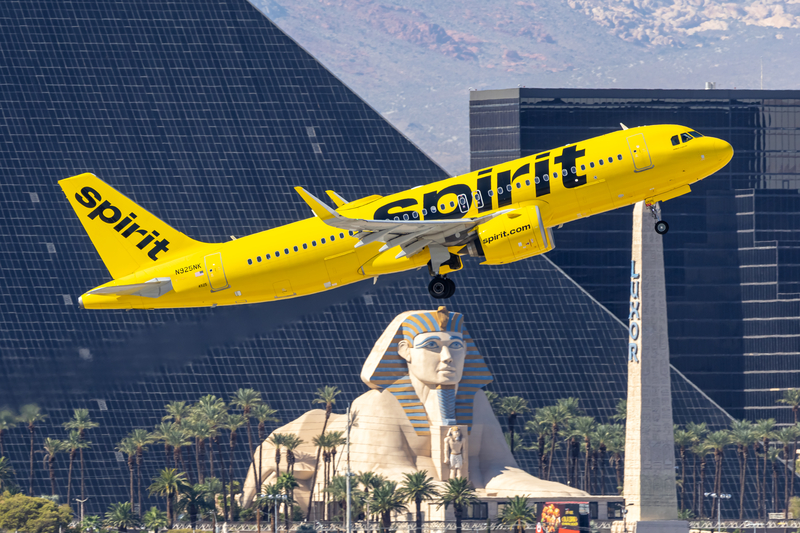
Spirit’s fleet is built around the Airbus A320-family—A320s and A321s, including “neo” variants—chosen for their efficiency and commonality. That’s still the backbone, but the airline is reshaping how much lift it wants on the books and how it pays for it.
To stabilize finances, Spirit has been:
-
Marketing 20 Airbus A320 and A321 aircraft for sale (a mix of owned jets), and
-
Rejecting or renegotiating leases on aircraft it considers higher-cost—particularly certain A320neo leases.
For aviation professionals, the subtext is important. Cutting “paper fleet” is not just about the number of tails; it’s about lease-rate exposure and maintenance liability. In a distressed environment, shedding the wrong aircraft can be as damaging as keeping them—especially if it erodes operational reliability. Spirit’s move suggests it wants a smaller fleet it can utilize harder, rather than a larger fleet it can’t afford to operate efficiently.
What passengers will notice: fewer flights, but potentially a more dependable schedule
Spirit is expected to emerge from bankruptcy smaller than before, and it’s already signaling that the flying will reflect that. For summer 2026, Spirit has indicated it plans to operate nearly 40% fewer flights than the same period in 2024, and it has already suspended service in roughly a dozen U.S. cities during the restructuring.
That’s not just network contraction—it’s a reliability play.
At a carrier built around tight aircraft utilization, trimming the schedule can reduce cascading disruptions when weather, ATC programs, or maintenance events hit. Fewer thin routes also means fewer stations where recovery options are limited. In practical terms, Spirit appears to be prioritizing a tighter core network out of major leisure and high-demand markets—think Florida, the Northeast-Florida corridor, and large metros where the airline can keep aircraft turning without fragile one-off flying.
Product direction: still a ULCC, but with a bigger premium lever
Spirit isn’t trying to become a legacy carrier. But it is leaning into the reality that “unbundled” doesn’t have to mean “one product.”
Spirit already has its upsell anchor—the Big Front Seat concept—paired with a base fare that stays aggressively low. The next phase, as described by leadership, is about expanding premium and flexible seating options so the airline can capture travelers who want a better experience without abandoning the low-fare promise.
That approach mirrors what’s happening across the market: even carriers known for low fares are investing in premium seating, priority bundles, and loyalty benefits because the revenue per square foot of cabin matters more than ever.
The mergers that didn’t happen—and why independence still matters
Spirit’s strategy is also shaped by what didn’t happen. A merger attempt with Frontier Airlines (F9) ultimately fell apart, and the proposed acquisition by JetBlue (B6) was blocked on antitrust grounds.
Those outcomes matter because they removed the “easy exit ramp” from Spirit’s story. If Spirit survives now, it does so on its own balance sheet and its own network discipline—meaning the restructuring has to be durable, not just a bridge to the next deal.
Bottom Line
Spirit (NK) expects to emerge from Chapter 11 in early summer 2026 after a creditor-backed agreement that aims to dramatically reduce debt and lease obligations and reposition the airline as a smaller, leaner competitor.
The near-term reality is fewer flights and a tighter route map, with fleet actions focused on shedding aircraft and costly leases. The longer-term bet is that Spirit can remain a true ULCC—still selling low base fares—while improving its ability to earn premium revenue from travelers who want something more than the bare minimum. If the airline can match a lighter balance sheet with dependable operations out of core bases like Fort Lauderdale (FLL), it may not return as the Spirit of its peak-growth years—but it could return as a Spirit built to last.
Keep reading FlyMag
Get the Daily Brief in the morning or the Route Watch weekly recap on Fridays. Or both.