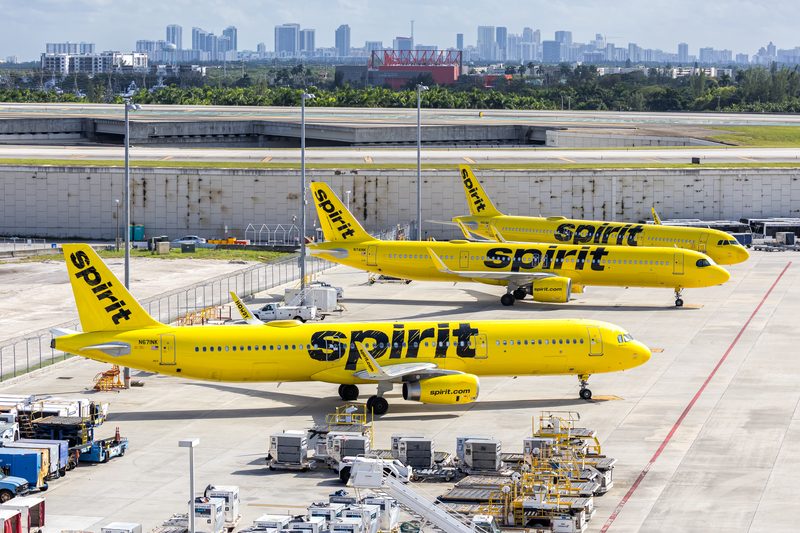
Spirit Airlines’ latest restructuring plan is not a comeback blueprint in the traditional sense. It is a downsizing plan designed to keep the airline alive.
On March 13, Spirit said it expects to shrink to just 76 to 80 aircraft by the third quarter of 2026, down from 214 aircraft when it entered its latest Chapter 11 case in August 2025. At the same time, the airline says it aims to slash debt, lease obligations, and aircraft-related costs from about $7.4 billion to roughly $2 billion. That is not a modest reset. It is a radical contraction of the airline’s operating base.
And the timing is brutal. Spirit is trying to emerge as a much smaller carrier just as the industry is being hit by a sharp fuel-price shock tied to the war involving Iran and disruptions around the Strait of Hormuz. For a U.S. ultra-low-cost carrier with limited pricing power and no meaningful fuel-hedging protection, that is about as uncomfortable a backdrop as possible.
Read our stories in your inbox
Two aviation newsletters. Zero fluff.
This Is No Longer A Vague Turnaround Story
What changed this week is that Spirit moved beyond broad restructuring language and put a more concrete post-bankruptcy model on the table.
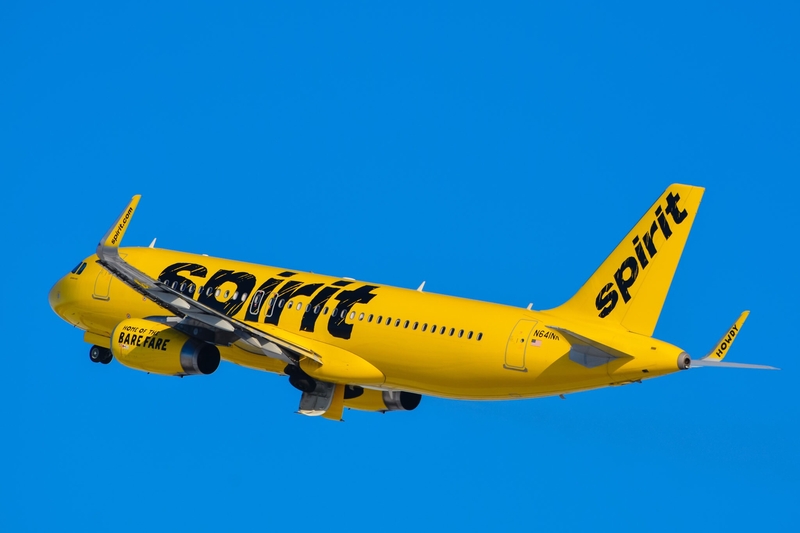
The airline filed a restructuring support agreement and plan of reorganization that outlines what Spirit expects to look like after Chapter 11: smaller, more concentrated, and far less ambitious in terms of sheer network breadth. Spirit says it plans to focus on core markets including Fort Lauderdale-Hollywood International Airport (FLL), Orlando International Airport (MCO), Detroit Metropolitan Wayne County Airport (DTW), and the New York City region.
That alone is telling.
For years, Spirit’s model depended on scale, aircraft density, and the ability to stimulate price-sensitive demand across a wide map. The new framework is much more selective. Spirit is effectively conceding that it cannot be everywhere and win. It now has to be smaller and more disciplined just to restore basic viability.
The airline is also trying to reshape its product mix. Spirit First and Premium Economy are being pushed harder as Spirit looks for more revenue per passenger, not just more passengers. That does not mean Spirit is abandoning the low-cost model altogether. It means the airline is trying to make that model less fragile.
The Fleet Reduction Is Enormous
The fleet number is the clearest expression of how dramatic this reset is.
Going from 214 aircraft at the time of the bankruptcy filing to 76 to 80 aircraft by the third quarter of 2026 means Spirit is shrinking to roughly one-third of its pre-restructuring fleet. That is not trimming around the edges. It is a wholesale resizing of the airline.
Spirit says the post-restructuring fleet will primarily consist of Airbus A320ceo and A321ceo aircraft. That is notable because it points to a simpler, narrower operating platform rather than a broad growth mix. In other words, Spirit is not emerging with a large near-term expansion story. It is emerging with a smaller core fleet designed to support a reduced network.
There is also an asset-sale layer to this. A bankruptcy judge has approved bidding procedures for around 20 additional aircraft, with a stalking-horse bid setting a floor of roughly $530 million. That underscores the basic reality of the restructuring: Spirit is not just renegotiating. It is actively shedding pieces of itself to make the balance sheet work.
The Carrier Is Negotiating From A Position Of Weakness
That is why the latest plan should be read as a survival blueprint, not a strategic flex.
Reuters reported that Spirit lost about $246 million in the three months ended June 2025, and the company’s first restructuring effort failed to stabilize the business adequately. Since then, Spirit has cut routes, exited airports, rejected leases, raised debtor-in-possession financing, and returned to court for another major overhaul.
This is a carrier that has already tried the lighter-touch version of recovery and found it was not enough.
That matters because smaller airlines in distress can sometimes sell a story about short-term pain followed by quick recovery. Spirit’s numbers do not really support that kind of optimism. The airline is emerging from repeated financial failure into an environment that may be even less forgiving than the one that pushed it into court.
The Fuel Problem Is Real — But It Is Not The Whole Story
The headline question is whether Spirit can survive the current fuel shock.
That is a fair question, but it needs framing carefully. Spirit is not in crisis because of fuel alone. The airline was already in deep trouble. Fuel is arriving as an accelerant, not the original cause.
Still, it is a serious accelerant.
Reuters has reported that jet fuel prices have jumped far faster than crude oil prices since the Iran war began, with some airlines facing jet-fuel price levels around $150 to $200 per barrel. The conflict has disrupted oil flows and tightened supply of the kinds of crude most useful for producing jet kerosene. Airlines in Asia and Europe have already responded by raising fares or imposing surcharges.
For Spirit, the problem is especially acute because ultra-low-cost carriers depend heavily on cost discipline and fare stimulation. When fuel spikes, the most price-sensitive parts of the market become the hardest to manage. Legacy carriers can sometimes absorb more through premium revenue, corporate contracts, or loyalty economics. Spirit has less cushion.
That does not mean the airline automatically fails if fuel remains elevated. But it does mean the margin for error becomes extremely thin.
A Smaller Spirit May Be More Rational — But Not Necessarily Safer
There is an argument in Spirit’s favor here.
A smaller airline focused on its strongest markets may actually be more rational than the old model. Concentrating around Fort Lauderdale (FLL), Orlando (MCO), Detroit (DTW), and the New York area gives Spirit a chance to preserve relevance where its brand, cost structure, and customer base still have some depth. A leaner fleet also means less financial drag from underperforming aircraft and fewer weak routes bleeding cash.
In theory, that should make Spirit more resilient.
The problem is that a smaller carrier is not automatically a safer carrier when fuel is surging. Shrinking reduces exposure, but it also reduces flexibility. A 76-to-80-aircraft Spirit has far less room to spread risk, defend market share broadly, or absorb shocks than a 200-plus-aircraft operator would. If fuel remains high, demand softens, or competitors get aggressive in Spirit’s core markets, the airline will have less strategic room to maneuver.
So yes, smaller may be smarter. But smaller also means there is less spare capacity for mistakes.
What Passengers Should Expect
For travelers, the practical outcome is likely to be a Spirit that feels more concentrated and less ubiquitous.
In strongholds such as FLL and MCO, passengers may still see a meaningful Spirit presence. But across weaker or more marginal markets, fewer aircraft almost certainly means fewer routes, fewer frequencies, and less schedule flexibility. The network is likely to become more seasonal and more selective.
At the same time, Spirit is clearly trying to improve the revenue mix onboard. Spirit First and Premium Economy are central to that effort. This is not just branding. It is part of the airline’s attempt to move away from relying almost entirely on the most stripped-down version of ultra-low-cost travel.
Passengers may therefore see a Spirit that is somewhat more polished and potentially more stable in its best markets. But they should not assume that means cheaper flying. If fuel stays elevated, the airline will have far less room to undercut competitors as aggressively as it once did.
The Bigger Question Is Whether Spirit Is Being Restructured To Compete — Or To Be Sold Later
There is one more angle worth watching.
A downsized, simplified Spirit may be easier not only to operate, but eventually to transact. Even if management is focused on exiting bankruptcy first, a smaller balance sheet and a cleaner fleet profile could make the company more digestible in a future industry deal if finances stabilize enough.
That does not mean a sale is imminent, and regulatory history around airline consolidation remains complicated. But this restructuring does look like the kind of plan that could leave the airline more legible to outside interest later on, assuming it can survive the immediate period.
For now, though, that is secondary. First Spirit has to prove it can function as a much smaller standalone airline in a high-fuel-cost environment.
Bottom Line
Spirit’s new plan to shrink to 76 to 80 aircraft by the third quarter of 2026 is a survival strategy, not a growth strategy.
The airline is trying to cut debt and lease obligations from about $7.4 billion to roughly $2 billion, simplify its fleet around older Airbus A320ceo and A321ceo aircraft, and concentrate on stronger markets such as Fort Lauderdale (FLL), Orlando (MCO), Detroit (DTW), and the New York area. That is a major contraction, and it reflects how severe Spirit’s position has become after repeated financial failures.
The complication is that this leaner Spirit is emerging into a fuel environment that is suddenly much harsher. The Iran-related fuel shock is real, and it hits low-cost carriers especially hard because they rely so heavily on being able to stimulate demand with cheap fares.
So can Spirit survive it? Possibly. A smaller airline has a better chance than the old version did. But this plan does not create much margin for error. It gives Spirit a path. It does not give Spirit comfort.
Keep reading FlyMag
Get the Daily Brief in the morning or the Route Watch weekly recap on Fridays. Or both.