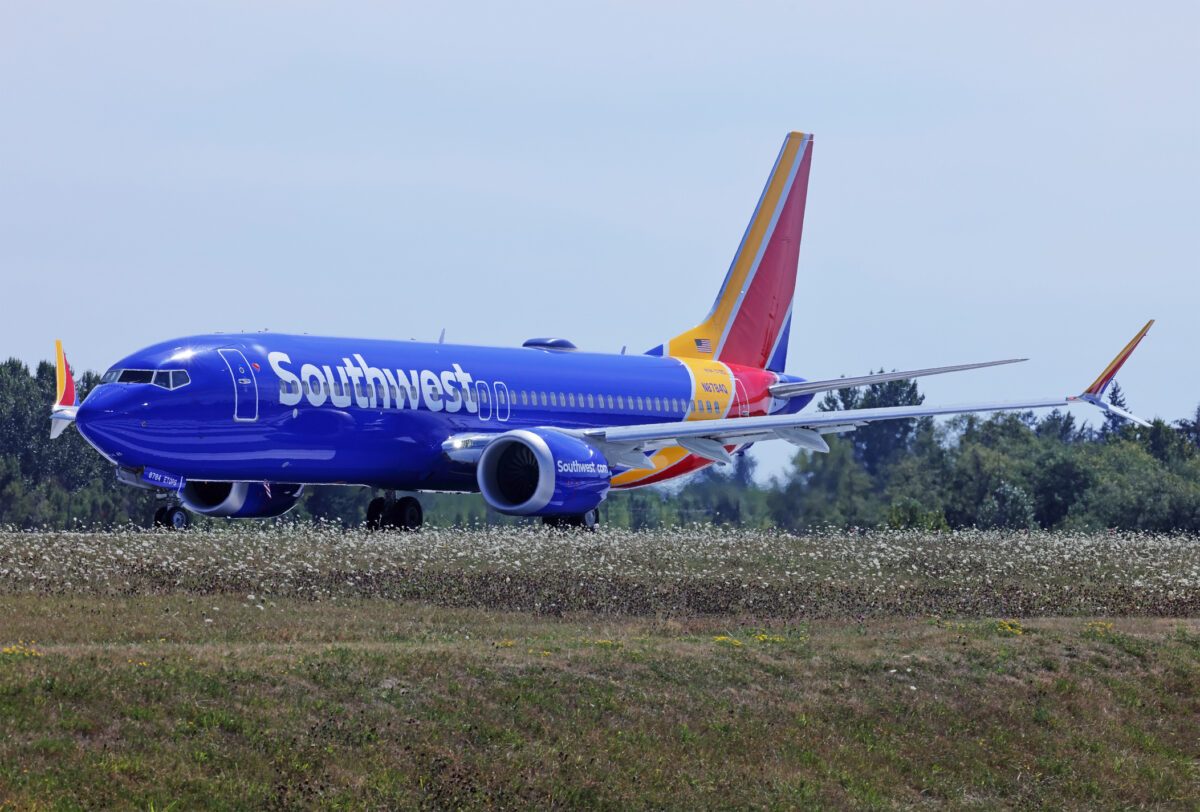
A Southwest Airlines Boeing 737 returned to the terminal at Las Vegas (LAS) on Friday, October 9, after another flight crew reported smoke coming from the aircraft’s right main landing gear.

The aircraft was operating Flight WN759, a scheduled service from LAS to Chicago Midway (MDW). The report came while the 737 was taxiing for departure, before it reached the runway. Airport emergency crews responded, and the aircraft was subsequently towed to the gate.
An airport spokesperson confirmed that the aircraft did not continue to the runway and that no injuries were reported. Southwest transferred the passengers to another aircraft for the delayed flight to Chicago.
Read our stories in your inbox
Two aviation newsletters. Zero fluff.
Southwest spokesperson Lynn Lunsford said the airline was examining a possible hydraulic issue. He said Southwest had received no report of an actual fire, drawing a distinction between the smoke observed by other pilots and the initial description of the event as a landing gear fire.
The airline has not attributed the smoke to a specific component. The aircraft was removed from the departure sequence for inspection rather than continuing toward takeoff.
Flight Stopped Before Reaching the Runway
The sequence matters operationally. WN759 was still taxiing when the warning came from another crew, allowing the flight to stop without beginning a takeoff roll. The event was therefore a return during taxi, not a rejected takeoff at speed.
Reports from crews in the departure queue focused on the right main landing gear. Airport fire and rescue vehicles were requested, and the aircraft remained on the ground while responders assessed the situation.
Smoke around a main landing gear assembly requires attention even without visible flames. The area contains the wheel, tire and brake assemblies, along with hydraulic lines and other components subjected to substantial loads and heat. A defect there could affect braking performance during taxi, takeoff or a rejected takeoff.
The Federal Aviation Administration’s guidance on ground inspections treats leaking fluid around landing gear and braking systems as an unacceptable condition requiring examination. The same guidance calls for checks of tires, brake components, hydraulic lines and surrounding hardware.
That does not establish the cause of the Southwest event. It explains why the combination of smoke and a possible hydraulic problem was sufficient to end the departure and move the passengers to another aircraft.
Replacement 737-8 Completed the Chicago Flight
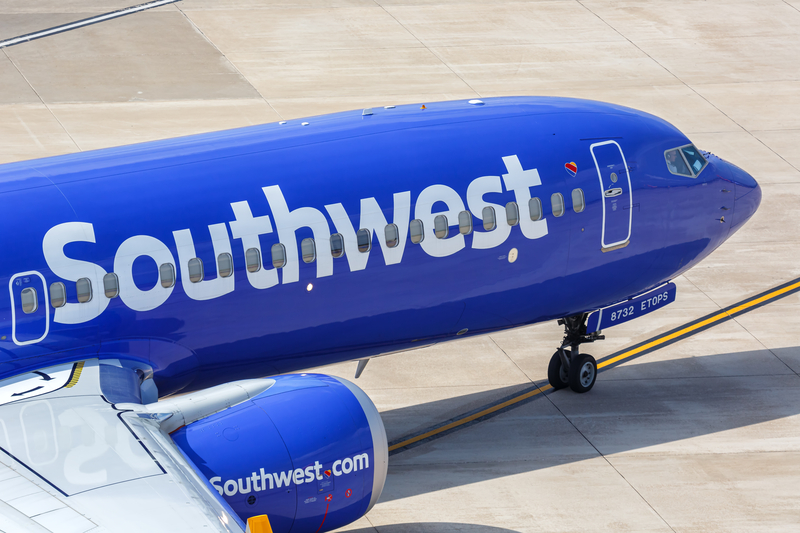
Southwest arranged a replacement Boeing 737-8 to carry the passengers to MDW. The flight left Las Vegas more than four hours after its original departure time and reached Chicago roughly four hours behind schedule.
The carrier’s Las Vegas–Chicago Midway service covers about 1,521 miles, with Southwest listing an average block time of approximately three hours and 33 minutes. That stage length is routine work for the 737-8, which Boeing lists with a maximum range of up to 3,500 nautical miles.
Southwest operates the 737-8 with 175 seats. The type provides the airline with the capacity of its 737-800s while delivering the operating economics and range of the newer MAX generation. Boeing describes the model as suitable for short- and medium-haul markets, with a typical two-class capacity of 160 to 180 seats and a maximum certified capacity of 210.
The aircraft has become central to Southwest’s fleet renewal. The airline’s corporate fleet summary listed 300 Boeing 737-8s at the end of 2025, alongside 305 737-700s and 198 737-800s. Southwest expected another 66 737-8 deliveries during 2026 while retiring approximately 60 older aircraft.
Southwest was the launch airline for the 737 MAX 8 and placed the model into scheduled service in October 2017. Its all-737 fleet allows the carrier to substitute aircraft without introducing a different pilot type rating or an incompatible narrowbody cabin, an advantage when an aircraft is removed from service at a large operating base.
Las Vegas Is One of Southwest’s Largest Stations
The disruption occurred at one of the most important airports in Southwest’s network. The airline is the largest operator at LAS by passenger volume and maintains an extensive schedule connecting Las Vegas with markets across the United States.
Official airport statistics show that Southwest handled more than 21.6 million arriving and departing passengers at LAS in 2024, several times the total recorded by any other airline. The airport handled nearly 55 million passengers across all carriers in 2025, according to its annual traffic report.
That scale gives Southwest access to replacement aircraft and technical staff but also means an aircraft stopped in a departure queue can affect a busy section of the operation. Removing WN759 from the taxi flow allowed emergency personnel to examine the landing gear while controllers continued managing other departures.
The aircraft involved remained out of the flight while Southwest completed the Chicago service with the replacement 737-8. The airline’s initial account points to a possible hydraulic problem rather than a confirmed fire.
Bottom Line
The most consequential detail is where the event stopped: on the taxiway and before the aircraft accelerated for takeoff. An abnormality involving a main-wheel brake or associated hydraulic equipment is considerably easier to contain at taxi speed than during a high-speed rejected takeoff, when braking capability and brake energy margins become critical.
For Southwest, the incident also illustrates the resilience created by a large, single-family fleet at a major station. A 175-seat 737-8 could take over the mission without changing the basic operating model, although the aircraft substitution still produced a delay of several hours. That flexibility becomes increasingly important as the 737-8 accounts for a growing share of Southwest’s fleet.
The technical significance will depend on the inspection findings. A localized wheel, brake or hydraulic component problem would remain an aircraft-level maintenance event. Evidence of a recurring defect or a component issue shared across other aircraft would draw wider attention from Southwest, Boeing and the FAA.
Keep reading FlyMag
Get the Daily Brief in the morning or the Route Watch weekly recap on Fridays. Or both.