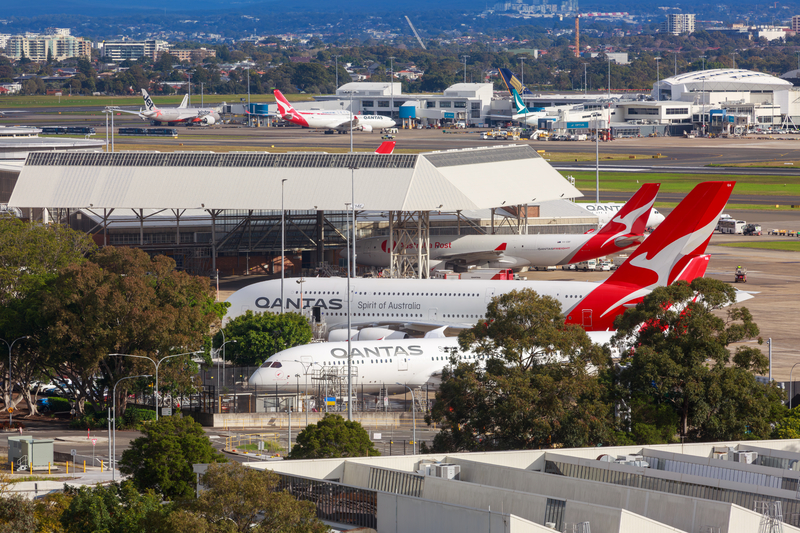
Qantas is officially taking its newest narrowbody beyond Australia’s borders. From 25 October 2026, the airline will deploy the Airbus A321XLR on Brisbane (BNE)–Manila (MNL), making the Philippines Qantas’ first international A321XLR destination and marking a meaningful shift in how the carrier plans to grow short-to-medium haul flying across the region.

What makes this move notable isn’t just the aircraft type—it’s the intent. Qantas is using the A321XLR to increase frequency from five weekly to daily while replacing the Airbus A330 currently operating the route. That is a classic “right-size and add frequency” strategy: more schedule choice for passengers, lower trip cost per departure for the airline, and a narrowbody capable of doing work that previously leaned on a widebody.
The route: Brisbane (BNE)–Manila (MNL) steps up to daily
BNE–MNL is a high-utility international market: VFR demand, growing leisure flows, and strong connectivity potential on both ends. Qantas’ updated plan takes the route to seven flights per week, with timing designed to support both point-to-point traffic and onward domestic connections at Brisbane (BNE).
Read our stories in your inbox
Two aviation newsletters. Zero fluff.
On published schedules, the service will operate as QF97/QF98, with a mid-afternoon departure from Brisbane (BNE) reaching Manila (MNL) in the evening, and a late-evening departure from Manila returning to Brisbane the following morning—an efficient pattern for aircraft utilization and for connecting banks.
Why the A321XLR is a big deal on this city pair
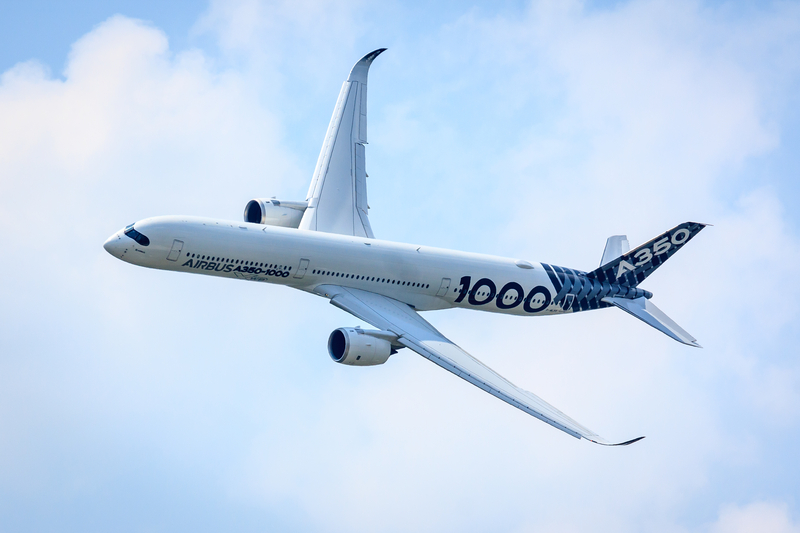
The A321XLR is the aircraft Airbus built to make “long, thin” routes viable at narrowbody economics—and Qantas is leaning straight into that capability.
Key performance and operational attributes that matter to planners and engineers:
-
Range and flexibility: Qantas has positioned the A321XLR as capable of flying around 8,700 km, opening sectors well beyond the practical reach of the Boeing 737-800s it is progressively replacing.
-
Right gauge for the market: On BNE–MNL, a narrowbody can better match demand day-to-day while enabling more frequency, which is often more valuable than a larger aircraft a few days a week—especially for business travel and connecting itineraries.
-
Quieter and more efficient: Brisbane Airport (BNE) has highlighted the XLR’s lower noise footprint and improved fuel efficiency—important operational benefits at a major curfew-sensitive gateway where community and sustainability pressures continue to rise.
For passengers, the aircraft swap will also be very noticeable: stepping down from a twin-aisle A330 to a single-aisle A321XLR changes the cabin feel, boarding flow, and aisle congestion dynamics. Qantas is betting that frequency and a newer onboard experience will outweigh the psychological comfort of a widebody on a sector of this length.
Cabin strategy: domestic-configured XLR first, international XLR later
Here’s the nuance aviation readers will care about: the first BNE–MNL A321XLR flights will use Qantas’ domestic-configured XLRs, not the future long-haul-optimized versions.
That means early international A321XLR customers should expect:
-
A domestic-style Business cabin (recliner seats rather than lie-flat)
-
A modern narrowbody cabin experience built around Wi-Fi and streaming entertainment rather than seatback screens
The bigger product leap comes later. Qantas has 16 internationally configured A321XLRs on order, planned to enter service from 2028, featuring:
-
Lie-flat Business Class seats
-
Seatback entertainment
-
Complimentary Wi-Fi
-
Deployment across short- and medium-haul international routes, plus selected longer domestic missions (including transcontinental flying involving Perth (PER))
In other words: BNE–MNL is the aircraft’s international debut, but it’s also a bridge period while Qantas ramps up toward the fully “international” XLR product.
A small change with outsized impact: four lavatories, 197 seats
Qantas’ cabin engineers have also made a telling adjustment on the A321XLR as deliveries progress.
The airline’s fourth A321XLR, VH-OGD, arrives with four lavatories instead of three—an addition that costs a row of economy seats and brings total capacity down from 200 to 197. On paper, that’s a tiny reduction. In the cabin, it’s a meaningful operational improvement:
-
Under the original 200-seat layout, economy effectively had two lavatories for 180 passengers—a 90:1 ratio that drew heavy criticism.
-
With the updated layout, economy moves closer to one lavatory per ~59 passengers, reducing queues, easing aisle congestion, and improving cabin flow on longer sectors.
Qantas plans to retrofit its first three A321XLRs (VH-OGA, VH-OGB, VH-OGC) to match the four-lavatory standard. For flight attendants, gate teams, and turn-time reliability, this is exactly the kind of “small” interior decision that can materially improve the day-to-day operation—especially on international missions where passenger dwell time onboard is longer and service routines are more complex.
Fleet acceleration: the XLR is becoming the narrowbody standard-bearer
The BNE–MNL announcement sits inside a rapid fleet induction phase for Qantas, with the airline pointing to:
-
Multiple new aircraft already delivered in recent months
-
Dozens more scheduled over the next 18 months
-
Domestic A321XLR flying already established across Sydney (SYD), Melbourne (MEL), Brisbane (BNE), and Perth (PER), with Brisbane–Perth (BNE–PER) also part of the rollout
It’s also worth watching what Qantas does next with its 737-800 fleet. The airline has signaled it is evaluating cabin retrofits on selected 737s to better align the onboard experience with the new narrowbody baseline the A321XLR is setting.
Bottom Line
Qantas’ decision to launch Brisbane (BNE)–Manila (MNL) as the first international A321XLR route from 25 October 2026 is a clear statement of strategy: use next-generation narrowbody range and economics to add frequency, modernize the product, and build a more flexible international schedule without defaulting to widebody capacity.
In the near term, passengers will see a daily service operated by domestic-configured A321XLRs—newer and more efficient, but without lie-flat Business. The real endgame arrives from 2028, when Qantas’ internationally configured XLRs enter the fleet with lie-flat seating and a more long-haul-grade onboard experience. Either way, BNE–MNL is the proof point: the XLR isn’t just replacing 737s—it’s starting to replace widebody missions where frequency and cost discipline matter more than aircraft size.
Keep reading FlyMag
Get the Daily Brief in the morning or the Route Watch weekly recap on Fridays. Or both.