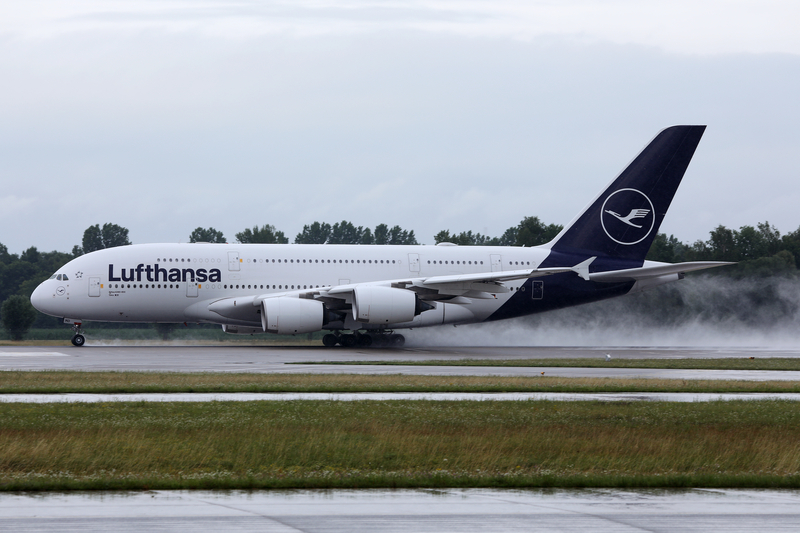
Lufthansa (LH) is preparing to add long-haul capacity in the coming weeks as the latest Middle East crisis reshapes global air travel patterns—especially for passengers who normally connect through the Gulf’s “super hubs” like Dubai (DXB) and Doha (DOH). With large swaths of regional airspace restricted and several Gulf networks running only limited operations, Lufthansa says it is seeing a sharp rise in demand for long-haul itineraries that route via Europe, and it intends to respond with additional frequencies where aircraft and slots allow.

Lufthansa Group CEO Carsten Spohr summed up the operational reality: modern aviation is resilient, but still exposed. When a conflict takes out major transit corridors, the shockwaves don’t stay local—they propagate through global hub banks, aircraft rotations, crew legality, and passenger connections.
Why Lufthansa is suddenly in the middle of everyone’s reroute plan
The Gulf’s geographic advantage is simple: it sits between Europe, Asia, and Africa, enabling one-stop connections that are hard to beat for time and frequency. When that connecting machine is constrained, travelers have limited alternatives:
Read our stories in your inbox
Two aviation newsletters. Zero fluff.
-
Connect via Europe instead (Frankfurt FRA, Munich MUC, Zurich ZRH, Vienna VIE, Istanbul IST, etc.)
-
Fly ultra-long-haul nonstop (available only on select city pairs, and capacity is limited)
-
Delay travel and wait for networks to normalize
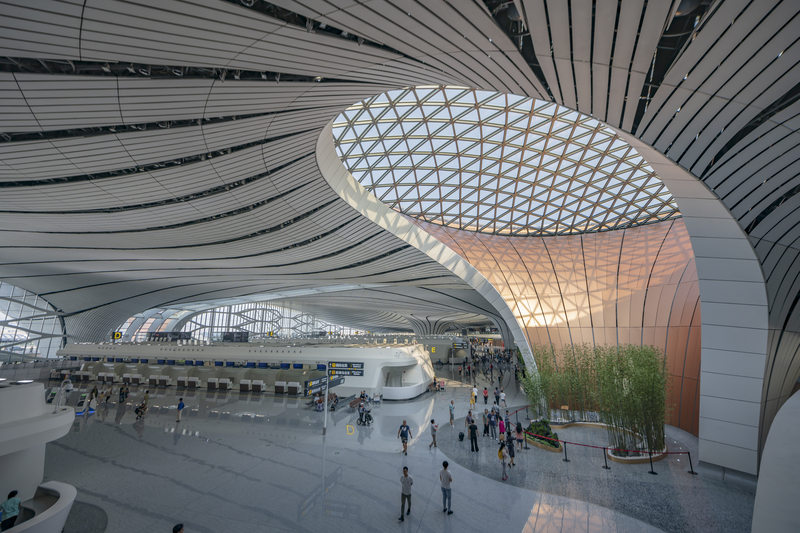
For Lufthansa, Europe’s “Plan B” status translates into a sudden booking surge on long-haul sectors where it already has scale and fleet depth—particularly flows to Asia and Africa, and certain routes that usually see winter softness.
What Lufthansa is likely to add: frequency where the widebody math works
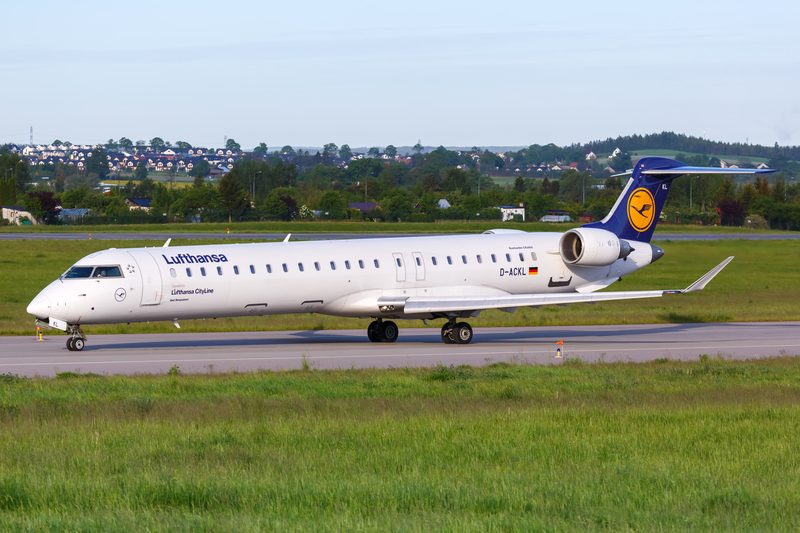
Lufthansa has indicated it is evaluating extra long-haul flying to markets including:
-
Singapore (SIN)
-
India (multiple gateways depending on the season and fleet availability)
-
China
-
South Africa (Johannesburg JNB is a typical demand magnet in disruption cycles)
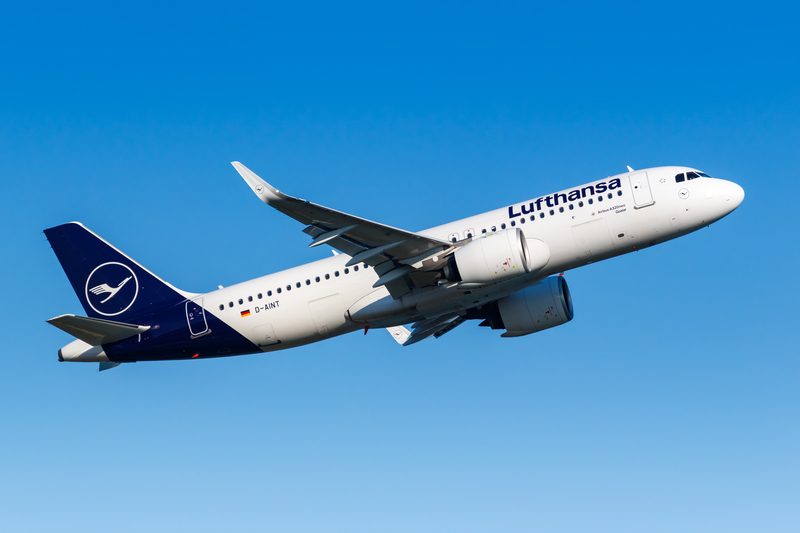
These are markets where disrupted Gulf connectivity hits hardest because passengers previously relied on one-stop routings through DOH/DXB/AUH. When that “midpoint” disappears, European carriers become the next best connecting option—especially for travelers originating in secondary European cities that can feed into Lufthansa’s hubs at FRA and MUC.
The airline is also repositioning capacity away from routes it has temporarily suspended or reduced in the Middle East, reallocating those widebody hours to long-haul markets where demand is now pulling forward.
The fleet reality: which aircraft Lufthansa can realistically deploy on short notice
When Lufthansa says “more long-haul flights,” what it can actually add depends on which widebodies are available and how quickly they can be slotted into an already tight schedule.
In Lufthansa Airlines’ long-haul fleet planning, these are the practical tools:
-
Boeing 787-9: a flexible long-haul workhorse with lower trip costs than larger widebodies—ideal for adding frequency where demand is strong but not “A380 strong.”
-
Airbus A350-900: efficient long-haul capacity that can be redeployed between Europe–Asia and Europe–Africa without the same fuel penalty as older types.
-
Boeing 747-8 and 777-9 planning: the 747-8 remains a major capacity lever at FRA, but it’s harder to “just add flights” with a very large gauge aircraft unless slots and demand are both robust.
-
A330/A340 replacements: Lufthansa has been modernizing aggressively, but the mix across Lufthansa Group carriers (including SWISS and Austrian) can still provide tactical options for irregular demand spikes.
The near-term reality is that incremental frequency is easier with 787/A350 gauge than with 747-sized capacity. That’s why many of the “extra flights” Lufthansa considers in crises tend to be additional rotations on already-established routes using mid-capacity widebodies.
Why “adding flights” is harder than it sounds during an airspace crisis
Even if demand is there, the operation has constraints that airline professionals will immediately recognize:
1) Longer routings mean fewer daily aircraft cycles
When airlines avoid restricted airspace, great-circle routings become irrelevant. Detours add track miles, block time, and fuel burn. A long-haul aircraft that used to complete a rotation with comfortable buffers may now require extra time on the ground, longer duty planning, or additional crew rest—reducing overall utilization.
2) Slot availability at FRA and MUC isn’t infinite
Frankfurt (FRA) and Munich (MUC) run on wave structures designed around schedule integrity. Adding a new long-haul departure isn’t just “find a plane”—it’s find a departure slot, a gate, a tow plan, and a connection window that won’t break the bank structure.
3) Crew legality becomes the limiting reagent
Long-haul operations are crew-intensive, and disruptions compress margins fast. Longer flights plus irregular operations increase the risk of crews timing out away from base, which can strand aircraft in places Lufthansa didn’t plan for.
4) Fuel price volatility hits the profit line immediately
Spohr has warned that the financial impact is difficult to estimate because it depends heavily on how long the conflict persists and how fuel markets react. Lufthansa is relatively well hedged in the short term, but sustained price spikes still matter—especially when detours increase fuel uplift.
Why Lufthansa’s revenue outlook can rise even as disruption costs rise
It sounds contradictory: how can the airline benefit while the industry is disrupted?
Because disruption reshapes pricing power.
When Gulf carriers reduce flying, a portion of their connecting capacity disappears. That tightens supply on Europe–Asia and Europe–Africa flows, often allowing European carriers to:
-
sell more seats at higher average fares,
-
fill premium cabins with displaced corporate travelers,
-
capture last-minute demand that previously flowed through the Gulf.
But this is a delicate balance. Disruption costs—hotel accommodations, reaccommodation, longer block times, higher fuel, and operational complexity—can eat into the upside quickly. Lufthansa’s position is essentially: demand is strong and bookings are rising, but the profitability of that demand depends on how long the disruption lasts and how constrained routings remain.
The financial context: a stronger base heading into turbulence
Lufthansa’s confidence is also underpinned by a solid financial base. For full-year 2025, the group reported net profit of €1.34 billion, about 3% lower than 2024, while maintaining record revenue and improving operational performance metrics. That matters because capacity additions require cash confidence—airlines don’t add long-haul flying in a crisis if they’re financially fragile.
Bottom Line
With Gulf hubs like Dubai (DXB) and Doha (DOH) constrained by the Middle East crisis, Lufthansa is moving to add long-haul flying and redirect capacity toward high-demand markets—especially across Asia and Africa—where Europe has become the default routing alternative. The opportunity is real: more bookings, fuller flights, and stronger pricing power. But the execution risk is equally real: longer detours, fuel volatility, slot limits at Frankfurt (FRA) and Munich (MUC), and crew legality constraints will determine how much extra flying Lufthansa can actually sustain—and how profitable that flying will be until the region stabilizes.
Keep reading FlyMag
Get the Daily Brief in the morning or the Route Watch weekly recap on Fridays. Or both.
Share this story
Composed for each network — click to share, or copy the composed text for your own timing.