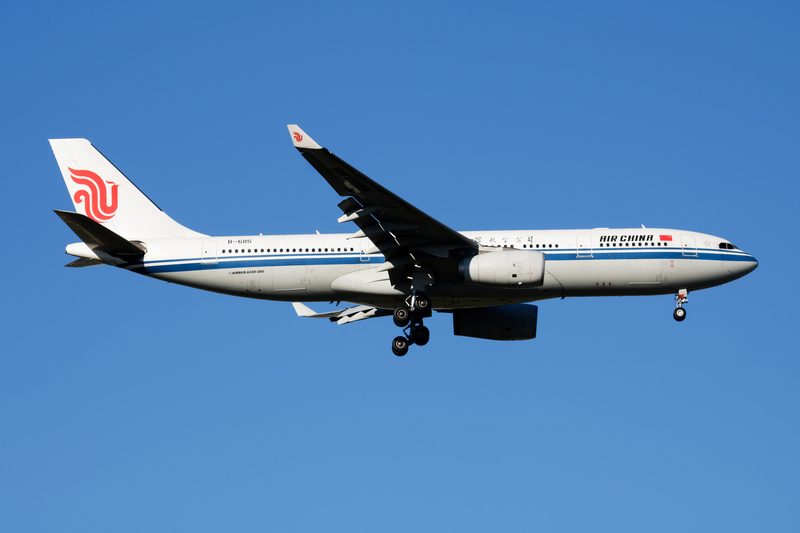
Air China is set to resume passenger flights between Beijing Capital International Airport (PEK) and Pyongyang Sunan International Airport (FNJ) from March 30, restoring a route that has been dormant since the pandemic-era shutdown of cross-border travel in 2020.

On the surface, the move is a straightforward schedule restoration. In reality, it is more important than that. The return of PEK–FNJ flights, alongside the reopening of rail service between Beijing and Pyongyang, is one of the clearest signs yet that China–North Korea transport links are moving back toward a more functional, if still tightly controlled, operating pattern.
For aviation readers, that makes this less a route restart story than a reopening signal.
Read our stories in your inbox
Two aviation newsletters. Zero fluff.
The Route Is Returning Carefully, Not Fully
Air China is not flooding the market with capacity. The airline is resuming Beijing (PEK)–Pyongyang (FNJ) on a once-weekly basis, initially operating every Monday from March 30. That alone says plenty about the pace of the reopening.
This is not the profile of a market that is suddenly normal again. It is the profile of a politically sensitive, operationally cautious route returning in a limited and highly controlled form.
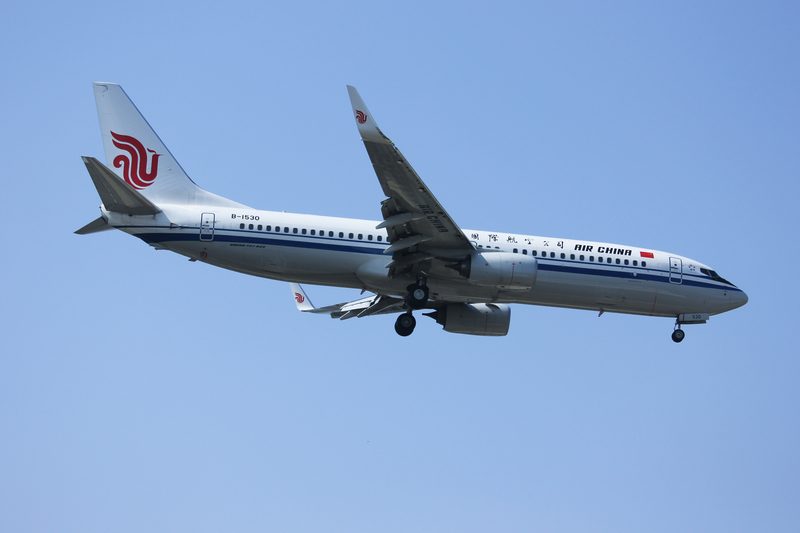
Aircraft assignment is telling too. Schedule data shows Air China plans to use the Boeing 737-700 on the route. That is a sensible choice for a service where demand may be real but still uncertain, and where a smaller narrowbody gives the airline flexibility without committing too much capacity too early. For a route of this nature, right-sizing matters more than making a statement.
The Rail Restart Gives The Flight Resumption More Meaning
The aviation angle matters, but this story is really about the broader restoration of cross-border connectivity.
Earlier this week, passenger train services between China and North Korea resumed for the first time since 2020. The Beijing–Pyongyang rail service is now scheduled to run four times weekly, while the Dandong–Pyongyang line has resumed daily operations. That matters because rail and air do not operate in isolation in this corridor. When both modes restart at nearly the same time, it usually signals a broader government-level comfort with reopening movement, even if under strict terms.
In other words, the return of PEK–FNJ is not happening alone. It is part of a coordinated reopening of travel channels between the two countries.
That is why the flight matters more than its weekly frequency might suggest.
This Is A Political And Operational Route, Not A Typical Commercial One
Flights between Beijing (PEK) and Pyongyang (FNJ) have never been ordinary in the way major regional trunk routes are ordinary.
This is a route shaped as much by diplomacy, state policy, border controls, and political signaling as by traditional airline economics. Demand exists, but it is not purely market-driven. The passenger mix is influenced by officials, business travelers, aid-related movement, approved organized travel, and tightly controlled categories of cross-border traffic.
That makes schedule restoration on PEK–FNJ especially significant. Airlines do not simply reload a North Korea route because leisure demand looks attractive or because a normal commercial market has snapped back. They do it when the political and regulatory environment permits it.
For that reason, Air China’s return to Pyongyang is a stronger indicator of state-level reopening confidence than it is of any dramatic change in near-term passenger volume.
Tourism Is Still Restricted, Despite The Headline
One important point needs to stay clear: resumed flights do not mean North Korea is broadly reopening to ordinary tourism.
Travel remains heavily restricted. Independent tourism is still not permitted, and access continues to be limited to tightly managed arrangements. Some specialized operators are hopeful the simultaneous return of rail and air links could eventually expand access further, but that remains a forward-looking interpretation, not a current reality.
That distinction matters because route resumptions involving North Korea can easily be overread. A weekly Air China flight from Beijing (PEK) to Pyongyang (FNJ) is a notable development, but it is not evidence that North Korea has reopened in any conventional travel sense.
For now, the route is better understood as a controlled restoration of access rather than a tourism relaunch.
Air China’s Return Also Changes The Competitive Picture Slightly
Another notable part of this development is that it adds a Chinese carrier back into the market rather than leaving the route solely to North Korea’s own aviation system.
Air Koryo had already resumed flights between the capitals earlier in the reopening process, but Air China’s return adds a different layer of legitimacy and connectivity. A state-backed Chinese carrier operating PEK–FNJ gives the route a more recognizably international commercial profile, even if the market remains politically constrained.
It also matters operationally. Air China brings the distribution, scheduling structure, and network familiarity of a major carrier, which may make the route more functional for the narrow categories of travelers currently able to use it.
In practical terms, that does not suddenly transform Beijing–Pyongyang into a competitive air corridor. But it does make the route look less like an isolated exception and more like a cautiously revived bilateral link.
Why The Boeing 737-700 Makes Sense Here
The aircraft choice deserves a closer look.
The Boeing 737-700 is a logical fit for PEK–FNJ because it balances modest capacity with strong operational flexibility. This is a short sector by international standards, but it serves a market where demand visibility is limited and where overcapacity would make little sense. Using a smaller 737 variant allows Air China to restore service without carrying the burden of a larger aircraft on a politically sensitive and still-recovering route.
It also fits the wider pattern of cautious reopening. Everything about this relaunch says measured re-entry rather than aggressive rebuild: one flight a week, a compact narrowbody, and a route being restored only after rail links have also resumed.
That is exactly how airlines and governments tend to behave when reopening a market that is still highly managed.
The Real Story Is Connectivity, Not Frequency
For aviation professionals, the most important takeaway is not that Air China is flying weekly from Beijing (PEK) to Pyongyang (FNJ). It is that China–North Korea connectivity is becoming structurally operational again.
Rail is back. Air is back. Neither is fully normalized, but both are active. That changes the transport picture materially.
It also creates a framework for whatever comes next. If restrictions ease further, frequencies can increase. If official travel grows, service can deepen. If tourism permissions broaden even modestly, the route could become more commercially relevant than it is today. None of that is guaranteed, but the infrastructure of reopening is now more visible than it has been at any point since 2020.
That alone makes this an important development.
Bottom Line
Air China’s planned resumption of Beijing Capital (PEK)–Pyongyang Sunan (FNJ) flights from March 30 is a small route restart with outsized significance.
The weekly Boeing 737-700 service is not a sign that North Korea has broadly reopened. It is a sign that China–North Korea transport links are being carefully restored across both air and rail. That makes the route strategically meaningful even if the near-term schedule remains modest and tightly controlled.
For airline and airport watchers, the bigger story is not the frequency. It is the fact that one of Asia’s most politically unusual air corridors is back on the board at all.
Keep reading FlyMag
Get the Daily Brief in the morning or the Route Watch weekly recap on Fridays. Or both.