EgyptAir will launch year-round service between Stockholm Arlanda (ARN) and Cairo (CAI) on December 18, 2026, adding Sweden to the flag carrier’s scheduled network from its main hub.

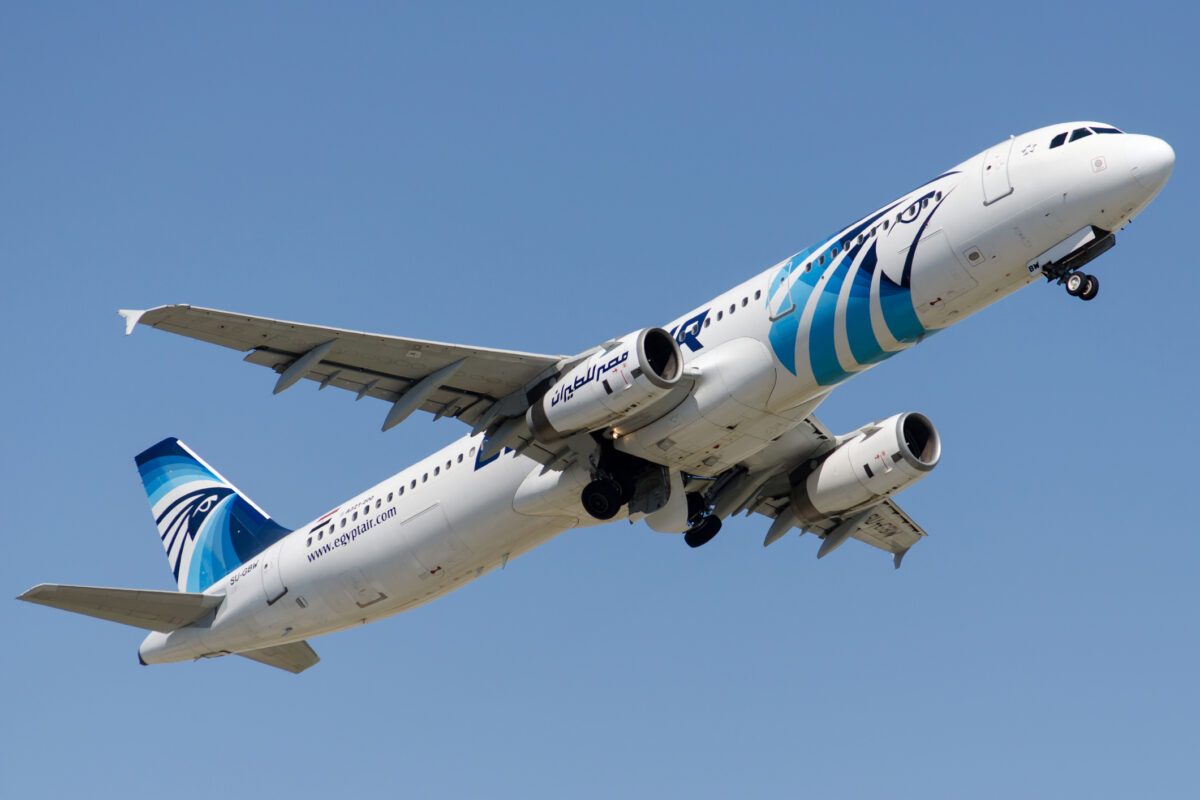
The airline will operate four weekly flights on Tuesdays, Fridays, Saturdays and Sundays. EgyptAir will use a 182-seat Airbus A321neo with business and economy cabins, according to route details published by Stockholm Arlanda operator Swedavia.
The launch will also mark EgyptAir’s arrival at ARN. Starting during the year-end travel period gives the airline access to leisure and visiting-friends-and-relatives demand immediately, while the year-round schedule indicates that EgyptAir is seeking traffic beyond a seasonal winter link.
Read our stories in your inbox
Two aviation newsletters. Zero fluff.
Four Weekly Flights With a Weekend-Heavy Schedule
EgyptAir’s Tuesday, Friday, Saturday and Sunday operation places three of the four weekly flights around the weekend. That pattern supports vacation traffic and shorter stays while retaining a midweek option for passengers whose plans do not align with the Friday-to-Sunday sequence.

At the announced aircraft capacity, EgyptAir will provide 728 seats in each direction per week. If the schedule operates unchanged across a full 52-week year, the route would place about 75,700 two-way seats into the Stockholm-Cairo market.
Four weekly frequencies stop short of the flexibility offered by a daily service, but they give EgyptAir enough scale to offer several connecting banks at CAI and to test demand across the year. The carrier can also adjust capacity through frequency changes without immediately introducing a larger widebody aircraft.
Swedavia has positioned the route as serving a mix of business, leisure and family traffic. The airport operator also expects it to support trade and the movement of higher-value goods, giving EgyptAir an additional source of revenue through the A321neo’s belly capacity.
Cairo Connections Extend the Route Beyond Egypt
The route’s value is not limited to passengers traveling between Sweden and Egypt. Cairo gives EgyptAir a geographically useful transfer point for journeys from Scandinavia to parts of Africa and the Middle East, particularly markets that require a connection from Stockholm.
EgyptAir’s Cairo schedule and network will therefore be central to the route’s performance. Local demand can establish a base for the service, while connecting passengers can help fill flights outside Sweden’s peak holiday periods.
The airline has belonged to Star Alliance since 2008. That gives the Stockholm service relevance to alliance frequent flyers and corporate travelers even though the route will be operated entirely by EgyptAir. Stockholm is also an established Star Alliance market, making the carrier’s alliance membership useful for customer recognition and loyalty benefits at the Swedish end.
Cairo, meanwhile, is EgyptAir’s core connecting hub and the base from which it serves domestic and international destinations. The new flight can carry Sweden-originating passengers into that network while also feeding inbound traffic to Stockholm from markets beyond Egypt.
A321neo Brings a Full Two-Class Cabin
EgyptAir’s selection of the A321neo gives the route more capacity than a smaller narrowbody without the seat risk and operating requirements of a widebody. The aircraft is well suited to a medium-haul sector of this kind, where the airline needs meaningful business-class inventory, connecting capacity and cargo space but does not require twin-aisle volume.

EgyptAir’s published fleet configuration divides the 182 seats into 16 business-class and 166 economy-class positions. Business class is arranged four abreast in a 2-2 layout, while economy uses the standard six-abreast 3-3 arrangement.
The airline received its first A321neo in February 2023, becoming the type’s first African operator. Airbus said at the time that EgyptAir’s aircraft are powered by CFM engines and were intended to increase single-aisle capacity across the carrier’s European, African and Middle Eastern network.
The A321neo’s economics allow EgyptAir to deploy 182 seats while keeping trip costs below those of a widebody. That matters on a four-times-weekly route where demand will vary by day and season. The aircraft also preserves a distinct premium cabin rather than relying on blocked economy seats, giving EgyptAir a product aimed at corporate passengers and higher-yield connecting traffic.
Airbus says the A321neo offers a 20% reduction in fuel consumption and emissions per seat compared with previous-generation competing aircraft. For EgyptAir, the type provides the range and cabin capacity to open thinner European routes from Cairo while maintaining commonality with the wider A320 family.
EgyptAir Joins an Expanding International Market at Arlanda
The announcement comes as Swedavia continues rebuilding and broadening ARN’s international network. Stockholm Arlanda handled more than 24.2 million passengers in 2025 and offered 163 nonstop destinations during the year, including 138 international points.
International traffic has led the airport’s recovery. Swedavia said ARN opened 23 new scheduled routes during 2025, while international passenger numbers exceeded the comparable pre-pandemic monthly level for the first time in October of that year. EgyptAir’s entry continues that emphasis on airlines able to provide both nonstop travel and connections through an overseas hub.
For ARN, Cairo adds a capital-to-capital route with several demand segments rather than a service dependent on one narrow traffic flow. For EgyptAir, Stockholm extends its northern European coverage using an aircraft already configured for exactly this type of medium-haul network expansion.
Bottom Line
EgyptAir’s decision to operate throughout the year is the most significant part of the announcement. A seasonal flight could rely primarily on winter tourism, but a permanent four-weekly schedule requires the carrier to combine local Stockholm-Cairo demand with family travel, corporate accounts and connections beyond CAI. The weekend-heavy timetable provides a practical starting structure without committing the airline to daily capacity.
The A321neo limits the risk of that expansion while still giving EgyptAir a credible premium cabin and more than 75,000 annual two-way seats at the announced frequency. The main indicator to watch will be whether EgyptAir adds a fifth or daily flight after the first full season. Such a move would suggest that Cairo’s connecting network is generating demand in addition to filling the route with Sweden-Egypt traffic.
For Stockholm, the service adds another non-European hub option and brings a new flag carrier to ARN. Its durability will depend less on the December launch period than on performance during the quieter shoulder months, when EgyptAir’s ability to combine several traffic streams will determine whether four weekly flights represent the finished schedule or the foundation for further growth.