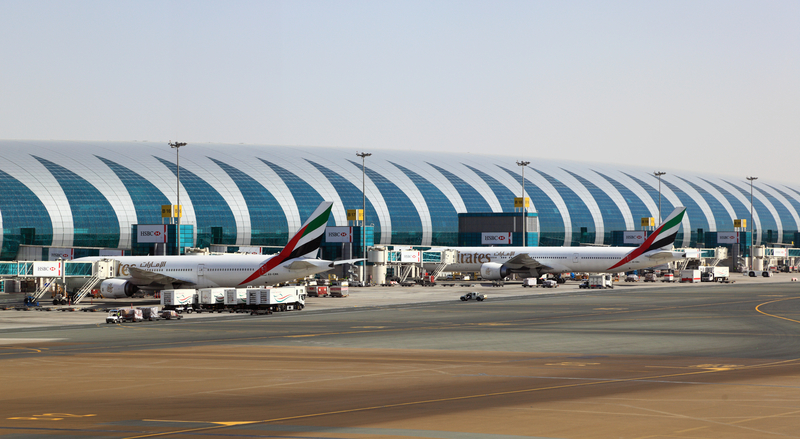
The latest drone-related disruption at Dubai International Airport (DXB) was serious enough on its own: a strike near the airport caused a fire at a fuel tank, forced a temporary suspension of operations, triggered a wave of diversions and turnbacks, and once again pushed one of the world’s most important long-haul hubs into crisis mode.
But one detail needs to be handled carefully. There is public reporting that foreign carriers were barred from landing at DXB after the strike. What is clearly confirmed is narrower: Dubai authorities said flights were suspended, then gradually resumed; Emirates and flydubai restarted limited operations; and a number of foreign airlines independently cancelled or extended suspensions to Dubai. That is not the same thing as a confirmed blanket ban on all foreign carriers.
That distinction matters, especially at an airport like DXB, where wording around access and operating restrictions has immediate implications for airlines, insurers, dispatch teams, and stranded passengers.
Read our stories in your inbox
Two aviation newsletters. Zero fluff.
The Strike Hit Fuel Infrastructure, Not Just The Schedule
The most consequential part of the event is where the drone hit.
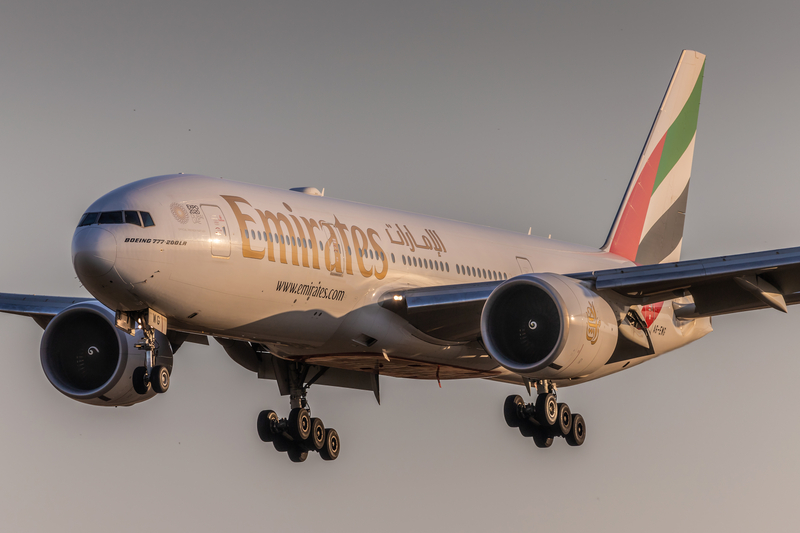
A fire near a fuel tank at or by DXB is not simply another airport-adjacent security scare. Fuel infrastructure is among the most operationally sensitive assets in any airport system. Damage or fire in that area raises immediate questions not only about physical safety, but about fuel supply continuity, aircraft turnaround reliability, tanker movements, and contingency planning for one of the busiest international hubs in the world.
That is why this incident went beyond the usual short-term delay pattern.
Authorities suspended operations and emergency teams moved quickly to bring the fire under control. Later, Dubai’s civil aviation and airport authorities shifted into limited reopening mode. That sequence tells you two things: first, the event was operationally significant enough to stop traffic; second, the airport’s contingency systems were robust enough to start restoring flow once immediate safety risk had eased.
At a hub built around intense aircraft banking and fast widebody turns, even a short disruption can have cascading global effects.
DXB’s Real Vulnerability Is Its Scale
Dubai International Airport (DXB) is not just another busy airport. It is a transfer machine.
The airport’s importance comes not only from local Dubai demand, but from the enormous role it plays in connecting Europe, Asia, Africa, Australasia, and the Middle East through tightly timed long-haul banks, especially for Emirates. When DXB stops, even briefly, the consequences radiate far beyond the UAE.
That is exactly what happened here.
Flights already airborne had to divert to nearby airports such as Al Maktoum International (DWC), Abu Dhabi (AUH), Muscat (MCT), and Jeddah (JED), while others turned back to their origin points. Flightradar24 data indicates 65 flights were diverted to 34 airports, including 22 return-to-origin “flights to nowhere.” That is a remarkable disruption footprint for a single airport event, but it is also completely consistent with how a global hub behaves when its core operation is interrupted.
A point-to-point airport absorbs shock locally. A transfer hub exports it.
Emirates Bore The Brunt — Because That Is How Hub Airlines Work
No carrier was more exposed than Emirates.
That was inevitable. Emirates’ network is built around DXB in a way very few airline systems are built around a single airport. When operations at DXB are suspended, even temporarily, the disruption does not just delay arrivals and departures. It breaks connection chains, strands crews and aircraft out of position, upsets maintenance planning, and leaves large numbers of passengers mid-itinerary without an easy fallback.
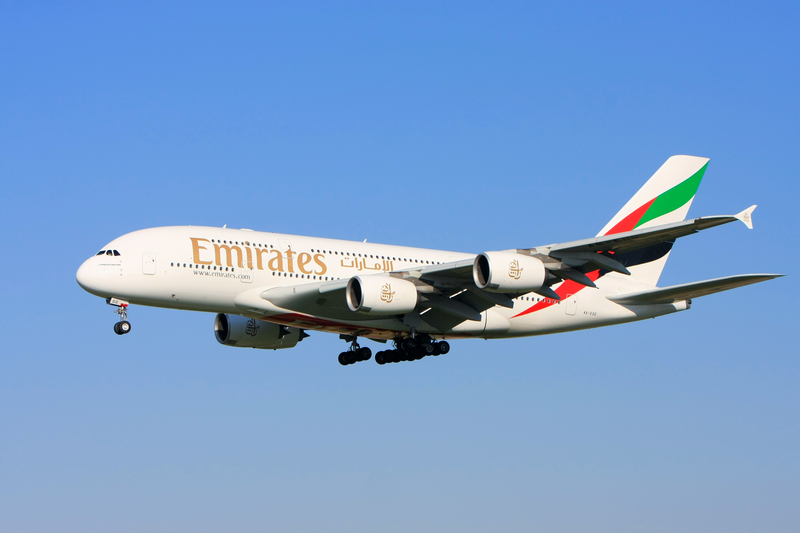
Reports indicate an Emirates Airbus A380 from Paris Charles de Gaulle Airport (CDG) spent over 10 hours in the air before returning to France, while another Emirates flight from Edinburgh turned back after hours airborne. Those are the kinds of “flights to nowhere” that only happen when the destination hub itself becomes unusable or unreliable in real time.
For a carrier like Emirates, this is more than passenger inconvenience. It is structural stress on the operating model.
Foreign Carriers Were Disrupted — But “Barred” Goes Too Far Without Clear Official Confirmation
This is the part that needs the most caution.
There is no doubt that numerous foreign airlines cancelled Dubai services, extended prior suspensions, or declined to operate into DXB after the strike. British Airways, Air India Group, LOT, and others adjusted service based on the broader Gulf security picture and the immediate DXB disruption.
But that is different from a clearly documented, airport-wide rule that foreign carriers were specifically barred while local carriers resumed.
The confirmed public line from Dubai and Reuters-supported reporting is that operations resumed gradually and that Emirates and flydubai restarted limited service. Some flights to selected destinations were restored, and other carriers continued to cancel based on their own risk assessments. So the cleanest and most accurate framing is not “foreign carriers barred,” but rather that DXB reopened only partially, with home carriers visibly leading the initial restart while many foreign operators stayed away or remained suspended.
For an industry audience, that is a much more precise description.
The Fuel-Side Story Is Bigger Than One Burning Tank
There is a second-order effect here that goes well beyond DXB itself.
The Gulf conflict is already tightening fuel markets, pushing up jet-fuel costs, and complicating normal supply assumptions across the region. A fire involving airport fuel infrastructure at DXB therefore lands in the worst possible strategic context. Even if the physical damage is contained, the symbolic effect is powerful. It tells airlines and markets that critical aviation-fuel assets are now within the threat envelope.
That matters because fuel is not just another line item. It is typically one of an airline’s top two costs, and in the current environment it is already under pressure from war-related supply disruption. A strike near fuel storage at a major global hub magnifies those concerns immediately.
So even after the fire is extinguished, the event keeps working its way through the industry via higher caution, tighter routing decisions, disrupted schedules, and more expensive operations.
DXB’s Recovery Matters To The Entire Region
The encouraging part of the story is that Dubai did restore some operational flow relatively quickly.
That says something important about DXB’s resilience. Airports at this scale are built with contingency procedures, technical redundancy, and strong emergency response capabilities for exactly this reason. But resilience should not be mistaken for invulnerability. The fact that the airport was able to restart limited operations does not erase the reality that a relatively low-cost drone was able to trigger a major international aviation disruption.
That is the uncomfortable lesson.
DXB remains one of the world’s best-equipped hubs, yet even it is vulnerable to this style of attack. And when a hub this central is hit, the aviation shockwave stretches from Europe to Asia and Africa within hours.
Bottom Line
The drone strike and fuel-tank fire near Dubai International Airport (DXB) did not just create temporary airport chaos. It exposed how dependent global aviation remains on a handful of concentrated hub operations and how vulnerable even the strongest of them are to low-cost asymmetric attacks.
DXB was temporarily shut, then gradually reopened. Emirates and flydubai restarted limited service, while many foreign airlines either diverted, cancelled, or extended suspensions. Flightradar24 data shows 65 diversions to 34 airports, including 22 return-to-origin flights, underlining the scale of the disruption.
The one point that should be stated carefully is the “foreign carriers barred” claim. The current confirmed picture supports a limited, phased reopening and widespread foreign-airline disruption, but not a clearly documented blanket ban on foreign carriers as such.
That still leaves the core conclusion unchanged: a strike near fuel infrastructure at DXB is one of the most serious aviation incidents the Gulf has seen in this conflict, and its effects will be felt far beyond Dubai itself.
Keep reading FlyMag
Get the Daily Brief in the morning or the Route Watch weekly recap on Fridays. Or both.