With Western sanctions still restricting access to new aircraft, parts, and OEM support, Russian airlines are facing growing strain in keeping predominantly Airbus and Boeing fleets serviceable. As a stopgap, carriers have increasingly leaned on older airframes—both Soviet-era and Western-built—where restoration is possible using existing inventories and domestic maintenance capability.
A Fleet Problem, Not a Growth Story
Most of Russia’s active commercial fleet is made up of foreign-made aircraft, and the disruption to spares and maintenance pipelines has made long-term reliability harder to guarantee. In response, operators have already brought older types back into use, including Tu-204/214s, Il-96s, and An-148s, as available capacity becomes more valuable than efficiency.
Rossiya Eyes Ex-Transaero 747-400s
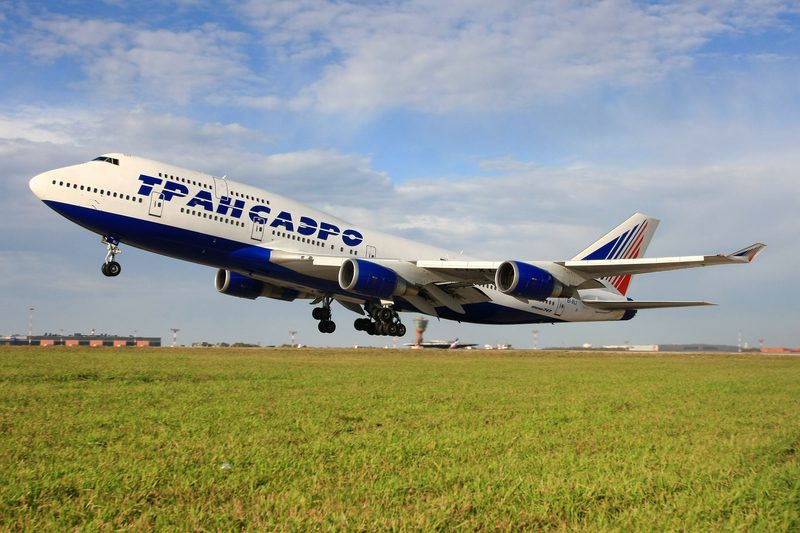
Recent reports indicate Rossiya Airlines could return as many as nine Boeing 747-400s to service—aircraft inherited after Transaero’s collapse and stored for years. The strategy appears driven by necessity: widebody lift remains useful, but sourcing newer aircraft or sustaining modern fleets at scale is increasingly difficult under ongoing restrictions.
Read our stories in your inbox
Two aviation newsletters. Zero fluff.
The Transaero “Boneyard” and the Long Shadow of Bankruptcy
Transaero was Russia’s first Boeing 747 operator and relied on the type as a long-haul workhorse. The airline mainly acquired secondhand 747 variants rather than new-builds, and its later 747-8 ambitions ended with bankruptcy. Those undelivered aircraft were ultimately repurposed outside Russia rather than joining its commercial fleet.
Domestic Replacements Are Still Not Ready at Scale
Russia’s long-term plan hinges on domestically produced airliners, but programs such as the MC-21 and an updated Superjet variant have faced delays, especially after replacing Western engines, avionics, and systems with Russian alternatives. Both remain in testing and certification phases, limiting their ability to relieve near-term fleet pressure.
Bottom Line
Reactivating stored Boeing 747-400s signals how acute Russia’s fleet constraints have become. Until domestic programs scale up and supply-chain limitations ease, airlines appear increasingly likely to rely on older aircraft—accepting higher operating costs and complexity in exchange for continued capacity.

Keep reading FlyMag
Get the Daily Brief in the morning or the Route Watch weekly recap on Fridays. Or both.
Share this story
Composed for each network — click to share, or copy the composed text for your own timing.