Seventeen people died when a Tracep Congo Aviation Let L-410 UVP crashed at Kenge in the Democratic Republic of the Congo on Friday, September 25, according to provincial authorities.
The revised count comprises 16 adults and a baby. Officials initially reported 13 fatalities while emergency personnel were still working around the burned wreckage, but raised the toll after the fire had been extinguished and the site could be examined more closely.
The final occupancy figure released by the authorities was 13 passengers and four crew members. Nobody aboard survived, and no casualties were reported on the ground.
Read our stories in your inbox
Two aviation newsletters. Zero fluff.
Aircraft Was Returning to Kinshasa
The aircraft, registered 9S-GUC, was operating from Kikwit (KKW) to Kinshasa Ndolo (NLO) when it came down in the Manzawu area of Kenge, the capital of Kwango province. Local officials placed the accident at approximately 2:05 p.m. local time, shortly after the aircraft left Kikwit.
Witness accounts supplied to provincial authorities described the Let circling Kenge as its crew apparently searched for a place to land. The aircraft then struck an unoccupied property and caught fire. Those observations have not yet been adopted as findings by investigators, and no official cause has been established.
The Bureau Permanent d’Enquêtes d’Accidents et Incidents d’Aviation, the DRC’s safety investigation authority, identified the aircraft as a Let L-410 UVP operated by Tracep Congo Aviation and dispatched investigators to Kenge on the day of the crash.
The BPEA instructed the operator to submit formal notification of the accident, the passenger manifest and the name of the aircraft commander. It also directed civil and military authorities to secure the site and prevent the movement or removal of wreckage and other evidence.
Those preservation requirements follow the DRC’s RACD 13 accident-investigation regulations, which set out the BPEA’s authority to collect records, examine wreckage and control access to evidence. The investigation is intended to determine the circumstances and identify safety lessons rather than assign criminal or civil liability.
TRACEP Let L-410 crashes in Kenge, DRC — 16 people reportedly killed
More details are emerging following the crash of a TRACEP Let L-410 in the Kenge area of the Democratic Republic of the Congo.
According to the Chairman of the Board of Régie des Voies Aériennes (RVA), the… pic.twitter.com/uMb5Htf6aM
— FL360aero (@fl360aero) September 25, 2026
Senior Military Judicial Officials Among Victims
Two senior figures in the DRC’s military justice system were among those killed. The Armed Forces of the Democratic Republic of the Congo identified them as Lieutenant General Joseph Mutombo Katalayi Tiende, first president of the High Military Court, and Lieutenant General Lucien-René Likulia Bakumi, auditor general of the armed forces.
The delegation was returning from an official assignment in Kikwit. Military personnel accounted for most of the passengers, while the remaining occupants included civilians and the four-person operating crew.
The discrepancy between the initial manifest-based figure and the bodies recovered is likely to be an early focus for investigators. Establishing exactly who boarded, where they joined the flight and how the load was documented will be necessary before the BPEA can reconstruct the aircraft’s weight, balance and operational history for the sector.
Tracep Congo Aviation Suspended
On Saturday, September 26, Transport Minister Jean-Pierre Bemba ordered the immediate withdrawal of Tracep Congo Aviation’s air operator certificate, suspending the company’s flights throughout the DRC while the investigation proceeds. The Ministry of Transport said further information would be released as investigators advanced their work.
The action followed two serious accidents involving Tracep-operated L-410s in about two months. On July 24, another aircraft, registered 7Q-GMR, crashed at Katchungu after encountering trouble during a domestic operation. The co-pilot died, while the captain and loadmaster survived. The BPEA had already begun taking evidence from the operator and crew in that investigation.
A Regional Workhorse
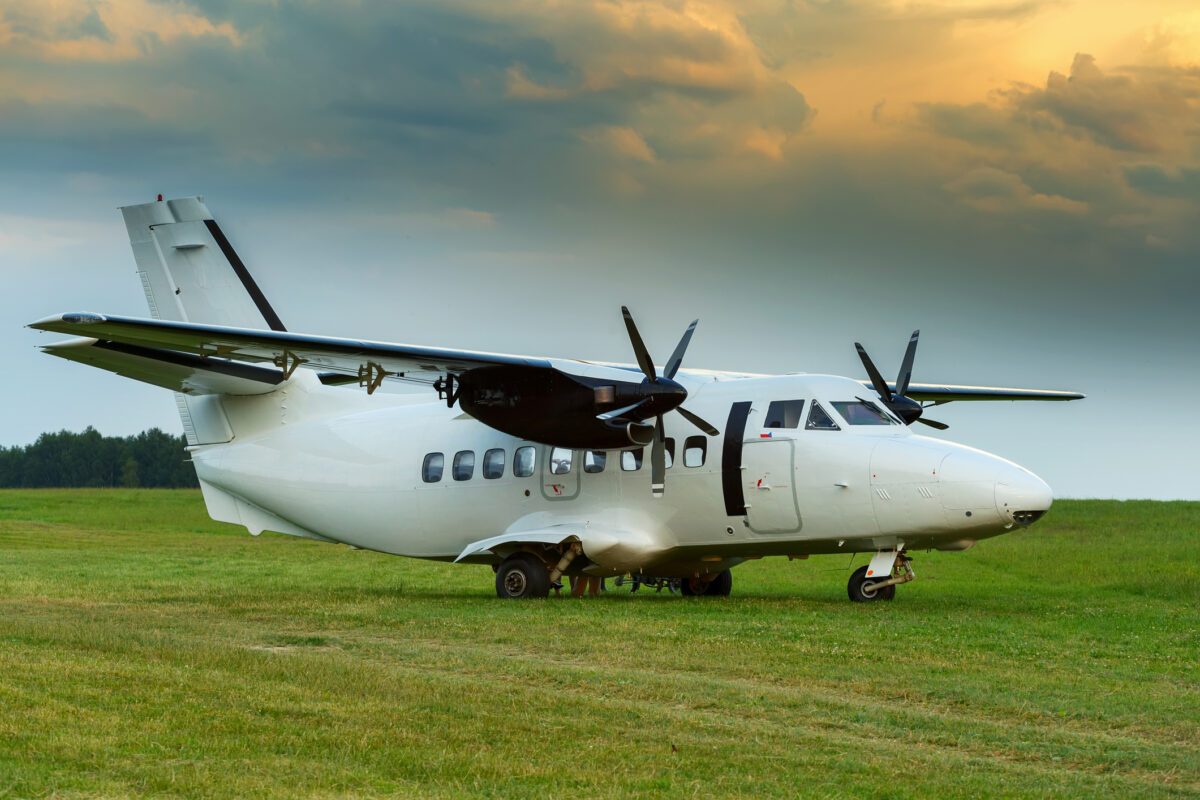
The L-410 is a twin-engine turboprop designed for regional services, charter flying and mixed passenger-cargo work from relatively short or minimally developed airfields. Those characteristics have made the type common on domestic networks where runway infrastructure and ground transport are limited.
Current versions are offered with seating for up to 19 passengers. The manufacturer lists a landing distance of about 500 meters and a maximum range of roughly 810 nautical miles for the present production model, although specifications vary by version, weight and operating conditions. The manufacturer’s current L-410 specifications also emphasize the aircraft’s ability to change between passenger, freight, medical and special-mission layouts.
The aircraft involved at Kenge was an earlier L-410 UVP rather than the current-production UVP-E20. Its destruction by fire will complicate the examination, placing added importance on any surviving flight records, maintenance documentation, operational paperwork and air traffic communications.
Bottom Line
The immediate regulatory consequence falls on Tracep Congo Aviation, which has lost authority to fly while two fatal L-410 accidents remain under investigation. The suspension removes an operator from a domestic market that depends heavily on small turboprops to connect cities beyond the country’s limited paved-road network. Any prolonged grounding will affect charter capacity as well as passenger and government transport in the regions Tracep served.
The larger issue for investigators is the integrity of the operational record. A difference between the number initially listed and the number of victims recovered makes the passenger manifest, boarding records, load sheet and weight-and-balance calculation central evidence rather than administrative details. The BPEA will also need to reconcile the flight’s stated itinerary, the crew’s decision to seek a landing near Kenge and the condition of the aircraft before departure from Kikwit.
What follows will test both the operator and the DRC’s aviation oversight system. The preliminary investigation should establish the verified sequence of flight, the aircraft’s maintenance status and whether usable recorder data survived the post-impact fire. Until then, accounts of a technical problem or attempted emergency landing remain observations, not findings.
Keep reading FlyMag
Get the Daily Brief in the morning or the Route Watch weekly recap on Fridays. Or both.