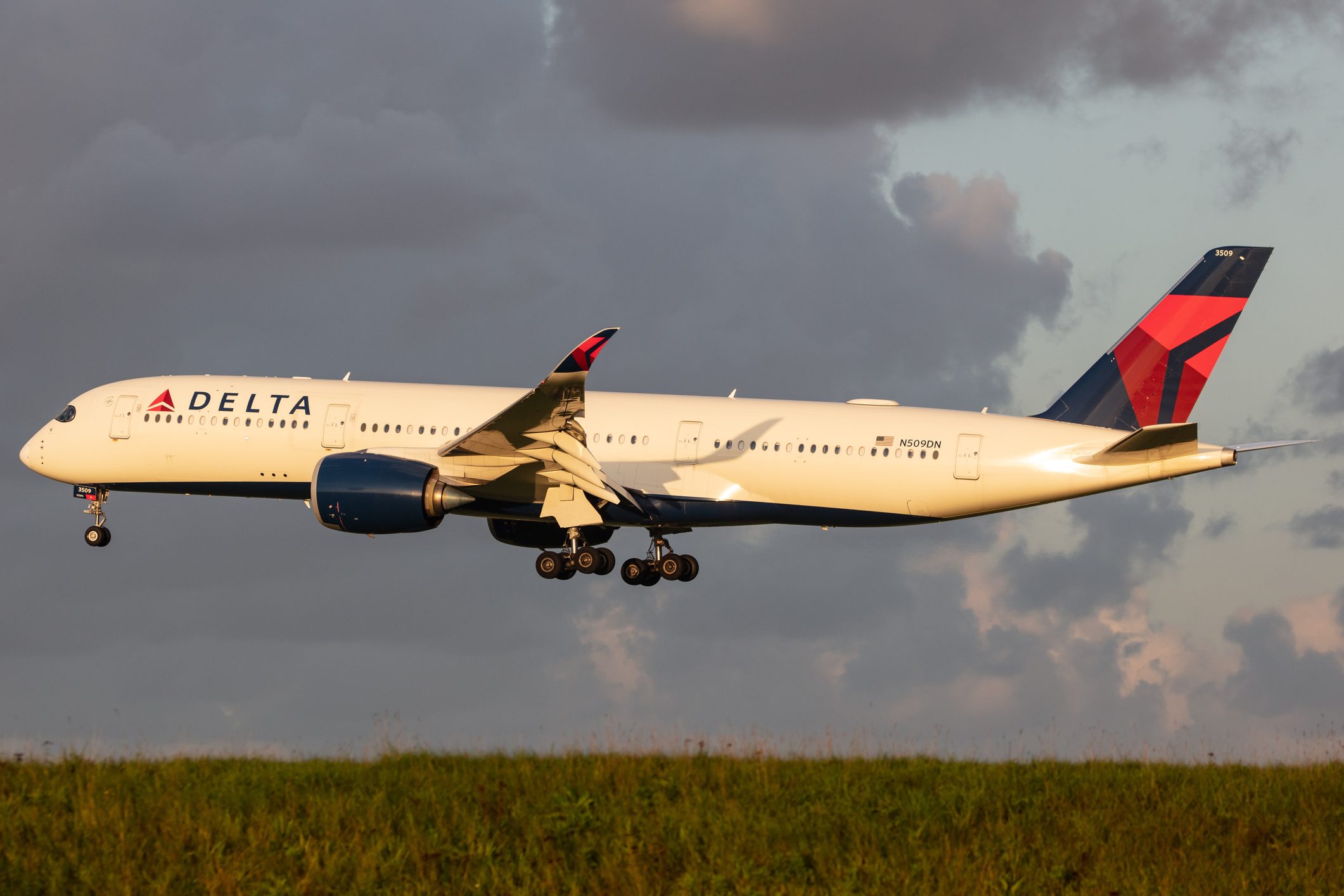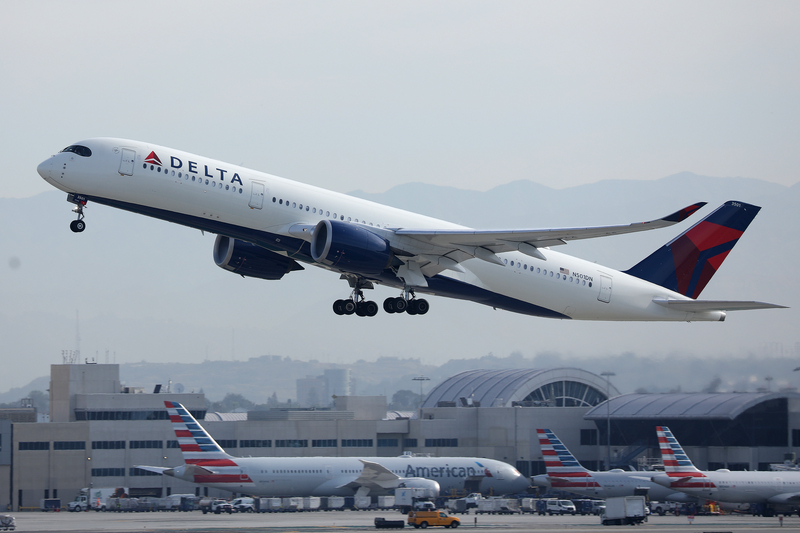
Delta Air Lines appears to be planning a return to the Los Angeles International Airport (LAX) to London Heathrow Airport (LHR) market, and if it does come back, the route will look very different from the one it dropped in 2024.

According to Delta Chief Commercial Officer Joe Esposito, the airline expects to restore its own LAX–Heathrow service “in a few years” using incoming aircraft with a cabin that will be about 70% premium and include roughly 50 to 60 Delta One seats.
For aviation readers, that is the story. This is not just about reviving a transatlantic route. It is about Delta trying to make one of the world’s toughest long-haul markets work by changing the economics of the airplane itself.
Read our stories in your inbox
Two aviation newsletters. Zero fluff.
Delta Is Not Coming Back With The Old Formula
Delta ended its own LAX–Heathrow service in May 2024, leaving the market to joint-venture partner Virgin Atlantic while still participating commercially in the corridor.
At the time, that made sense. LAX–LHR was already crowded, with British Airways, American Airlines, United, and Virgin Atlantic all competing for traffic. In that kind of market, simply adding another standard widebody does not always improve the business case, even if the route itself is strategically important.
What seems to have changed is not the market, but Delta’s view of how to serve it.
The New Aircraft Are The Key
Esposito’s comments strongly suggest Delta’s future return to Heathrow from Los Angeles is tied to the arrival of its new-generation long-haul aircraft, especially the Airbus A350-1000.
That matters because the A350-1000 gives Delta the chance to build a much more premium-heavy product than the kind of aircraft mix it used on the route before. If the cabin really is around 70% premium, then this is not a volume play. It is a yield play.
In other words, Delta is not planning to win LAX–LHR by flooding the market with more economy seats. It is trying to win by putting more high-value seats on the route and using the aircraft as a premium revenue machine.
LAX–LHR Is Too Competitive To Come Back Lightly
That is why the route matters so much.
Los Angeles to Heathrow is one of the most competitive long-haul city pairs in the world. It is premium-heavy, high-profile, and strategically important, but it is also extremely difficult to dominate because so many airlines already have strong reasons to be there.
Delta knows this. The airline already has access to the route through Virgin Atlantic, so if it puts its own aircraft back into the market, it will only do so if it believes its own metal can earn more than leaving all the nonstop flying to its partner.
That makes the planned return much more meaningful than a simple route restoration.

The Premium Strategy Fits Delta’s Broader Direction
The proposed LAX–Heathrow relaunch also fits neatly into Delta’s wider strategy.
The airline has been moving steadily toward a more premium long-haul model, with more Delta One suites, more Delta Premium Select, more lounge investment, and a stronger focus on customers willing to pay at the top end of the cabin. Esposito has also indicated that half of Delta’s long-haul fleet already has suite-style products with sliding doors, and that the airline intends to finish that transition over the next five to six years.
That makes a 70%-premium LAX–LHR aircraft sound much less like an isolated idea and much more like the logical next step.
Los Angeles Is One Of Delta’s Most Important Battlegrounds
This route also matters because of where it sits.
Los Angeles is one of Delta’s most strategically sensitive hubs. It is a major corporate market, one of the largest premium travel markets in the United States, and a place where Delta is in constant competition with United, American, British Airways, Cathay Pacific, and others across both transatlantic and transpacific flying.
That means any move Delta makes at LAX carries extra weight. The airline is not just managing one route. It is defending and strengthening its position in one of the country’s fiercest premium aviation battlegrounds.
Delta’s LAX Strategy Is Built Around Premium And Asia
Esposito’s broader comments make clear that LAX remains central to Delta’s international ambitions.
The airline is already pushing more long-haul growth from Los Angeles, especially into Asia, with Hong Kong coming back and Shanghai being strengthened. That matters because it shows Delta still sees Los Angeles as one of its most important global gateways, even with Seattle also serving as a major West Coast international hub.
In that context, bringing back London becomes less surprising. If Delta wants LAX to remain a true premium long-haul stronghold, Heathrow is one of the routes it eventually has to fly again on its own terms.
Virgin Atlantic’s Presence Changes The Equation
One reason the timing is so interesting is that Virgin Atlantic already serves the route multiple times daily.
That means Delta is not trying to open a market from scratch. It is considering whether adding its own aircraft back into a joint-venture route can improve the overall position of the partnership — or at least improve Delta’s own product control at the top end of the market.
That is an important distinction. Delta’s return would not be about presence alone. It would be about how much of the premium demand it wants to carry under its own brand and product.
Bottom Line
Delta appears serious about bringing Los Angeles–London Heathrow back in the next few years, but not with the kind of aircraft or cabin that served the route before. The plan now is to use new long-haul jets with an extremely premium-heavy layout, including 50 to 60 Delta One seats and a cabin that is about 70% premium overall.
That tells you everything you need to know about the strategy. Delta is not looking at LAX–LHR as just another transatlantic route. It is looking at it as a premium battlefield, and if it returns, it wants to do so with an airplane built to win on yield, not just on size.
Keep reading FlyMag
Get the Daily Brief in the morning or the Route Watch weekly recap on Fridays. Or both.