A powerful earthquake sequence in northern Venezuela has damaged terminal infrastructure at Simón Bolívar International Airport in Maiquetía, the main airport serving Caracas and operating under the IATA code CCS.
Video from inside Simón Bolívar International Airport (CCS) shows ceiling panels and overhead fixtures falling into a public passenger area, with dust spreading through the terminal as travelers and airport staff moved away from the affected zone. The airport, also identified by its ICAO code SVMI, sits in La Guaira state near the Caribbean coast and remains Venezuela’s most important international air gateway.
The damage followed two major earthquakes on June 24, now listed by the U.S. Geological Survey as a magnitude 7.2 event followed seconds later by a magnitude 7.5 event in northern Venezuela. The shallow nature of the shaking increased the risk of serious structural damage, particularly across Caracas, La Guaira, and communities closer to the epicentral area.
Read our stories in your inbox
Two aviation newsletters. Zero fluff.
Serious Terminal Damage Reported at Caracas (CCS)
The visible damage at Caracas/Maiquetía (CCS) appears concentrated in a passenger-processing area rather than on the airfield itself. Footage shows sections of suspended ceiling material, damaged lighting, hanging electrical components, debris across the floor, and passengers leaving the affected area.
That distinction matters. A damaged terminal does not automatically mean that runways, taxiways, aprons, fuel systems, navigation aids, or the control tower are unusable. However, for an airport such as CCS, even terminal-side damage can stop operations if it affects passenger flows, security screening, baggage systems, emergency exits, power distribution, fire-safety systems, or the structural integrity of public areas.
Local reporting, citing Venezuelan officials, said the airport was closed following the earthquake. Copa Airlines also canceled Panama City (PTY)–Caracas (CCS) flights scheduled for the night of June 24 and the following day, while LATAM Airlines Colombia introduced travel flexibility for passengers affected by the emergency. Wingo’s Bogotá (BOG)–Caracas (CCS) operation was also reported canceled, and a Turkish Airlines flight bound for Venezuela was diverted to Panama.
For airlines and airport operators, the immediate question is not only whether aircraft can physically land at CCS. The larger operational question is whether passengers can be processed safely through the terminal, whether sterile areas can be secured, whether boarding bridges and gate rooms are usable, and whether emergency-response access remains available.
Why Maiquetía Matters to Venezuela’s Air Network
Caracas/Maiquetía (CCS) is more than the capital’s airport. It is Venezuela’s primary international gateway and the airport through which much of the country’s long-haul, regional, diplomatic, business, and diaspora traffic flows.
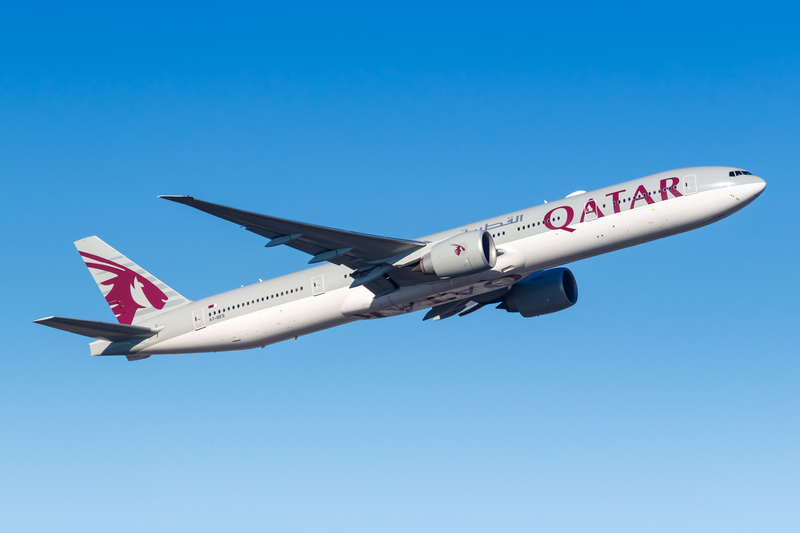
The airport has two long paved runways, with published runway lengths of roughly 11,483 feet and 9,930 feet. That gives CCS the runway capability to handle everything from narrowbody regional aircraft to widebody long-haul jets, including the Boeing 787-9 Dreamliner, Airbus A330-family aircraft, Boeing 777-family aircraft, and other high-capacity international types when scheduled or charter operations require them.
That runway capability is one reason CCS has remained central to Venezuela’s reconnection with international markets. The airport’s location near Caracas gives it strong origin-and-destination demand, but its importance is also political and economic. When carriers restore Caracas (CCS), they are not simply adding another dot to a route map; they are re-entering a market that has experienced years of service reductions, regulatory uncertainty, security concerns, and airspace disruption.
Reopening Momentum Now Faces a New Test
The timing of the damage is especially significant because Caracas (CCS) had only recently begun rebuilding international connectivity.
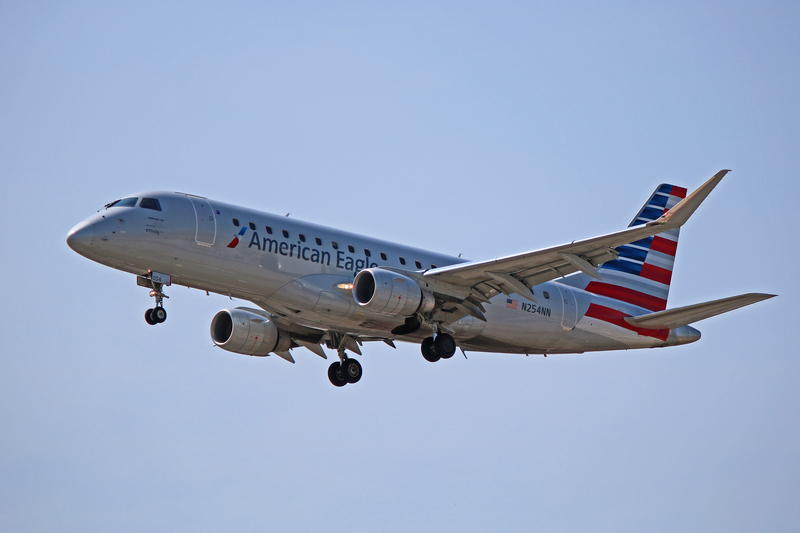
American Airlines resumed Miami (MIA)–Caracas (CCS) service on April 30, marking the first nonstop U.S.–Venezuela commercial passenger service in seven years. The route is operated by Envoy Air using the Embraer 175, a 76-seat regional jet configured with a two-class cabin. For American, the E175 is a logical aircraft for a cautious market restart: it offers premium seating and mainline-style onboard amenities while keeping capacity lower than a Boeing 737 or Airbus A320.
American later added a second daily MIA–CCS frequency, making the route a meaningful bridge between South Florida and Venezuela. Miami International Airport (MIA) is already one of the strongest U.S. gateways to Latin America and the Caribbean, and the Venezuelan diaspora in South Florida gives the route a traffic base beyond ordinary business demand.
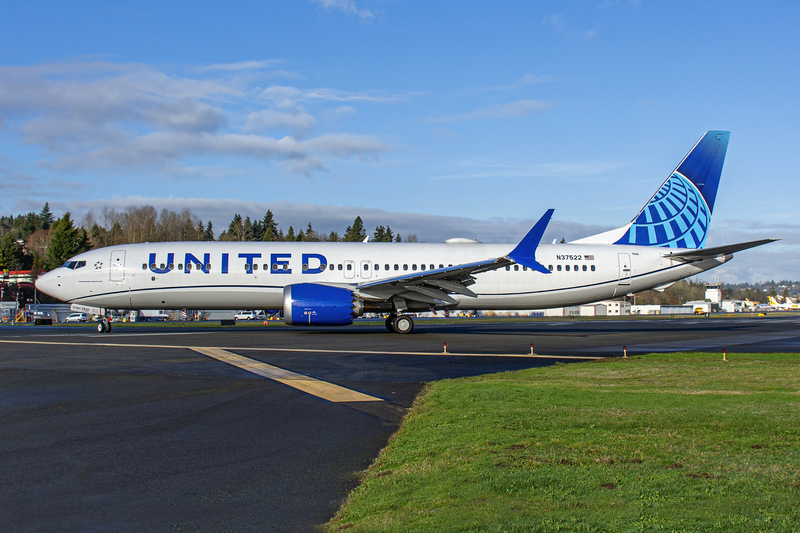
United Airlines has also announced plans to resume daily Houston Intercontinental (IAH)–Caracas (CCS) service on August 11, using the Boeing 737 MAX 8. The MAX 8 gives United greater range, fuel efficiency, and capacity than the regional aircraft used on American’s Miami route, while linking Caracas with United’s Houston (IAH) hub and its broader Latin America, energy-sector, and connecting traffic network.
A prolonged closure or capacity restriction at CCS would therefore affect more than local travel. It could disrupt a fragile U.S.–Venezuela aviation reopening that airlines, regulators, airport authorities, and travelers have only just started to rebuild.
Regional and Long-Haul Carriers Also Exposed
The impact extends beyond U.S. service. Avianca resumed daily Bogotá (BOG)–Caracas (CCS) flights in February after reviewing operational and aviation safety conditions with authorities. The route uses Airbus A320-family equipment, which is well suited to high-frequency regional markets and allows Avianca to connect CCS passengers through Bogotá (BOG) to its wider network across the Americas.
Turkish Airlines has also been rebuilding Istanbul (IST)–Caracas (CCS) service with the Boeing 787-9, one of the most capable long-haul aircraft in the market. The 787-9 is important because it can operate long sectors efficiently while carrying a mix of passenger and belly-cargo traffic, giving Caracas a direct link to Istanbul (IST) and onward connections across Europe, the Middle East, Asia, and Africa.
Air Europa’s Madrid (MAD)–Caracas (CCS) flying is similarly important for Europe–Venezuela connectivity. Its Boeing 787-9 Dreamliner operations give the route long-haul efficiency and cargo capacity, while maintaining a direct link between Spain and Venezuela’s large family, business, and cultural travel markets.
Any extended disruption at CCS would force airlines to make difficult choices. Some may cancel flights outright. Others may hold aircraft, reroute passengers through alternate Venezuelan airports, adjust schedules, or temporarily reduce frequencies until the terminal, airside systems, and support infrastructure are cleared for safe use.
What Investigators and Airport Engineers Will Need to Assess
After an earthquake of this size, the airport’s return to normal service depends on far more than clearing debris from the terminal floor. Engineers and aviation authorities will need to examine the structural frame, roof systems, suspended ceilings, electrical systems, water lines, fire-suppression systems, elevators, escalators, boarding bridges, baggage conveyors, and public-address systems.
Airside checks are just as important. Runways and taxiways must be inspected for cracking, pavement displacement, lighting damage, drainage issues, and foreign object debris. Aprons and stands need assessment before aircraft can safely park, load, refuel, and push back. Navigation and communications systems also require verification, including tower operations, approach aids, radio systems, backup power, and emergency-response coordination.
For airlines, the practical threshold is simple: they need confidence that an aircraft can arrive, passengers can be processed, crews can be supported, ground handling can function, and a departure can operate without exposing people or equipment to unacceptable risk.
Until that happens, travelers booked through Caracas/Maiquetía (CCS) should check directly with their airline before going to the airport. Passengers should also watch for waiver policies, rerouting options, and possible changes involving nearby or alternate Venezuelan airports.
Bottom Line
The earthquake damage at Caracas/Maiquetía (CCS) is more than a terminal maintenance problem. It strikes at the center of Venezuela’s aviation recovery just as international carriers were beginning to rebuild confidence in the market.
The visible damage appears to be terminal-side, but the operational impact is much broader. Passenger processing, safety systems, airside infrastructure, utilities, and emergency access all need to be assessed before CCS can return to normal operations.
For American, United, Avianca, Copa, Turkish Airlines, Air Europa, LATAM, Wingo, and other carriers serving or planning to serve Caracas (CCS), the next few days will be critical. If inspections show that the airfield and terminal systems can be stabilized quickly, the disruption may be short-lived. If the damage extends deeper into the airport’s infrastructure, the setback could slow one of Latin America’s most closely watched aviation reopenings.