British Airways is moving quickly to strengthen its position in the interior United States, adding substantial capacity at two airports whose long-haul networks were reshaped by the retreat of U.S. legacy hubs.

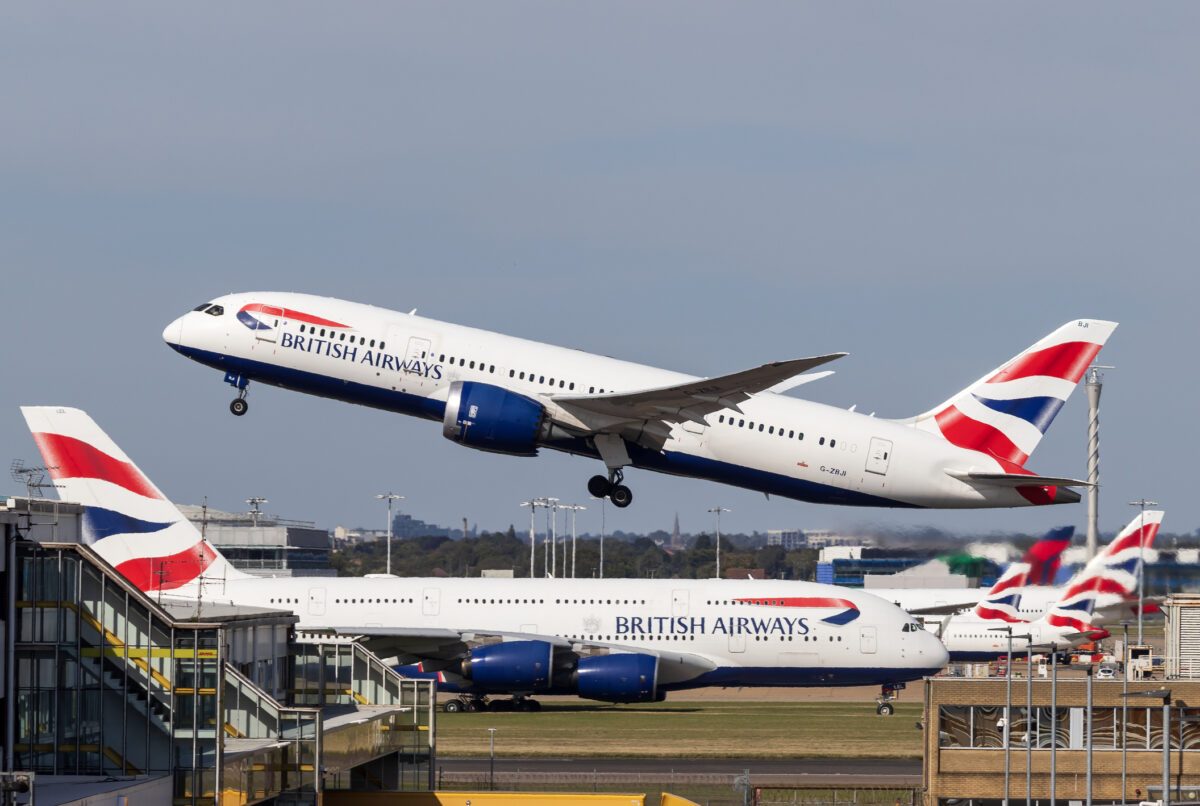
The airline launched service between St. Louis (STL) and London Heathrow (LHR) on April 19, 2026, initially operating four times per week. Five months later, it confirmed that the route would grow to five weekly flights from March 28, 2027, then operate daily from April 19 through June 28 and again from September 6 through October 30.
That schedule will add more than 35,400 seats and represents an 80% increase over the route’s first season, according to the airport’s September 22 announcement.
Read our stories in your inbox
Two aviation newsletters. Zero fluff.
British Airways is making a parallel move at Cincinnati (CVG), where it will increase Heathrow service from five to six flights per week beginning March 28, 2027. The route becomes daily between April 22 and June 24 and again from September 9 through October 28.
Taken together, the increases show a network plan extending beyond an experimental seasonal flight. British Airways is establishing a stronger presence in regional markets where passengers previously had to connect through a major U.S. coastal or domestic hub to reach London.

London Returns to a Former TWA Stronghold
The arrival of British Airways restored nonstop U.K. service to St. Louis for the first time in decades. The inaugural Heathrow flight landed at STL at approximately 7:30 p.m. on April 19, opening British Airways’ 27th U.S. gateway.
The historical contrast is significant. St. Louis was once one of the largest connecting complexes in the U.S., built around TWA’s extensive domestic network and long-haul flights to cities including London, Paris and Frankfurt.
American Airlines acquired TWA in 2001, shortly before the September 11 attacks accelerated a broad contraction in U.S. aviation. An STL aviation forecast records how American subsequently consolidated its mid-continent connecting operation around Chicago and Dallas-Fort Worth, completing its St. Louis hub restructuring in November 2003.

The result was unusually severe for STL. Annual enplanements fell from 15.3 million in 2000 to 6.7 million in 2004, while connecting passengers dropped from 53% to 21% of the airport’s traffic. American continued serving St. Louis, but the network architecture that had supported extensive international flying was gone.
British Airways is not attempting to recreate that hub. Its flight instead depends on St. Louis-area demand, traffic drawn from the wider Midwest and connections over Heathrow. The distinction matters: STL may be a non-hub station in the British Airways system, but the service is not purely point-to-point in network terms. Heathrow supplies the onward destinations that make the route useful beyond London.
Cincinnati Shows the Model Can Be Repeated
Cincinnati offers the clearest comparison. British Airways announced the CVG route in November 2022 and began flying in June 2023, initially offering five weekly summer services and four during winter.
The airline has expanded steadily rather than simply adding more seats through a larger aircraft. Its summer 2027 schedule brings CVG to six flights per week for the full season and daily operation for more than four months.
Frequency is particularly important in a market expected to generate corporate and premium traffic. A daily service removes day-of-week constraints, improves connection options at Heathrow and makes the route more practical for shorter business trips. It also reduces the disruption created when a passenger misses one of only four or five weekly departures.
Pittsburgh (PIT) provided an earlier version of the strategy. British Airways returned there in 2019 after a 20-year absence, then restarted the route in June 2022 following its pandemic suspension. The carrier subsequently increased Pittsburgh to six weekly flights, building another Heathrow link at a former U.S. legacy hub.
St. Louis, Cincinnati and Pittsburgh are different markets, but they share useful characteristics for British Airways: substantial regional catchment areas, established corporate demand and limited nonstop access to Europe. They also allow the airline to sell a one-stop itinerary across much of Europe, Africa, the Middle East and South Asia without routing the passenger through a U.S. gateway first.
The Boeing 787-8 Changes the Route Equation
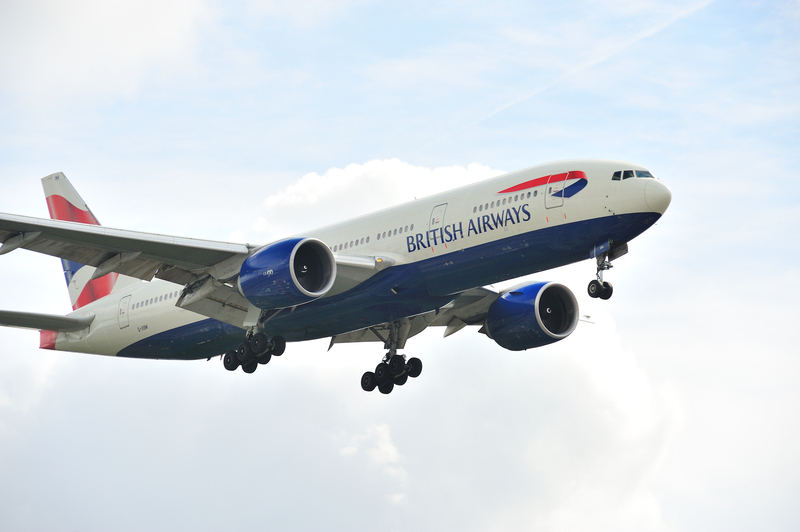
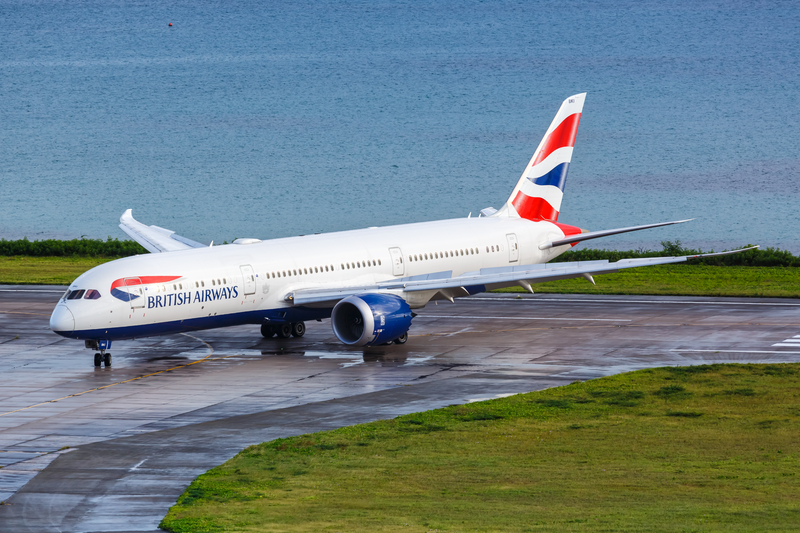
The Boeing 787-8 is central to the strategy. British Airways launched St. Louis with the type and also uses its 787 fleet at Cincinnati and Pittsburgh.
British Airways lists its Boeing 787-8 with 214 seats across three cabins: Club World business class, World Traveller Plus premium economy and World Traveller economy. The airline is fitting Club Suite to the type, although the enclosed direct-aisle-access product is available only on selected flights while the fleet transition continues.
That capacity is well suited to a long, relatively thin route. The aircraft offers enough premium seating to capture corporate revenue while avoiding the volume required to fill a larger Boeing 777. Its range is far beyond what is necessary for the Midwest-Heathrow sectors, leaving the airline with a capable long-haul aircraft that can operate the routes without making them dependent on a large connecting operation at the U.S. end.
The 787 also gives British Airways room to build frequency before gauge. Moving from four weekly flights to daily service is commercially more useful in these markets than retaining a sparse schedule and substituting a substantially larger aircraft.
A Different Kind of Hub Strategy
British Airways’ expansion does not reverse the consolidation that followed 9/11. Instead, it exploits the geography that consolidation created.
American, Delta and United concentrate much of their transatlantic capacity at their largest U.S. hubs. British Airways can approach the same market from the opposite direction, linking a regional U.S. airport directly to its primary hub at Heathrow. The U.S. city does not need to support onward domestic banks because the connection opportunity sits at the European end of the route.
The Atlantic Joint Business with American Airlines, Iberia, Finnair, Aer Lingus and LEVEL further broadens the commercial reach of the flights. American may no longer operate a St. Louis hub, but its domestic network and sales relationship with British Airways still support the Heathrow service.
What appears on a route map as a standalone St. Louis-London flight is therefore part of a larger network proposition. The passenger avoids Chicago, Dallas, New York or another U.S. gateway, while British Airways captures the long-haul sector and feeds its Heathrow schedule.
Bottom Line
The rapid St. Louis expansion is the clearest evidence that British Airways sees more than short-lived novelty in these interior markets. Committing to daily flying during large portions of the second season gives corporate travel programs, tour operators and connecting passengers a schedule they can use consistently. Cincinnati’s simultaneous move to daily service shows that the approach is repeatable rather than unique to one city.
The principal winners are airports that lost hub status but retained sizeable metropolitan economies. They gain nonstop international access without rebuilding domestic connecting banks, while British Airways gains passengers who might otherwise travel over a U.S. legacy hub. The 787-8 makes that exchange possible at a manageable seat count, with enough premium capacity to support the economics of a long-haul route.
The next test is whether St. Louis develops into a year-round service and whether daily summer flying becomes permanent at STL and CVG. Further expansion would strengthen the case for British Airways to examine other former hub markets where local demand is substantial but nonstop European capacity remains limited.
Keep reading FlyMag
Get the Daily Brief in the morning or the Route Watch weekly recap on Fridays. Or both.