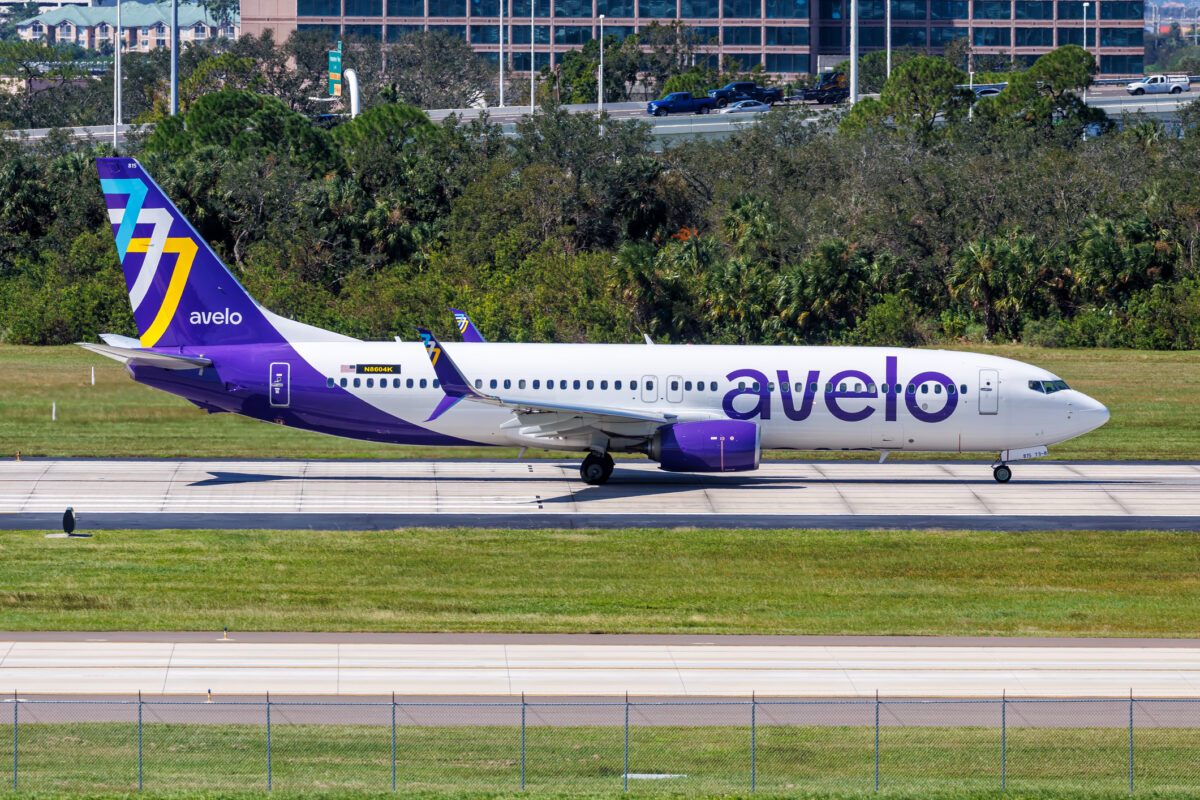
Avelo Airlines will add four routes and a third based Boeing 737-800 at McKinney (DTX), substantially enlarging its North Texas operation before the airport’s first scheduled passenger flight has departed.

The carrier will begin service to Denver (DEN) and Atlanta (ATL) on December 16, 2026. Both routes will operate four times weekly on Mondays, Wednesdays, Fridays and Saturdays.
Flights to New Orleans (MSY) and Nashville (BNA) will follow on December 17, each operating twice weekly on Thursdays and Sundays. The four additions bring Avelo’s planned DTX network to nine destinations.
Read our stories in your inbox
Two aviation newsletters. Zero fluff.
In its September 24 route announcement, Avelo said the expansion reflects an unusually strong response to the McKinney launch. The airline has not yet begun flying from DTX; its first service is scheduled for November 11.
McKinney Schedule Grows to 32 Weekly Round Trips
The December expansion adds 12 weekly round trips to Avelo’s schedule: four each to Atlanta and Denver, and two each to Nashville and New Orleans. The new routes will provide about 4,416 weekly seats in both directions when operated with the 184-seat aircraft assigned to the base.
Avelo’s original McKinney schedule, announced in June, comprises Las Vegas (LAS) and four Florida markets. Fort Myers (RSW) starts November 11, followed by Las Vegas and Orlando (MCO) on November 12. Tampa (TPA) and Fort Lauderdale (FLL) join the network on November 19.
Fort Lauderdale and Orlando will each operate five times weekly. Las Vegas and Tampa receive four weekly flights, while Fort Myers will be served twice weekly.
Combining both phases gives DTX 32 weekly round trips. At the announced 184-seat configuration, the complete schedule represents approximately 11,776 one-way seats each week across 64 flight sectors, before any seasonal changes.
The route mix also changes the character of the base. Avelo’s first five markets lean heavily toward Florida and Las Vegas leisure traffic. Atlanta and Denver add two large year-round metropolitan markets, while Nashville and New Orleans retain the shorter-break and leisure profile common across much of Avelo’s network.
The frequencies remain below daily, allowing Avelo to distribute capacity across a relatively broad map while the airline and airport establish local demand. Grouping Atlanta and Denver on the same four operating days, with Nashville and New Orleans sharing Thursdays and Sundays, also gives the carrier a structured pattern for rotating the based fleet.
Third Aircraft Raises McKinney Commitment
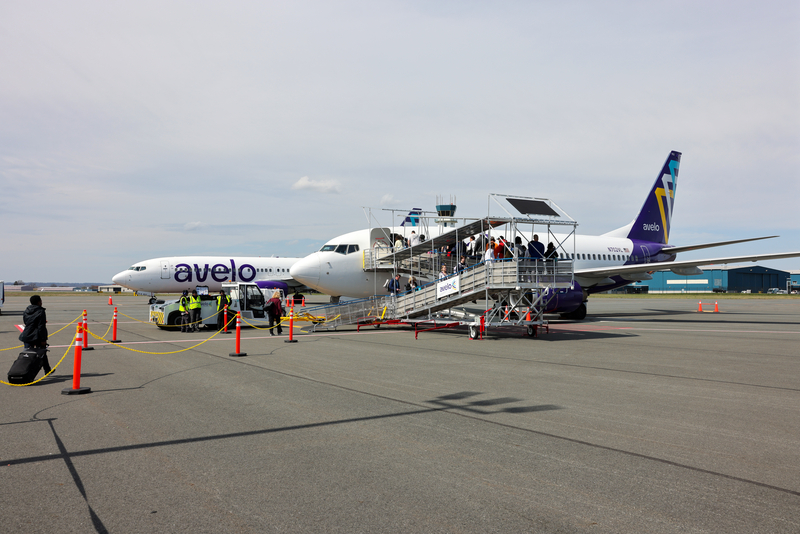
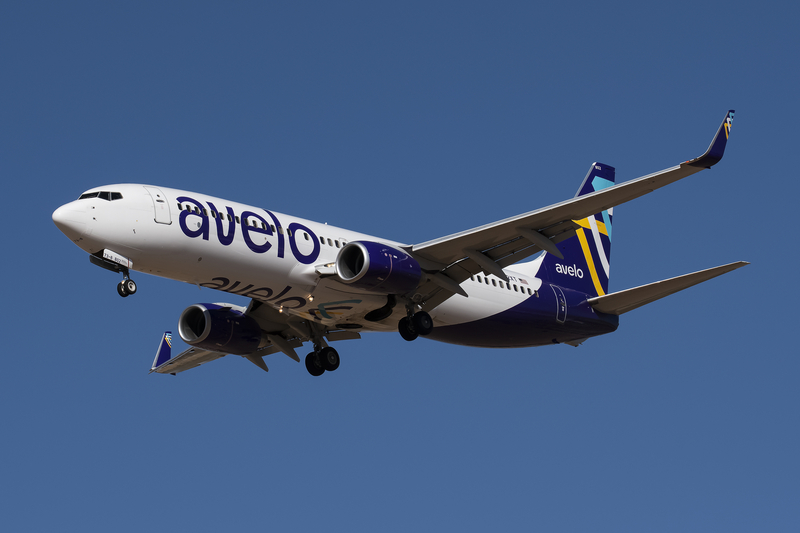
Avelo initially planned to open McKinney with two based aircraft. The additional routes will bring that allocation to three 184-seat Boeing 737-800s, giving the base 552 seats of aircraft capacity when all three jets are deployed.
The 737-800 is the main type in Avelo’s fleet following the carrier’s decision to remove most of its smaller 737-700s. The higher-capacity -800 suits a base built around nonstop local traffic, allowing the airline to concentrate demand into several weekly departures rather than support a daily schedule in every market.
The aircraft assignment is also consistent with the network and fleet restructuring Avelo outlined in January. That plan identified McKinney as one of five core bases around which the airline would focus its 2026 operation, while simplifying the near-term fleet around the Boeing 737-800.
Avelo expects its DTX investment to support approximately 150 jobs. The positions include pilots, flight attendants, aircraft technicians and airport personnel. The increase from two to three aircraft expands the operational footprint before opening day rather than waiting for the base to mature through several schedule seasons.
Terminal and Certification Advance Toward November Opening
The airline announcement coincided with another important milestone for the airport. The Federal Aviation Administration issued DTX a Part 139 Airport Operating Certificate on September 24, authorizing the airport to accommodate scheduled passenger airline service. The FAA confirmed the certification as the city prepares to open the terminal on Veterans Day.
McKinney’s latest construction update says the passenger terminal remains on schedule for November 11. Airport officials presented the facility to Avelo executives and local stakeholders six weeks before its planned public opening.
The 46,000-square-foot terminal will initially have four boarding gates, with provision to expand to six. Plans also include centralized concessions, a 980-space public parking lot, rental-car facilities and ground transportation areas.
Commercial passengers will see DTX on booking systems, boarding passes and baggage tags. The airport’s established FAA location identifier, TKI, continues to be associated with its general aviation operation, which will remain alongside scheduled airline service.
Avelo will become McKinney’s launch and anchor airline. The expansion means the airport is now preparing to open with a larger airline operation than the one disclosed only three months earlier: nine destinations, three based aircraft and a schedule operating from Wednesday through Monday.
Bottom Line
Adding the third aircraft before the first departure is a stronger commitment than a routine route announcement. Avelo is giving McKinney enough scale to function as a meaningful crew and aircraft base from its opening season, rather than as an outstation supported by aircraft based elsewhere. That creates more local employment and gives the airline greater control over first-wave departures, maintenance coverage and schedule recovery.
For McKinney, the nine-route schedule provides an immediate test of whether a smaller airport can capture passengers from the northern Dallas-Fort Worth suburbs without trying to reproduce the network breadth of the region’s established airports. The airport’s advantage is surface access for Collin County travelers; its challenge is converting that convenience into enough repeat demand to support 184-seat aircraft on sub-daily routes.
The next measure will be how Avelo adjusts frequencies after the winter launch. Additional destinations would broaden the map, but growth in the existing markets would offer clearer evidence that DTX is developing durable local demand. With three aircraft already committed, Avelo has left itself room to do either.
Keep reading FlyMag
Get the Daily Brief in the morning or the Route Watch weekly recap on Fridays. Or both.