American Airlines will resume service to Haiti on November 1, 2026, with a new daily route between Miami International Airport (MIA) and Cap-Haïtien International Airport (CAP).
The route will reconnect American with Haiti after U.S. carriers suspended service to the country in late 2024 amid serious security concerns. It will also give American its 100th destination across Mexico, the Caribbean and Latin America.
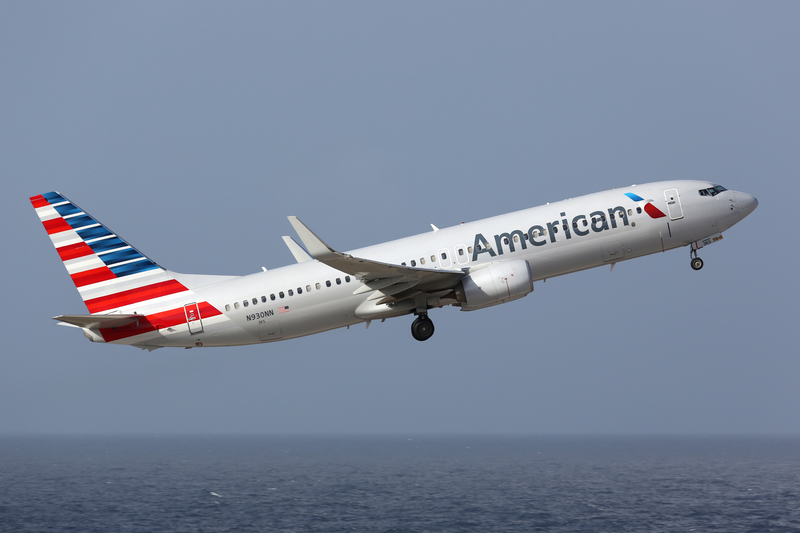
American will operate the Miami (MIA)–Cap-Haïtien (CAP) route with Boeing 737 aircraft. The airline says the aircraft will offer a premium cabin and free high-speed Wi-Fi sponsored by AT&T.
Read our stories in your inbox
Two aviation newsletters. Zero fluff.
For American, this is more than a simple Caribbean route restoration. It is a strategic network move from its most important Latin America and Caribbean hub.
Daily Boeing 737 Service From MIA To CAP
American will fly daily between Miami (MIA) and Cap-Haïtien (CAP) from November 1, 2026.
The carrier has not yet identified the exact Boeing 737 variant scheduled for the route. However, American’s current Boeing 737-800 and Boeing 737 MAX 8 cabin layouts both list 172 seats. Each includes First Class, Main Cabin Extra and Main Cabin.
That makes the aircraft a logical fit for the route. Miami (MIA)–Cap-Haïtien (CAP) is a short international sector by American’s network standards. However, it is important for visiting-friends-and-relatives traffic, community links and regional connectivity.
The flight also gives passengers in Haiti direct access to American’s large Miami hub. From Miami (MIA), customers can connect across the United States, Latin America, the Caribbean and beyond.
That network depth is where American has a major advantage.

Cap-Haïtien Becomes A Milestone Destination
Cap-Haïtien (CAP) will become American’s 100th destination across Mexico, the Caribbean and Latin America.
That is a major milestone for the airline. American already describes its Miami hub as the largest U.S. gateway to Latin America and the Caribbean.
The carrier says its winter network in the region will be nearly 50% larger than its closest U.S. competitor. That scale gives American a powerful position in markets where nonstop service is limited.
Cap-Haïtien (CAP) follows another important regional launch. American will begin Miami (MIA)–Maracaibo (MAR) service on July 14, 2026. Maracaibo (MAR) will become American’s 99th destination in the region.
Together, Maracaibo (MAR) and Cap-Haïtien (CAP) show how American is using Miami (MIA) to rebuild and expand in markets that have been difficult to serve.
Why Cap-Haïtien Matters
Cap-Haïtien is Haiti’s second-largest city and sits on the country’s northern coast. It is also an important gateway for northern Haiti.
That location matters right now. Port-au-Prince (PAP), Haiti’s capital and traditional main international gateway, remains affected by aviation security restrictions.
The Federal Aviation Administration has continued to restrict certain U.S. civil aviation operations involving Port-au-Prince (PAP) because of risks to aircraft. Those restrictions followed incidents in which commercial aircraft were struck by gunfire in 2024.
Cap-Haïtien (CAP), however, has been treated differently from Port-au-Prince (PAP) under the FAA’s Haiti notices. That makes CAP a more viable point for restoring U.S. carrier service.
For American, the move is practical. It allows the airline to resume Haiti service while avoiding the more complex security environment around Port-au-Prince (PAP).
A Route Built Around Community Demand
The Miami (MIA)–Cap-Haïtien (CAP) route has a strong community case.
South Florida is home to one of the largest Haitian communities in the United States. That creates steady demand for family, personal, business and essential travel.
American also noted that customers in other U.S. markets will benefit from one-stop connections over Miami (MIA). That includes passengers traveling from cities such as New York, Orlando, Boston, Washington and other areas with large Haitian diaspora communities.
This is the type of route where hub strength matters. A standalone Miami–Cap-Haïtien flight is useful. However, a daily MIA–CAP flight connected to American’s broader network is far more valuable.
It gives Haiti-bound passengers more schedule options. It also gives customers from CAP access to a much larger U.S. and international network.
American Returns As U.S. Carrier Service Remains Limited
Haiti has not had direct scheduled service operated by major U.S. carriers since flights were suspended in late 2024.
Regular U.S.–Haiti flying has continued in a different form. Sunrise Airways has marketed service between Haiti and South Florida, while GlobalX has supported Sunrise with wet-leased Airbus A320 aircraft.
Still, American’s return is significant. It is the first U.S. carrier to announce a resumption of Haiti service under its own brand.
That distinction matters for passengers and for the broader market. American brings a large frequent flyer base, corporate contracts, interline connectivity and deep distribution through its own sales channels.
It also brings the scale of Miami (MIA), which remains one of the most important airline hubs in the Americas.
The Boeing 737 Is A Sensible Aircraft Choice
American’s decision to use Boeing 737 aircraft on Miami (MIA)–Cap-Haïtien (CAP) makes operational sense.
The 737 gives the airline enough capacity for a daily route while keeping unit costs competitive. It also allows American to offer a premium cabin, extra-legroom seating and onboard connectivity on a market that is likely to include both leisure and diaspora traffic.
American says the aircraft will feature free high-speed Wi-Fi sponsored by AT&T. The airline has been expanding free inflight Wi-Fi across much of its narrowbody fleet, which includes Boeing 737 aircraft.
That is a useful product detail for this market. Many passengers on MIA–CAP will connect beyond Miami. A more consistent onboard experience can help American compete for that traffic.
Cargo may also play a role. The 737 does not offer widebody belly capacity, but daily narrowbody service can still support small freight, mail and time-sensitive shipments between South Florida and northern Haiti.
Miami Remains The Center Of American’s Regional Strategy
Miami (MIA) is the core of American’s Latin America and Caribbean network.
The airline says it will operate more than 410 peak daily departures from Miami this winter. That scale gives American a large bank of connections across Florida, the U.S. East Coast, the Midwest, Texas and the Caribbean.
For Haiti, that is important. Miami is already one of the most natural U.S. gateways for Haitian travel. It has the community base, geography and network structure to support daily service.
American is also expanding other regional routes from MIA. The airline highlighted service to destinations such as San Juan (SJU), St. Thomas (STT), Tortola (EIS), Antigua (ANU), Exuma (GGT) and St. Kitts (SKB) as part of its winter schedule.
That broader growth gives the Haiti route more context. American is not adding CAP in isolation. It is building a larger winter network around Miami’s role as the leading U.S. gateway to the Caribbean and Latin America.
A Carefully Timed Return
The November 1 launch date places the route at the start of the winter travel season.
That timing is logical. Winter is a peak period for Caribbean flying, and Miami (MIA) sees strong seasonal demand across the region. It also gives American time to open sales, finalize operations and monitor the security environment before the route begins.
At the same time, Haiti remains a complex market. Aviation security, airport operations and local conditions will continue to matter. Airlines do not restore service to a market like Haiti casually.
That is why American’s decision is notable. The airline clearly sees enough demand and enough operational confidence to put daily service back into the schedule.
Bottom Line
American Airlines’ return to Haiti is an important move for both the airline and the Haitian travel market.
The new daily Miami (MIA)–Cap-Haïtien (CAP) service will restore American-branded flying to Haiti from November 1, 2026. It will also make Cap-Haïtien American’s 100th destination across Mexico, the Caribbean and Latin America.
The route is practical, strategic and community-driven. It avoids the more restricted Port-au-Prince (PAP) environment, uses a right-sized Boeing 737 aircraft and connects northern Haiti to American’s powerful Miami hub.
For passengers, the route restores a major U.S. airline option. For American, it strengthens the carrier’s already dominant position between the United States, Latin America and the Caribbean.