Laser Airlines is back on the radar with a familiar ambition: restoring nonstop service between Caracas Simón Bolívar International Airport (CCS) and Miami International Airport (MIA). On paper, it’s an obvious market with deep demand. In practice, it’s one of the most regulation-heavy “routes” in the Western Hemisphere—because the biggest variable isn’t aircraft range or slot timing. It’s whether U.S.–Venezuela commercial flying is even allowed to exist.

What makes the latest move especially attention-grabbing is the equipment Laser has floated for the mission: the MD-80/MD-90 family, with a possible Boeing 767 in the mix. That combination reads like aviation déjà vu—yet it also hints at how Laser might be thinking about scale, reliability, and the realities of operating into a high-expectation airport like MIA.
A Familiar Filing in a Market That Isn’t “Normal”
CCS–MIA isn’t a typical new route launch. It’s a reopening attempt in a corridor where scheduled commercial flights have been effectively shut down for years under U.S. restrictions. So when an airline signals intent to return, the story isn’t “which days of the week?”—it’s “what has to change for the first flight to legally push back?”
Read our stories in your inbox
Two aviation newsletters. Zero fluff.
Laser has pursued U.S. authority before, and the renewed push suggests a common strategy: get the paperwork positioned now, so the airline can move quickly if policy conditions shift. That matters because, in reopened markets, the first mover often captures premium yields and diaspora traffic before competitors re-enter and pricing normalizes.
Why CCS–MIA Demand Doesn’t Go Away
If you work network planning, you already know the fundamentals: South Florida has one of the largest Venezuelan diaspora concentrations, and that creates persistent VFR demand (visiting friends and relatives). Those passengers travel even when it’s inconvenient—meaning today’s demand is partially “trapped” demand, forced onto circuitous itineraries and vulnerable connections.
A nonstop CCS–MIA flight would compress journey time and friction immediately. The great-circle distance sits around 1,180 nautical miles—squarely in the wheelhouse of classic narrowbody and mid-size widebody performance. Operationally, both endpoints can handle serious metal: CCS has long runways (including 10/28 at over 11,000 feet), and MIA’s primary runway set supports heavy departures all day long. The airport infrastructure isn’t the issue.
The issue is that demand alone doesn’t reopen a market when government security determinations and operating authority are the gatekeepers.
The Aircraft Angle: Why the MD-80 Still Makes Sense—And Why It’s Risky
Laser’s identity is closely tied to the MD-80 series. For aviation insiders, that instantly frames the discussion in terms of dispatch reliability, engine maturity, and cost structure.
The MD-80 (MD-81/82/83) is a rugged, high-cycle workhorse built for short- to medium-haul flying, typically powered by Pratt & Whitney JT8D-200-series engines. In a pure mission-fit sense, CCS–MIA is well within capability. Block times would generally sit in the mid–three-hour range depending on winds and routing, and the airframe has ample runway performance margin at both airports.
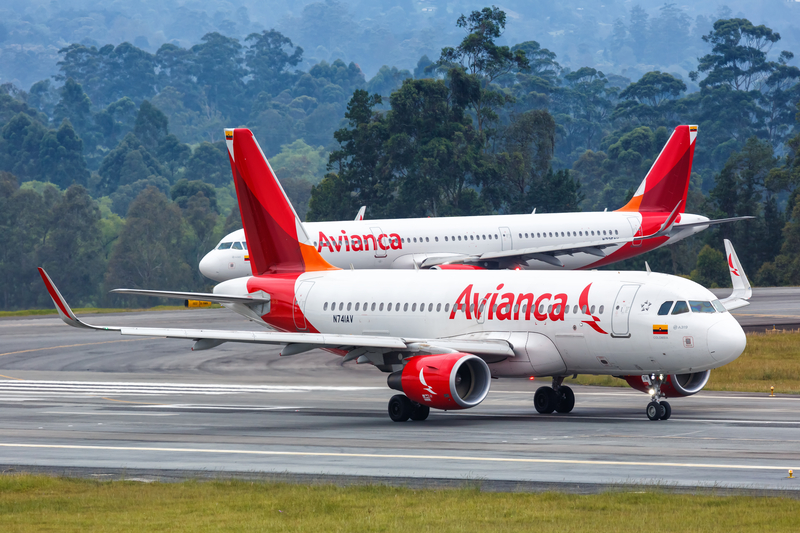
Avianca Shifts Venezuela Lifeline To Valencia As Caracas Airport Disruption Continues
But MIA is not a forgiving market for perception or operational hiccups:
-
Passenger expectations: Miami’s international network is dense and competitive. Even if Laser had a temporary monopoly on CCS–MIA, travelers will compare the experience to modern Airbus and Boeing cabins they fly elsewhere out of MIA.
-
Operational resilience: Mature fleets can be reliable—if the operator has deep maintenance planning, strong parts access, and predictable engine shop support. Any disruption in spares availability or AOG recovery time becomes highly visible on a twice-daily schedule.
-
Product consistency: The MD-80 can deliver a solid onboard experience with the right interior and service discipline, but it has less margin for “soft” shortcomings when the market expects modern touches as baseline.

In short: the MD-80 is mission-capable, but it is reputation-sensitive—especially in a market where a single technical delay can ripple into missed connections, misconnect reaccommodation costs, and reputational drag.
Why Mention a Boeing 767 at All?
The Boeing 767 reference is the real tell, because it suggests Laser is thinking beyond a simple scheduled shuttle.
A 767 (most realistically a 767-300 or 767-300ER in today’s leasing ecosystem) changes the playbook:
-
Capacity flexibility: A widebody can consolidate demand into fewer departures if frequency is constrained, or if operating windows at MIA become a limitation.
-
Charter utility: If the airline expects irregular, event-driven demand—or anticipates charter flying alongside scheduled service—a 767 is a useful tool for bulk movements without building a fragile high-frequency schedule.
-
Cargo upside: Even belly space matters on Miami routes. MIA is a cargo powerhouse, and a widebody schedule can add meaningful incremental revenue if the regulatory environment allows it.
That said, a 767 doesn’t magically simplify anything. It raises the operational bar: more complex maintenance planning, heavier station requirements, more intense scrutiny on reliability, and a higher “headline risk” if anything goes wrong. If the MD-80 is a perception gamble, a 767 is an execution gamble.
The Real Barrier: Authority Isn’t the Same as Access
Here’s the reality that matters for professionals: even a perfectly planned route, with crews trained and aircraft ready, won’t matter if the broader U.S. prohibition on air service to/from Venezuela remains in place.
The limiting factors are structural:
-
A U.S. policy framework that can suspend service to/from Venezuelan airports for safety and security reasons
-
The requirement for government findings and approvals—well beyond what any single airline can influence
-
The practical requirement that airport security oversight and audit access be feasible in the first place
In other words, Laser can file, plan, and position aircraft, but it cannot schedule its way around a government stop sign.
What to Watch If This Story Develops
If you’re tracking whether CCS–MIA ever returns as a nonstop, the meaningful signals won’t be marketing announcements. Watch for:
-
Any change in U.S. DOT/DHS posture regarding Venezuela service restrictions
-
Evidence of re-established security assessment access frameworks that would allow oversight to function
-
Fleet signals from Laser: cabin refresh investment, spares strategy, and whether a widebody is actually sourced or merely listed as an option
-
Competitive positioning at MIA: once the door opens, incumbents and larger players may move quickly—especially if premium diaspora demand is obvious
Bottom Line
Laser Airlines aiming for nonstop CCS–MIA service is a logical move in a market where demand never truly disappeared—but it’s not a typical route launch. The MD-80 angle is operationally plausible and brand-consistent for Laser, while the 767 mention hints at charter/capacity flexibility and a broader playbook. Still, the route’s fate is less about aircraft performance and more about whether U.S.–Venezuela commercial flying is permitted to resume at all. Until that changes, CCS–MIA remains a route that can be filed on paper—but not reliably flown in the real world.
Keep reading FlyMag
Get the Daily Brief in the morning or the Route Watch weekly recap on Fridays. Or both.