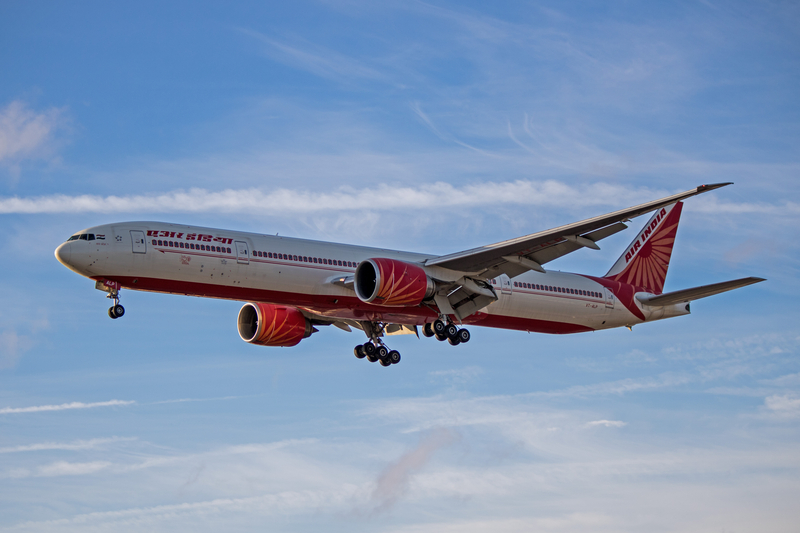
Air India (AI) is preparing to return a long-grounded Boeing 777-300ER—VT-ALL—to revenue service in early February 2026, closing out an unusually long maintenance limbo that began just before the pandemic reshaped global fleets.

The aircraft has been stored and worked on at Air India Engineering Services’ Nagpur maintenance facility after entering what was intended to be a routine heavy check in February 2020. Instead of a typical “in-and-out” C-check cycle, VT-ALL became a classic widebody parts donor—cannibalised to keep the rest of the 777 fleet flying during a period when cash, spares availability, and operational urgency often overrode long-term planning.
For an airline managing an aging widebody fleet while simultaneously modernising, putting a 777-300ER back into the line is a practical capacity win—especially when every long-haul tail can represent one more protected frequency, one more schedule recovery option, and one less need for expensive wet-lease cover.
Read our stories in your inbox
Two aviation newsletters. Zero fluff.
The aircraft: Boeing 777-300ER, still a long-haul cornerstone
The Boeing 777-300ER (77W) remains one of the most capable long-haul passenger platforms in service: high thrust, long range, strong payload, and a mature global maintenance ecosystem. Most frames are powered by GE90-115B engines—among the most powerful turbofans ever certificated—built for sustained long-haul utilization.
In Air India’s context, the 77W is typically deployed on trunk long-haul markets where premium demand, belly cargo opportunity, and schedule protection matter. Adding one more usable 777-300ER back into the roster is meaningful even if it only supports one daily long-haul rotation; widebody networks are often constrained by tail count more than by demand.
How a “30-day C-check” becomes a six-year grounding
What happened to VT-ALL is a scenario engineers and fleet planners know too well: once a widebody becomes a parts donor, the path back gets exponentially harder.
A heavy check that begins as a standard C-check can stretch dramatically when:
-
High-value rotable parts are removed to keep sister aircraft dispatchable
-
The aircraft accumulates open items that must be revalidated before return to service
-
Supply chain lead times expand (especially for legacy or less-common components)
-
Engineering priorities shift toward near-term flying rather than long-cycle restoration
The longer a widebody sits, the more complicated “reactivation” becomes. Beyond reinstalling parts, aircraft returning from long storage often require additional inspections and functional checks across systems that can degrade over time: hydraulics, seals, wiring, avionics cooling, and corrosion prevention areas. Even cabin systems can become nontrivial when an aircraft has been parked through multiple interior standard changes.
Why Air India would prioritize bringing VT-ALL back now
The timing—early February 2026—suggests Air India wants additional widebody coverage during a period when:
-
Long-haul schedules are increasingly product-driven and reliability-sensitive
-
The airline is balancing multiple fleet workstreams (legacy widebodies, retrofits, and new deliveries)
-
Unplanned maintenance events can quickly force wet leases, downguages, or cancellations
From an operational control perspective, a “spare” widebody tail is invaluable. It gives the airline options:
-
Protect long-haul reliability when another aircraft goes tech
-
Avoid cascading delays where a single out-of-service widebody disrupts multiple routes
-
Provide maintenance rotation flexibility without cutting flying
-
Keep premium-heavy long-haul routes properly gauged
Even one additional 777-300ER can reduce the fragility of the overall plan—especially in a fleet where utilization is high and spare ratios are thin.
Air India’s Boeing 777 fleet picture
Air India’s current Boeing 777 fleet consists of:
-
19 Boeing 777-300ERs
-
5 Boeing 777-200LRs
That mix is important. The 777-200LRs are niche assets—excellent range, but fewer in number, which makes them harder to substitute when a tail is down. The 777-300ERs, by contrast, are the mainstay for high-capacity long-haul markets. Returning VT-ALL effectively strengthens the backbone.
What to watch as VT-ALL returns to line service
If VT-ALL is indeed in the final stages of return-to-service work, the industry will watch for a few predictable indicators of a successful reactivation:
-
Progression into proving / functional flights and route assignment stability
-
Dispatch reliability in the first few weeks back, when latent maintenance issues tend to surface
-
Whether the aircraft re-enters with an updated cabin standard or returns in a legacy configuration
-
How quickly Air India can convert the reactivation into schedule resilience (i.e., fewer short-notice substitutions and wet-lease cover)
Bottom Line
Air India’s plan to return Boeing 777-300ER VT-ALL to service in early February 2026 ends an unusually long six-year grounding that began with what should have been a routine 2020 heavy check in Nagpur—before the aircraft was cannibalised to keep the rest of the fleet moving. For Air India, the significance is practical: one more long-haul-capable 77W back on the flight line strengthens widebody availability, improves recovery options, and reduces the pressure to cover gaps with costly short-term solutions.
Keep reading FlyMag
Get the Daily Brief in the morning or the Route Watch weekly recap on Fridays. Or both.