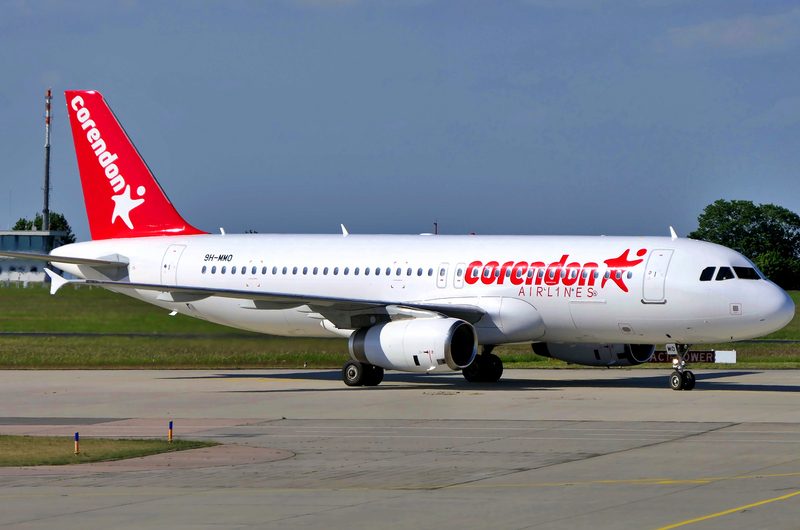
A Corendon Airlines Europe flight bound for Egypt returned to Brussels Airport (BRU) on Sunday after its crew detected an unspecified technical problem while flying over southern Germany.

Flight XR5401 was traveling from Brussels (BRU) to Hurghada International Airport (HRG) with approximately 180 passengers aboard. The Airbus A320 had already departed nearly three hours behind schedule before the pilots discontinued the flight and returned to Belgium.
The aircraft landed safely at Brussels (BRU), where airport emergency services were positioned as a standard precaution. No injuries were reported, and there is no indication that the crew lost control of the airplane or that an immediate emergency landing was required.
Read our stories in your inbox
Two aviation newsletters. Zero fluff.
Although the technical return was completed without further incident, passengers criticized Corendon’s communication during the disruption. Travelers said they received limited information about the reported defect, the reason for the return, and when an alternative flight to Hurghada (HRG) would depart.
Flight Departed Brussels Nearly Three Hours Late
Flight XR5401 was scheduled to leave Brussels Airport (BRU) at 1:35 p.m. local time on July 12, 2026, with an expected arrival at Hurghada International Airport (HRG) at 6:25 p.m.
Flight-tracking data shows that the Airbus A320 did not depart until approximately 4:30 p.m., placing it two hours and 55 minutes behind schedule before the technical problem developed.
The aircraft continued southeast from Brussels and reached southern Germany before turning back toward Belgium. That location suggests the crew had been airborne long enough to assess the reported problem before deciding that continuing across southeastern Europe and the eastern Mediterranean was not appropriate.
Corendon has not disclosed the aircraft’s altitude, the cockpit indication received by the pilots, or the precise point at which the crew decided to return.
The approximately 2,240-mile route between Brussels (BRU) and Hurghada (HRG) normally takes around four hours and 50 minutes. Corendon Airlines Europe competes on the nonstop market with Brussels Airlines and TUI fly Belgium.
Passengers Reported Unusual Engine Noises
Several passengers said they heard unusual noises coming from one of the engines before the aircraft turned back.
Those accounts are relevant to the investigation and maintenance inspection, but they do not establish that an engine failed. Corendon has described the event only as a technical problem and has not confirmed that the defect involved an engine, fuel system, hydraulic system, electrical component, or another aircraft system.
Airplane cabins routinely transmit changes in engine tone, airflow, vibration, and aerodynamic noise. A crew reducing thrust, changing altitude, slowing the aircraft, or configuring it for a return can produce sounds that are noticeable to passengers without indicating a complete engine shutdown.
Conversely, some genuine engine problems may initially present as unusual vibration or noise. Only data from the aircraft’s maintenance computers, cockpit indications, crew report, and physical inspection can determine whether the passenger observations were connected to the technical issue.
There has been no report that the Airbus A320 operated on one engine, declared an engine failure, suffered visible damage, or required assistance after landing.
Why the Pilots Returned to Brussels
Returning to Brussels Airport (BRU) gave the crew and airline several operational advantages over continuing to Hurghada (HRG) or diverting to another airport.
Brussels was the aircraft’s departure point, the passengers’ original location, and the station where Corendon had already arranged ground handling and customer support. Returning also placed the airplane at an airport with extensive maintenance facilities and access to replacement aircraft serving European leisure routes.
A technical problem does not have to make an airplane immediately unsafe to justify a return. The crew must consider whether the affected system is required for the remaining flight, whether the fault could worsen, and whether the aircraft would retain sufficient redundancy throughout several more hours of flying.
Continuing toward Egypt would have taken the aircraft farther from its departure base and across a route where a later diversion could create more complicated passenger, maintenance, and crew-recovery problems.
The decision to return was therefore a risk-management measure. Corendon said the pilots acted in accordance with normal safety procedures and emphasized that passenger safety remained the airline’s highest priority.
Emergency Vehicles Do Not Automatically Mean an Emergency Landing
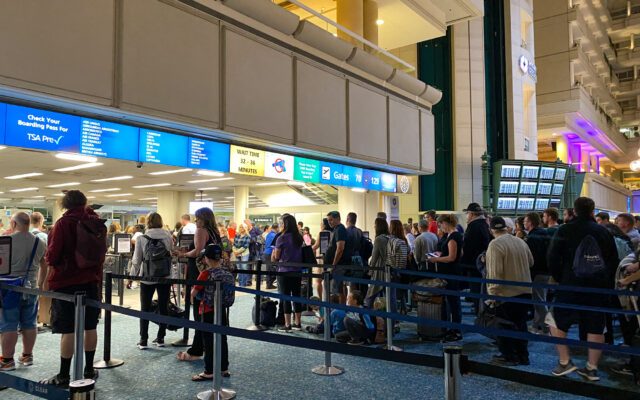
Emergency services were standing by when XR5401 arrived back at Brussels Airport (BRU), but their presence should not be interpreted as evidence that a crash or catastrophic failure was expected.
Airports routinely position fire and rescue vehicles for precautionary returns involving technical indications, suspected engine problems, hydraulic faults, unusual smells, smoke warnings, or other conditions that may affect landing or taxiing.
The response allows firefighters and medical personnel to reach the airplane immediately if the condition worsens during the approach, landing, or rollout.
In this case, the A320 landed normally, and passengers disembarked without an evacuation. There was no report of smoke, fire, landing-gear damage, a runway closure, or passengers using emergency slides.
Describing the event as a technical return is therefore more precise than calling it an emergency landing, based on the currently available information.
The Aircraft Was Airbus A320-232 LY-LGA
The aircraft involved was Airbus A320-232 LY-LGA, manufacturer serial number 3927.
The Lithuanian-registered airplane made its first flight on May 25, 2009, making it approximately 17 years old at the time of the incident. It is configured with 180 all-economy seats and powered by two International Aero Engines V2527-A5 turbofans.
The A320-232 belongs to the original-generation A320ceo family rather than the newer A320neo series. The “232” designation identifies an A320-200 equipped with IAE V2500-series engines.
The aircraft has been operated by Global Airways Lithuania and has spent extended periods flying for Corendon Airlines Europe under an aircraft, crew, maintenance, and insurance arrangement commonly known as an ACMI or wet lease.
Under that structure, Corendon sells and schedules the flight under its XR code, while the wet-lease provider supplies the aircraft and typically the operating flight crew, maintenance support, and insurance. Global Airways began using LY-LGA for Corendon Airlines Europe operations in 2022.
This explains why a Corendon flight was operated by an airplane carrying a Lithuanian registration rather than the Maltese registration normally associated with Corendon Airlines Europe’s own fleet.
The A320 Remains a Mainstay of European Leisure Flying
The Airbus A320 is one of the world’s most widely operated single-aisle airliners and is commonly used on European leisure routes to destinations in North Africa, the Canary Islands, Turkey, and the eastern Mediterranean.
The type typically carries between 150 and 180 passengers, although individual layouts vary by operator. Its six-abreast cabin and available range make it suitable for flights such as Brussels (BRU)-Hurghada (HRG), which sits near the longer end of conventional European leisure flying but remains well within the A320’s operating capabilities.
The A320 family was the first commercial aircraft series to introduce full digital fly-by-wire flight controls. Pilots use electronic side-stick controllers rather than conventional mechanically linked control columns, while flight-control computers translate those inputs into commands for the aircraft’s control surfaces.
LY-LGA’s IAE V2500 engines are from the same broad generation as the CFM56 engines used on other A320ceo aircraft. Both engine families have accumulated decades of commercial service across thousands of airplanes.
Nothing released about XR5401 indicates a broader safety issue involving the Airbus A320 or V2500 fleet.
Passengers Criticized Corendon’s Communication
The most significant passenger complaints arose after the aircraft returned to Brussels.
Travelers said the airline provided little information about the technical issue or the recovery plan. Some reported that they did not know whether the flight would depart again that evening, whether another aircraft was available, or where they would spend the night.
The passengers were eventually transferred to a hotel near Brussels Airport (BRU). Corendon arranged a replacement flight that departed for Hurghada (HRG) the following evening, extending what was intended to be a same-day journey into a disruption lasting more than 24 hours for many travelers.
Corendon’s decision to provide hotel accommodation was appropriate for an overnight disruption, but the complaints illustrate that operational recovery involves more than locating beds and another airplane.
Passengers generally respond better to disruptions when an airline explains what it knows, clearly identifies what remains unknown, and provides regular updates even when no firm departure time is available.
The technical cause may have required several hours to diagnose. Corendon could therefore have been unable to provide immediate details about the malfunction or confirm when the aircraft would be released. That uncertainty does not prevent an airline from communicating the status of maintenance work, replacement-aircraft planning, hotel arrangements, and the expected time of the next update.
A Full Flight Complicates Recovery
LY-LGA is configured for 180 passengers, and reports placed approximately that number aboard XR5401. The flight may therefore have been close to full.
Finding a replacement aircraft for an entire A320 load at short notice is more difficult than simply transferring passengers to the next scheduled service.
Corendon needed an available airplane with sufficient crew duty time, maintenance clearance, airport slots, and operating range. The airline also had to consider the return passengers scheduled to fly from Hurghada (HRG) to Brussels (BRU) on XR5402.
Because the outbound aircraft never reached Egypt, the associated return flight could not operate with LY-LGA. A single technical return can therefore disrupt two passenger groups: those traveling to Hurghada and those expecting to return from the resort destination.
Rebooking passengers onto other airlines would also have been difficult. Flights to Hurghada are often heavily booked during the summer vacation period, and few carriers would have had 180 seats available on one departure.
Holding the group together for a dedicated replacement flight may have been operationally more realistic, even though it required an overnight delay.
EU Passenger Rights Apply to the Flight
Because XR5401 departed from Brussels Airport (BRU), the flight falls within the scope of European Union passenger-protection rules regardless of the operating airline’s country of registration.
EU rules require an airline to provide care during a significant delay, including food, refreshments, hotel accommodation when an overnight stay becomes necessary, and transportation between the airport and hotel. That duty of care remains in place even when the disruption is caused by extraordinary circumstances outside the airline’s control.
Passengers who reach their final destination at least three hours late may also qualify for financial compensation unless the airline can demonstrate that the delay resulted from extraordinary circumstances that could not have been avoided through reasonable measures.
For flights exceeding 3,500 kilometers between an EU airport and a destination outside the EU, the standard compensation level can reach €600 per passenger. The precise amount and eligibility will depend on the final arrival delay, cause of the defect, rerouting arrangements, and any future determination concerning extraordinary circumstances.
A technical issue is not automatically extraordinary merely because it affects safety. Airlines must establish the nature and origin of the defect before compensation eligibility can be determined.
Passengers should retain boarding passes, booking confirmations, hotel or meal receipts, written airline messages, and proof of their eventual arrival time in Hurghada (HRG).
Corendon Has Not Identified the Technical Fault
As of July 14, Corendon had not publicly identified the component or system that caused the return.
The lack of detail is not unusual immediately after a technical event. Maintenance personnel must download fault messages, inspect the relevant systems, review the flight crew’s report, conduct troubleshooting, replace or test components, and determine whether the defect can be cleared safely.
Airlines are also cautious about announcing preliminary explanations that may later prove incorrect.
However, continued silence can intensify passenger frustration, particularly after a major overnight disruption. A later explanation stating whether the event involved an engine indication, sensor fault, hydraulic problem, or another system would provide useful context without requiring Corendon to release sensitive maintenance records.
The absence of an explanation also means reports of abnormal engine noises must remain passenger observations rather than an established cause.
Bottom Line
Corendon Airlines Europe flight XR5401 returned to Brussels Airport (BRU) on July 12 after its crew identified an unspecified technical problem during a flight to Hurghada International Airport (HRG).
The Airbus A320 departed almost three hours late at approximately 4:30 p.m. and turned back while over southern Germany. It landed safely at Brussels, where emergency personnel were waiting as a precaution.
The airplane involved was 17-year-old Airbus A320-232 LY-LGA, a 180-seat aircraft powered by two IAE V2527-A5 engines. The Lithuanian-registered jet is operated by Global Airways and has been used on wet-lease assignments for Corendon Airlines Europe.
Passengers reported unusual engine noises, but Corendon has not confirmed that the technical issue involved an engine. There is also no evidence that the aircraft suffered a complete engine failure, visible damage, smoke, or fire.
The crew’s decision to return to Brussels was operationally conservative and consistent with normal airline safety procedures. The larger controversy concerns what happened afterward.
Approximately 180 passengers said they received limited information about the malfunction and the airline’s recovery plan. Corendon eventually provided hotel accommodation and transported the passengers to Hurghada on a replacement aircraft the following evening.
The overnight delay was undoubtedly disruptive, but it also demonstrates why airlines sometimes need considerable time to recover from a technical return involving a nearly full aircraft. Corendon had to arrange an airworthy replacement, a legal flight crew, airport slots, and accommodations while also accounting for passengers stranded in Hurghada by the canceled return service.
What remains unanswered is the cause. Until Corendon or the aircraft operator identifies the technical fault, passenger reports of engine noise should not be presented as proof of an engine failure.