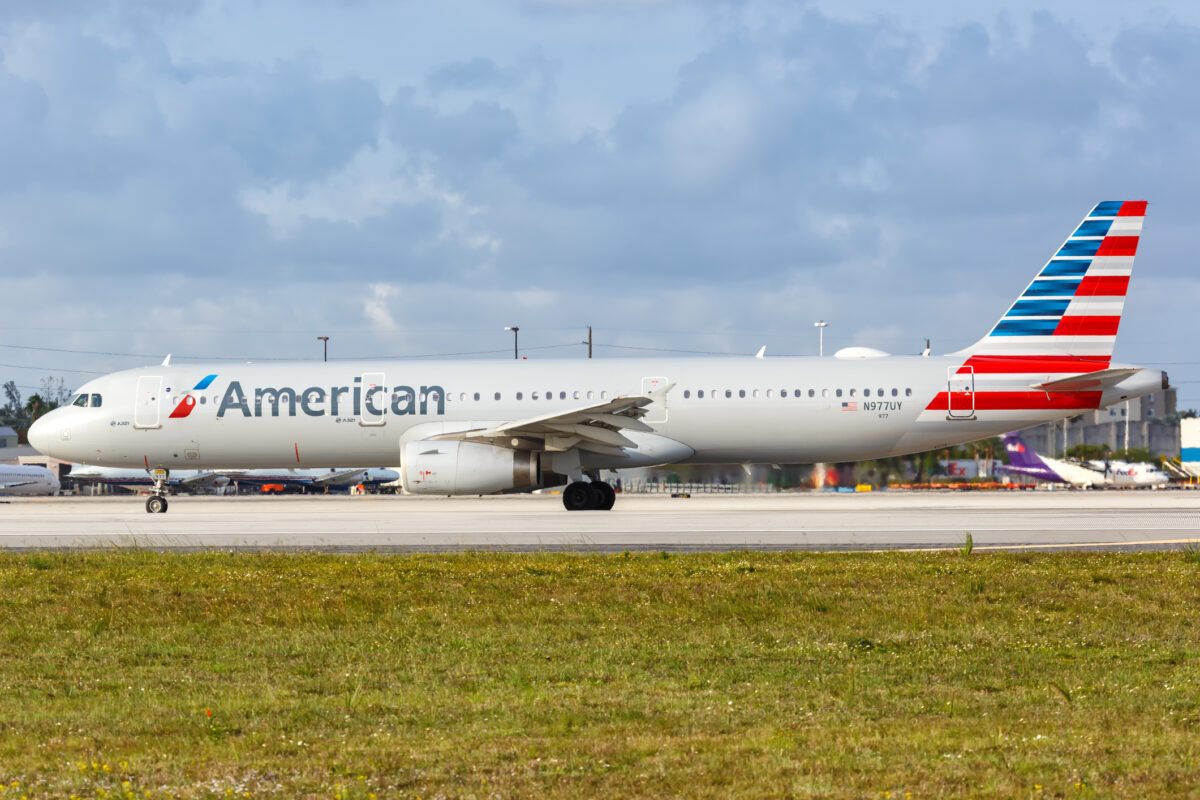
An American Airlines Airbus A321 landed safely at Dallas Fort Worth International Airport (DFW) Friday evening after a passenger’s laptop caught fire in the cabin during the final portion of a flight from Atlanta.

American Airlines Flight AA2398 was operating from Hartsfield-Jackson Atlanta International Airport (ATL) to Dallas Fort Worth International Airport (DFW) on August 21 when smoke and fire were reported from a passenger’s laptop. The crew contained the device before landing, while the pilots advised air traffic control of a cabin fire and the possibility that several passengers had suffered burns.
The aircraft landed at DFW at approximately 6:55 p.m. local time and subsequently taxied to the gate under its own power. Emergency personnel met the flight on arrival.
Read our stories in your inbox
Two aviation newsletters. Zero fluff.
American Airlines said one passenger received medical attention at DFW and was released at the scene.
Pilots Reported A Cabin Fire During The Approach To DFW
The seriousness of the situation is clearer in air traffic control communications from the flight.
According to audio obtained by CBS News, the pilots initially reported a “cabin fire” toward the rear of the aircraft while flight attendants worked to control it.
The flight crew later told controllers that the laptop had been contained around the middle of the cabin and reported that four or five passengers might have suffered burns. There were 133 people aboard the aircraft, according to the pilot’s transmission.
That initial report did not ultimately translate into four or five passengers requiring treatment after arrival. Dallas Fort Worth International Airport (DFW) and American Airlines confirmed that one passenger was treated and released.

The Federal Aviation Administration said flight attendants contained the device using a thermal containment bag and confirmed that it is investigating the incident.
American Airlines said the flight landed safely following reports of smoke from a customer’s device and praised the crew for its rapid response.
The Aircraft Was A 17-Year-Old Airbus A321-211
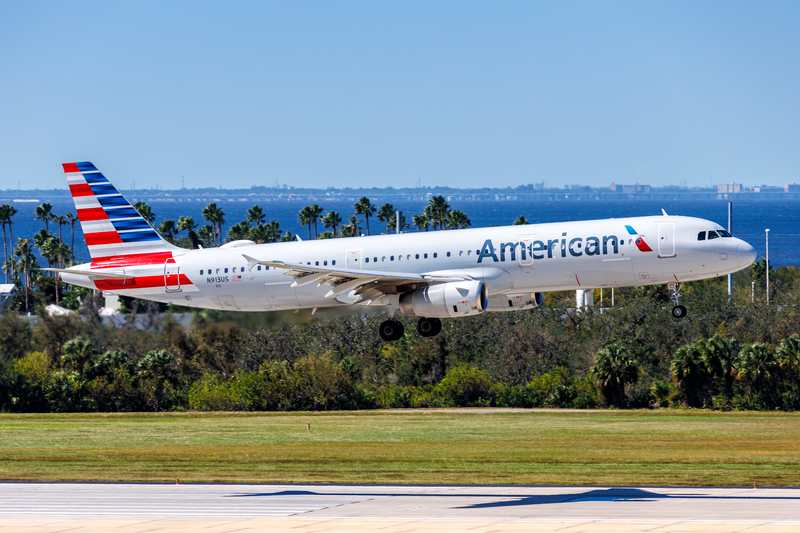
Flight AA2398 was reportedly operated by N197UW, an Airbus A321-211.
The aircraft is an older-generation A321, commonly referred to as an A321ceo to distinguish it from the newer A321neo. Aircraft records identify N197UW as manufacturer serial number 3928, a roughly 17-year-old airframe powered by CFM International CFM56 engines.

The aircraft has an interesting history within the American fleet. N197UW was delivered new to US Airways in June 2009 before becoming part of American Airlines following the merger of the two carriers.
The A321-200 is the stretched member of the original Airbus A320 family and has become one of the workhorses of American’s domestic network. American operates both older A321ceo aircraft such as N197UW and newer A321neo aircraft, although the two versions use different generations of engines and incorporate a number of aerodynamic and efficiency improvements.
N197UW is specifically an A321-211, rather than one of American’s newer A321neo aircraft.
Flight Attendants Used A Thermal Containment Bag
The crew response is particularly important because lithium-ion battery fires behave differently from many conventional cabin fires.
A damaged or defective lithium-ion cell can enter a process known as thermal runaway, during which rapidly increasing temperatures can cause additional cells within a battery pack to fail. That can produce intense heat, smoke and potentially repeated flare-ups even after the initial flames appear to have been controlled.
The FAA’s lithium battery guidance warns that thermal runaway can result from physical damage, overheating, overcharging, exposure to water, improper packing or an internal manufacturing defect. In some cases, there may be little warning before the battery begins producing smoke or excessive heat.
A passenger who spoke with CBS News said the laptop began smoking and then caught fire roughly 30 minutes before the flight ended. The passenger said people nearby attempted to help before flight attendants secured the device in a thermal containment bag.
That response illustrates one of the reasons regulators prefer lithium-battery-powered electronics to remain accessible in the cabin.
A fire involving a device beneath a passenger seat or inside an overhead bin can normally be detected quickly. A similar event inside checked baggage in a cargo compartment is considerably less accessible to the cabin crew.
Lithium Battery Events Remain A Significant Aviation Safety Issue
Lithium batteries are now found throughout the passenger cabin. Laptops, smartphones, tablets, cameras, wireless headphones, electronic cigarettes and portable power banks can all contain lithium-ion cells.
The number of devices carried aboard a typical passenger flight means airlines and regulators have devoted increasing attention to the issue.
The FAA maintains a running database of lithium battery incidents involving smoke, fire or extreme heat. The agency cautions that its records include only events it is aware of and should not be considered a complete accounting of every lithium battery incident.
Reports surrounding AA2398 put the 2026 total at roughly 56 to 58 incidents so far this year, depending on the reporting date and dataset being referenced.
Those events do not necessarily involve laptops. Power banks, electronic cigarettes, smartphones and other rechargeable electronics have also been involved in aircraft incidents.
What makes lithium batteries particularly challenging is their energy density. It is precisely the characteristic that allows a relatively small laptop battery to power a computer for hours that can also produce substantial heat if the cells fail.
Why Spare Batteries And Power Banks Must Stay In The Cabin
There is an important distinction in the rules surrounding lithium batteries that is sometimes overlooked.
The FAA does not categorically prohibit laptops and other electronic devices containing lithium-ion batteries from checked baggage. Devices containing installed batteries can generally be checked if they meet applicable limits, are completely powered off and are protected against accidental activation and damage.
The rules are much stricter for batteries that are not installed in equipment.
Under current FAA PackSafe requirements, spare lithium batteries, power banks and portable chargers cannot be placed in checked baggage. They must travel in the passenger cabin and be protected against short circuits and damage.
Most consumer lithium-ion batteries up to 100 watt-hours can be carried without specific airline approval. Larger batteries between 101 and 160 Wh generally require airline approval, while batteries above 160 Wh are normally prohibited aboard passenger aircraft except under limited provisions for certain mobility devices.
Passengers who have to gate-check a carry-on bag are also required to remove spare lithium batteries and power banks before surrendering the bag.
The reasoning is straightforward: an overheating battery in the passenger cabin can be detected and addressed by trained crewmembers. A battery deep inside a checked suitcase presents a very different risk.
Bottom Line
American Airlines Flight AA2398 from Hartsfield-Jackson Atlanta International Airport (ATL) to Dallas Fort Worth International Airport (DFW) landed safely after a passenger’s laptop caught fire during the latter portion of the flight on August 21.
The Airbus A321-211, registration N197UW, continued to DFW, where it taxied to the gate under its own power and was met by emergency personnel. Although the pilots initially reported that several passengers might have suffered burns, American Airlines confirmed that one passenger received medical treatment and was released.
The incident also demonstrates why lithium-battery events remain an important cabin-safety issue. With dozens of battery-related smoke, fire and extreme-heat events already recorded in U.S. aviation during 2026, crews are increasingly likely to encounter malfunctioning personal electronics.
In this case, the most important element was the response: the problem occurred where it could be detected, the cabin crew contained the device with specialized equipment, and the A321 landed at DFW without a larger onboard fire developing.