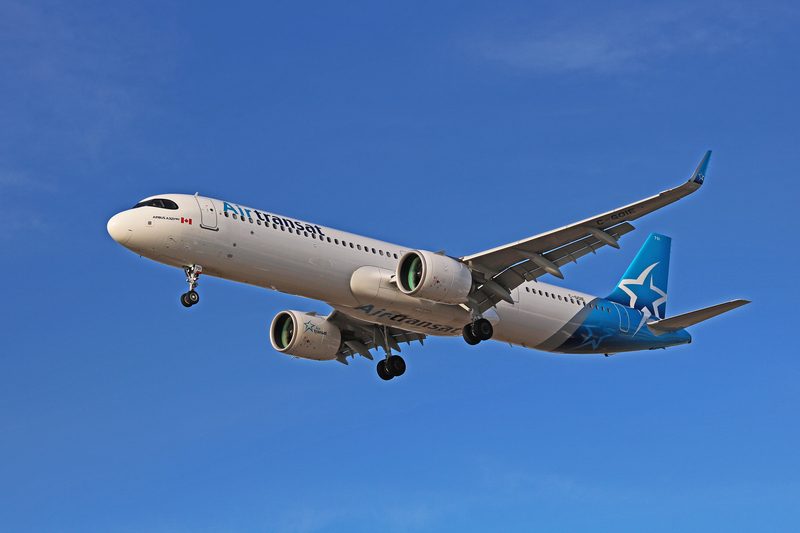
Air Transat’s active network contracted by seven international destinations during 2026, but the changes do not amount to a single, permanent round of route closures.

Five of the cities are in Cuba, where the carrier suspended its entire operation in February amid an aviation fuel shortage and later made the suspension indefinite. A sixth is Port-au-Prince, removed for security reasons. Orlando is the seventh, although Air Transat’s booking inventory indicates that service to the Florida market is seasonal rather than permanently terminated.
The seven destinations are:
Read our stories in your inbox
Two aviation newsletters. Zero fluff.
- Cayo Coco (CCC), Cuba
- Havana (HAV), Cuba
- Holguin (HOG), Cuba
- Santa Clara (SNU), Cuba
- Varadero (VRA), Cuba
- Port-au-Prince (PAP), Haiti
- Orlando (MCO), United States
The list combines three distinct developments: the wholesale suspension of Cuban flying, the open-ended halt in Haiti and a seasonal interruption at Orlando. It should not be read as seven routes dropped for the same commercial reason.
Cuba Accounts for Most of the Contraction
Air Transat initially stopped flying to Cuba on February 9, 2026, after Cuban authorities warned that aviation fuel would not be available at destination airports. The airline organized repatriation flights carrying sufficient fuel for the return journey and canceled existing bookings through April 30.

The planned restart was subsequently pushed back. On June 5, Air Transat said it would suspend its Cuba operation indefinitely because of the geopolitical situation on the island.
The affected airports are the five Cuban stations listed in Air Transat’s own airport directory: CCC, HAV, HOG, SNU and VRA. Together, they represented the bulk of the seven-destination reduction.
The Cuban suspension was financially material rather than a marginal trimming of low-frequency routes. Transat said the interruption reduced revenue by C$116 million during the nine months ended July 31, 2026. It also forced the airline to reposition aircraft that had been allocated to Cuba, creating inefficiencies elsewhere in the schedule.
Cuba had been an important part of Air Transat’s winter leisure program, supported by package traffic and service from multiple Canadian cities. Removing the country therefore left more than a set of isolated route gaps: it disrupted a network built around recurring winter rotations and hotel inventory.
Port-au-Prince Remains Suspended
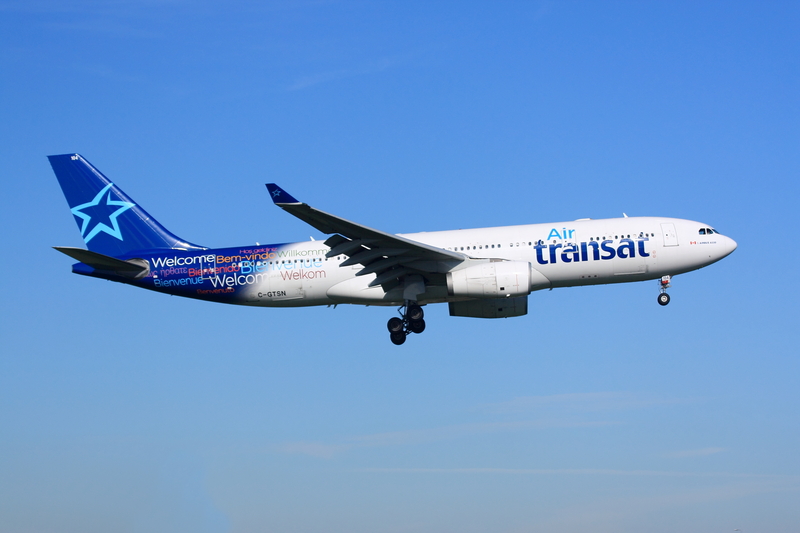
Air Transat separately halted service to Port-au-Prince on May 13. The airline attributed that decision to conditions in Haiti and said flights would return only when operations could be conducted safely for passengers and crews.
The carrier’s Port-au-Prince notice remains open-ended. Unlike the Cuban decision, it was not presented as a response to fuel availability or the broader rise in Air Transat’s operating costs.
PAP is nevertheless part of the same operational result: a destination that Air Transat served during 2026 disappeared from its active schedule before the end of the year.
Orlando Is a Seasonal Case
Orlando differs from the Caribbean suspensions. Air Transat ended its continuous 2026 operation to MCO, taking the city out of the active network for an extended period, but it has continued to market Orlando and load later seasonal service.
The airline’s Orlando booking page shows the gap in late 2026 alongside flights returning in the subsequent winter schedule. Orlando is therefore a network interruption, not evidence that Air Transat has abandoned the destination permanently.
That distinction matters because leisure carriers routinely move narrowbody capacity between Florida, Mexico and the Caribbean as demand changes by season. MCO’s inclusion in a seven-city count describes what happened within the 2026 operating calendar, rather than the airline’s longer-term commitment to Central Florida.
Fuel Costs Drove a Wider Capacity Review
The destination changes came during a broader reassessment of Air Transat’s schedule. On April 22, parent company Transat said it had implemented a 6% reduction in planned capacity for May through October, cutting selected frequencies to Europe and the Caribbean while prioritizing routes with stronger expected performance.
By the third quarter, Transat said aviation fuel costs had risen C$105 million year over year, reflecting a 56% increase in fuel prices. The cumulative effect of the fuel crisis had reached approximately C$175 million, while the company reported negative adjusted EBITDA of C$0.9 million for the quarter, compared with positive C$81.2 million a year earlier.
The airline was also contending with the continued grounding of Airbus A321LR aircraft for Pratt & Whitney GTF engine inspections and repairs. Those aircraft are central to Air Transat’s network because they can operate both transatlantic and southern leisure routes, allowing capacity to move between markets as the seasons change.
Air Transat’s 199-seat Airbus A321LR has 12 Club Class seats and combines long range with lower trip costs than its Airbus A330 widebodies. Its Airbus A321ceo fleet carries 198 or 199 passengers and is suited to shorter leisure sectors in Florida, Mexico and the Caribbean. The flexibility of those two narrowbody variants is particularly valuable when an airline must redeploy capacity at short notice.
Transat’s response has not been limited to reductions. Air Transat continued opening destinations in Europe, Africa and South America during 2026, while preparing new winter service to Aruba, Barbados, Los Cabos and Las Palmas. The seven-city contraction is therefore part of a redistribution of flying rather than a uniform retreat from international expansion.
Bottom Line
The largest consequence is the removal of Cuba from Air Transat’s winter production. Five stations disappeared together, taking out a mature package market and forcing aircraft, hotel inventory and sales capacity to be redirected. For a leisure airline, that kind of countrywide suspension is more disruptive than closing five unrelated routes because the affected flying shared the same seasonal planning and distribution structure.
Port-au-Prince adds another market where the timetable depends on conditions outside the airline’s control. Orlando is different: its return in later seasonal schedules shows that Air Transat remains willing to serve Florida when the demand pattern and aircraft economics support it. Treating all seven destinations as permanent cancellations would miss that distinction.
What matters next is where the freed capacity settles. Air Transat is directing growth toward Europe, North Africa, South America and alternative winter sun markets while managing higher fuel costs and limited A321LR availability. The durability of that shift will become clearer when the airline publishes its full 2027 program and indicates whether any Cuban service can return.