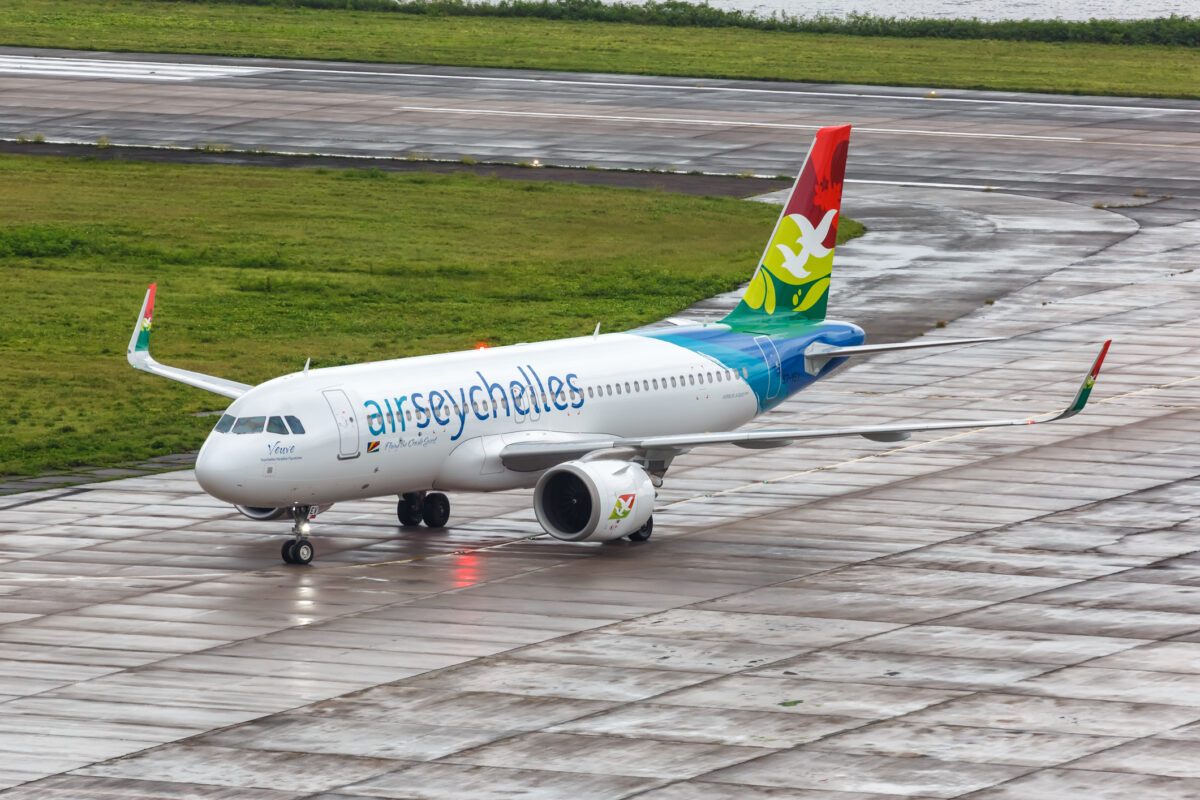
Air Seychelles will add two Airbus A321XLR aircraft in 2028, giving the island nation’s flag carrier the range to reconnect Mahé with major European tourism markets using a lower-capacity aircraft than a traditional widebody.

The airline will dry lease both aircraft from SMBC Aviation Capital. The A321XLRs will come from the lessor’s existing Airbus order book, although exact delivery dates, lease terms and cabin configurations have not yet been disclosed.
Deliveries are scheduled for 2028. Air Seychelles CEO Sandy Benoiton said the aircraft will allow the airline to reach established tourism source markets while developing new destinations beyond its current regional network.
Read our stories in your inbox
Two aviation newsletters. Zero fluff.
For Air Seychelles, this is more than a routine fleet addition. The A321XLR could provide a financially sustainable way to restore nonstop European routes without returning to the cost and capacity of a permanently based Airbus A330 widebody fleet.
Air Seychelles Will Operate the Aircraft Itself
The two A321XLRs will be supplied through a dry lease rather than a wet-lease arrangement.
Under a dry lease, the airline receives the aircraft without pilots or cabin crew and retains operational control. Air Seychelles will therefore operate the jets under its own air operator certificate, using its own crews, maintenance program and commercial procedures.
That is an important distinction from the temporary long-haul capacity Air Seychelles has used during 2026.
The carrier has operated selected flights with an Airbus A330-300 supplied by Hi Fly Malta. Hi Fly specializes in wet leases, under which the provider supplies the aircraft together with its crew, maintenance and insurance.
Wet-leased aircraft allow airlines to add capacity quickly without permanently expanding their fleets. They are useful for seasonal routes, short-term disruptions and testing new markets, but they are generally more expensive and give the customer airline less operational control.
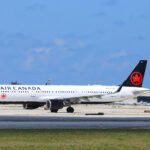
The A321XLR agreement represents a longer-term commitment. Air Seychelles will need to recruit or train pilots, establish maintenance support, acquire spare parts and prepare Seychelles International Airport (SEZ) for regular long-range A321 operations.
The A321XLR Is a Very Different Aircraft From the A320neo
Air Seychelles currently owns and operates two Airbus A320neos on international and regional routes from Seychelles International Airport (SEZ).
Each A320neo is configured with 168 seats, including 12 Business Class seats and 156 Economy Class seats. The airline also operates five 19-seat De Havilland Canada DHC-6-400 Twin Otters, primarily on the short domestic route between Mahé and Praslin Island Airport (PRI).
The incoming A321XLR belongs to the same Airbus A320neo family, but it is significantly larger and has far greater range.

The aircraft is 146 feet long and can accommodate between 180 and 220 passengers in a typical two-class configuration. Airbus certifies the type for as many as 244 passengers in a high-density layout, although an airline operating flights of eight to 11 hours would normally select a less dense cabin.
Air Seychelles has not revealed how many seats its aircraft will have. It has also not confirmed whether the jets will include lie-flat Business Class seats, Premium Economy or seatback entertainment.
Airbus specifically markets the A321XLR as capable of supporting full-flat premium seating, modern inflight entertainment and connectivity. A spacious configuration would be important if Air Seychelles intends to compete for higher-yield European vacation traffic.
Up to 4,700 Nautical Miles of Range
The A321XLR has a published maximum range of approximately 4,700 nautical miles, or 8,700 kilometers. Airbus says the aircraft can remain airborne for as long as 11 hours, depending on payload, weather and operating conditions.
Its additional range comes partly from a permanent rear center fuel tank installed within the lower fuselage. The aircraft also has a maximum takeoff weight of 101.5 metric tons, structural changes and modified fuel systems compared with a standard A321neo.
That range places much of Europe within theoretical nonstop reach of Seychelles International Airport (SEZ).
Paris Charles de Gaulle Airport (CDG), Frankfurt Airport (FRA), Rome Fiumicino Airport (FCO), Milan Malpensa Airport (MXP), Zurich Airport (ZRH) and London Heathrow Airport (LHR) all fall within or near the A321XLR’s published range from Mahé.
However, published range is not the same as guaranteed commercial performance.
Headwinds, required fuel reserves, passenger baggage, cargo, diversion planning and seasonal weather can reduce the aircraft’s usable range. Flights to northern Europe may require payload restrictions under unfavorable conditions, particularly on sectors approaching the outer edge of the aircraft’s capability.
Air Seychelles will need detailed route-performance studies before selecting destinations and cabin capacity.
Europe Is the Obvious Strategic Target
Air Seychelles has not officially named the routes that will receive the A321XLR. Benoiton referred only to traditional tourism source markets and opportunities to develop new destinations.
European service is nevertheless the clearest strategic objective.
A local report describing the agreement said the aircraft would support Air Seychelles’ return to Europe in 2028. The airline previously operated its own Airbus A330 services to Paris Charles de Gaulle Airport (CDG) and Düsseldorf Airport (DUS), but ended its scheduled European widebody operation during a major restructuring in 2018.
Europe remains the largest source of visitors to Seychelles.
Germany was the country’s largest individual tourism market through late November 2025, followed by France and Russia. Italy and the United Kingdom completed the five largest source markets. Together, those countries provide a strong indication of where Air Seychelles could eventually deploy the A321XLR.
Paris Airport (CDG) would be a logical candidate because Air Seychelles has served the French capital previously and France consistently ranks among Seychelles’ largest visitor markets.
Germany may offer several possibilities. Frankfurt Airport (FRA) would provide a large catchment area and extensive connecting opportunities, while Düsseldorf Airport (DUS) has historical significance for Air Seychelles.
Rome Airport (FCO) or Milan Airport (MXP) could address the Italian market, while London Airport service would target another important source of high-value leisure travelers.
None of these routes has been confirmed. Air Seychelles may also choose secondary airports with lower fees, better slot availability or stronger tour operator support.
The XLR Reduces the Risk of European Service
Air Seychelles’ previous European network relied on the Airbus A330, a twin-aisle aircraft with considerably more seats and cargo capacity than the A321XLR.
Widebodies work well when an airline can consistently fill them. They become expensive when demand is seasonal or when competing airlines offer large amounts of connecting capacity.
Seychelles is already well connected through the Gulf. Emirates, Qatar Airways and Etihad Airways provide access through Dubai International Airport (DXB), Hamad International Airport (DOH) and Zayed International Airport (AUH). European leisure carriers also operate seasonal nonstop flights to Seychelles International Airport (SEZ).
That competition contributed to Air Seychelles’ decision to abandon its previous long-haul model.
The A321XLR changes the calculation. It provides long-haul range with fewer seats and lower trip costs than an A330, allowing Air Seychelles to operate routes that may not support a widebody throughout the year.
Airbus claims the A321XLR uses approximately 30% less fuel per seat than previous-generation competing aircraft. The actual savings for Air Seychelles will depend heavily on cabin density, route length and load factor.
The XLR could also allow Air Seychelles to adjust frequency more easily. Instead of filling one or two large widebody flights, the airline may be able to offer three or four smaller weekly departures, improving schedule choice while distributing capacity more evenly.
Two Aircraft Create Operational Limitations
A fleet of only two A321XLRs will require careful planning.
Long-haul aircraft accumulate substantial flight hours, and scheduled maintenance can remove one jet from service for extended periods. An unexpected technical problem could leave Air Seychelles with only one available aircraft for its entire long-range network.
The airline could maintain access to wet-leased backup capacity, but positioning a replacement aircraft to Seychelles International Airport (SEZ) at short notice would be expensive.
Air Seychelles must also avoid building a schedule that requires both aircraft to operate continuously with little recovery time. Long sectors to Europe can be affected by weather, airspace restrictions, crew-duty limits and delays at congested destination airports.
Airbus commonality should reduce some transition costs because Air Seychelles already operates the A320neo. Pilots can move between A320-family variants with additional differences training rather than completing an entirely unrelated type rating.
However, operating the A321XLR on flights approaching 11 hours introduces new requirements involving augmented crews, inflight rest, long-range communications, diversion planning, catering and passenger service.
The A321XLR Cannot Fully Replace a Widebody
The A321XLR offers lower risk, but it does not provide all the capabilities of an Airbus A330.
Passengers will travel in a single-aisle cabin, which can make boarding slower and restrict movement during a 10-hour flight. Restroom and galley space is also more limited than on a widebody.
Belly-cargo capacity presents another tradeoff.
Seychelles imports a significant amount of merchandise by air, while outbound cargo can include seafood and other time-sensitive products. An A330 can carry substantially more freight beneath the passenger cabin than an A321XLR, particularly when operating with a full passenger load and long-range fuel requirement.
The XLR’s economics are strongest when passenger demand is too small for a widebody. Air Seychelles will sacrifice cargo volume and some cabin flexibility in exchange for lower trip cost and reduced seat capacity.
For a tourism-focused carrier serving a relatively small home market, that may be the appropriate compromise.
The Aircraft Could Also Strengthen Existing Markets
Although European routes will attract the most attention, Air Seychelles could use the A321XLR elsewhere.
Its current regional network includes service from Seychelles International Airport (SEZ) to O.R. Tambo International Airport in Johannesburg (JNB), Sir Seewoosagur Ramgoolam International Airport in Mauritius (MRU), Bandaranaike International Airport in Colombo (CMB) and Zayed International Airport in Abu Dhabi (AUH).
Most of those routes are comfortably within A320neo range, so deploying the XLR would primarily add capacity rather than unlock a destination.
The aircraft could be valuable during peak holiday periods or on routes with substantial cargo and premium demand. It could also open longer services into India, Southeast Asia, Central Asia or additional African markets.
Air Seychelles will need to balance those opportunities against the primary purpose of the fleet: restoring direct access to major international tourism markets that are currently reached mainly through foreign airlines and connecting hubs.
Bottom Line
Air Seychelles’ agreement for two Airbus A321XLRs is the airline’s most important fleet decision in years.
The aircraft will be dry leased from SMBC Aviation Capital and delivered in 2028. Unlike temporary wet-leased widebody capacity, the A321XLRs will be operated by Air Seychelles using its own crews and under its own operational control.
With up to 4,700 nautical miles of range, the aircraft can potentially connect Seychelles International Airport (SEZ) with major tourism markets across Europe while carrying fewer passengers than an Airbus A330.
That lower capacity is the central advantage. Air Seychelles can pursue long-haul routes without assuming the same financial risk that contributed to the end of its previous European widebody network.
The airline has not announced specific routes, frequencies or cabin layouts. It must also address the operational vulnerability of maintaining a long-haul network with only two aircraft.
Still, the A321XLR appears unusually well matched to Air Seychelles. It offers enough range to reconnect the islands with their most important visitor markets while retaining the economics of a single-aisle aircraft.
Keep reading FlyMag
Get the Daily Brief in the morning or the Route Watch weekly recap on Fridays. Or both.