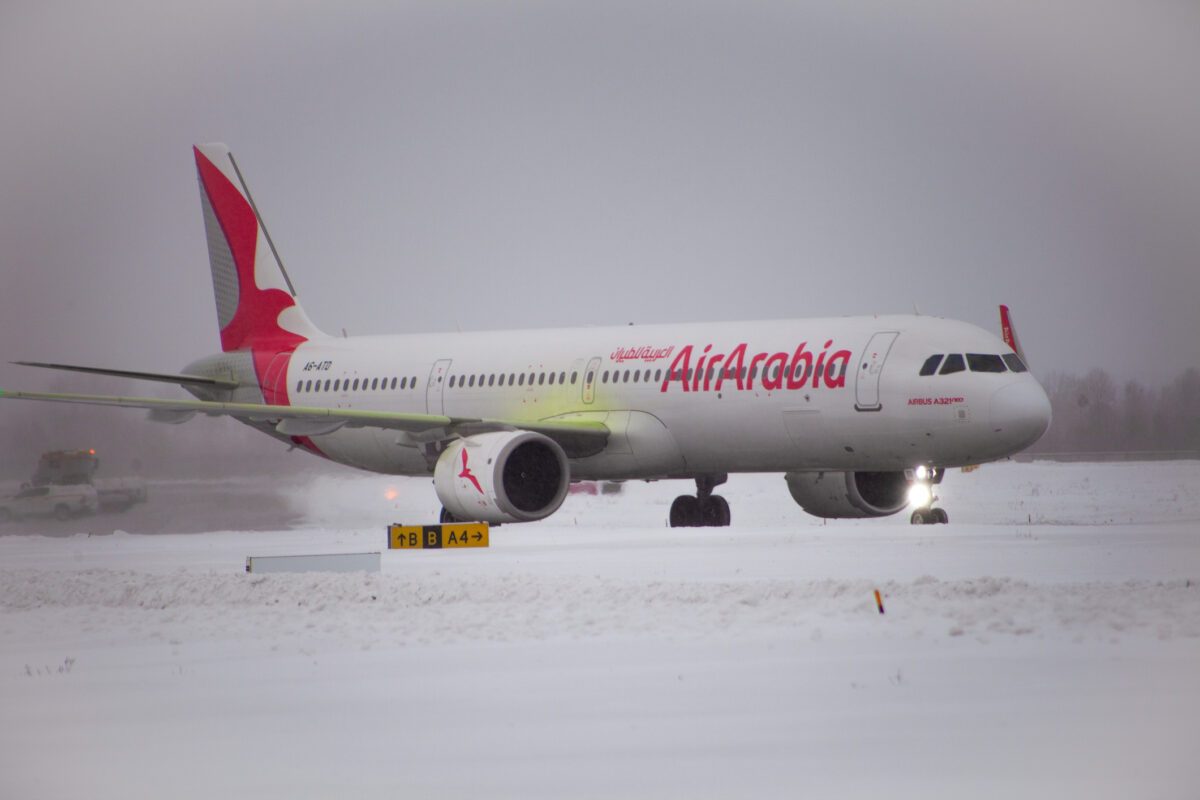
Air Arabia will launch daily nonstop flights between Sharjah (SHJ) and Düsseldorf (DUS) on December 16, 2026, adding a third German destination to its expanding European network.
The carrier confirmed the route in an August 27 announcement. Düsseldorf Airport also published the schedule and said the service would broaden access to the Gulf and Air Arabia’s connecting network for travelers from North Rhine-Westphalia and neighboring areas of the Netherlands.
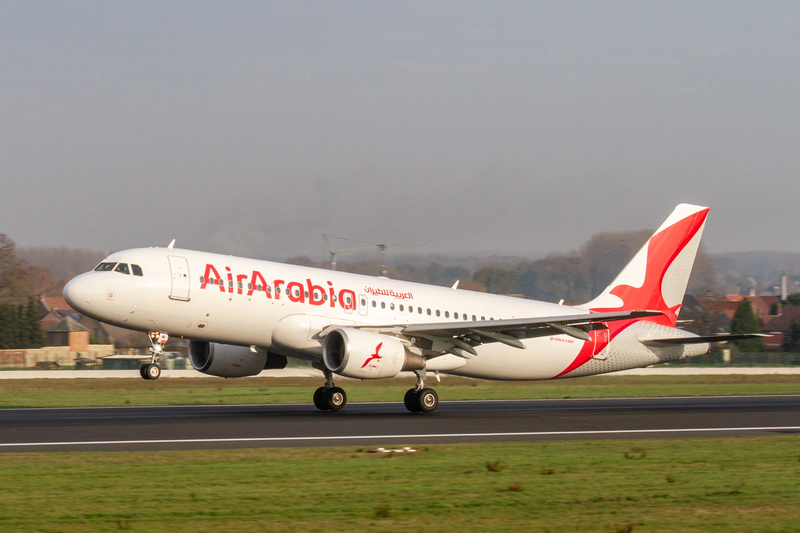
The airline will operate the route with a 174-seat Airbus A320neo. At seven round trips a week, that represents 1,218 seats in each direction, or about 126,700 scheduled seats annually if the frequency and aircraft configuration remain unchanged.
Read our stories in your inbox
Two aviation newsletters. Zero fluff.
Two Timetables Across the Week
Air Arabia has divided the daily service between two sets of flight numbers and departure times. On Mondays, Wednesdays, Fridays and Sundays, flight G9 412 will leave SHJ at 3:30 p.m. and arrive at DUS at 8:05 p.m. The return flight, G9 413, will depart Düsseldorf at 8:55 p.m. and reach Sharjah at 6:35 a.m. the following day.
On Tuesdays, Thursdays and Saturdays, G9 403 will depart SHJ at 8:10 a.m. and land at DUS at 12:45 p.m. Flight G9 404 will leave Germany at 1:35 p.m. and arrive in Sharjah at 11:15 p.m. All times are local.
The published schedule gives an elapsed block time of seven hours and 35 minutes westbound and six hours and 40 minutes eastbound during the winter timetable. Both Düsseldorf patterns provide a 50-minute ground turn before the aircraft returns to Sharjah.
The split schedule also produces two distinct arrival profiles at SHJ. Four weekly flights feed into the following morning after an overnight sector from Germany, while the other three reach Sharjah before midnight. Air Arabia is marketing onward access across the Middle East, South Asia and Southeast Asia, including connections involving Saudi Arabia, India, Pakistan, Nepal and Thailand.
Third German Route in a Year
Düsseldorf follows a rapid buildup by Air Arabia in Germany. The airline began daily service between Sharjah and Munich (MUC) on December 15, 2025, after identifying the Bavarian city as its first destination in the country.

Frankfurt (FRA) will become the second on December 15, 2026, when another daily A320neo route begins. Düsseldorf follows one day later, taking Air Arabia from one to three German stations within 12 months. Each will have daily nonstop service from SHJ.
The choice of Düsseldorf adds Germany’s most populous state to that footprint rather than simply adding frequency at Frankfurt or Munich. The airport’s 2025 annual report places 18 million people within 100 kilometers of DUS. The airport handled 21.03 million passengers and 159,969 aircraft movements during the year.
Düsseldorf said the new route would serve passengers in North Rhine-Westphalia as well as parts of the Netherlands. That catchment gives Air Arabia access to a large mix of leisure, visiting-friends-and-relatives and business traffic, while SHJ provides a transfer point into markets that are difficult to serve nonstop from a single German regional gateway.
The German expansion is part of a wider increase in Air Arabia’s European flying. Its Sharjah network now reaches markets across the United Kingdom, Italy, Austria, Greece, the Czech Republic and Poland, alongside the three German destinations.
A320neo Takes On the Longer Sector
Air Arabia’s A320neo has a single-class layout with 174 seats, according to the carrier’s first-delivery announcement. The aircraft uses CFM International LEAP-1A engines and Sharklet wingtip devices.
Airbus publishes a maximum range of 3,400 nautical miles for the A320neo and says the type can reduce fuel consumption and carbon dioxide emissions per seat by up to 20% compared with previous-generation aircraft. Those economics are important on a daily route with a westbound block time exceeding seven hours, where fuel performance and the ability to match capacity closely to demand carry more weight than on shorter European sectors.
The 174-seat layout is below the A320neo’s maximum certified capacity of 194 passengers. It gives Air Arabia a standardized narrowbody product for Düsseldorf while keeping the daily capacity increment substantially below that of a widebody. That allows the airline to emphasize frequency and connecting choice without introducing several hundred seats on individual departures.
The Düsseldorf assignment also shows how Air Arabia is using its new-generation fleet to open longer European routes. The airline received its first directly ordered A320neo in September 2025 and placed it into commercial service the following month. Its larger order covers 120 A320-family aircraft, including A320neo, A321neo and A321XLR variants.
Expansion Continues After a Disrupted First Half
Air Arabia reported a fleet of 96 owned and leased Airbus A320-family aircraft at the end of June 2026 after adding six aircraft during the first half. In its half-year results, the group said it carried more than 8.7 million passengers with an average load factor of 83%, despite capacity reductions caused by regional airspace disruption.
The airline entered 2026 after carrying 21.8 million passengers in 2025, when it added 30 routes across its operating hubs and increased capacity by 10%. The succession of winter announcements for Germany and Poland indicates that Air Arabia is continuing to commit incoming aircraft to network growth even after a more difficult operating period in the first half of 2026.
Tickets for the Düsseldorf service are now on sale through Air Arabia and travel agencies.
Bottom Line
Düsseldorf gains a daily low-cost link to the United Arab Emirates that is structured as more than a point-to-point leisure flight. Sharjah’s value lies in the onward network, particularly toward South Asia and the Middle East, while DUS gives Air Arabia a dense catchment extending beyond North Rhine-Westphalia into the Netherlands. The daily schedule is also more commercially useful than a limited-frequency service for passengers assembling connecting itineraries.
For Air Arabia, the route is another example of the A320neo order translating into longer-range network growth. A 174-seat narrowbody limits the capacity risk at a new station while daily operation keeps the product competitive on schedule. The key measure after launch will be whether Düsseldorf, Frankfurt and Munich can each sustain year-round daily flying without relying on frequency reductions outside peak travel periods.
The three-city German buildup also signals that Air Arabia sees room for a distinct Sharjah-based proposition alongside the established Gulf hubs. Its advantage will depend on maintaining low costs and useful connections as the European network expands. Further A320neo deliveries — and eventually the arrival of the larger A321 variants in its orderbook — will determine how far the airline can extend that strategy and whether additional German or nearby European markets follow.
Keep reading FlyMag
Get the Daily Brief in the morning or the Route Watch weekly recap on Fridays. Or both.