Southwest’s 19-Route Spring 2027 Expansion Includes a 90-Mile BWI–Philadelphia Shuttle
Southwest Airlines is adding 19 new or returning nonstop routes for spring 2027, including expanded international flying from Nashville, two more links between California and Hawaii, and one of the shortest routes in its network: Baltimore–Philadelphia.

The schedule also gives Austin-Bergstrom International Airport (AUS) and Orlando International Airport (MCO) their largest Southwest operations to date. Austin will handle as many as 141 Southwest departures on Mondays, Thursdays, and Fridays, while Orlando will reach 214 departures on Saturdays.
Southwest announced the expansion on July 16 while encouraging customers to begin planning spring-break travel. The additional flying is scheduled to begin in March 2027; it is not a back-to-school capacity increase, as the original report suggested.
Read our stories in your inbox
Two aviation newsletters. Zero fluff.
The airline’s official spring 2027 schedule announcement lists 19 new city pairs, five significant frequency additions, and an unusual 2:45 a.m. departure from Las Vegas to Honolulu.
Southwest’s 19 New Spring 2027 Routes
Most of the additions will begin during March 2027. Southwest did not publish exact start dates for every route, although the Baltimore–Philadelphia service is scheduled to begin on March 11.
| New or Returning Route | Planned Frequency |
|---|---|
| Austin-Bergstrom International Airport (AUS)–Detroit Metropolitan Wayne County Airport (DTW) | Four weekly: Monday, Thursday, Friday, and Sunday |
| Austin-Bergstrom International Airport (AUS)–Juan Santamaría International Airport (SJO), San José, Costa Rica | Saturday only |
| Orlando International Airport (MCO)–LaGuardia Airport (LGA) | Three daily |
| Orlando International Airport (MCO)–Pensacola International Airport (PNS) | Daily |
| Baltimore/Washington International Thurgood Marshall Airport (BWI)–Philadelphia International Airport (PHL) | Twice daily |
| Dallas Love Field (DAL)–Detroit Metropolitan Wayne County Airport (DTW) | Daily except Saturday |
| Nashville International Airport (BNA)–Des Moines International Airport (DSM) | Daily |
| Nashville International Airport (BNA)–Wichita Dwight D. Eisenhower National Airport (ICT) | Daily |
| Harry Reid International Airport (LAS)–Boston Logan International Airport (BOS) | Selected days; frequency not disclosed |
| Harry Reid International Airport (LAS)–Miami International Airport (MIA) | Selected days; frequency not disclosed |
| Harry Reid International Airport (LAS)–Philadelphia International Airport (PHL) | Selected days; frequency not disclosed |
| Harry Reid International Airport (LAS)–McGhee Tyson Airport (TYS) | Selected days; frequency not disclosed |
| Nashville International Airport (BNA)–Queen Beatrix International Airport (AUA), Aruba | Saturday only |
| Nashville International Airport (BNA)–Daniel Oduber Quirós International Airport (LIR), Liberia, Costa Rica | Saturday only |
| Nashville International Airport (BNA)–Sangster International Airport (MBJ), Montego Bay | Saturday only |
| Nashville International Airport (BNA)–Cyril E. King Airport (STT), St. Thomas | Saturday only |
| John Glenn Columbus International Airport (CMH)–Punta Cana International Airport (PUJ) | Saturday only |
| San Diego International Airport (SAN)–Ellison Onizuka Kona International Airport at Keāhole (KOA) | Weekends |
| San Diego International Airport (SAN)–Lihue Airport (LIH) | Weekends |
The four Las Vegas routes will operate on varying days and frequencies. Southwest has not yet publicly specified how many weekly flights each market will receive, so reports describing any of them as daily or providing exact operating days are premature.
Baltimore–Philadelphia Is the Most Unusual Addition
The most surprising route is the twice-daily connection between Baltimore/Washington International Thurgood Marshall Airport (BWI) and Philadelphia International Airport (PHL).
The two airports are separated by just 90.1 statute miles, or 78.3 nautical miles. The driving distance is approximately 100 miles, depending on the route. Southwest plans to begin the flights on Thursday, March 11, 2027.
A Boeing 737 will spend relatively little time at cruise altitude on such a short sector. Much of the block time will be consumed by taxiing, takeoff, climb, descent, and the approach into Philadelphia International Airport (PHL) or Baltimore/Washington International Airport (BWI).
The route is unlikely to depend primarily on passengers traveling only between Baltimore and Philadelphia. Amtrak and Interstate 95 provide practical surface alternatives, and airport processing can make flying slower than traveling by train or car.
Its greater value is probably connecting traffic through Baltimore/Washington International Airport (BWI), one of Southwest’s largest operating bases. That is an inference based on the airline’s network rather than an explanation supplied by Southwest.
A passenger originating in the Philadelphia region could fly to Baltimore/Washington International Airport (BWI) and connect to one of Southwest’s many destinations that either lack nonstop service from Philadelphia International Airport (PHL) or are available at less attractive times and fares.
The route could also help Southwest retain customers in the Delaware Valley who prefer the airline’s Rapid Rewards program, assigned-seating products, or connecting network but do not want to drive to BWI.
Twice-daily service, however, provides only limited schedule flexibility. Its performance will depend heavily on whether the flights are timed around productive connecting banks at Baltimore/Washington International Airport (BWI).
Short flights are relatively expensive to operate on a per-mile basis. Fuel consumption during takeoff and climb, airport charges, crew costs, and aircraft-cycle-related maintenance expenses do not decline in proportion to distance. Southwest will therefore need meaningful connecting revenue rather than relying on inexpensive local fares alone.
Austin Reaches a Record 141 Departures
Southwest’s growth at Austin-Bergstrom International Airport (AUS) includes two new destinations and additional service to two Colorado ski markets.
The airline will begin four weekly flights between Austin-Bergstrom International Airport (AUS) and Detroit Metropolitan Wayne County Airport (DTW), operating on Mondays, Thursdays, Fridays, and Sundays.
Detroit is a significant local business market and a major connecting hub for Delta Air Lines. Southwest’s new route will compete for local passengers while also providing one-stop connections beyond Austin-Bergstrom International Airport (AUS).
The second Austin addition is a Saturday flight to Juan Santamaría International Airport (SJO), which serves San José, Costa Rica. The airport code is important: Southwest is flying to SJO in Costa Rica, not Norman Y. Mineta San Jose International Airport (SJC) in California.
A once-weekly Saturday schedule is a low-risk way to test leisure demand. It allows Southwest to concentrate vacation traffic onto one departure without committing an aircraft to daily service in a market that may be highly seasonal.
Southwest is also increasing Austin service to Yampa Valley Regional Airport (HDN), serving Steamboat Springs, and Montrose Regional Airport (MTJ). Both routes will operate five times weekly on Mondays, Thursdays, Fridays, Saturdays, and Sundays during the relevant seasonal period. These are frequency increases rather than entirely new routes.
The growth will push Southwest to as many as 141 departures from Austin-Bergstrom International Airport (AUS) on Mondays, Thursdays, and Fridays, the highest level in its history at the airport.
That expansion is closely connected to Southwest’s new Austin crew base. The airline opened the base in March 2026 with approximately 335 pilots and 650 flight attendants and expects it to grow to roughly 2,000 employees by mid-2027.
Austin is also gaining a station command center and flight-attendant training facility. Basing crews locally reduces the need to position pilots and flight attendants from other cities, creates more opportunities to begin and end aircraft rotations in Austin, and can improve recovery when weather or maintenance problems disrupt the schedule.
The 141-departure schedule is therefore more than a temporary spring-break increase. It demonstrates how the crew base is allowing Southwest to turn Austin-Bergstrom International Airport (AUS) into a more operationally independent station.
Orlando Will Reach 214 Saturday Departures
Orlando International Airport (MCO) will set its own Southwest record with as many as 214 departures on Saturdays.
The most prominent addition is three-times-daily service to New York LaGuardia Airport (LGA). Southwest does not currently appear among the regular nonstop operators in the Orlando–LaGuardia market, which is served by American Airlines, Delta Air Lines, Frontier Airlines, and JetBlue Airways. Its spring 2027 schedule should therefore be viewed as a return or reentry rather than simply the addition of a third daily frequency to an existing Southwest route.
Three daily flights provide enough frequency to appeal to both leisure and business travelers. They also allow Southwest to offer morning, midday, and evening options, subject to the final schedule.
LaGuardia Airport (LGA) is slot-controlled, meaning airlines generally cannot add flights freely during restricted hours without obtaining or reallocating takeoff and landing rights. Southwest has not said that the Orlando flights depend on receiving slots previously held by Spirit Airlines, and that should not be presented as confirmed.
Southwest will also begin daily intrastate service from Orlando International Airport (MCO) to Pensacola International Airport (PNS).
The route connects two Florida markets separated by a lengthy drive. It should carry a mixture of local passengers and connecting traffic, particularly travelers using Orlando as a gateway to destinations elsewhere in Southwest’s network.
The Saturday peak of 214 departures reflects Orlando’s leisure profile. Demand for theme parks, cruises, beaches, and vacation homes is especially strong on weekends, when accommodations commonly turn over and families are most likely to travel.
Nashville Adds Domestic Feed and Four International Destinations
Nashville International Airport (BNA) receives six of the 19 new routes, more than any airport other than Las Vegas when domestic and international additions are combined.
Daily flights to Des Moines International Airport (DSM) and Wichita Dwight D. Eisenhower National Airport (ICT) will strengthen Nashville’s role as a connecting point for travelers moving between smaller Midwestern cities, the Southeast, Florida, and the East Coast.
Neither route is especially long, but both can contribute passengers to several Nashville departures. A traveler from Wichita may use Nashville to reach the Carolinas or Florida, while a Des Moines passenger could connect through Nashville to destinations across the Southeast.
Southwest is also adding four Saturday-only international routes from Nashville International Airport (BNA):
- Queen Beatrix International Airport (AUA) in Aruba
- Daniel Oduber Quirós International Airport (LIR) in Liberia, Costa Rica
- Sangster International Airport (MBJ) in Montego Bay, Jamaica
- Cyril E. King Airport (STT) in St. Thomas
These are classic leisure-oriented additions. Saturday service allows Southwest to target the most common vacation changeover day while limiting capacity during the rest of the week.
St. Thomas is part of the U.S. Virgin Islands, so passengers returning to the continental United States generally avoid the same immigration process associated with arriving from a foreign country. Aruba also offers U.S. Customs and Border Protection preclearance, allowing travelers to complete U.S. entry formalities before departure.
The source article incorrectly identifies Punta Cana as another new Nashville route. The new Punta Cana service will operate between John Glenn Columbus International Airport (CMH) and Punta Cana International Airport (PUJ) on Saturdays.
Nashville International Airport (BNA) already has Southwest service to Punta Cana International Airport (PUJ). That route, along with Nashville–San Juan, is scheduled to increase to daily service in March 2027.
Columbus Receives a New Punta Cana Flight
The Saturday route between John Glenn Columbus International Airport (CMH) and Punta Cana International Airport (PUJ) expands Southwest’s international leisure portfolio from Ohio.
Punta Cana is well suited to limited-frequency nonstop service because many travelers book weeklong resort packages beginning and ending on Saturdays. A single weekly rotation can therefore capture concentrated demand that might not support year-round daily service.
The route also allows Southwest to compete more directly for Ohio travelers who would otherwise connect through Baltimore/Washington International Airport (BWI), Orlando International Airport (MCO), Fort Lauderdale-Hollywood International Airport (FLL), or another gateway.
Unlike an ordinary domestic addition, international service requires customs facilities, appropriate ground handling, coordination with foreign authorities, and schedules that account for longer passenger-processing times.
Las Vegas Gains Four New Markets
Southwest will add four destinations from Harry Reid International Airport (LAS):
- Boston Logan International Airport (BOS)
- Miami International Airport (MIA)
- Philadelphia International Airport (PHL)
- McGhee Tyson Airport (TYS), serving Knoxville
The airline has described the routes as operating on varying days and frequencies but has not provided a simple weekly pattern for each one.
Boston–Las Vegas is the longest of the four and is a substantial transcontinental market. It combines strong leisure traffic with conventions, entertainment, and visiting-friends-and-relatives demand.
Miami International Airport (MIA) gives Southwest another connection between Las Vegas and South Florida. Philadelphia International Airport (PHL) extends its Las Vegas presence into another large Northeast market, while Knoxville provides a less competitive link from eastern Tennessee.
The Knoxville route may be particularly valuable for connections. McGhee Tyson Airport (TYS) has a smaller local passenger base than Boston, Miami, or Philadelphia, but Las Vegas can distribute those travelers across Southwest’s western network.
A 2:45 A.M. Las Vegas–Honolulu Flight
Southwest is also adding what it calls its first “reverse red-eye,” departing Harry Reid International Airport (LAS) for Daniel K. Inouye International Airport (HNL) at 2:45 a.m. local time.
The terminology reflects the direction of travel. Traditional overnight transcontinental flights leave the western United States late in the evening and arrive on the East Coast the following morning. The Honolulu flight will instead leave Las Vegas in the middle of the night and travel west, reaching Hawaii in the morning after accounting for the time-zone change.
The departure is unlikely to be popular with every passenger, but it can improve aircraft utilization. An airplane that might otherwise remain parked in Las Vegas for much of the night can operate a revenue-producing flight and arrive in Honolulu in time for daytime flying.
It may also attract passengers connecting into Harry Reid International Airport (LAS) on evening flights from other Southwest cities. Those travelers can continue to Hawaii without paying for a hotel in Las Vegas, although the long overnight connection and 2:45 a.m. departure will not appeal to everyone.
Southwest Adds More California–Hawaii Flying
San Diego International Airport (SAN) will gain weekend nonstop flights to both Ellison Onizuka Kona International Airport at Keāhole (KOA) and Lihue Airport (LIH).
Kona provides access to the western side of the Island of Hawaii, while Lihue serves Kauai. The routes allow Southern California travelers to reach two Hawaiian leisure destinations without connecting through Daniel K. Inouye International Airport (HNL) or another mainland gateway.
Southwest is also increasing existing service from Daniel K. Inouye International Airport (HNL) to Hollywood Burbank Airport (BUR) and Ontario International Airport (ONT). Both will operate five times weekly, with no flights on Tuesdays and Wednesdays.
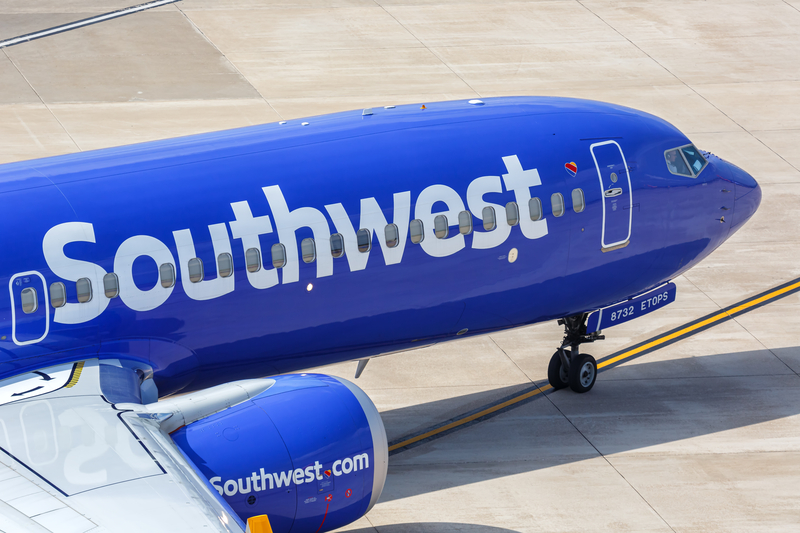
Mainland–Hawaii operations require aircraft and crews approved for Extended-range Twin-engine Operational Performance Standards, commonly known as ETOPS. Those rules address the additional planning, equipment, maintenance, and dispatch requirements associated with operating twin-engine aircraft for long periods away from suitable diversion airports.
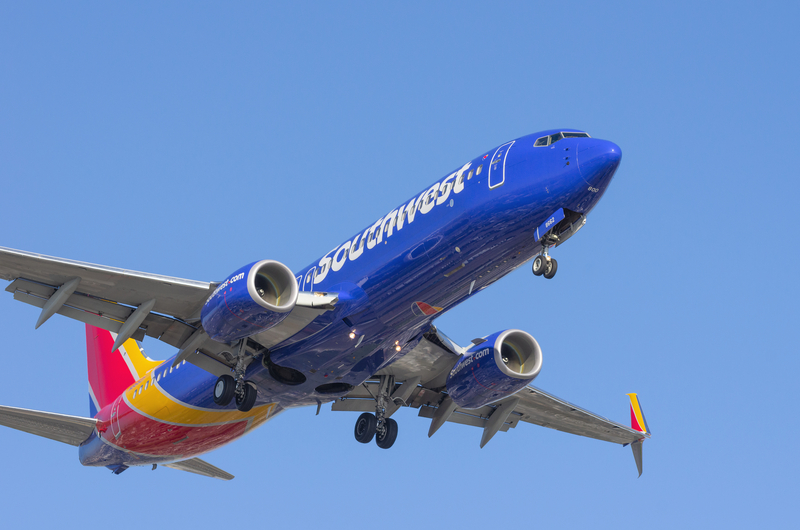
Southwest uses ETOPS-qualified Boeing 737-800s and 737 MAX 8s for Hawaii flying. Its “Imua One” special-livery aircraft, for example, is a Boeing 737 MAX 8 certified for ETOPS service.
The smaller Boeing 737-700 is not normally the aircraft associated with Southwest’s mainland–Hawaii schedule. The 175-seat 737-800 and 737 MAX 8 provide greater capacity and are better suited to the long overwater sectors.
Southwest Has Not Assigned Aircraft to Individual Routes
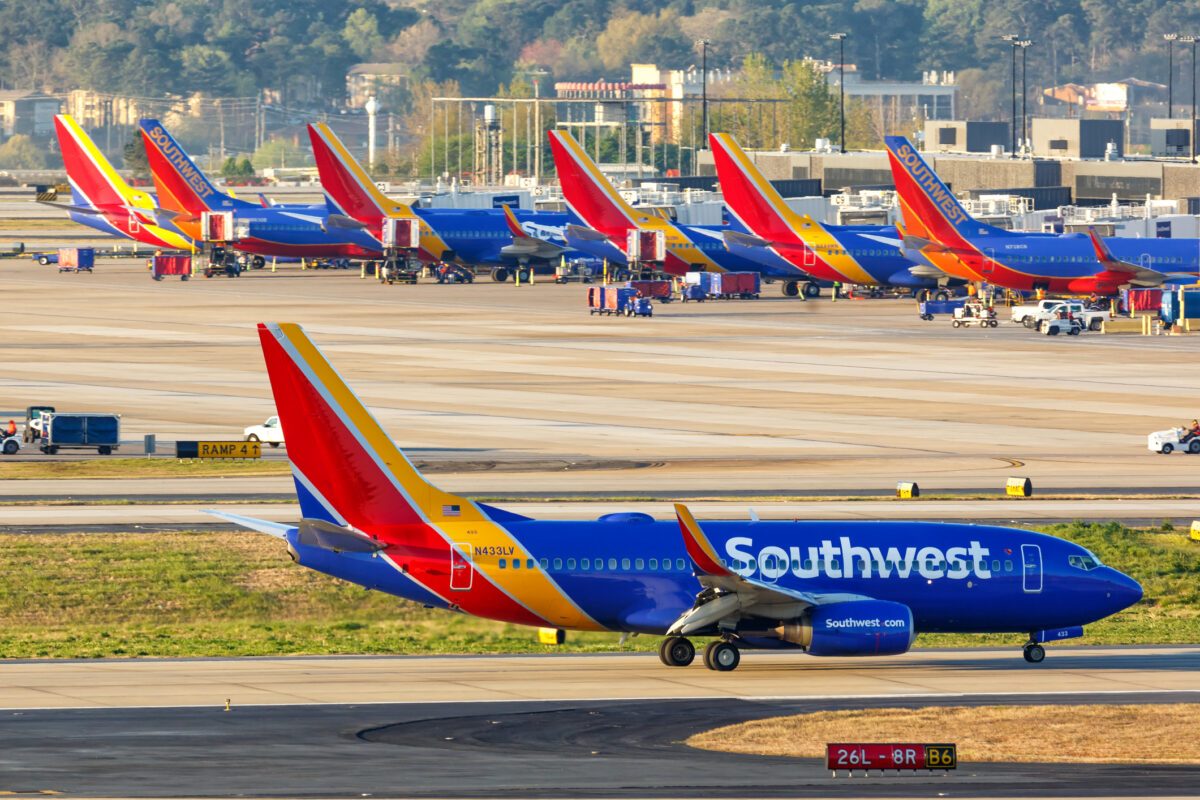
Southwest operates an all-Boeing 737 fleet, but its announcement does not identify a specific aircraft variant for each new route.
At the end of 2025, Southwest had 803 aircraft:
| Aircraft | Fleet at Year-End 2025 | Spring 2027 Seating Configuration |
| Boeing 737-700 | 305 | 137 seats |
| Boeing 737-800 | 198 | 175 seats |
| Boeing 737 MAX 8, officially designated 737-8 | 300 | 175 seats |
The airline received 55 Boeing 737 MAX 8s and retired 55 older aircraft during 2025, ending the year with the same fleet total with which it began. Most of the retirements involved Boeing 737-700s.
The 737-700 is especially useful for shorter or lower-volume routes because it provides fewer seats than the 737-800 or MAX 8. That could make it suitable for markets such as Baltimore–Philadelphia, although Southwest has not confirmed an assignment.
The 737-800 and MAX 8 are more likely to appear on higher-demand and longer-distance services. The MAX 8’s improved fuel efficiency and range make it particularly valuable on long flights such as Las Vegas–Boston and mainland–Hawaii routes, but aircraft substitutions remain common in Southwest’s network.
By spring 2027, these flights will also look different from the traditional Southwest product. The airline introduced assigned seating for travel beginning January 27, 2026, along with Standard, Preferred, and Extra Legroom seat categories.
The 737-700 carries 137 passengers under the revised configuration, while the 737-800 and MAX 8 retain 175 seats. Extra Legroom seats offer up to five additional inches of pitch on the 737-700, with the exact increase varying on larger aircraft. (Southwest’s assigned-seating information)
ID 331012298 © Boarding1now | Dreamstime.com
More Than 4,400 Flights on Peak Weekdays
Southwest’s spring 2027 schedule will exceed 4,000 daily departures across most of the week.
| Day of Week | Planned Systemwide Departures |
| Monday, Thursday, and Friday | More than 4,400 |
| Sunday | More than 4,300 |
| Tuesday, Wednesday, and Saturday | Just over 4,000 |
The pattern reflects the way Southwest is rebuilding its schedule around demand rather than operating nearly identical capacity every day.
Monday and Friday are important business and weekend-travel days, while Thursday has become a major departure day for leisure trips. Sunday carries heavy return traffic. Tuesdays and Wednesdays tend to be softer, allowing Southwest to reduce capacity, complete maintenance, and avoid discounting too many seats during lower-demand periods.
Saturday is more complex. It produces strong leisure demand at airports such as Orlando International Airport (MCO) and Nashville International Airport (BNA), but fewer traditional business trips. Southwest can therefore operate a lower total system schedule while concentrating aircraft on Caribbean, Mexican, Central American, Florida, and Hawaii routes.
The Expansion Does Not Mean Every Route Is Permanent
Southwest has placed the flights on sale, but schedules more than eight months in advance remain subject to revision.
Weekly international services and seasonal mountain routes are particularly sensitive to demand. A Saturday flight can be increased if bookings are strong, but it can also be withdrawn with limited effect on the remainder of the network if performance disappoints.
The airline’s decision not to disclose simple frequencies for the four Las Vegas additions may indicate that schedules vary by week or around peak travel periods.
It is also too early to conclude that the new routes are a direct response to capacity vacated by another airline. Southwest will undoubtedly consider competitive changes at Detroit Metropolitan Wayne County Airport (DTW), LaGuardia Airport (LGA), Orlando International Airport (MCO), and other airports, but it has not publicly attributed the spring expansion to Spirit Airlines or confirmed that it will receive any of Spirit’s former slots.
The clearer strategy is airport-specific. Austin is growing around a new crew base. Orlando is receiving additional leisure and Northeast capacity. Nashville is developing into a larger connecting and international gateway. Las Vegas is gaining both transcontinental and medium-sized regional markets, while California–Hawaii flying is expanding on weekends.
Bottom Line
Southwest Airlines’ spring 2027 expansion is larger than the original 15-route headline suggests.
The airline is adding 19 new or returning nonstop city pairs, led by six additions at Nashville International Airport (BNA), four at Harry Reid International Airport (LAS), two each at Austin-Bergstrom International Airport (AUS), Orlando International Airport (MCO), and San Diego International Airport (SAN), and individual routes from Baltimore/Washington International Airport (BWI), Dallas Love Field (DAL), and John Glenn Columbus International Airport (CMH).
The twice-daily, 90-mile flight between Baltimore/Washington International Airport (BWI) and Philadelphia International Airport (PHL) will attract the most attention. Its success will probably depend on connecting traffic through BWI rather than passengers traveling only between the two cities.
Austin’s record 141-departure schedule demonstrates the operational value of its new Southwest crew base, while Orlando’s 214 Saturday departures reflect the airline’s continued strength in leisure travel.
The schedule also shows a more targeted version of Southwest than in previous years. Daily service is being reserved for markets such as Orlando–Pensacola and Nashville–Des Moines, while thinner international and Hawaii routes are being introduced on weekends when demand is most concentrated.
With more than 4,400 departures on peak weekdays and roughly 800 Boeing 737s available across the network, Southwest is not merely adding destinations. It is using day-of-week scheduling, local crew bases, selective international growth, and carefully limited frequencies to place capacity where it expects to earn the strongest return.
Keep reading FlyMag
Get the Daily Brief in the morning or the Route Watch weekly recap on Fridays. Or both.