Hawaiian Airlines is making a major change to one of the most recognizable parts of its transpacific passenger experience.

Beginning July 1, Main Cabin travelers on most Hawaiian Airlines flights between Hawai‘i and the U.S. mainland will no longer receive the carrier’s standard complimentary meal by default. Instead, passengers will be able to pre-order paid meals from a new chef-curated menu developed with Maui-based chef Sheldon Simeon.
The change marks the end of a long-running differentiator for Hawaiian. For years, the airline stood apart from most U.S. domestic carriers by offering complimentary food in Economy on long-haul mainland flights. Even as the meal became more modest over time, the free Main Cabin service remained part of the airline’s identity: a small but meaningful extension of the “Hawaiian Difference” on flights across the Pacific.
Read our stories in your inbox
Two aviation newsletters. Zero fluff.
Now, that model is changing.
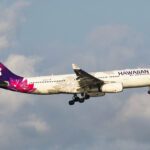
Hawaiian says the new program will give passengers more choice, better quality, and a stronger connection to local Hawai‘i flavors. Critics will see it differently: as another sign that Hawaiian’s product is becoming more aligned with Alaska Airlines’ buy-on-board and pre-order model following the 2024 merger.
Both things can be true.
What Is Changing On July 1
Starting July 1, Main Cabin passengers on most domestic Hawaiian Airlines flights between Hawai‘i and the U.S. continent will be able to purchase meals through a pre-order system.
Passengers can select meals through the Alaska Hawaiian mobile app or through the “My Trips” section of Hawaiian’s website. Orders can be placed from two weeks before departure until 20 hours before the flight.
The program applies to Hawaiian’s domestic transpacific network, but not every route is included. The Honolulu (HNL) to New York John F. Kennedy (JFK) route will continue to receive a complimentary Main Cabin meal. Neighbor Island flights, South Pacific flights, and international services are also outside the scope of this domestic mainland pre-order program.
That route exception matters. Hawaiian’s Honolulu (HNL)–New York (JFK) service is one of the longest domestic flights in the United States and is operated with long-haul widebody aircraft, historically including the Airbus A330-200 and, in some periods, Boeing 787-9 Dreamliner equipment. Keeping a complimentary meal on that route avoids the optics of removing a meal from an ultra-long-haul domestic sector that can approach 10 hours eastbound and more than 11 hours westbound depending on winds and schedule.
On shorter mainland flights, including West Coast routes between Hawai‘i and cities such as Los Angeles (LAX), San Francisco (SFO), Seattle (SEA), Portland (PDX), San Diego (SAN), Las Vegas (LAS), Phoenix (PHX), Sacramento (SMF), and Oakland (OAK), the new model will be much more visible to travelers.
Hawaiian’s Free Meal Had Already Changed
The phrase “free meal” carries emotional weight with Hawaiian Airlines passengers, but the product had already evolved.
Historically, Hawaiian’s Main Cabin meal service was one of the airline’s clearest domestic advantages. On flights between Hawai‘i and the mainland, passengers received a complimentary meal while many competing U.S. airlines offered only snacks or buy-on-board options in Economy.
Over time, however, the offering became more limited. On many domestic transpacific flights, the complimentary meal had been reduced to a sandwich or lighter snack-style item rather than the more substantial meal passengers may remember from previous years.
That context is important. Hawaiian is not removing a full-service hot meal experience from every Main Cabin passenger. It is replacing a standardized, increasingly modest complimentary item with a paid menu that is broader, more locally focused, and likely higher quality.
Still, from a customer perception standpoint, the change is significant. Something that was included in the fare is becoming an optional paid add-on for most mainland routes. For longtime Hawaiian flyers, that will feel like a loss even if the replacement food is better.
The New Menu Comes From Chef Sheldon Simeon
Hawaiian’s new Main Cabin menu is built around chef Sheldon Simeon, one of Hawai‘i’s best-known culinary figures and a James Beard Award-recognized chef. Simeon is associated with Maui restaurants including Tin Roof and Tiffany’s, and his cooking is rooted in the local food culture of Hawai‘i.
That matters because Hawaiian is trying to frame this not as a cost cut, but as a product upgrade.
The menu includes dishes that draw from plate lunch, bento, local breakfast, and island comfort-food traditions. Items include crispy mochiko chicken with garlic noodles, barbecue teriyaki chicken bento, corned beef hash and eggs, island-style French toast, banana pancakes, coconut overnight oats, teriyaki cheeseburgers, grilled chicken bánh mì, and a sweet-and-tangy greens option.
Several dishes incorporate Simeon’s signature flavors, including spicy-K mayo, teriyaki sauce, banana bread syrup, and crispy toppings made with rice crackers and furikake.
This is a smart culinary direction. If Hawaiian is going to charge Main Cabin passengers for meals, the product needs to feel meaningfully different from a generic airline sandwich. A menu connected to Maui, local-style food, and recognizable Hawai‘i flavors gives the airline a stronger story to tell.
The challenge is that storytelling only goes so far when passengers remember that the old item was included.
Prices Range From $10.99 To $16.99
The new Main Cabin meals are priced between $10.99 and $16.99.
Morning flights departing between 6:00 a.m. and 9:59 a.m. will have breakfast-focused options. These include corned beef hash and eggs, island-style French toast, banana pancake breakfast, coconut overnight oats, and a cheesy omelet scheduled to arrive later in the fall.
Afternoon and evening flights departing between 10:00 a.m. and 8:29 p.m. will feature dishes such as crispy mochiko chicken and garlic noodles, barbecue teriyaki chicken bento, teriyaki cheeseburger, grilled chicken bánh mì, sweet and tangy tender greens, Italian sub with mac salad, and a cheeseburger mac and cheese option planned for the fall.
The most expensive launch item is the crispy mochiko chicken and garlic noodles at $16.99. The lowest-priced option at launch is the coconut overnight oats at $10.99. Vegan and gluten-free options are included, which gives Hawaiian more flexibility than a single standard meal ever could.
From a revenue-management perspective, the pricing is not surprising. U.S. airlines have increasingly moved toward pre-order fresh meals on longer domestic flights because it reduces waste, improves catering accuracy, and generates ancillary revenue. It also avoids the uncertainty of trying to stock enough fresh items for onboard purchase without overloading the aircraft with unsold food.
For Hawaiian, the model also aligns more closely with Alaska Airlines’ existing approach to onboard food.
Complimentary Snacks Are Not Going Away
Hawaiian is not eliminating all complimentary food from Main Cabin.
The airline says passengers will continue to receive smaller onboard touches, including a welcome beverage, a local snack, and a pre-arrival sweet treat. Snack partners include local or Hawai‘i-connected brands such as Diamond Bakery, Anahola Granola, Hawaiian Host Chocolates, and Honolulu Cookie Company.
That is an important distinction. The new program does not turn Hawaiian’s Main Cabin into a completely bare-bones onboard product. Passengers will still get some elements of the airline’s traditional hospitality, but the full meal becomes something they must select and purchase in advance.
For passengers on a five-to-six-hour West Coast flight, that may be acceptable if they understand the change before departure. For passengers who board expecting the old complimentary meal, it could create frustration.
Communication will be critical.
Hawaiian will need to make the new process obvious during booking, check-in, app reminders, and pre-departure emails. Otherwise, some passengers will board an Airbus A321neo from Los Angeles (LAX) to Kahului (OGG), or an Airbus A330-200 from Seattle (SEA) to Honolulu (HNL), expecting a complimentary meal that is no longer part of the standard Main Cabin experience.
Why Pre-Order Helps Airlines
The airline’s operational argument is straightforward.
Pre-order systems give carriers better control over catering. Meals are loaded based on actual demand rather than broad forecasts. That reduces waste, limits over-catering, and improves the chance that passengers receive the item they want.
It also makes fresh food more practical. Hawaiian says meals are prepared close to departure, which is easier to manage when the airline knows what passengers selected in advance.
For an airline operating long overwater sectors, catering is not a minor detail. A Hawaiian Airbus A330-200 flying from Honolulu (HNL) to Las Vegas (LAS), or an Airbus A321neo operating from Kona (KOA) to Los Angeles (LAX), cannot simply restock fresh meals after takeoff. The catering decision is made before departure, and the aircraft is committed to that load for the entire transpacific flight.
A pre-order model reduces guesswork.
It also helps with inventory complexity. A single complimentary sandwich is simple but limited. A multi-item menu is more attractive to passengers but harder to stock efficiently unless the airline knows demand in advance.
That is the trade Hawaiian is making: less automatic inclusion, more customization.
Aircraft Type Matters On These Routes
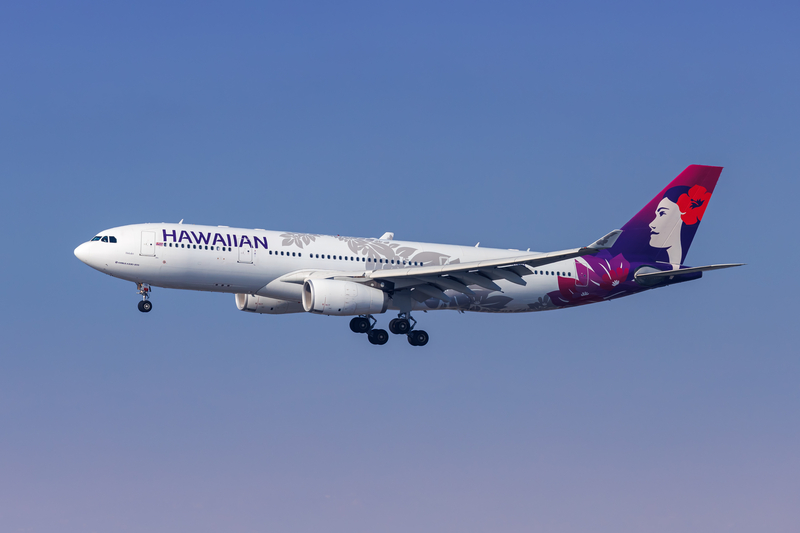
Hawaiian’s mainland network is operated by a mix of aircraft, and the passenger experience varies by route.
The Airbus A321neo is used heavily on West Coast-to-Hawai‘i routes where the economics of a long-range narrowbody make sense. The aircraft is well suited to thinner mainland markets and allows Hawaiian to serve more islands nonstop without routing every passenger through Honolulu (HNL). An A321neo flight from Portland (PDX) to Maui (OGG), Oakland (OAK) to Kona (KOA), or Los Angeles (LAX) to Līhuʻe (LIH) gives the airline efficient capacity and direct access to Neighbor Island markets.
The Airbus A330-200 remains one of Hawaiian’s core widebody aircraft for longer and higher-demand mainland sectors. The A330 offers more capacity, a twin-aisle cabin, and a more traditional long-haul feel on routes such as Honolulu (HNL) to Seattle (SEA), Los Angeles (LAX), Las Vegas (LAS), Phoenix (PHX), or other large mainland markets depending on seasonal scheduling.
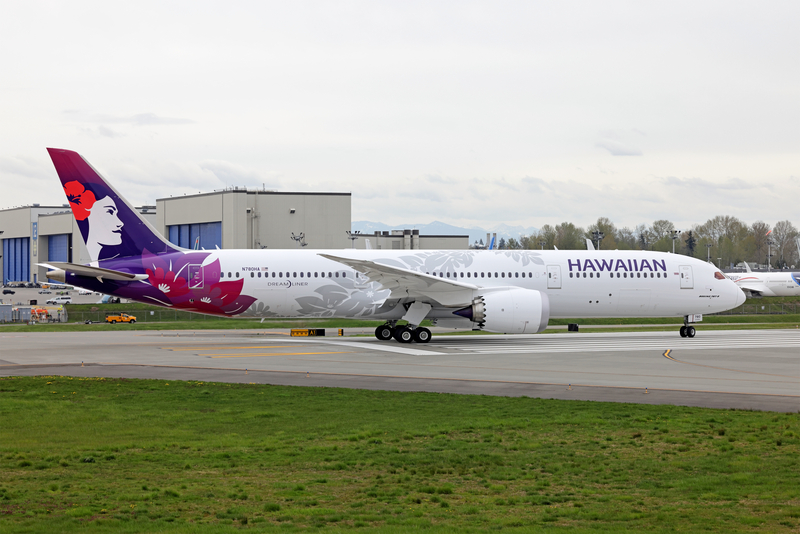
The Boeing 787-9 Dreamliner is Hawaiian’s newest long-haul aircraft type and brings a more modern premium cabin, improved passenger comfort, and longer-range capability. Its role has become especially important as Hawaiian and Alaska Air Group rethink long-haul flying, premium products, and aircraft deployment across the combined network.
The meal change will be felt differently across these aircraft. On a widebody A330 or 787, passengers may associate the flight more strongly with a long-haul experience and expect more service. On an A321neo, the cabin feels closer to a domestic narrowbody, even though the flight may still cross more than 2,400 miles of ocean.
That difference will shape customer reaction.
Alaska Integration Is The Larger Backdrop
This change is happening as Hawaiian continues to integrate with Alaska Airlines under Alaska Air Group.
Alaska completed its acquisition of Hawaiian in 2024, with both airlines retaining distinct brands. That dual-brand strategy is unusual in the U.S. airline industry and has created a delicate balancing act. Alaska wants operational and commercial efficiencies. Hawaiian’s loyal customers want the carrier’s identity, service style, and cultural presence preserved.
The new meal program sits directly in that tension.
On one hand, the menu is deeply Hawaiian in theme. It features local chefs, island flavors, Hawai‘i-based snack partners, and an effort to keep the onboard experience tied to place. On that level, the change is not a generic Alaska-style food program simply pasted onto Hawaiian aircraft.
On the other hand, the commercial model is unmistakably more aligned with Alaska. Pre-order meals, fare segmentation, paid optionality, and reduced complimentary inclusions are part of the modern U.S. airline playbook. Hawaiian is now adopting more of that structure.
For longtime Hawaiian customers, this is why the change may feel bigger than food. It becomes a symbol of the broader question surrounding the merger: how much of Hawaiian’s identity will remain as Alaska integrates systems, loyalty, operations, flight numbers, and customer-facing products?
A Better Meal, But A Weaker Included Product
From a pure food-quality standpoint, Hawaiian may be right that the new menu is better.
A passenger who pre-orders crispy mochiko chicken with garlic noodles, a teriyaki chicken bento, or corned beef hash and eggs will likely receive something more interesting than the previous standard complimentary sandwich. The new dishes have a stronger culinary identity, more variety, and a clearer connection to Hawai‘i.
But airline product perception is not only about quality. It is also about what is included.
A free sandwich may not have been remarkable, but it was part of the fare. A $16.99 chef-driven meal may taste better, but it changes the value equation for Main Cabin travelers. Families, infrequent leisure passengers, and budget-conscious travelers may see the change as another added cost on top of fares, seat fees, baggage fees, and other travel expenses.
That is the risk Hawaiian faces.
The airline can credibly argue that it is improving choice and quality. Passengers can credibly respond that the included experience has been reduced.
The JFK Exception Shows Where The Line Is
The decision to keep complimentary meals on Honolulu (HNL)–New York (JFK) is telling.
That route is simply too long to treat like an ordinary domestic flight. It is one of the longest U.S. domestic services and is typically operated with widebody aircraft designed for long-haul flying. Removing the complimentary meal from that sector would likely have generated a much stronger backlash.
By exempting HNL–JFK, Hawaiian is drawing a practical line between long domestic transpacific flying and ultra-long-haul domestic flying.
That said, many of Hawaiian’s other mainland flights are still long by U.S. domestic standards. Honolulu (HNL) to Seattle (SEA), Maui (OGG) to Los Angeles (LAX), Kona (KOA) to Phoenix (PHX), and Līhuʻe (LIH) to San Diego (SAN) are not short hops. They are multi-hour overwater flights where passenger expectations are different from a two-hour mainland domestic sector.
That is why the change will attract attention even with JFK protected.
What Passengers Should Know
For passengers booking Hawaiian Main Cabin travel from July 1 onward, the most important point is simple: check meal options before the flight.
Travelers who want one of the new meals should pre-order through the Alaska Hawaiian app or Hawaiian’s website between two weeks and 20 hours before departure. Waiting until boarding may mean the full menu is unavailable. Hawaiian says passengers who do not pre-order will still have access to some onboard purchase options, including snack boxes and Pau Hana snack cart items, but the chef-curated meal selection is built around pre-ordering.
Passengers should also pay attention to departure time. Morning flights will have breakfast items, while later departures will have the afternoon and evening menu.
For premium-cabin travelers, the situation is different. First Class has already moved into a pre-select model, but First Class passengers still receive a meal even if they do not make a selection in advance. Pre-selecting simply improves the chance of getting the preferred choice.
For Main Cabin passengers, pre-ordering is now the key to receiving the new meal.
Bottom Line
Hawaiian Airlines is replacing its complimentary Main Cabin meal on most domestic Hawai‘i–mainland flights with a paid pre-order menu beginning July 1.
The new menu has real strengths. It is more varied, more locally rooted, and more ambitious than the standard complimentary sandwich it replaces. Chef Sheldon Simeon brings credibility and a strong Hawai‘i culinary identity to the program, and the airline is retaining complimentary smaller touches such as snacks, beverages, and pre-arrival sweets.
But the commercial shift is still significant. For most Main Cabin passengers flying between Hawai‘i and the U.S. mainland, a meal that was once included will now cost extra unless they are traveling on the Honolulu (HNL)–New York (JFK) route, where complimentary meals will continue.
This is the tension at the center of the new Hawaiian under Alaska Air Group: better optional products, more modern systems, and more revenue discipline, but fewer included legacy touches that made Hawaiian feel different.
For passengers, the advice is straightforward. If food matters on your Hawaiian flight, pre-order before departure. For Hawaiian, the challenge is bigger: proving that a paid, chef-driven meal program can still feel like island hospitality rather than just another airline fee.