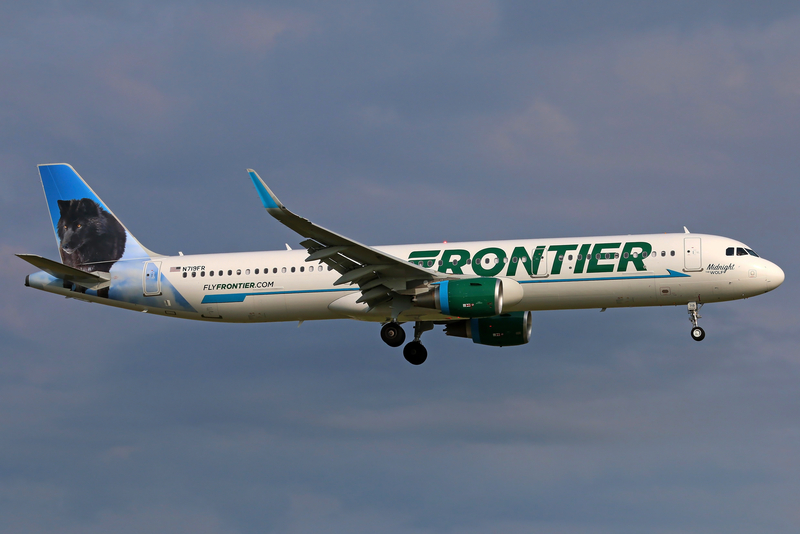
Frontier Airlines is restoring nonstop service between Los Angeles International Airport (LAX) and Orlando International Airport (MCO), but in a way that says a lot about how carefully the airline is now deploying capacity.

The route returns on July 1, 2026 and will run daily through October 26. That is a much shorter operating window than last year, when Frontier kept the route in the market for roughly 11 months. The message is clear: Frontier still wants the route, but only for the part of the year where it believes the economics are strongest.
For aviation readers, this is not just a route comeback. It is a sign of a carrier becoming more selective.
Read our stories in your inbox
Two aviation newsletters. Zero fluff.
The Route Is Back, But Only For Four Months
The most important detail is not that the route is returning. It is how briefly it is returning.
Running July through October suggests Frontier sees LAX–MCO as a worthwhile seasonal opportunity, but not one it currently wants to support for most of the year. That is a meaningful change from the previous schedule. Airlines do not usually cut a route’s season nearly in half unless they believe the lower-demand months are not producing the returns they want.

So while the headline is “Frontier is back,” the more revealing takeaway is that Frontier is back on much stricter terms.
Competition Is Still Very Strong
Frontier is not entering an empty market.
The airline will compete against American, Delta, United, and Southwest, all of which already serve the route year-round. Even with Spirit Airlines gone from the market, this remains a crowded transcontinental corridor with substantial incumbent capacity.
That matters because Frontier is not trying to dominate the route. It is trying to carve out a narrower, more tactical position in it, one that likely depends on price-sensitive travelers and the strongest part of the summer-to-fall demand curve.
The A321neo Tells You What Frontier Thinks Will Work
Frontier plans to use the Airbus A321neo, its densest and most efficient narrowbody for this kind of mission.
That makes sense. On a route of roughly 2,217 miles, the A321neo gives the airline lower seat-mile costs and the ability to spread fixed operating expenses across a large number of seats. For a low-cost airline, that matters enormously on a highly competitive route where pricing pressure is likely to remain intense.
In other words, Frontier is using the right aircraft for a route where cost discipline is everything.
Daily Service Still Means A Meaningful Seasonal Presence
Even though the route is only returning for four months, daily flying is still a significant commitment.
From July through October, Frontier will operate 117 flights and add 28,080 seats in the market. That is not symbolic capacity. It gives the airline a real seasonal presence and enough frequency to be relevant for travelers planning vacations, theme-park trips, school-break travel, and family itineraries between Southern California and Central Florida.
This is not a test flight. It is a focused seasonal program.
The Shorter Season Probably Reflects Better Network Discipline
The reduction from an 11-month run last year to a 4-month run this year may actually be a sign of better network discipline rather than weakness.
Low-cost carriers often do best when they match capacity tightly to the strongest part of demand instead of forcing year-round service where the off-peak months drag down returns. That appears to be what Frontier is doing here. It is keeping the route, but only for the months where the opportunity appears strongest.
That is often the difference between “having a route” and “having a route that actually works.”
Spirit’s Exit Helps, But It Does Not Make This Easy
Frontier is certainly benefiting from the fact that Spirit is no longer on the route.
But Spirit’s disappearance does not suddenly make LAX–MCO an easy market. The route still has strong legacy and Southwest competition, and all of those airlines have the scale, schedule depth, and customer familiarity to make life difficult for a low-cost entrant.
That is why the shorter seasonal pattern makes sense. Frontier may be able to profit from the gap Spirit left behind, but it still does not need to overstay.
Bottom Line
Frontier’s return to Los Angeles–Orlando is notable less because the route is back and more because the airline is handling it so cautiously. Daily service from July 1 to October 26 gives Frontier a real presence in the market, but the much shorter season shows the airline is no longer willing to stretch the route across weaker months just to keep it on the map.