Hundreds of Virgin Atlantic passengers arriving at Orlando International Airport endured a long and uncomfortable wait for checked baggage after weather disrupted ground handling operations at one of Florida’s busiest international leisure gateways.

The disruption unfolded on Saturday, June 27, 2026, after multiple Virgin Atlantic flights arrived at Orlando International Airport (MCO) from the United Kingdom. Passengers had already cleared the flight and moved into the international arrivals process when they learned that baggage unloading had been delayed because of adverse weather affecting ramp operations.
What began as a routine arrival delay turned into a multi-hour ordeal. Local reporting says passengers on three Virgin Atlantic flights waited more than four hours for their bags, while some accounts described waits stretching beyond five hours. Travelers said the customs baggage hall became crowded, uncomfortable, and short on seating, with families, elderly passengers, and children forced to wait late into the night.
Read our stories in your inbox
Two aviation newsletters. Zero fluff.
The incident was especially frustrating because international arrivals at U.S. airports do not work like domestic baggage claim. Passengers arriving from overseas generally must collect their checked bags and clear U.S. Customs and Border Protection before leaving the restricted arrivals area.
Virgin Atlantic Flights Arrived As Weather Hit Ground Handling
The affected flights arrived during a period of weather disruption at Orlando (MCO), a major issue for ramp operations.
When lightning or severe weather affects the airfield, airports and ground handlers can be forced to stop or restrict outdoor work. That means baggage carts may not move, belt loaders may sit idle, aircraft holds may remain unopened, and bags can stay onboard even after passengers have entered the terminal.
For passengers, that distinction can be hard to accept. The aircraft is at the gate, the seatbelt sign is off, immigration may already be complete, and the carousel is visible. But if ramp crews cannot safely unload the aircraft, bags will not move.
That appears to have been the core operational problem at Orlando (MCO). Virgin Atlantic later apologized and attributed the delay to weather-related ground-handling disruption. Airport officials also pointed to severe weather and staffing levels among airline ground-handling crews, while noting that baggage handling is the responsibility of airlines and their contracted providers.
In plain aviation terms, this was not a flight delay. It was an arrivals-processing failure caused by the intersection of weather, international baggage rules, and constrained passenger facilities.
Why Passengers Could Not Simply Leave
The most controversial part of the incident was the claim that some passengers were told they could face arrest if they tried to leave without their luggage.
That allegation should be handled carefully. Passengers reported being warned they could not leave the customs area without their checked bags. Airport officials later denied that any airport employees or Orlando police officers made arrest threats. U.S. Customs and Border Protection had not publicly commented at the time of the initial local reporting.
The underlying process, however, is real. International passengers arriving in the United States normally collect checked baggage before completing customs formalities. If a passenger leaves the customs area without a bag that is still inside the international arrivals system, that bag becomes a problem for both security and customs control.
The issue is not simply that the passenger wants to go home. Checked baggage arriving internationally is part of the customs process. It may contain declarable goods, restricted agricultural items, commercial quantities, or other contents that CBP has the authority to inspect. If the passenger leaves without the bag, the chain of responsibility becomes unclear.
There are ways airlines can handle delayed international baggage, but they require documentation and coordination. Virgin’s own customer service plan says that if baggage does not arrive on the belt, passengers should file a report before leaving the airport. That report is important because it formally identifies the baggage as delayed or mishandled and allows the airline to manage the next steps.
In this case, passengers appear to have been stuck in the worst possible version of the process: their bags were not officially delivered, not formally released as delayed, and not available for customs clearance.
A Bad Passenger Experience In The Customs Hall
The passenger experience described from the Orlando delay was poor.
International baggage halls are designed for processing, not long-term waiting. They usually have limited seating, limited food and beverage access, limited passenger amenities, and restricted movement because travelers have not fully exited the border-control environment.
That makes a four- or five-hour wait materially different from a normal domestic baggage delay. In a domestic baggage claim area, passengers can usually leave, get food, meet family, rent a car, or file a baggage claim and go home. In an international customs hall, passenger movement is far more restricted.
Reports from Orlando described elderly passengers and families sitting on the floor, limited access to food, and one passenger requiring medical assistance. Even if the root cause was weather, the customer-service challenge was obvious: hundreds of tired long-haul passengers were left in a restricted area with few practical options.
For many of those travelers, Orlando was not a business destination. It was the start of a family holiday. After a nine- to ten-hour transatlantic flight from the UK, a late-night baggage delay is more than an inconvenience. It can mean missed rental car pickups, delayed hotel check-ins, tired children, disrupted medication schedules, and extra stress for passengers with accessibility needs.
Virgin Atlantic’s Orlando Operation Is A Major UK Leisure Corridor
Virgin Atlantic’s Orlando operation is one of the most important UK–Florida leisure links.
The airline flies direct to Orlando (MCO) from London Heathrow (LHR) and Manchester Airport (MAN), with seasonal service from Edinburgh Airport (EDI). These routes are built around one of the strongest long-haul leisure markets in the Atlantic: British travelers heading to Walt Disney World, Universal Orlando, Central Florida resorts, cruise ports, and Florida beach extensions.
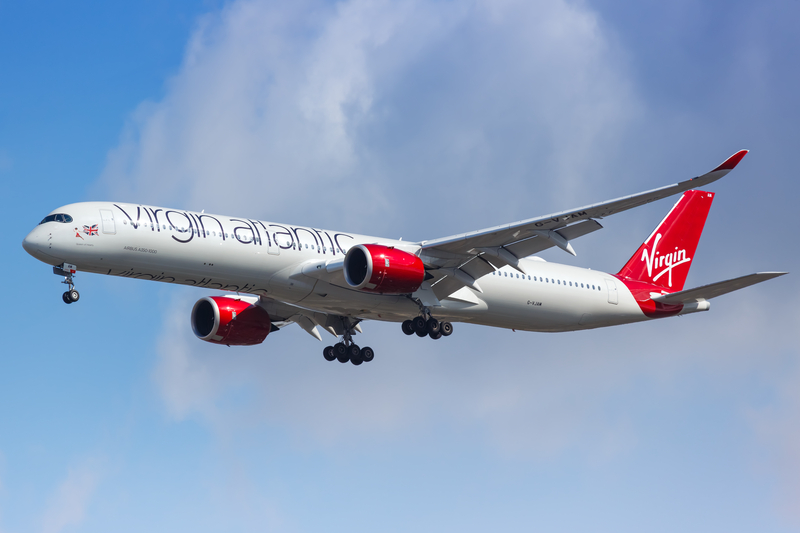
Virgin uses long-haul widebody aircraft across its network, including the Airbus A330-300, Airbus A330neo, Boeing 787-9, and Airbus A350-1000. The Orlando market is typically served by widebody aircraft because of the distance, passenger volume, baggage demand, and holiday-heavy profile of the route.
That baggage demand matters. Orlando flights often carry families traveling for one or two weeks, with multiple checked bags, strollers, car seats, golf clubs, medical items, and holiday equipment. A full long-haul arrival can produce hundreds of checked bags from a single aircraft. When several Virgin Atlantic flights arrive close together and unloading is delayed, the baggage backlog can grow quickly.
The aircraft may operate normally, the pilots may have landed safely, and the terminal may be functioning. But if bags cannot be unloaded, the passenger journey effectively stops.
Why Weather Delays On The Ramp Are So Disruptive
Weather-related ramp stops are among the most frustrating airport disruptions because they are both legitimate and hard for passengers to see.
Lightning, wind, and severe weather can make it unsafe for ramp employees to work around aircraft. Baggage handlers are exposed on the airfield, often near metal equipment, fuel trucks, aircraft, belt loaders, and open ramp areas. When lightning is close enough, stopping ramp work is a safety requirement, not a convenience.
The problem is that passengers are usually already inside. From their perspective, the storm may appear to be easing, or they may not understand why bags cannot be delivered when the aircraft is parked at the gate.
For airlines and airports, the challenge is communication. Passengers can accept delays more easily when they receive clear, frequent, specific updates. What drives anger is uncertainty: no bags, no timeline, no seating, no food, no ability to leave, and no clear explanation of what happens next.
That appears to have been the failure point at Orlando. The delay itself may have been weather-driven, but the passenger-management problem grew because hundreds of people were trapped in a restricted arrivals area with limited information and limited comfort.
Terminal C Move Adds Another Layer
The disruption occurred just before Virgin Atlantic’s scheduled move at Orlando (MCO) from Terminal A to Terminal C on June 30.
Virgin had long operated from Terminal A at Orlando, but the airline confirmed that from June 30, 2026, its MCO flights would move to Terminal C. The change is significant because Terminal C is a newer facility and uses a different international arrivals process.
MCO describes Terminal C as a CBP “Bags First” facility, meaning international passengers claim baggage as part of the arrivals process before completing the required border and customs steps. For UK travelers used to Terminal A, the move changes the physical flow of the airport experience.
The June 27 disruption happened before that move, but the timing is still notable. Virgin’s Orlando operation was already in transition, and a major baggage-delay incident days before the terminal change would have placed additional attention on how the airport and airline manage international arrivals.
The move to Terminal C may improve the long-term experience for Virgin passengers, but only if baggage delivery, staffing, weather-response procedures, and customer communication are robust enough during peak arrival banks.
Who Is Responsible When Bags Are Delayed?
Baggage handling is one of the most complicated parts of the airport operation because responsibility is shared.
The airline sells the ticket and is responsible to the passenger. Ground handlers or airline-contracted staff unload the aircraft and move bags. The airport provides the terminal and baggage infrastructure. CBP controls the customs environment for international arrivals. Weather can restrict ramp activity. Security rules limit passenger movement.
That creates a problem during disruptions. Passengers do not care which company technically owns the delay. They just want their bags and a clear answer.
In this case, airport officials said baggage handling is the responsibility of airlines and their contracted ground-service providers. Virgin apologized and said weather affected ground handling. Passengers, meanwhile, experienced the delay inside a facility where food, seating, and mobility were limited.
That means the operational responsibility may sit with the airline and handler, but the passenger-experience failure involved the entire arrivals ecosystem.
What Should Have Happened Differently?
A delay of this length requires a structured irregular-operations plan.
At a minimum, passengers need regular announcements, realistic timing estimates, water access, medical support, mobility assistance, and a clear process for anyone who cannot wait. Families with infants, elderly passengers, disabled travelers, and passengers with medication needs should not be left to improvise in a customs hall for hours.
There also needs to be a clear decision point. If bags cannot be unloaded within a reasonable period, the airline, airport, and CBP should have a process to classify the baggage as delayed, document it properly, and allow eligible passengers to complete formalities and leave. That may not be simple, but a five-hour wait in a restricted hall is not a sustainable default.
The biggest lesson is that international baggage delays require different procedures from domestic delays. A domestic passenger can file a claim and exit. An international passenger may be legally and operationally tied to the bag until customs processing is resolved.
That difference needs to be built into airport planning.
Virgin’s Response And Passenger Compensation
Virgin Atlantic later contacted affected passengers and apologized.
The airline reportedly offered reimbursement for snacks purchased during the wait, though passengers said food options inside the restricted area were limited. That kind of gesture may help, but it does not fully address the core issue: people were stuck for hours in a space not designed for extended waits.
Virgin’s published baggage policy says passengers whose bags do not arrive should contact airline staff or representatives and file a Property Irregularity Report before leaving the airport. For non-residents arriving in a country, Virgin says it will reimburse reasonable receipted costs for essential overnight items, such as toiletries and nightwear, when bags are delayed.
That policy is useful after a bag is formally delayed. The Orlando problem was different. The bags were not lost in the system or sent to the wrong airport. They were physically at MCO but could not be delivered to passengers for hours. That created a gap between normal delayed-bag procedures and the reality of an international customs hold.
Why This Matters Beyond Virgin Atlantic
This incident should concern more than Virgin Atlantic.
Orlando (MCO) is one of the most important leisure airports in the United States, and international arrivals are central to its business. The airport serves theme-park traffic, cruise connections, family holidays, transatlantic leisure demand, and growing international networks.
When international passengers have a poor arrival experience, the impact extends beyond one airline. It affects the airport’s reputation, tourism partners, hotels, rental car companies, cruise lines, and destination perception.
The UK–Orlando market is especially sensitive because many passengers are families traveling on expensive, long-planned holidays. A five-hour baggage delay after a transatlantic flight is the kind of experience that passengers remember and share widely.
For airports, that kind of reputational damage is avoidable only if the response plan is strong. Weather cannot be controlled. Passenger care can.
Bottom Line
The Virgin Atlantic baggage delay at Orlando (MCO) was not just a late-bag incident. It was a failure of international-arrivals resilience.
Weather disrupted ground handling, preventing checked baggage from being unloaded from multiple Virgin Atlantic flights arriving from the UK. Because passengers were inside the customs arrivals process, many could not simply leave and return later. Local reporting says hundreds of passengers waited more than four hours, with some accounts describing waits of more than five hours.
The most disputed detail is the alleged threat of arrest. Passengers said they were warned they could face arrest if they left without bags, while airport officials denied that airport employees or Orlando police made such threats. The underlying customs issue, however, is clear: international passengers generally need to collect checked baggage and complete customs processing before exiting the restricted arrivals area unless the airline and authorities formally handle the bags as delayed.
For Virgin Atlantic, MCO, CBP, and the ground handlers involved, the lesson is straightforward. Weather delays happen, but hundreds of international passengers should not be left for hours in a customs baggage hall without adequate seating, food access, communication, and a clear fallback process.
Orlando is one of the world’s great leisure gateways. Its arrivals experience needs to match that role, especially when the passengers arriving are families who have just crossed the Atlantic to begin a long-awaited Florida holiday.
Keep reading FlyMag
Get the Daily Brief in the morning or the Route Watch weekly recap on Fridays. Or both.