Riyadh Air’s Own Dreamliners Finally Arrive As London Launch Nears
Riyadh Air has taken delivery of its first two new-build Boeing 787-9 Dreamliners, giving Saudi Arabia’s newest national carrier the aircraft it needs for the next phase of its long-awaited commercial launch.
The two aircraft, registered HZ-RXAA and HZ-RXAB, left the United States on June 4, 2026, bound for Riyadh King Khalid International Airport (RUH). Their delivery marks a major fleet milestone for one of the most closely watched airline startups in the world.
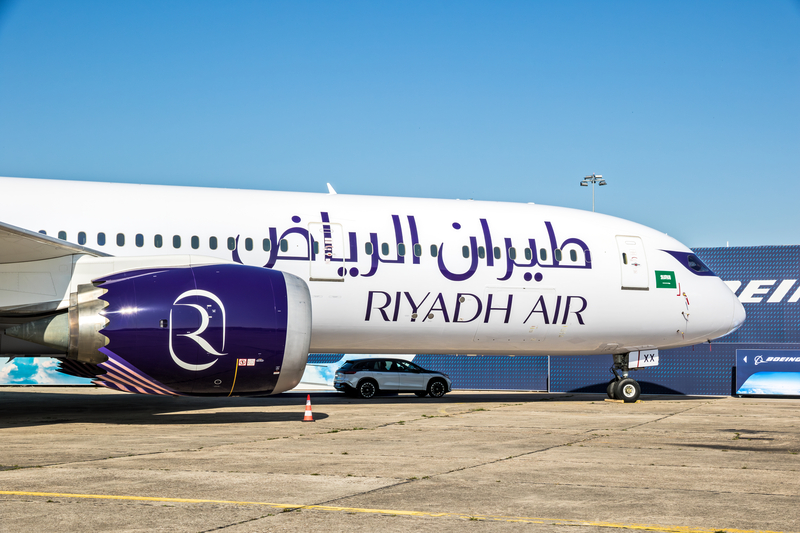
Riyadh Air has already been flying between Riyadh (RUH) and London Heathrow (LHR) using a leased Boeing 787-9, HZ-RXX, as part of its operational-readiness program. But HZ-RXAA and HZ-RXAB are different. These are the first Dreamliners built for Riyadh Air’s own long-term operating fleet, complete with the airline’s custom cabin and distinctive purple livery.
Read our stories in your inbox
Two aviation newsletters. Zero fluff.
Their arrival comes just weeks before Riyadh Air opens its flagship London Heathrow (LHR) route to the broader traveling public from July 1.
Two Boeing 787-9s Leave The United States On The Same Day
Riyadh Air’s first new-build Dreamliner, HZ-RXAA, departed Boeing’s North Charleston facility at Charleston International Airport (CHS) on June 4 as RXI001.
The second aircraft, HZ-RXAB, departed Paine Field/Everett (PAE) in Washington the same day as RXI002. The two aircraft began their delivery flights from opposite sides of the United States, creating a highly symbolic moment for the startup airline: two factory-new purple Dreamliners heading home to Riyadh (RUH) on the same day.
HZ-RXAA is Boeing 787-9 MSN 69471, line number 1265. It first flew on December 22, 2025, and has spent the months since in Boeing’s test, completion, and customer-acceptance process.
HZ-RXAB is Boeing 787-9 MSN 69472, line number 1279. It first flew on February 13, 2026, then moved through its own testing and pre-delivery work before the June 4 ferry flight to Riyadh (RUH).
The delivery timing matters. Both aircraft had been visible in testing for months, and Riyadh Air’s public launch schedule has been affected by the delayed arrival of its own 787s. With these two aircraft now delivered, the carrier has moved from proving flights and brand-building into the real beginning of fleet operations.
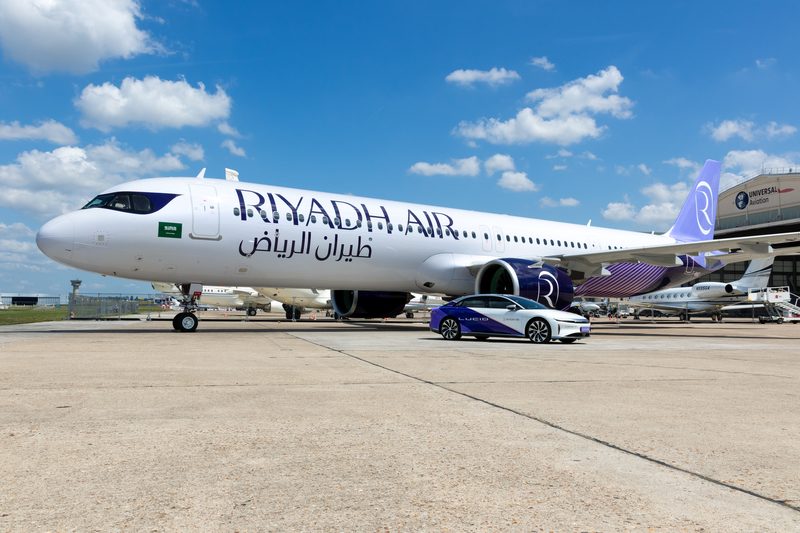
These Are Riyadh Air’s First Custom-Built Aircraft
Riyadh Air’s current public image has already been tied to the Boeing 787, but HZ-RXAA and HZ-RXAB are the airline’s first aircraft built specifically for its own service.
The airline previously used HZ-RXX, a leased Boeing 787-9 associated with Oman Air, for its “Pathway to Perfect” operational-readiness flights. Those flights helped Riyadh Air train crews, test processes, protect valuable Heathrow (LHR) slot activity, and simulate live passenger operations before opening the airline to the general public.
That aircraft did not represent the full Riyadh Air cabin product.
The new-build 787-9s do. Riyadh Air’s Dreamliners will seat 290 guests across four cabin products: 4 Business Elite seats, 24 Business seats, 39 Premium Economy seats, and 223 Economy seats. That is a premium-heavy layout for a startup carrier and gives a clear indication of how Riyadh Air wants to position itself.
The airline is not entering the market as a basic long-haul carrier. It is launching with a full-service, design-led, premium-oriented product aimed at competing with the world’s most established global airlines.
The Boeing 787-9 Is The Foundation Aircraft
The Boeing 787-9 Dreamliner is central to Riyadh Air’s launch strategy.
The type gives the airline long-haul range, lower fuel burn than older widebodies, and enough capacity to open major international routes without immediately requiring a larger aircraft such as the Boeing 777X or Airbus A350-1000. For a new airline building from Riyadh (RUH), the 787-9 is a sensible first long-haul platform.
The aircraft is powered by GEnx-1B engines and is designed around long-range efficiency, composite structures, large windows, higher cabin humidity, lower cabin altitude, and a quieter onboard environment. On routes such as Riyadh (RUH) to London Heathrow (LHR), Manchester (MAN), Madrid (MAD), or future long-haul destinations in Asia, Europe, and North America, those cabin features will be an important part of Riyadh Air’s passenger proposition.
The 787-9 also gives Riyadh Air flexibility. It can operate high-profile trunk routes such as London (LHR), but it can also support thinner long-haul routes where a larger widebody might be too much aircraft early in the carrier’s development.
That flexibility is especially important for an airline trying to scale quickly from a standing start.
A 787 Order That Put Riyadh Air On The Map
Riyadh Air’s first major aircraft order was announced in March 2023, shortly after the airline itself was unveiled.
The carrier committed to 39 Boeing 787-9 Dreamliners, with options for 33 more. At the time, it was one of the most ambitious aircraft orders ever placed by a newly launched airline and immediately signaled that Riyadh Air was not being built as a small regional operator.
The order tied directly into Saudi Arabia’s wider aviation and tourism strategy. Riyadh Air is owned by the Public Investment Fund and is intended to help turn Riyadh (RUH) into a major global aviation gateway. The airline has repeatedly stated ambitions to serve more than 100 destinations by 2030.
That target will require a large and varied fleet. The 787-9 is the first major building block, but Riyadh Air has since expanded its fleet plan to include Airbus A321neo-family aircraft and Airbus A350-1000s.
The A321neo will eventually support regional routes, domestic flying, and thinner medium-haul markets. The A350-1000 will give Riyadh Air a larger long-haul aircraft for high-density missions, especially once the carrier begins pushing deeper into Europe, Asia, and North America.
But the 787-9 comes first.
More Dreamliners Are Already In The Pipeline
The first two delivered aircraft are only the beginning of Riyadh Air’s Dreamliner ramp-up.
Several more 787-9s are already built or in advanced pre-delivery work. HZ-RXAC, HZ-RXAD, and HZ-RXAE have all been visible in Boeing’s testing and customer-acceptance process, with additional aircraft following behind them in the production pipeline.
That matters because Riyadh Air cannot build a global network with only two aircraft.
The initial London Heathrow (LHR) operation can be supported by a small number of Dreamliners, but expansion to Jeddah (JED), Dubai (DXB), Cairo (CAI), Manchester (MAN), Madrid (MAD), and other planned early markets will require fleet depth. The airline also needs spare coverage, maintenance flexibility, crew-training capacity, and operational resilience.
For a startup long-haul airline, early aircraft availability is critical. If deliveries slip, the route map slips with them. If aircraft arrive in clusters, the airline can scale faster.
The delivery of HZ-RXAA and HZ-RXAB therefore marks more than a symbolic milestone. It begins the operational clock.
London Heathrow Is The Public Launchpad
Riyadh Air’s first publicly available route will be Riyadh (RUH) to London Heathrow (LHR), with flights open to the broader traveling public from July 1, 2026.
London is the obvious launch market. Heathrow (LHR) is one of the world’s most important premium long-haul airports, and the Riyadh–London corridor has strong demand from business travelers, government traffic, leisure passengers, students, high-net-worth travelers, and Saudi residents with ties to the UK.
The route is also strategically visible. Launching with London Heathrow gives Riyadh Air instant global credibility and puts its cabin product directly in front of one of the most competitive long-haul markets in the world.
The airline has already been operating Riyadh (RUH)–London Heathrow (LHR) flights in a restricted form using HZ-RXX. From July 1, the service transitions into the next phase, with public sales and new-build Dreamliners carrying paying passengers.
That makes the arrival of HZ-RXAA and HZ-RXAB especially well timed. Riyadh Air now has its own aircraft available just before its formal public debut.
Why The Delays Matter
The delivery delay is not a minor footnote.
Riyadh Air had originally hoped to move faster, but Boeing 787 production constraints and cabin-completion complexity pushed the timeline to the right. The airline’s bespoke onboard product is a major part of its brand, and custom premium interiors are often among the most difficult elements of a new aircraft delivery program.
That is not unique to Riyadh Air. Airlines around the world have faced widebody delivery delays, seat certification bottlenecks, supply-chain issues, and cabin supplier constraints. For a startup carrier, however, the impact is more visible because every aircraft is foundational.
A mature airline can sometimes absorb a delayed widebody by shifting capacity, wet-leasing aircraft, or adjusting schedules. A new airline waiting for its first aircraft has fewer options.
Riyadh Air’s leased HZ-RXX gave it a bridge, allowing the carrier to maintain operational readiness and Heathrow presence before its own Dreamliners arrived. But the airline’s real commercial promise depends on its own cabin, its own aircraft, and its own fleet growth.
That is what HZ-RXAA and HZ-RXAB now provide.
The Cabin Is A Major Part Of The Strategy
Riyadh Air has spent significant effort positioning its cabin as a differentiator.
The Boeing 787-9 configuration is premium-heavy for a new entrant. Four Business Elite seats sit above the standard Business Class product, giving Riyadh Air a top-tier cabin for passengers willing to pay for its most exclusive onboard experience. The 24 Business Class seats are arranged for long-haul premium travelers, while the 39 Premium Economy seats give the airline an important middle cabin between Business and Economy.
That Premium Economy cabin will be especially important. It allows Riyadh Air to capture passengers who want more comfort than Economy but cannot justify Business Class fares. On routes such as Riyadh (RUH)–London (LHR), Riyadh (RUH)–Manchester (MAN), Riyadh (RUH)–Madrid (MAD), and future long-haul routes, Premium Economy can be a valuable revenue segment.
The 223-seat Economy cabin gives the aircraft enough scale to support leisure and connecting traffic, while still keeping the total seat count at 290.
That is a deliberate balance: premium enough to compete at the front, large enough to support network economics at the back.
Building A Network From Riyadh
The first phase of Riyadh Air’s network is expected to mix flagship long-haul, regional, and domestic flying.
London Heathrow (LHR) is the headline launch route. Jeddah (JED) is a natural domestic trunk route and one of the most important city pairs in Saudi Arabia. Dubai (DXB) is an obvious regional market because of business, tourism, and Gulf connectivity. Cairo (CAI) is another major regional market with deep Saudi-Egypt travel demand.
Manchester (MAN) and Madrid (MAD) are expected to follow as European expansion points.
That early network gives Riyadh Air several different types of demand: premium long-haul to London, domestic Saudi traffic to Jeddah, Gulf business and leisure traffic to Dubai, high-volume regional demand to Cairo, and additional European reach through Manchester and Madrid.
The challenge will be sequencing. Riyadh Air must introduce routes as aircraft arrive, crews are trained, and operational systems mature. A global network cannot be switched on overnight, even with ambitious fleet orders.
The first two 787-9s allow the airline to begin. The next several aircraft will determine how quickly it can scale.
The U.S. Is Already On The Horizon
Riyadh Air is also preparing for eventual U.S. flying.
The airline has applied to the U.S. Department of Transportation for authority to operate scheduled and charter services between Saudi Arabia and the United States. It has not yet formally announced its first U.S. destinations, but the application is a necessary early step toward launching transatlantic service.
Riyadh Air’s partnership with Delta Air Lines adds another important layer. Delta will serve as Riyadh Air’s exclusive North American partner, while Riyadh Air will be Delta’s exclusive partner in Riyadh and beyond, subject to regulatory approvals and further development.
That partnership makes U.S. service strategically important. Delta has a major hub at Atlanta (ATL) and a large presence at New York JFK (JFK), while also offering domestic connectivity across the United States. For Riyadh Air, a future U.S. network supported by Delta could provide feed far beyond a single nonstop route.
Still, the first U.S. destinations remain unconfirmed. It is reasonable to expect that New York, Atlanta, Washington, Los Angeles, or other major U.S. gateways may be evaluated, but until Riyadh Air names airports and schedules, they should remain potential future markets rather than confirmed routes.
The Bigger Saudi Aviation Picture
Riyadh Air’s aircraft deliveries fit into Saudi Arabia’s broader aviation strategy.
Saudi Arabia already has Saudia based in Jeddah (JED), along with flynas and other carriers. Riyadh Air is different because it is being built around Riyadh (RUH), premium global connectivity, and the capital’s role in Saudi Arabia’s Vision 2030 economic transformation.
The airline is expected to support tourism, business travel, inward investment, major events, and Riyadh’s development as a global city. Saudi Arabia is investing heavily in tourism infrastructure, business districts, sports, entertainment, logistics, airports, and aviation services. A new full-service global carrier is part of that ecosystem.
The delivery of two Dreamliners does not make Riyadh Air a global super-connector overnight. But it does turn years of branding, orders, partnerships, and promises into physical operating capability.
That is why this milestone matters.
Boeing Also Needed This Moment
The delivery is also significant for Boeing.
The 787 program has dealt with production and delivery challenges in recent years, and many airlines have seen widebody delivery timelines stretch. For Boeing, delivering Riyadh Air’s first new-build Dreamliners is important because the carrier is one of the most visible new 787 customers in the world.
The aircraft will be photographed, marketed, reviewed, and closely watched. Riyadh Air’s launch is not a quiet entry into service. It is a public test of the aircraft, cabin, airline brand, and Saudi aviation ambition.
For Boeing, having the first two Riyadh Air 787-9s finally heading to Riyadh (RUH) is a welcome step in converting a high-profile order into operational reality.
Bottom Line
Riyadh Air has taken delivery of its first two new-build Boeing 787-9 Dreamliners, HZ-RXAA and HZ-RXAB, with both aircraft departing the United States for Riyadh (RUH) on June 4, 2026.
HZ-RXAA flew from Charleston (CHS) to Riyadh (RUH) as RXI001, while HZ-RXAB departed Paine Field/Everett (PAE) for Riyadh (RUH) as RXI002. These aircraft are the first Dreamliners built for Riyadh Air’s own long-term operating fleet, following months of readiness flying with the leased HZ-RXX.
The timing is critical. Riyadh Air is opening its Riyadh (RUH)–London Heathrow (LHR) route to the traveling public from July 1, 2026, and these aircraft finally give the airline the custom 787-9 product it has been promising.
The Dreamliners are configured with 290 seats across Business Elite, Business, Premium Economy, and Economy. They are the foundation of Riyadh Air’s long-haul network, which is expected to begin with London (LHR) and expand to regional, domestic, European, and eventually U.S. markets.
After delays, testing, and months of anticipation, Riyadh Air now has its own aircraft. For a startup airline built around one of the most ambitious aviation projects in the world, that is the moment when the launch story becomes real.
Keep reading FlyMag
Get the Daily Brief in the morning or the Route Watch weekly recap on Fridays. Or both.