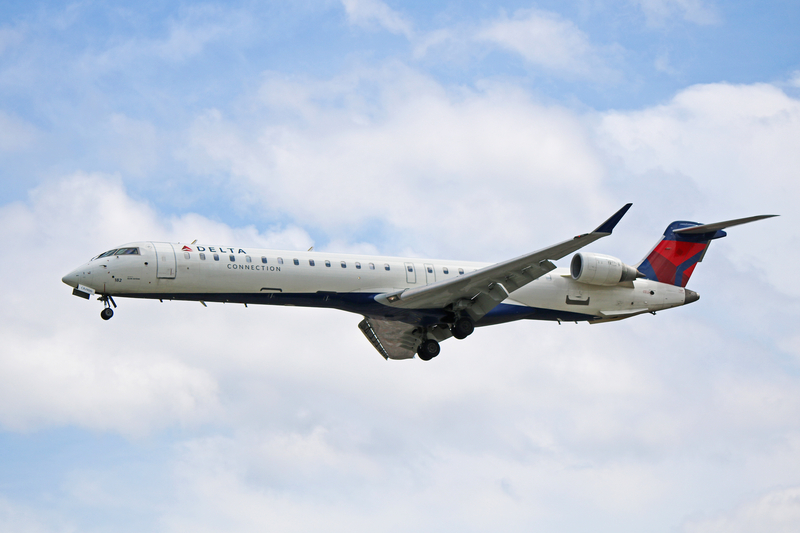
Two separate pilot medical emergencies in the span of a few days forced urgent responses on both sides of the Atlantic, giving passengers an unnerving reminder of one of aviation’s most serious but well-rehearsed contingencies: pilot incapacitation in flight.

One incident involved a Jet2 Airbus A321neo from Tenerife South (TFS) to Birmingham (BHX), which diverted to Porto (OPO) after one of the pilots became seriously unwell mid-flight. The second involved a Delta Connection CRJ-900 approaching Cedar Rapids (CID) from Detroit (DTW), where a pilot reportedly became incapacitated during approach.
In both cases, the remaining pilot landed safely. That is the headline that matters most.
Read our stories in your inbox
Two aviation newsletters. Zero fluff.
The Jet2 Event Happened In Cruise, But Still Became A Full Emergency
The Jet2 incident appears to be the more dramatic of the two in public reporting.
On May 21, flight LS1266 from Tenerife to Birmingham diverted to Porto after one of the pilots suffered a medical emergency. Passenger accounts described cabin crew urgently asking whether any doctors or nurses were onboard, which is usually the clearest sign to passengers that the problem is not routine. Jet2 later confirmed only that the diversion was caused by a pilot feeling unwell and said safety was never compromised.
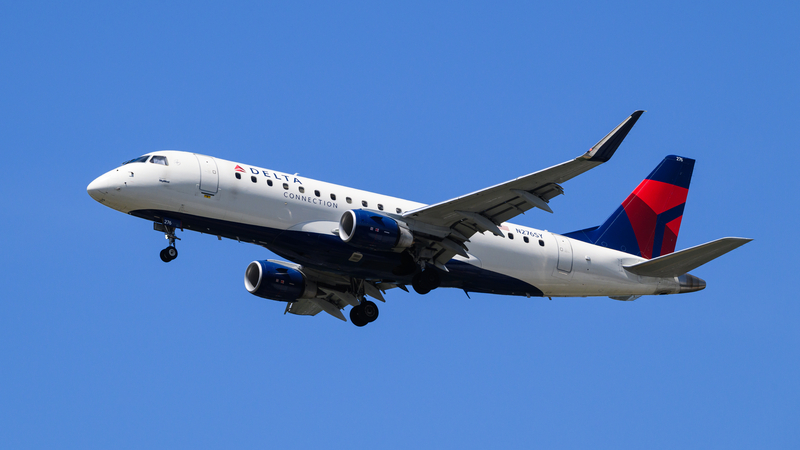
Some passengers and tabloid reporting described the event as a suspected heart attack, but Jet2 has not publicly confirmed that specific diagnosis. That distinction matters. The confirmed fact is pilot incapacitation or serious illness, not the exact medical cause.
The aircraft landed safely in Porto, where emergency responders met the flight and the affected pilot was taken to hospital.
The Delta Connection Event Happened At A Harder Moment: Approach
The second incident is more lightly documented publicly, but the broad outline is similar and operationally even more challenging.
A Delta Connection CRJ-900 operating DL5827 from Detroit to Cedar Rapids reportedly declared an emergency during approach after a pilot became incapacitated. Approach is one of the busiest phases of flight, with high cockpit workload, frequent ATC communication, aircraft configuration changes, and less margin for error than in cruise.

That makes the safe outcome especially important. Losing one pilot in cruise is serious. Losing one during descent or approach compresses the decision-making window much more sharply.
Even so, the remaining pilot landed the aircraft safely, and emergency responders met the flight after arrival.
Why These Events Sound Scarier Than They Usually Are
To passengers, pilot incapacitation sounds like one of the most frightening things that can happen on an airliner.

But commercial aviation is built around exactly this kind of redundancy. Airlines train for pilot incapacitation in simulators, and those scenarios are not treated as abstract edge cases. They are part of standard recurrent training. Modern aircraft systems also reduce workload substantially, especially in cruise, making it possible for one pilot to stabilize the situation, coordinate with ATC, and get the airplane on the ground safely.
That does not make these events minor. It means they are survivable because the system is designed with them in mind.
The Cabin Crew Role Is Easy To Underestimate
In both events, the cabin crew were a critical part of the response.
On the Jet2 flight especially, passengers became aware of the seriousness of the situation because cabin crew moved quickly through the aircraft to locate medical professionals. That is not just improvisation. It is part of how airlines use every available layer of support when a pilot becomes unwell. Cabin crew also help contain passenger anxiety, relay information, and keep the cabin stable while the aircraft diverts or lands.
These are the moments when airline professionalism becomes most visible to passengers.
The Most Important Detail In Both Cases Is The Same
The most reassuring fact is also the simplest one: both aircraft landed safely.
That outcome is easy to take for granted, but it is exactly what these layered systems are meant to deliver. One pilot became ill, the other kept control, the cabin crew managed the human side of the emergency, ATC provided priority handling, and medical teams were waiting on arrival.
That is the system working as intended.
Bottom Line
Two pilot incapacitation events in just a few days sound alarming, and for the people onboard they undoubtedly were. But the real lesson is not that commercial aviation is fragile. It is that it is heavily designed around redundancy, training, and procedural discipline.
The Jet2 diversion to Porto and the Delta Connection emergency into Cedar Rapids both ended the same way: safely, professionally, and without injury to passengers. In aviation, that is exactly what good system design looks like.
Keep reading FlyMag
Get the Daily Brief in the morning or the Route Watch weekly recap on Fridays. Or both.