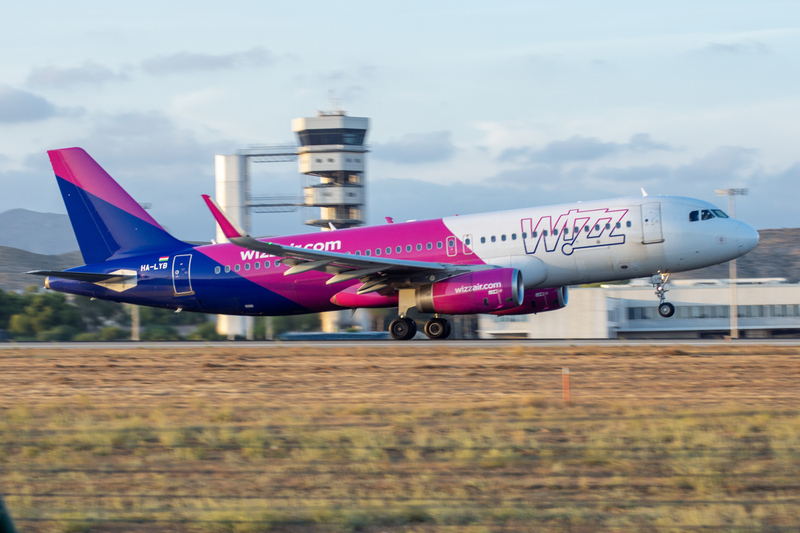
Wizz Air is opening a new link between Berlin Brandenburg Airport (BER) and Bratislava Airport (BTS), but the real significance is larger than a single route. The service marks the airline’s first nonstop connection between Berlin and the Slovak capital and forms part of what is shaping up to be Wizz Air’s most aggressive expansion yet at BER.

The new route begins on March 16, 2026 and will operate four times weekly on Mondays, Wednesdays, Fridays, and Sundays using the Airbus A321neo. With a scheduled flight time of about 1 hour 15 minutes, it gives Berlin a direct connection to Bratislava and, by extension, to a wider Central European catchment close to the borders of Austria and Hungary.
On its own, that is a tidy network addition. In the context of Wizz Air’s wider Berlin strategy, it looks more like a statement.
Read our stories in your inbox
Two aviation newsletters. Zero fluff.
Bratislava Is A Smart Route, Not Just A New One
Bratislava may not be the first city casual travelers think of when they look at Central Europe, but from a network-planning perspective it makes plenty of sense.
Bratislava Airport (BTS) sits just outside one of the most densely interconnected parts of the region. It serves the Slovak capital directly, but it also sits within reach of Vienna and northwestern Hungary, giving the market more catchment flexibility than a simple city-pair label might suggest. For Wizz Air, that makes BER–BTS an efficient addition: short stage length, strong price-sensitive demand potential, and relevance for both leisure and visiting-friends-and-relatives traffic.
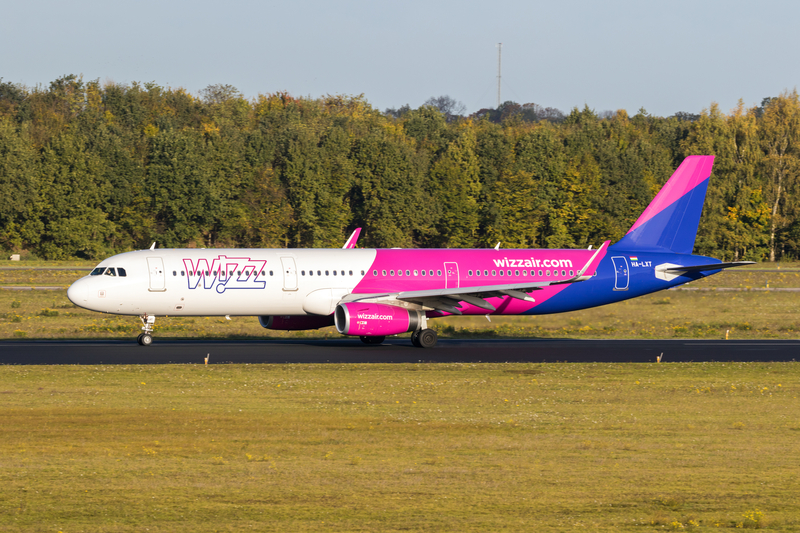
The aircraft assignment reinforces that logic. Using the Airbus A321neo rather than a smaller narrowbody tells you Wizz Air believes there is enough demand to support a relatively high-capacity low-cost operation from the start. The A321neo remains one of the most efficient tools in European short-haul flying, especially on dense sub-two-hour sectors where seat economics matter.
The Bigger Story Is Berlin
The real headline is not simply Berlin–Bratislava. It is how much Wizz Air is scaling up at BER overall.
For summer 2026, the airline plans to serve 12 destinations from Berlin Brandenburg, representing a capacity increase of around 90% compared with the previous summer. That is a major step-up at an airport where Wizz Air has at times looked more selective than expansive.
The carrier is not only adding Bratislava (BTS). It is also building out more of an Eastern and South-Eastern European profile from Berlin, with new services including Tuzla (TZL), Cluj-Napoca (CLJ), and Timișoara (TSR), while continuing Bucharest (OTP) daily. That route mix is revealing. Wizz Air is leaning into the parts of Europe where it has long had strong brand recognition and structural cost advantages rather than trying to fight for every mainstream Western European trunk market from BER.
That is a classic Wizz Air move. Grow where the model is strongest.
Eastern Europe Is Becoming More Central To BER’s Route Map
For Berlin Brandenburg, this expansion matters because it strengthens one of the airport’s most important geographic roles.
BER has extensive European coverage, but direct connectivity into parts of Eastern and South-Eastern Europe is especially valuable because those flows combine business travel, diaspora demand, tourism, and labor mobility. Wizz Air is particularly well positioned in that space. It knows how to stimulate traffic in markets that are sometimes underserved by traditional network carriers and sometimes too fragmented for larger airlines to prioritize.
That is why routes such as Cluj-Napoca (CLJ), Timișoara (TSR), Tuzla (TZL), Bucharest (OTP), Chișinău (RMO), Belgrade (BEG), Tirana (TIA), and Varna (VAR) fit so naturally into the airline’s Berlin strategy. They create a network that is coherent rather than random.
For BER, that makes the airport more relevant not just as Germany’s capital gateway, but as a stronger Central and Eastern European bridge.
Frequency Growth Matters As Much As New Routes
Another important detail is that Wizz Air is not relying only on fresh city launches. It is also increasing frequencies on several existing BER routes, including Belgrade (BEG), Chișinău (RMO), Tirana (TIA), and Varna (VAR).
That is often a more important signal than a new route announcement.
Any airline can add a city to a map. Increasing frequency suggests the carrier wants to become more useful in the market, not just more visible. More flights improve flexibility for passengers, deepen schedule utility, and make the network more attractive for repeated use. At a capital airport like BER, that matters because connectivity is not judged only on whether a city is served. It is judged on whether the timings and frequency make the route genuinely competitive.
In that sense, Wizz Air’s Berlin buildout is beginning to look less like opportunistic expansion and more like a meaningful base-strengthening exercise.
The A321neo Is Central To The Economics
The Airbus A321neo sits at the center of this entire expansion.
For Wizz Air, the aircraft is not just a fleet type. It is the commercial engine that allows the airline to scale in markets like Berlin while keeping unit costs low. On shorter sectors such as BER–BTS, the A321neo’s economics are especially useful because they allow Wizz to deploy more seats at lower cost per seat while still serving markets that are not long-haul or premium-dependent.
That is one reason the 90% capacity jump at BER is plausible. Wizz Air does not need to reinvent its operating model to expand. It just needs to apply its existing A321neo strategy more aggressively in a market where it now sees more room to grow.
What This Says About Wizz Air’s Position In Berlin
Berlin has never been the easiest airport for any one airline to dominate cleanly. It is a large capital market, but also a highly competitive one with a mix of leisure, government, business, and visiting-friends-and-relatives demand.
Wizz Air’s answer is not to try to be everything at BER. It is to be particularly strong in a specific set of markets where its brand, cost base, and route logic align. The summer 2026 expansion reflects that clearly. Rather than chasing headline routes for the sake of visibility, the airline is doubling down on the part of Europe where it has real structural strength.
That gives the expansion more substance than a routine seasonal update.
Bottom Line
Wizz Air’s new Berlin Brandenburg (BER)–Bratislava (BTS) route is a notable addition on its own, with four weekly Airbus A321neo flights beginning March 16, 2026. But the bigger story is what the route represents.
This is part of a much broader summer 2026 expansion at BER that will take Wizz Air to 12 destinations from Berlin and increase its seat capacity by around 90% year over year. Alongside Bratislava, the airline is adding or strengthening service to cities such as Tuzla (TZL), Cluj-Napoca (CLJ), Timișoara (TSR), Bucharest (OTP), Belgrade (BEG), Chișinău (RMO), Tirana (TIA), and Varna (VAR).
For aviation readers, that is the key takeaway. Wizz Air is not just launching a new Berlin route. It is materially deepening its position at BER and reinforcing the airport’s role as a gateway to Central, Eastern, and South-Eastern Europe.
Keep reading FlyMag
Get the Daily Brief in the morning or the Route Watch weekly recap on Fridays. Or both.