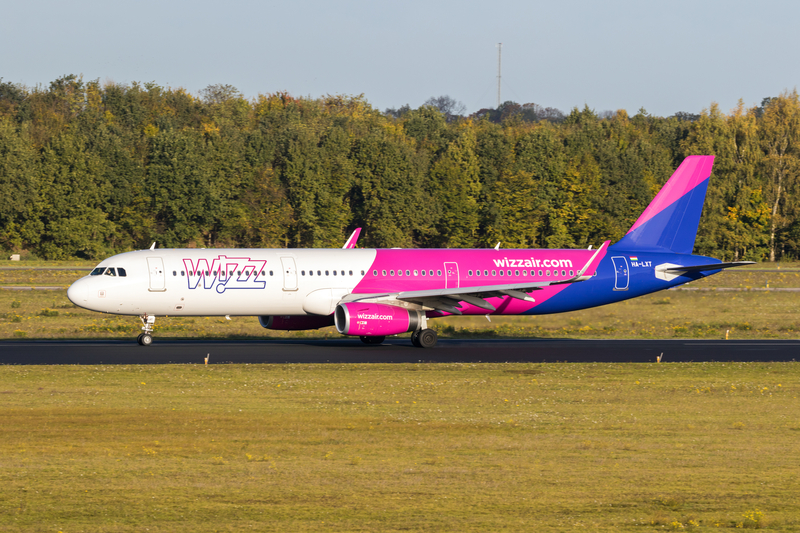
Wizz Air UK has secured regulatory approval to operate flights between the United Kingdom and the United States, a notable step for a carrier that has historically kept its business model focused on short- and medium-haul flying around Europe and the near periphery.

The key detail, though, is what Wizz Air UK is not doing: it has emphasized it has no plans to launch scheduled commercial transatlantic routes. Instead, the authorization will be used to operate tailored charter services, with a clear initial target—European football teams and supporter groups traveling to the United States for major summer tournaments.
For the industry, this is a smart way to leverage new regulatory permissions without rewriting the airline’s core model. Charters allow control over risk, pricing, and aircraft utilization without the year-round exposure and brand promise of scheduled long-haul service.
Read our stories in your inbox
Two aviation newsletters. Zero fluff.
What “approval to fly to the U.S.” actually means operationally
This kind of authorization is not a marketing certificate—it’s a legal and compliance threshold that confirms the airline can meet the operational, safety, and security frameworks required to operate to the U.S. from the UK.
In practical terms, it means Wizz Air UK can now:
-
file and operate transatlantic charters under the appropriate bilateral frameworks,
-
coordinate U.S. airport handling, security, and customs arrangements for arriving passengers,
-
and sell charter flying to organizations that want an entire aircraft (or a controlled block) rather than individual ticketed seats.
It does not automatically mean you’ll see Wizz Air UK selling London-to-New York fares on a public schedule. The carrier’s statement makes it clear this is about non-scheduled operations.
Why this makes sense as a football and events product
Charter flying thrives on predictable peaks and group demand. Major tournaments create exactly that:
-
large passenger volumes traveling on narrow date windows,
-
a premium on schedule flexibility (late departures after matches, quick turnarounds),
-
and high willingness to pay for “move the whole group together” travel.
Airlines can design charter packages that include flight times optimized around match schedules, training commitments, and recovery periods—something scheduled airlines can’t easily do without disrupting their network.
This is also where a low-cost operator can be surprisingly competitive: if the aircraft is available and the airline can control costs, a charter can deliver a strong margin without needing year-round demand to sustain the route.
The aircraft question: what Wizz Air UK would likely use
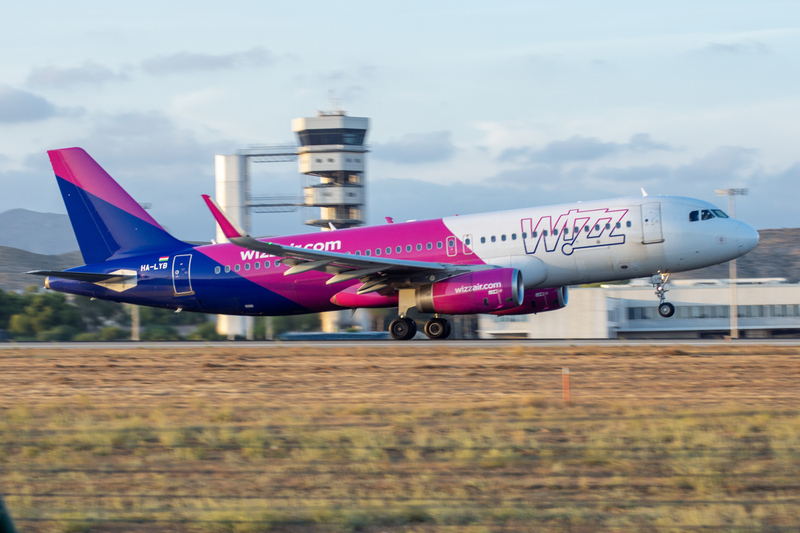
Wizz Air UK’s fleet is built around the Airbus A320 family—primarily A320ceo, A320neo, and A321neo aircraft—designed for efficient short- and medium-haul flying.
A true nonstop UK–U.S. mission generally demands long-range equipment—something like an A321LR or A321XLR, or a widebody. Wizz Air UK is not a widebody airline, and it has not positioned itself as a long-haul scheduled operator.
That doesn’t prevent charter operations. It simply changes how they’re executed. For transatlantic charters, the airline could:
-
operate via technical fuel stops where necessary,
-
use wet-lease/ACMI partnerships for long-range aircraft as part of a charter package,
-
or position aircraft depending on range requirements and customer needs.
The key point is that charter authority gives Wizz Air UK flexibility to deliver the product through operational solutions that are not constrained by “sell it every day on a timetable.”
Who else can use it besides sports teams
Wizz Air UK has said the approval will also support charter requests from:
-
corporate groups and tour operators,
-
sports organizations,
-
and private travelers seeking dedicated transatlantic connections.
That’s important because football isn’t a year-round demand engine. If Wizz Air UK wants this authority to remain commercially useful beyond tournament season, it needs other charter verticals—corporate incentives, conferences, cruise repositioning, and special events where group travel is time-sensitive and passengers value being moved together.
Bottom Line
Wizz Air UK’s new approval to operate between the UK and the U.S. is a genuine milestone—but it’s not a scheduled transatlantic pivot. This is a charter strategy, aimed first at the surge demand created by major summer football tournaments, with broader corporate and group charter opportunities also in view.
For the airline, it’s a low-risk way to extend reach across the Atlantic without committing to the operational complexity and commercial volatility of scheduled long-haul service. For charter customers, it’s another aircraft provider entering a market where flexibility, timing control, and group movement often matter more than the cheapest seat.
Keep reading FlyMag
Get the Daily Brief in the morning or the Route Watch weekly recap on Fridays. Or both.