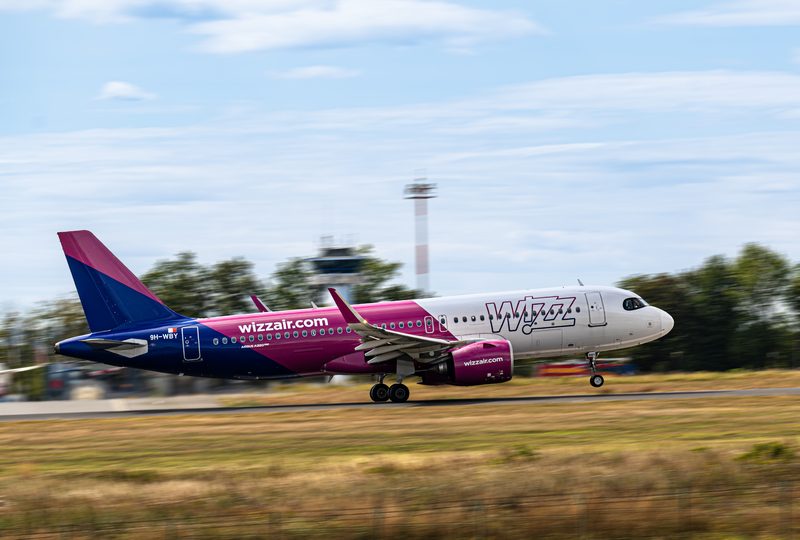
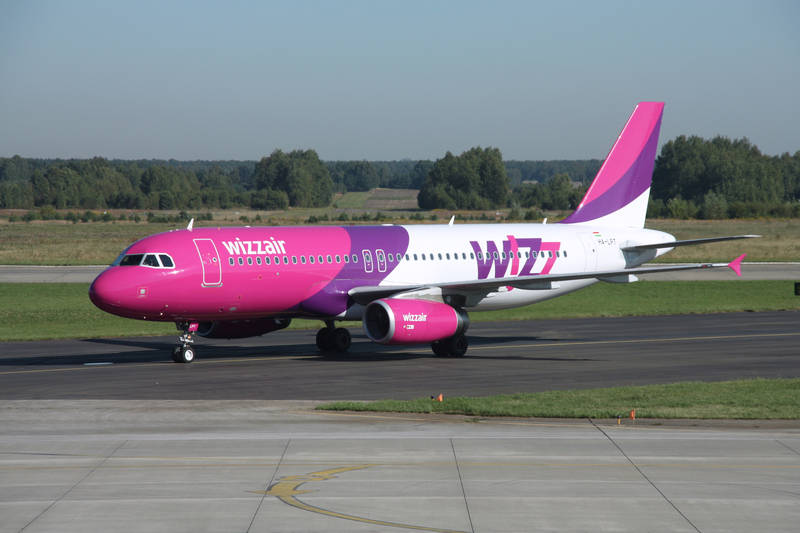
Wizz Air has moved into an unenviable first place in the UK: it now generates the highest volume of escalated passenger complaints per million passengers among airlines captured in the Civil Aviation Authority’s (CAA) dispute-resolution reporting. The latest CAA dataset—compiled from cases handled by approved Alternative Dispute Resolution (ADR) bodies and the regulator’s Passenger Advice and Complaints Team (PACT)—shows Wizz edging well ahead of Ryanair on a rate basis, even though both carriers sit in the same general low-cost arena.

This isn’t a popularity poll, and it’s not a measure of every grumble posted on social media. It’s narrower—and arguably more revealing—because it focuses on complaints that progress far enough to require third-party adjudication. In other words: situations where the passenger either couldn’t get a timely outcome directly from the airline, disagreed with the airline’s decision, or escalated because the stakes (refunds, EU261-style compensation, denied boarding, disruption costs) were high.
What the CAA numbers actually track (and why that matters)
The CAA’s quarterly releases aggregate cases dealt with by ADR providers (notably CEDR and AviationADR/Consumed Dispute Resolution Ltd) plus PACT. These channels are where complaints land when airline customer service has failed to close the loop—or when passengers believe they’re owed compensation and can’t get traction.
Read our stories in your inbox
Two aviation newsletters. Zero fluff.
Two important technical points shape how professionals should read the headline “complaints per million passengers” figure:
First, the “per million passengers” rate is an estimate based on UK terminal passenger volumes from a prior quarter, intended to reflect the real-world lag between a flight disruption and a formal escalation. It’s useful for comparison, but it isn’t a perfect apples-to-apples KPI.
Second, the dataset isn’t trying to measure how many people were unhappy. It’s measuring how many cases became formal disputes within the UK-linked regulatory ecosystem—often tied to delay/cancellation compensation, refunds, and care obligations.
The headline: Wizz Air’s rate dwarfs Ryanair’s
In the CAA’s FY25 summary dataset (covering Q2 2024 through Q1 2025), Wizz Air recorded 10,548 total cases opened and a complaints rate of 918 complaints per million passengers. Ryanair, meanwhile, logged 10,083 total cases opened but at a much lower rate of 188 complaints per million passengers.
That “same ballpark” absolute case count is exactly why the rate metric is so punishing for Wizz: it suggests that, relative to the passenger volume attributed in the CAA’s denominator, Wizz’s dispute load is disproportionately heavy.
For context, British Airways—operating a completely different network profile across hubs like London Heathrow (LHR) and London Gatwick (LGW)—posted 9,135 cases opened and 192 complaints per million passengers, roughly in Ryanair territory on rate, but with a markedly different outcome profile once adjudicated.

Uphold rates: where the reputational damage compounds
Complaint volume alone doesn’t tell you whether passengers are “right.” The more telling indicator is the uphold rate—the proportion of decided or settled cases resulting in a consumer-favorable outcome.
-
Wizz Air: 47% uphold rate
-
Ryanair: 28% uphold rate
-
British Airways: 83% uphold rate
Those numbers have two very different interpretations depending on your lens.
From the passenger perspective, a higher uphold rate implies a larger share of escalations had merit under the rules being applied.
From an airline ops and customer recovery perspective, it can indicate that the carrier is either:
-
losing too many cases at the adjudication stage (policy clarity, documentation quality, disruption handling, or claims processing issues), or
-
allowing too many valid claims to reach ADR instead of being settled earlier through effective self-service, proactive payouts, or faster case triage.
For Wizz Air, a near-50% uphold rate in a high-volume dispute stream is operationally expensive—both in payouts and in the internal admin cost of building case files, responding to ADR deadlines, and managing backlogs.
Compensation math: the “average award” tells a different story than the headlines
One common misconception is that low-cost carriers always face “small” awards. In reality, the average award depends on stage length, disruption type, and eligibility under the relevant rules.
In this dataset, the average award values reported by ADR providers were:
-
Wizz Air: £651
-
Ryanair: £694
-
British Airways: £837
That’s a critical nuance. Wizz leads on complaint rate, not because each case is necessarily larger than peers, but because more cases are escalating—and a material share of those are being upheld.
Why Wizz Air is vulnerable right now: disruption exposure and fleet complexity
Wizz Air’s UK footprint is heavily concentrated on point-to-point, high-utilization flying out of airports like London Luton (LTN), London Gatwick (LGW), Birmingham (BHX), Manchester (MAN), and Edinburgh (EDI). That model is brutally efficient when the operation runs clean—but it’s also fragile when disruption cascades, because there’s less slack in aircraft and crew rotations.
The fleet angle matters here. Wizz is overwhelmingly an Airbus A320-family operator, with significant capacity in the Airbus A321neo—an aircraft that’s a unit-cost machine when it’s flying. Many of those jets are powered by Pratt & Whitney GTF engines (PW1100G family), and the industry-wide inspection and shop-visit cycle tied to powdered metal concerns has forced airlines into tough decisions: parked aircraft, wet leases, higher spare ratios, and tighter schedules.
When a carrier loses aircraft availability, the downstream impacts aren’t just cancellations and delays. They’re also:
-
missed connections (even in an LCC world, passengers self-connect),
-
accommodation and duty-of-care disputes,
-
refund timing disputes,
-
and compensation eligibility arguments that often end up in ADR.
In practical terms, engine-driven capacity constraints can turn a customer service weakness into a measurable regulatory statistic—because passengers don’t escalate to ADR when an airline communicates clearly and resolves quickly. They escalate when the process breaks.
Ryanair’s “win” is real—but not a free pass
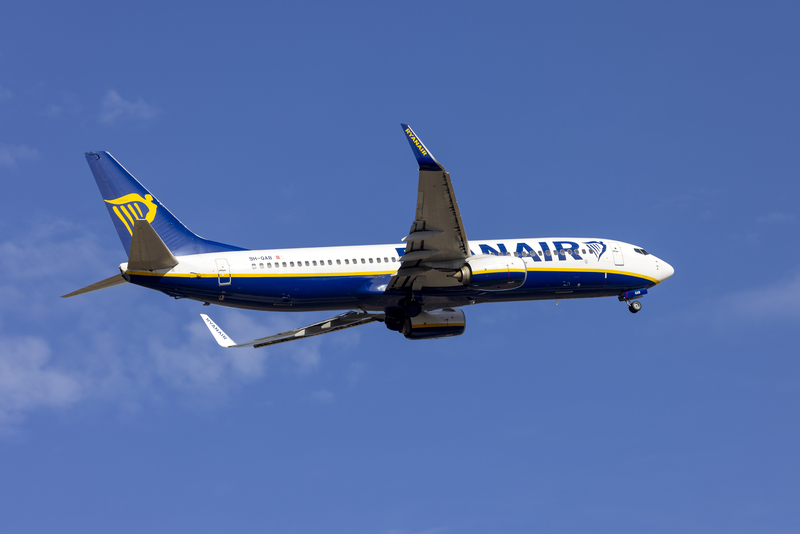
Ryanair will read these figures with some satisfaction, especially given its long-standing reputation for sharp-edged customer interactions. Operating largely from airports like London Stansted (STN), Manchester (MAN), and Edinburgh (EDI), Ryanair’s model is mature, tightly standardized, and built around rapid turn performance on the Boeing 737-800 and 737-8200 (“Gamechanger”) fleets.
A lower complaint rate per million passengers suggests either:
-
stronger disruption recovery (faster refunds, clearer communications, better self-serve), or
-
fewer cases reaching the point where passengers feel forced to escalate.
However, Ryanair still posted 10,083 cases opened in the period—an enormous absolute number. For airline managers, that’s not a vanity metric; it’s friction. High absolute disputes still cost money, consume staff time, and can erode confidence among infrequent flyers who don’t distinguish “rate” from “volume.”
What this signals to the market: airports, regulators, and brand economics
Airports care about airline reliability because it affects terminal flow, staffing, and customer experience. A carrier with a reputation for unresolved disruption can face quieter—but meaningful—commercial pressure in negotiations around incentives, service levels, and passenger handling.
Regulators care because repeated patterns in complaint backlogs and dispute outcomes can indicate systemic issues. The CAA has been explicit in the past that complaint handling standards matter—particularly when large volumes reach third parties. In a market where political and consumer expectations remain elevated post-pandemic, persistent underperformance doesn’t just hurt reputation; it risks inviting deeper scrutiny and, potentially, operational mandates around responsiveness and process.
For Wizz Air, the immediate lever is not marketing—it’s service recovery engineering:
-
faster eligibility decisions,
-
cleaner disruption communications,
-
fewer “grey zone” refusals that collapse at ADR,
-
and investment in case management tools that keep disputes from leaving the airline’s own channel.
Bottom Line
The CAA’s dispute-resolution dataset doesn’t claim Wizz Air has the most unhappy customers. It shows something more specific—and more damaging for a cost-driven brand: Wizz Air generates the highest rate of complaints that escalate far enough to require ADR or regulator involvement, at 918 complaints per million passengers in the FY25 period (Q2 2024–Q1 2025). Ryanair, with a similar absolute number of opened cases, sits far lower on a rate basis at 188 per million, while British Airways lands in a similar band on rate but with a dramatically higher uphold rate once cases are decided. For Wizz, the message is operational: when disruption meets slow or inconsistent resolution, complaints stop being noise and start becoming a published metric.
Keep reading FlyMag
Get the Daily Brief in the morning or the Route Watch weekly recap on Fridays. Or both.