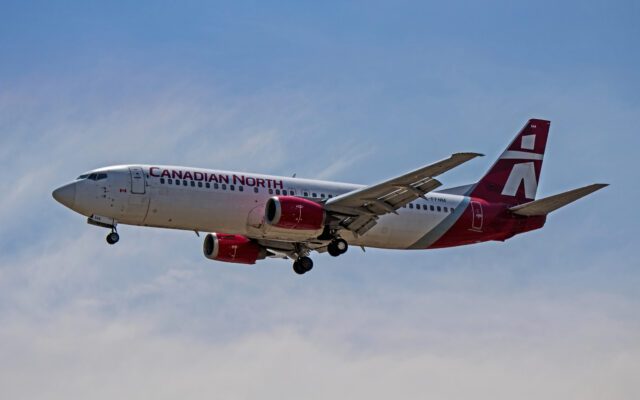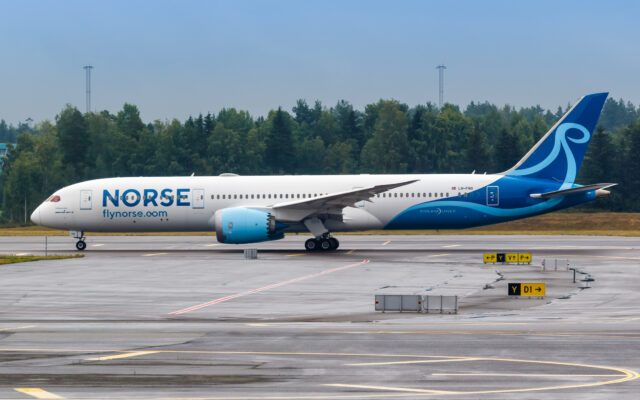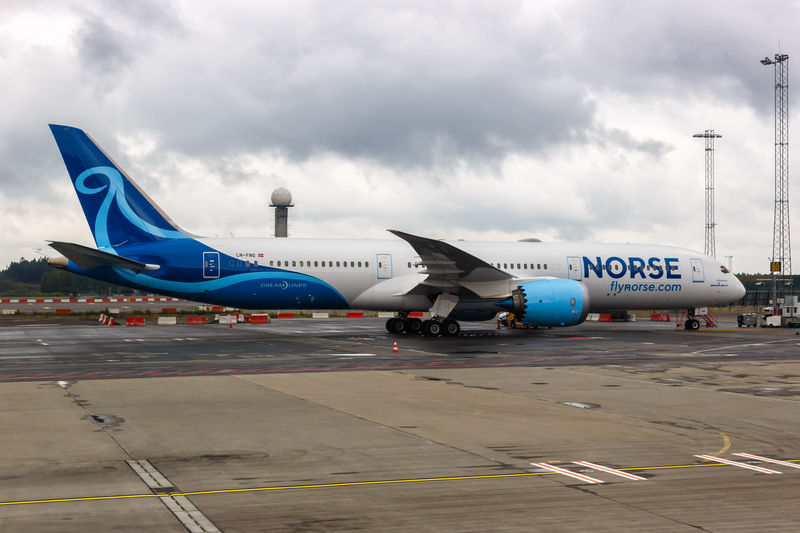
Norse Atlantic is accelerating its restructuring, cutting jobs, furloughing some crew, and shrinking parts of its support organization as the airline tries to protect itself from a sharp rise in fuel costs and a more volatile long-haul market.

The airline says its cost-cutting program, known as Project Falcon, is now being pushed harder in response to geopolitical tension and the effect that has had on fuel prices and traffic flows. For a carrier built entirely around long-haul flying, that matters enormously. Norse does not have a short-haul network to cushion it. When long-haul economics deteriorate, the whole airline feels it.
This is why the latest move is more than a normal round of efficiency measures. It is a sign that management believes the pressure is serious enough to justify a much faster and much more painful reset.
Read our stories in your inbox
Two aviation newsletters. Zero fluff.
The Cuts Are Significant By Any Standard
Norse says it will eliminate around 75 administrative positions, equal to roughly 35% of its administrative workforce.
That alone is substantial. But the restructuring goes further than head-office layoffs. The airline is also introducing crew furloughs, temporary pay reductions for non-flying crew, and changes to make its crew-base structure more flexible. It is also rationalizing internal IT and partner systems, which suggests the company is looking not just at people costs, but at the broader cost of running the business.
Taken together, these are not cosmetic changes. They are deep reductions aimed at reshaping the airline’s expense base quickly.
Oslo Wins, Arendal Loses
One of the clearest structural changes is the decision to move the airline’s headquarters to Oslo and close the office in Arendal.
That matters because headquarters moves are usually about more than real estate. They signal a change in how management wants the company organized and where it believes the core of the business should sit. In Norse’s case, bringing the head office closer to Oslo appears intended to align commercial and operational functions more tightly while simplifying the company’s structure.
For employees in Arendal, though, it also makes the restructuring more tangible. This is not just a spreadsheet exercise. It is a physical consolidation of the airline.
Project Falcon Is Now The Core Survival Tool
Norse says Project Falcon is expected to deliver annualized savings of up to $50 million compared with the 2025 baseline.
That number matters because it shows the airline is not just trying to shave around the edges. It is trying to rebase its cost structure at a meaningful scale. For a relatively small long-haul carrier, $50 million in recurring savings is material enough to affect the viability of the whole operation.
This is also why the move should be read carefully. Airlines often announce cost programs. They do not always accelerate them this sharply unless management believes the external environment is worsening faster than expected.
Fuel Is The Immediate Trigger, But Not The Only Problem
The airline has linked the acceleration directly to geopolitical tension and higher jet fuel prices.
That is entirely credible. Long-haul low-cost operators are particularly exposed when fuel rises because they have less room than full-service network airlines to absorb cost shocks through premium revenue or short-haul feed. A route that looks workable in a stable fuel environment can become much harder to justify once prices jump.
But fuel is unlikely to be the only issue here. Norse has already been under pressure to prove that a long-haul low-cost model can work sustainably at scale, especially outside the strongest transatlantic city pairs. The latest fuel shock appears to have forced management to confront that pressure more urgently.
Crew Furloughs Suggest The Network Itself Is Being Reassessed
The decision to furlough some crew is one of the strongest signals in the whole announcement.
Airlines do not furlough crews lightly, because crews are expensive to recruit, train, and retain. If management is willing to put crew on furlough, it usually means the airline expects flying levels, aircraft utilization, or route performance to be weaker than it had hoped in the near term.
That does not necessarily mean immediate route exits are coming across the board. But it does suggest Norse is aligning staffing to a more cautious view of what its network can profitably support this summer and beyond.
This Is A Harsh Reminder Of Norse’s Exposure
Norse’s network is built around long-haul flying to and from Europe, Southeast Asia, South Africa, and North America. That gives it visibility, but it also gives it concentration risk.
Unlike a diversified airline group, Norse cannot easily offset long-haul weakness with strong domestic or regional profits. That makes every major external shock more dangerous. A sustained increase in fuel prices, a shift in traffic flows, or even a softer premium market can have an outsized impact.
This latest restructuring is a reminder that the airline’s model can still be compelling in the right markets, but it remains vulnerable when conditions turn against it.
The Bigger Question Is Whether This Is Defensive Or Foundational
That is the question investors and industry observers will now be asking.
Is this restructuring a one-time defensive move to get through a difficult fuel cycle? Or is it part of a deeper realization that Norse needs to become a smaller, leaner airline permanently if it wants to survive?
The answer may not be clear yet. But the scale of the cuts suggests this is more than a temporary patch. Management appears to be trying to make sure the airline can operate with a lower, more resilient cost base even if the external environment stays difficult longer than hoped.
Bottom Line
Norse Atlantic’s decision to cut around 75 administrative jobs, furlough some crew, reduce pay for some non-flying staff, and close its Arendal office is a serious escalation of its restructuring effort, not a routine efficiency update.
The airline is clearly moving faster because fuel prices and wider geopolitical instability have made its long-haul model harder to defend at current cost levels. Project Falcon’s targeted $50 million in annualized savings now looks less like an optimization program and more like a survival tool.
For Norse, the next phase will not be about growth headlines. It will be about whether this reset is enough to make the business durable in a market that has become much harsher than expected.
Keep reading FlyMag
Get the Daily Brief in the morning or the Route Watch weekly recap on Fridays. Or both.