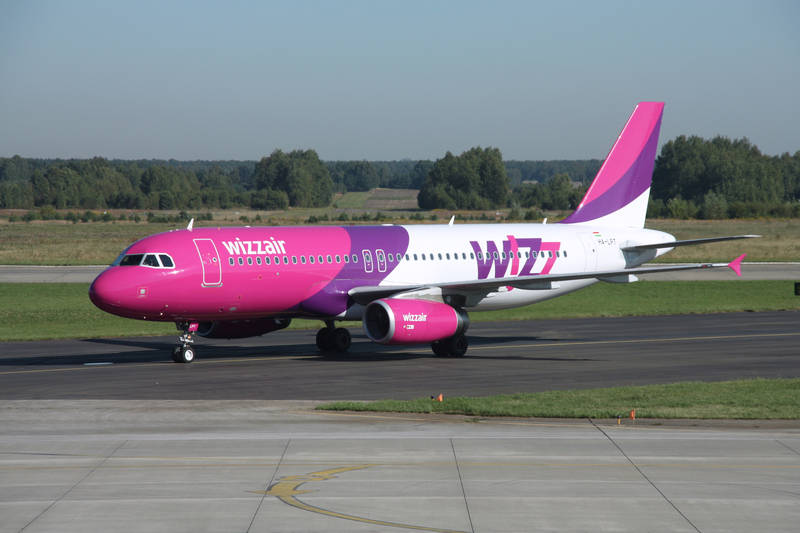
Wizz Air has expanded WIZZ Class across its entire route network, moving the product from a limited-base trial into a standard, bookable option beginning February 9, 2026. The rollout is a classic ultra-low-cost carrier (ULCC) move: create a more comfortable “front-of-cabin” experience without adding a true premium cabin, without sacrificing the high-density single-class layout that keeps unit costs low, and without the complexity of a full fleet reconfiguration.

The result is a lightweight comfort upsell that targets two groups Wizz wants more of: time-sensitive travelers who value personal space, and leisure passengers willing to pay a modest premium for a calmer experience on short- and medium-haul flights.
From trial bases to the full network
WIZZ Class first appeared on selected routes from six major bases:
Read our stories in your inbox
Two aviation newsletters. Zero fluff.
-
Budapest (BUD)
-
Bucharest Otopeni (OTP)
-
Warsaw (WAW)
-
London Luton (LTN)
-
London Gatwick (LGW)
-
Rome Fiumicino (FCO)
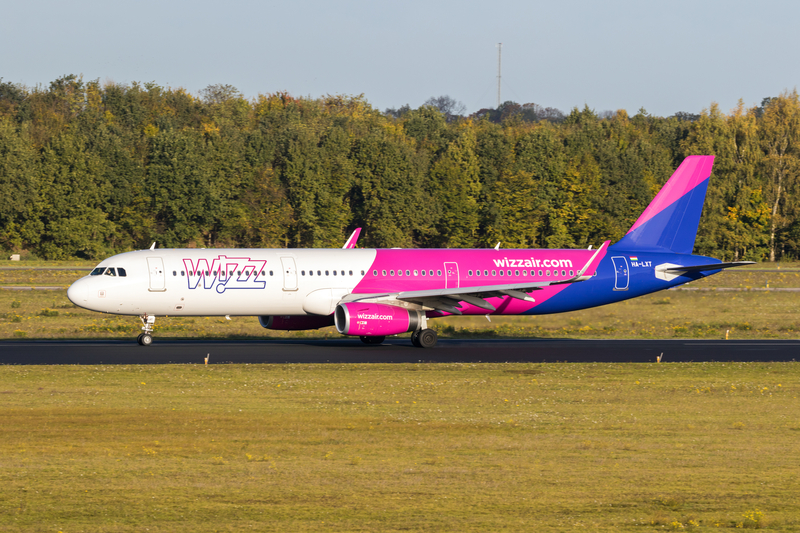
Those bases are telling. They combine strong business demand (London and Rome), large diaspora/VFR flows (BUD, OTP, WAW), and dense competition where schedule and perceived comfort can sway purchasing decisions—even in a low-fare market. Wizz says passenger uptake exceeded internal expectations during the trial, particularly among travelers who wanted “business-class style” space without business-class pricing.
How WIZZ Class works on an Airbus narrowbody
Wizz operates a predominantly Airbus A320-family fleet—principally the A320neo and A321neo—in a single-cabin, high-density configuration. WIZZ Class doesn’t change that.
Instead, the airline creates extra personal space by blocking the middle seat in the first row: 1B and 1E are kept empty. That means only four seats are occupied in Row 1 (typically 1A/1C/1D/1F), reducing shoulder contact and giving passengers a noticeably “airier” feel without touching the cabin layout.
Row 1 also delivers the second part of the value proposition: more legroom. On most A320-family layouts, the front row sits ahead of the standard seat track pattern with additional pitch, and Wizz leverages that to sell a “comfort tier” without building a separate cabin.
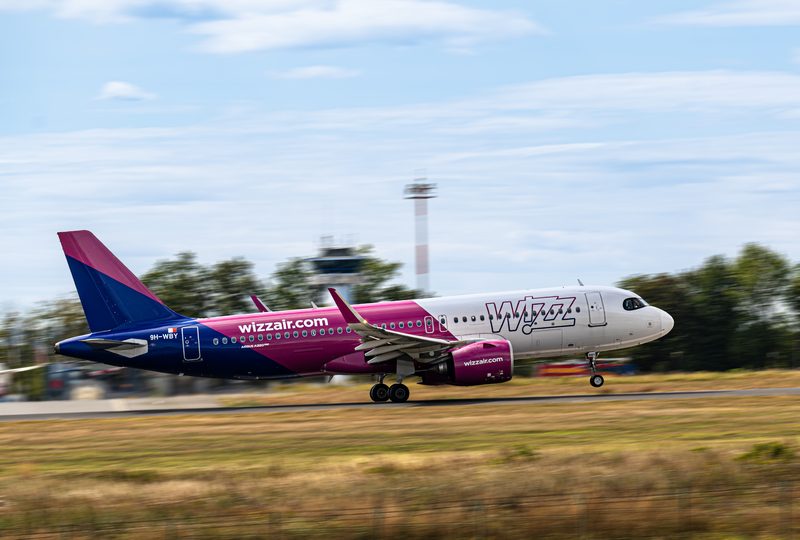
It’s a subtle move, but commercially smart. The airline is monetizing the most desirable real estate in a narrowbody cabin—front row, fastest exit, most space—while keeping the aircraft’s structural seating plan intact.
What you get: comfort plus a tightly controlled bundle strategy
WIZZ Class is positioned as an optional upgrade during booking and is tied to Wizz’s higher-value fare bundles—primarily Smart and Plus. Those bundles already include elements that frequent travelers care about:
-
Priority boarding
-
A 10 kg carry-on allowance
WIZZ Class then adds a small “premium touch” onboard: a complimentary non-alcoholic drink and snack. Don’t overstate that perk—it’s not lounge access, it’s not hot meals, and it’s not flexible change protection. But it’s enough to create a psychological boundary between standard ULCC travel and “I paid for a better seat,” which is exactly what ancillary strategy is meant to achieve.
Why Wizz is doing this now: ancillaries, business-share, and competitive pressure
European short-haul is a knife fight on price, and Wizz has also dealt with operational headwinds tied to engine availability across parts of the A320neo-family ecosystem. In that context, the easiest margin to protect is the margin you don’t have to fly harder for—ancillary revenue.
WIZZ Class is essentially a higher-yield seat product created through inventory control. Wizz “gives up” two seats (1B and 1E) but can often offset that with a higher total price for the remaining four seats in the row, plus the halo effect on bundle attachment rates. It’s the same revenue logic that has existed for years in European short-haul business class—blocked middle seats—but reframed in ULCC language and tightly integrated into a self-serve e-commerce funnel.
There’s also a network effect. Once the product exists across the network, corporate travel buyers and frequent flyers learn it’s consistently available—whether they’re departing LTN on a short hop or flying a longer intra-European sector from FCO. Consistency drives habit, and habit drives repeat purchase.
The operational advantage: “premium” with zero cabin downtime
Traditional premium cabins come with weight, complexity, certification overhead, and downtime for installation. WIZZ Class avoids all of that.
-
No additional monuments
-
No new cabin partitions
-
No seat swap program
-
No impact on turnaround performance beyond minor service handling
For a carrier that relies on quick turns and high aircraft utilization on A320neo/A321neo narrowbodies, those are not small benefits—they are the business model.
Bottom Line
Wizz Air’s decision to roll WIZZ Class across its entire network from February 9, 2026 is a clear signal that the airline sees “premium-lite” seating as a scalable profit lever. By blocking 1B and 1E in the first row—typically on Airbus A320-family aircraft like the A320neo and A321neo—Wizz delivers extra personal space and legroom without redesigning the cabin or diluting its ULCC cost base. The product is designed to pull higher-value customers toward Smart and Plus bundles, strengthen ancillary revenue, and give comfort-minded passengers a predictable upgrade option from major bases like BUD, OTP, WAW, LTN, LGW, and FCO—all while keeping the density and simplicity that define Wizz’s operation.
Keep reading FlyMag
Get the Daily Brief in the morning or the Route Watch weekly recap on Fridays. Or both.