The United States has sanctioned 27 Iranian airlines and nine people and companies tied to aircraft procurement, cargo handling and sales representation, widening its aviation restrictions far beyond the measures already imposed on Mahan Air.

The September 8 action places the airlines on the Specially Designated Nationals and Blocked Persons List. Property within US jurisdiction must be blocked, US persons generally cannot transact with the carriers, and foreign banks or aviation companies risk secondary sanctions for significant dealings with them.
The package is not a fleet-grounding order issued by an aviation regulator. Iranian carriers can continue flying where local authorities and counterparties permit. Its force comes instead from making banking, insurance, aircraft transfers, maintenance, parts procurement, airport services and cargo representation substantially more difficult.
Read our stories in your inbox
Two aviation newsletters. Zero fluff.
Remaining Iranian Airlines Added to the SDN List
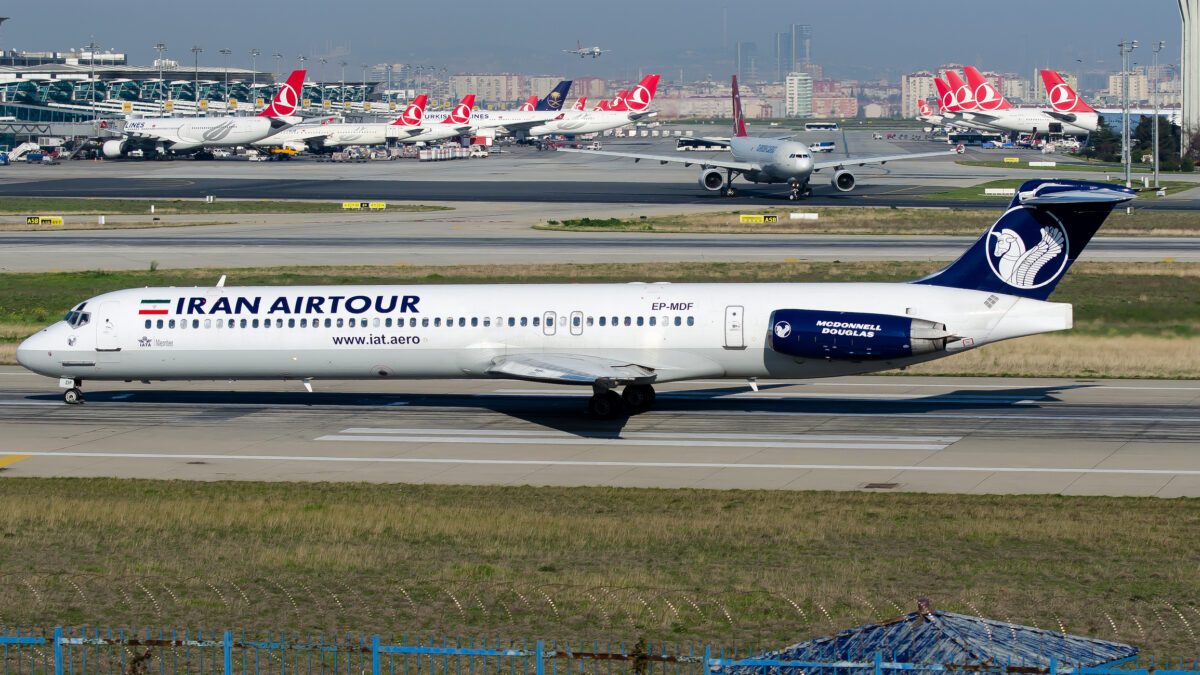
The Treasury Department said the 27 designations cover Iran’s remaining active airlines. The list includes Ata Airlines, Chabahar Airlines, Fly Persia Airlines, Iran Air Tour, Iran Aseman Airlines, Kish Airlines, Qeshm Air, Saha Airlines, Sepehran Airlines, Taban Airlines, Varesh Airlines and Zagros Airlines, alongside a group of smaller and recently established operators.
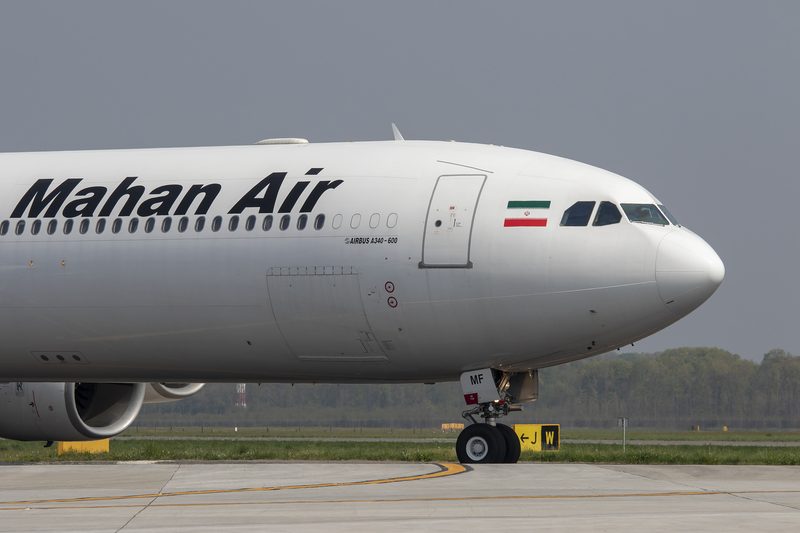
Mahan Air and Iran Air are not among the 27 new additions because they were already subject to US restrictions. Mahan Air was designated in 2011 over Treasury’s finding that it supported the Islamic Revolutionary Guard Corps-Qods Force. Iran Air was placed on the SDN List in 2018 as an entity owned or controlled by the Iranian government.
Tuesday’s action uses Executive Order 13902, under which Treasury identified aviation as a sanctionable sector of the Iranian economy on August 24, 2026. That determination gave OFAC authority to target foreign people and companies operating in, or providing support to, the sector.
For the newly designated airlines, the immediate commercial problem is counterparty risk. Banks must screen payments, while lessors, maintenance providers, parts distributors, freight forwarders, fuel suppliers, general sales agents and airport contractors must assess whether a transaction involves a blocked carrier or a company owned at least 50% by one or more blocked persons.
Aircraft and Overflight Authorizations Withdrawn
OFAC also indefinitely suspended four civil aviation provisions under the Iranian Transactions and Sanctions Regulations. These covered payments connected with Iranian overflights or emergency landings by US-owned or US-registered aircraft; an aircraft-safety licensing policy; bunkering and emergency support in the United States for non-Iranian carriers serving Iran; and General License J-1.
J-1 had allowed non-US operators to take certain foreign-registered, fixed-wing civil aircraft into Iran temporarily. Eligible aircraft included US-origin jets and foreign-built aircraft containing at least 10% US-controlled content. The authorization required the foreign operator to retain control of crew, dispatch, routing and principal maintenance, and limited each stay in Iran to 72 hours.
Its suspension therefore reaches beyond Iranian operators. Foreign airlines using aircraft containing controlled US technology can no longer rely on the general authorization when operating to Iran. Treasury said aviation safety requests will instead be considered individually.
General License DD provides a short wind-down period for transactions previously covered by the overflight, bunkering and J-1 authorizations. That window closes at 12:01 a.m. Eastern time on September 23, 2026.
Three Boeing 777s at the Center of Procurement Case
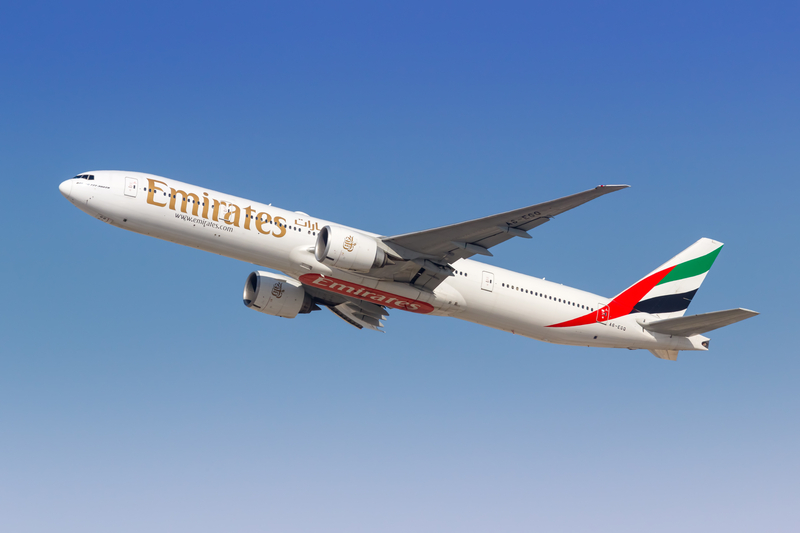
The action also targets a network that Treasury says transferred at least three Boeing 777 aircraft to Mahan Air during summer 2026. According to the department, the aircraft came from a retired fleet and passed through the United Arab Emirates and Oman, receiving temporary registrations before reaching Iran.
Treasury designated UAE-based ECT Aviation Support, Türkiye-based Sky Phoenix, UK-based ECT Aviation Support, Aerobravo Airplane Management and Egyptian national Ibrahim Mahran over their alleged roles in the transfers. Mahran is identified as ECT Aviation Support’s founder, owner and chief executive.
The aircraft are significant because the Boeing 777 is a long-haul widebody with substantial passenger and belly-cargo capability. Boeing’s reference figures for legacy passenger variants span roughly 313 to 396 passengers and more than 7,000 nautical miles of range. Adding three aircraft from the family would give Mahan Air additional capacity for long international sectors and high-volume cargo carriage.
A separate general license allows limited wind-down transactions involving ECT Aviation Support and two Türkiye-based logistics companies until September 23. It does not provide a general wind-down authorization for dealings with the 27 newly sanctioned Iranian airlines.
Cargo Agents and Financial Transactions Targeted
OFAC also sanctioned S Sistem and Mes Cargo in Türkiye, Icargo in Malaysia and Tour Invest in Kazakhstan. Treasury alleges that the companies acted as cargo service providers or general sales agents for Mahan Air. It said S Sistem coordinated shipments including unmanned aerial vehicle components, while Icargo handled US-origin parts destined for Iran.
The designations were accompanied by a Financial Crimes Enforcement Network alert directing banks to watch for aviation procurement networks. Indicators include newly incorporated aviation or logistics companies with opaque ownership, aircraft undergoing repeated changes of registration, layered transfers among companies in several jurisdictions, and parts orders routed through unrelated freight forwarders.
FinCEN also highlighted aircraft emerging from long-term storage, unusual movements through Central Asia, unsupported claims of OFAC or Commerce Department authorization, and deliveries split among suppliers and logistics companies in different countries. Financial institutions filing related suspicious activity reports have been asked to use the identifier “FIN-2026-IRANAIR.”
Bottom Line
The sanctions will matter most at the edges of Iran’s airline system, where carriers still depend on foreign banks, component suppliers, maintenance organizations and service companies. Domestic flying can continue using aircraft, crews and infrastructure already inside Iran, but every cross-border payment or technical requirement now carries greater compliance risk for the company on the other side.
The withdrawal of General License J-1 is particularly important for non-Iranian airlines. Washington is no longer only blocking named Iranian operators; it is restricting the legal pathway that allowed eligible US-origin or US-content aircraft to enter Iran temporarily under foreign control. That could narrow Iran’s international connectivity even where the operating airline itself is not sanctioned.
The next test will be how airports, fuel providers, insurers and correspondent banks outside the United States respond. OFAC’s secondary-sanctions language is intended to encourage those companies to withdraw before an enforcement case is required. If that response is broad, the operational effect will extend well beyond the assets directly blocked on September 8.
Keep reading FlyMag
Get the Daily Brief in the morning or the Route Watch weekly recap on Fridays. Or both.