Norse Atlantic Airways filled 94% of the seats in its scheduled network during the second quarter of 2026. It also lost $27.3 million at the operating level and $70.6 million after financing costs.
That combination explains why the future of Norse’s low-fare long-haul network depends on more than passenger demand. The airline is selling seats at higher prices and recording near-full aircraft, but its sharply reduced operation is not producing enough revenue to cover fuel, maintenance, leases and other fixed costs.
According to Norse Atlantic’s second-quarter and half-year report, revenue fell 35% year over year to $132 million. EBITDAR swung from a positive $23.1 million to a negative $8.4 million, while the operating margin deteriorated to approximately negative 21%.
Read our stories in your inbox
Two aviation newsletters. Zero fluff.
Full Aircraft Could Not Close the Cost Gap
Norse’s scheduled operation carried 184,365 passengers during the quarter, down from 502,737 a year earlier. It operated 580 scheduled flights, compared with 1,542 in the second quarter of 2025, while scheduled capacity measured in available seat kilometers fell 64%.
The capacity cuts helped support pricing. The average airfare increased 27% to $380, while total revenue per passenger rose 20% to $447. Passenger revenue per available seat kilometer reached 5.84 cents, and total unit revenue reached a record 6.15 cents.
Costs moved faster. Scheduled-network cost per available seat kilometer increased from 4.85 cents to 8.23 cents. Norse attributed the deterioration to higher fuel prices, reduced aircraft utilization and a cost base containing substantial fixed expenses that could not decline at the same rate as capacity.
The airline said fuel prices were 92% higher than a year earlier. Technical maintenance expenses also increased because of unscheduled engine repairs. Norse canceled its Los Angeles summer program and reduced production elsewhere as it sought to avoid flying routes that could not support the higher fuel bill.
The figures illustrate the limitation of load factor as a measure of financial health. A 94% load factor is commercially strong, but it cannot produce a profit when the revenue collected for each unit of capacity remains below the cost of operating it. Norse has improved fares and network quality, yet the smaller operation has pushed fixed expenses across fewer available seat kilometers.
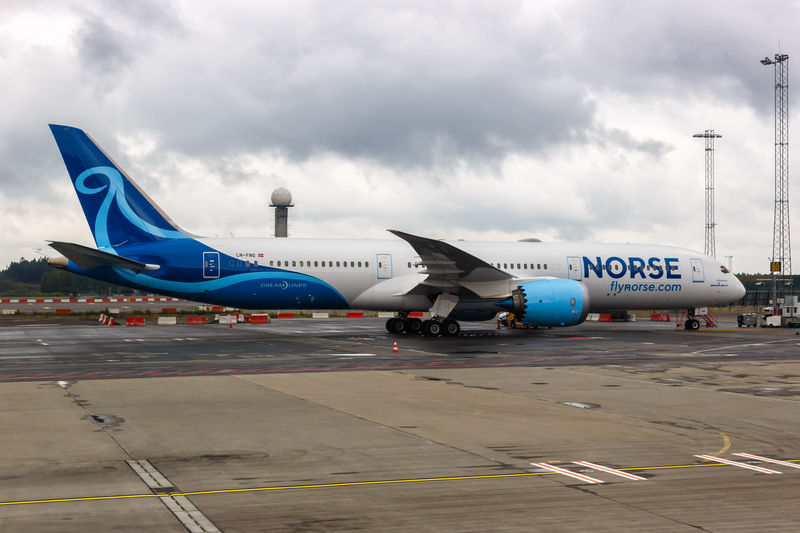
The Scheduled Network Is Already Smaller
Norse has not announced a withdrawal from scheduled long-haul flying. It has, however, shifted substantially away from the broad transatlantic network on which it built its consumer brand.
Scheduled passenger revenue fell 56% to $82.4 million during the quarter. By contrast, ACMI and charter revenue increased from $6.1 million to $45 million as six aircraft spent the quarter operating outside Norse’s own network. ACMI and charter block hours rose from 813 to 7,455.
This model was intended to stabilize revenue and reduce Norse’s direct exposure to fuel and ticket-price risk. It also meant that half of the 12-aircraft fleet was unavailable for the airline’s own scheduled services.
That arrangement is changing again. Norse and IndiGo agreed to end their ACMI cooperation from November 1, returning five Boeing 787-9s to Norse. Management said those aircraft could support scheduled routes, charters or new ACMI contracts. The additional capacity gives Norse options, but it also returns utilization risk to the company unless replacement work is secured.
The airline has identified additional winter capacity between Europe and Southeast Asia and more flying to New York and Orlando as possible uses for the returning aircraft. Norse has separately announced an expanded Thailand program, reflecting its willingness to move aircraft away from marginal transatlantic routes when stronger seasonal opportunities emerge elsewhere.
New Capital Has Bought Norse More Time
Norse’s ability to continue reshaping the network depends on liquidity. The airline completed a $110 million rights issue and bond conversion in June, using the recapitalization to repay debt and meet obligations to suppliers and lessors.
The transaction heavily diluted existing shareholders. Norse had approximately 162.6 million shares outstanding at the end of October 2025. Following the rights issue, bond conversion, underwriting shares and a management placement, the company’s registered share count reached nearly 2.96 billion in July 2026.
Cash and cash equivalents stood at $67.1 million on June 30, up from $17.6 million at the end of 2025. That increase came from financing rather than operations: Norse recorded a $29.1 million operating cash outflow during the second quarter.
The company subsequently arranged another $52 million of senior secured financing. The facility carries a 15% fixed coupon, was issued at 95% of par, matures in May 2027 and must be repaid at 103% of par. Lenders are also entitled to a fee equal to 3% of Norse’s equity value if the strategic review produces a change of control or sale.
Those terms provide a financial runway, but at a significant cost. Norse said the funding should support operations while its strategic review proceeds. Multiple parties have signed nondisclosure agreements, and the review could result in a sale, merger or partnership by the end of 2026.
The Boeing 787 Fleet Is Norse’s Strongest Asset
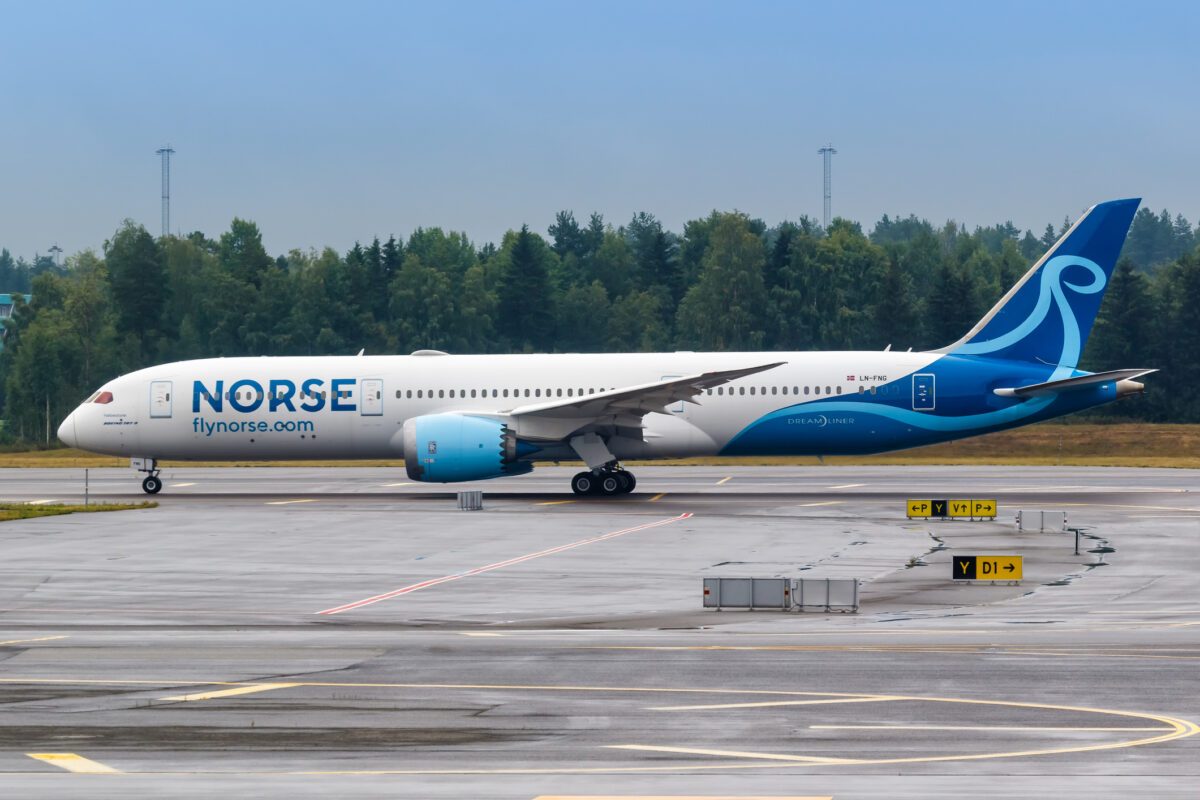
Norse operates 12 Boeing 787-9s, each configured with 338 seats: 56 in Premium and 282 in Economy. The dense layout supports low seat costs when the aircraft are highly utilized, while the Premium cabin gives the airline access to higher-yield demand without the complexity of a conventional business-class product.
Boeing lists the 787-9 with a range of up to 8,300 nautical miles, making it suitable for Norse’s transatlantic, African and Asian operations. Its range and cargo capability also make the aircraft attractive for ACMI customers and potential strategic partners.
Norse says its aircraft leases have between seven and 12 years remaining, with an average duration of nine years. The rates are fixed without inflation adjustments and, according to management, compare favorably with current market prices for equivalent aircraft.
That lease portfolio helps explain why outside parties may be interested even as the airline reports losses. Modern widebody availability remains constrained, and acquiring Norse could provide immediate access to 12 standardized 787-9s, trained crews, operating certificates and an established commercial platform.
Low Fares May Become More Selective
The evidence does not point to an immediate end to Norse Atlantic’s scheduled flights. It does point to a smaller, more selective network in which aircraft are assigned according to short-term returns rather than a commitment to maintaining a broad low-fare transatlantic schedule.
Norse’s own terminology reflects the change. Management now describes the company as an “Airline on Demand,” able to move capacity among scheduled routes, charters and ACMI work. That flexibility may be necessary for survival, but it means consumers cannot assume that marginal routes or consistently low promotional fares will remain available from season to season.
The airline’s challenge is no longer filling the 787s. It is earning enough from each flight, keeping the fleet productive and securing sufficient capital to absorb long-haul volatility. Until those issues are resolved, high load factors will remain evidence of demand rather than proof of a sustainable business.
Bottom Line
Travelers are unlikely to see Norse Atlantic’s low-fare model disappear in a single step. The more probable outcome is continued concentration on routes and travel periods that can support higher fares, strong cargo demand or unusually high load factors. That leaves less room for thin transatlantic markets and for capacity added primarily to stimulate demand with headline fares.
The returning IndiGo aircraft will be the next operational test. If Norse can place them in profitable scheduled flying or secure replacement ACMI contracts, the fleet could generate more value without recreating the capacity problem that forced the 2026 cuts. If utilization remains weak, the combination of lease expenses, costly secured financing and volatile fuel prices will continue to consume the capital raised in June.
The strategic review may ultimately matter more than any individual route announcement. Norse possesses a standardized Boeing 787-9 fleet on leases it considers favorable, but the company has repeatedly required new capital to support that platform. Investors and passengers should watch the November 25 third-quarter report, the deployment of the five returning aircraft and whether the review produces a transaction before year-end.
Keep reading FlyMag
Get the Daily Brief in the morning or the Route Watch weekly recap on Fridays. Or both.