International Airlines Group is rolling out a common fuel-efficiency technology platform across more than 600 aircraft operated by Aer Lingus, British Airways, Iberia, LEVEL and Vueling, giving the airline group a single system for identifying and measuring opportunities to reduce fuel consumption.
IAG has selected OpenAirlines’ SkyBreathe platform to standardize fuel-efficiency analysis across its five passenger airlines. Rather than simply monitoring how much fuel individual flights consume, the software analyzes operational information including flight plans, weather conditions and aircraft performance to identify areas where fuel burn can potentially be reduced.
The scale is significant. IAG’s 2025 annual report listed 627 aircraft across its five airline brands, ranging from Airbus A320-family narrowbodies used on short-haul European flying to Airbus A330s, A350s and Boeing 777s and 787s operating long-haul routes.
Read our stories in your inbox
Two aviation newsletters. Zero fluff.
The technology will therefore be applied across one of the most diverse airline fleets in Europe.
IAG’s announcement of the SkyBreathe deployment
One Platform Across Five Very Different Airlines
The significance of the agreement goes beyond installing another piece of airline software.
IAG’s airlines operate under very different business models.
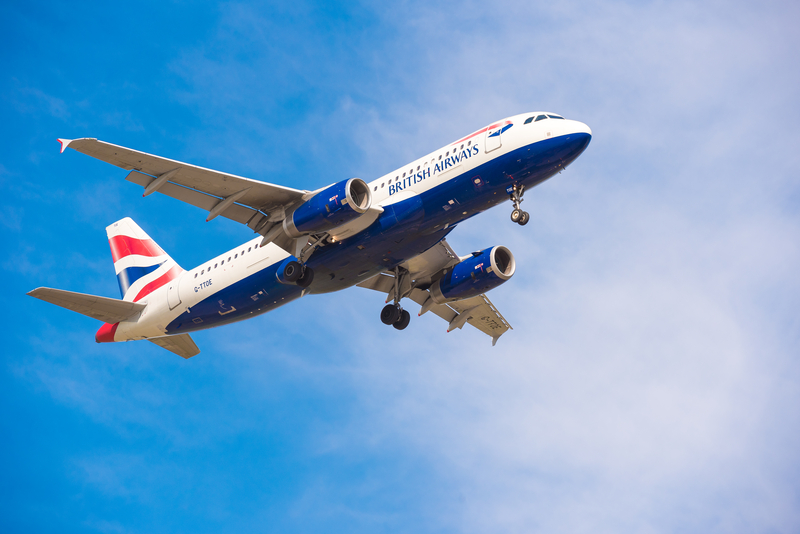
British Airways has an extensive global network and a fleet that includes Airbus A320-family aircraft, Airbus A350-1000s, Airbus A380s, Boeing 777s and several variants of the Boeing 787 Dreamliner.
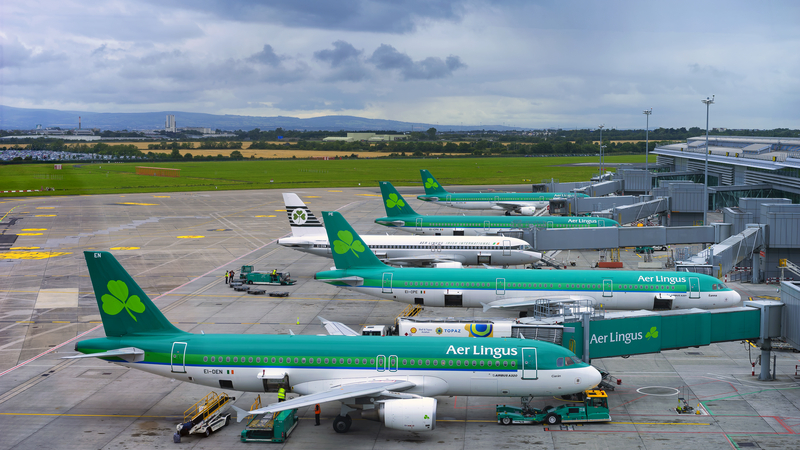
Aer Lingus combines European narrowbody flying with a transatlantic operation built around the Airbus A321LR, A321XLR and A330.
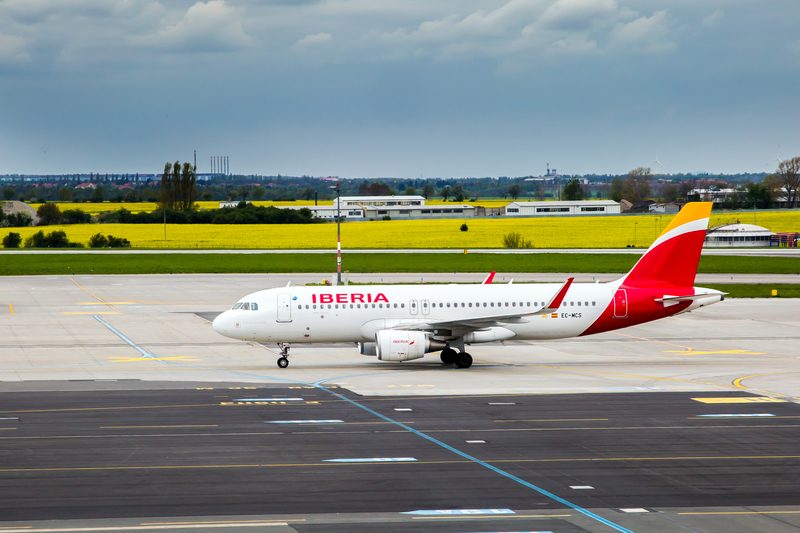
Iberia similarly operates Airbus A320-family aircraft within Europe while relying on Airbus A330s and A350s for long-haul service. It has also become a major early operator of the long-range Airbus A321XLR.
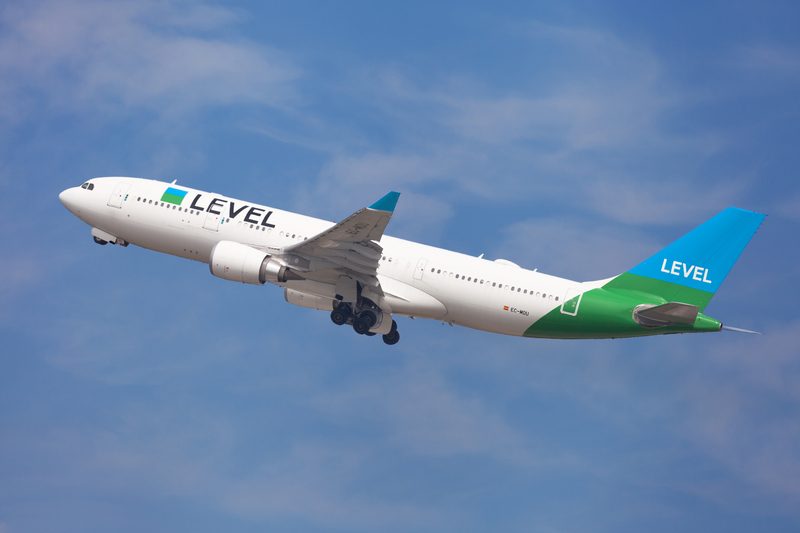
LEVEL operates a much smaller long-haul fleet centered on the Airbus A330-200, while Vueling is overwhelmingly a short-haul operation using Airbus A320-family aircraft.
Finding fuel-saving opportunities across all of those operations is considerably more complicated than analyzing a single aircraft type flying similar routes each day.
A Boeing 787 operating an overnight transatlantic flight presents a very different set of operational variables from a Vueling Airbus A320 flying a 90-minute sector within Europe. SkyBreathe’s role is to process those differences while giving IAG a common framework for measuring the results.
SkyBreathe Looks For Savings Hidden Inside Everyday Operations
SkyBreathe is essentially a large-scale flight-operations analytics platform.
It takes operational data generated by flights and looks for patterns that can indicate unnecessary fuel consumption or opportunities to improve procedures.
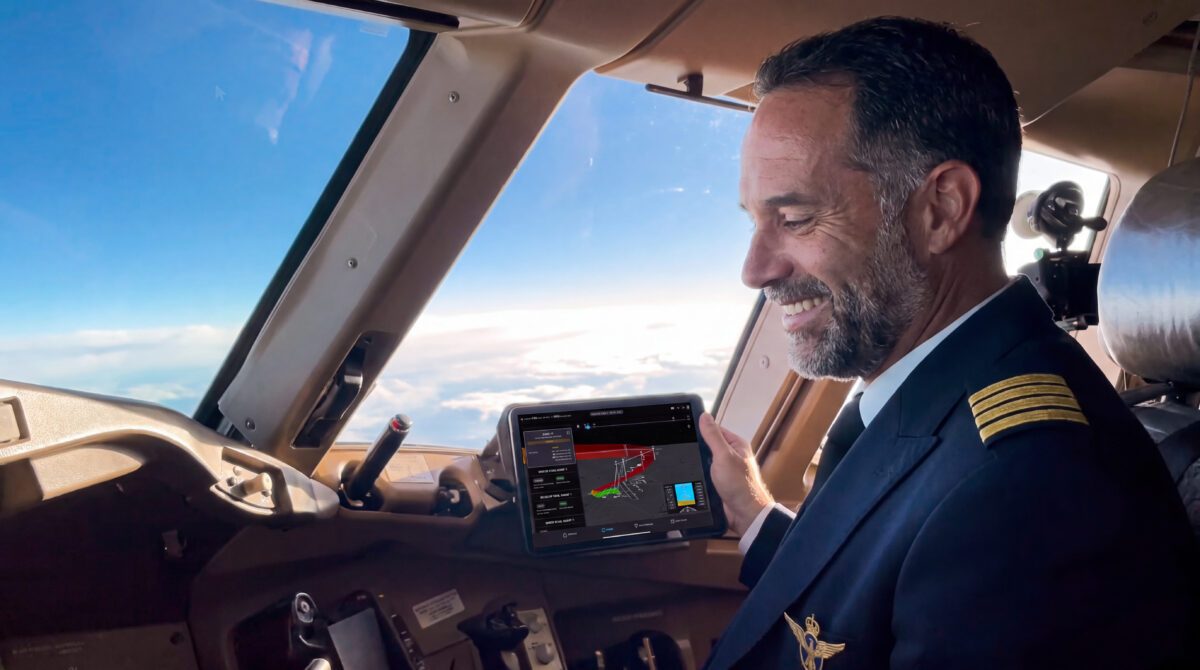
OpenAirlines describes SkyBreathe Analytics as a combination of physics-based modeling, big-data analysis and artificial intelligence. The software can monitor fuel-saving practices across different fleets, routes, airports and operating conditions while presenting results through dashboards and reports for airline flight-operations teams.
OpenAirlines’ SkyBreathe fuel-management platform
That does not mean an AI system is deciding how pilots should operate an aircraft.
Rather, the technology is designed to analyze enormous quantities of operational data and identify trends that would be difficult for an airline’s fuel-management team to find manually.
If one fleet, route or operating base consistently performs better under certain conditions, analysts can examine why and determine whether the same practice can be applied elsewhere.
For an airline group the size of IAG, that ability to compare operations across multiple carriers may be particularly valuable.
Small Changes Can Matter Across More Than 600 Aircraft
Airline fuel efficiency is often improved through relatively small operational changes rather than one dramatic measure.
IAG says its airlines already use a variety of techniques, including optimizing flight plans, reducing the use of auxiliary power units, or APUs, while aircraft are on the ground, and using reduced-engine taxi procedures when operationally appropriate.
The APU is the small turbine engine normally located in the tail of an airliner. It can supply electrical power and compressed air while the aircraft’s main engines are shut down.
An APU is extremely useful, but it also burns jet fuel. When airport infrastructure allows an aircraft to use ground electrical power and preconditioned air instead, APU operating time can sometimes be reduced.
Taxi procedures present another opportunity.
Depending on the aircraft, airport, weather and operating procedures, pilots may be able to taxi with fewer engines running during part of the ground operation. A twin-engine aircraft, for example, may under appropriate circumstances taxi after landing with one engine shut down.
No individual instance produces a transformational saving. But repeating small improvements across hundreds of aircraft and tens of thousands of flights can produce substantial results over the course of a year.
That is where software such as SkyBreathe potentially becomes more valuable: not necessarily by discovering one massive source of wasted fuel, but by finding and measuring numerous small opportunities across an enormous operation.
Fuel Is A Major Cost Even When Prices Are Stable
The timing of the IAG decision is also important.
Fuel remains one of the airline industry’s largest operating expenses, and changes in oil prices can quickly alter the economics of routes that otherwise appear profitable.
IAG Chief Financial and Sustainability Officer José Antonio Barrionuevo said recent volatility in fuel prices has increased the importance of finding efficiency improvements wherever possible.
For a group operating more than 600 aircraft, even a fractional percentage improvement can become financially meaningful.
There is also a direct emissions benefit. Burning less jet fuel means producing less carbon dioxide, regardless of whether the motivation for the savings is environmental, financial or both.
This is one area where operational efficiency differs from longer-term aviation decarbonization projects.
An airline does not need to wait for a new aircraft, new engine generation or large quantities of sustainable aviation fuel to begin reducing unnecessary fuel burn. Many operational changes can be implemented with aircraft already in the fleet.
The 5% Figure Needs Some Context
OpenAirlines says SkyBreathe can help airlines reduce fuel consumption by up to 5%.
That is an important figure, but it should not be interpreted as a prediction that IAG will suddenly cut its total fuel bill by 5%.
The number is a maximum savings figure promoted by the software provider. The savings available to an individual airline will depend heavily on how efficient its existing operation already is, which practices have already been implemented, its fleet, route network and operating environment.
OpenAirlines’ explanation of SkyBreathe’s fuel-saving capabilities
A sophisticated airline that already closely monitors fuel performance may have fewer obvious opportunities remaining than a carrier beginning a major fuel-efficiency program from scratch.
IAG is clearly not starting from zero.
Its airlines already operate their own fuel-saving initiatives. The more interesting element of the SkyBreathe agreement is that those programs have historically been monitored through different systems.
SkyBreathe will now give the group a common reporting and analysis framework, making it easier to compare performance and transfer successful practices from one IAG airline to another.
That could ultimately be more important than any single algorithm.
British Airways Is The Final Major Piece Of The Rollout
Although the announcement makes the project sound like an entirely new deployment, SkyBreathe is already operating at most of IAG.
Aer Lingus, Iberia, LEVEL and Vueling are already using the platform.
British Airways is the remaining airline, with its rollout expected to be completed in the coming months.
Once British Airways is fully integrated, IAG will have the same underlying fuel-efficiency platform spanning all five airlines.
British Airways also represents the largest piece of the project.
IAG’s 2025 annual report listed the BA fleet at 298 aircraft, compared with 139 at Vueling, 120 at Iberia, 63 at Aer Lingus and seven at LEVEL. Fleet totals naturally change as aircraft are delivered, transferred and retired, but the figures demonstrate the scale of the British Airways operation within the group.
Bringing that fleet onto the same system substantially increases the amount and variety of operational data available for group-wide analysis.
More Than Just Comparing Fuel Burn
One reason modern fuel-management software has become increasingly sophisticated is that simply comparing the fuel burned by two flights can produce misleading results.
Two flights operating the same route may encounter different winds, temperatures, traffic restrictions, payloads, runway configurations and holding patterns.
One aircraft may be carrying substantially more passengers and cargo. Another may encounter thunderstorms requiring a lengthy deviation. A third may spend 20 minutes waiting for departure clearance.
A useful fuel-efficiency system therefore has to distinguish between fuel consumption that results from unavoidable operating conditions and fuel consumption that could potentially have been avoided.
OpenAirlines says SkyBreathe uses performance models, machine learning and actual flight conditions when calculating savings opportunities. It also allows airlines to analyze results by fleet, geography and time period rather than relying on simple fleetwide averages.
That is particularly relevant for IAG because of the variety of aircraft and missions within the group.
Comparing the raw fuel consumption of a British Airways Airbus A380 with a Vueling A320 obviously tells an analyst very little. The useful question is whether each aircraft is being operated as efficiently as possible within the conditions of its particular flight.
OpenAirlines Says Its Users Saved 714 Million Kilograms Of Fuel In 2025
OpenAirlines has been expanding well beyond a small group of early airline customers.
Following its 2026 merger with aviation-data specialist CEFA Aviation, the combined company says it now works with more than 160 airlines and 90,000 pilots worldwide.
According to figures included in the IAG announcement, airlines participating in the broader SkyBreathe community saved approximately 714 million kilograms of fuel during 2025, which OpenAirlines values at approximately $600 million in operating costs.
The company says those fuel savings also avoided around 2.2 million metric tons of CO2 emissions.
Those figures are reported by OpenAirlines rather than an estimate of what IAG itself will save.
Still, they illustrate why airlines devote considerable resources to chasing improvements that may look insignificant on an individual flight.
Commercial aviation operates at enormous scale. A few kilograms saved here and a few minutes of unnecessary engine or APU operation eliminated there can add up quickly when the process is repeated across millions of flights.
A Data Project With A Very Physical Result
Much of the discussion around artificial intelligence in aviation currently focuses on future applications.
This is a considerably more practical use.
SkyBreathe does not change the aerodynamics of an Airbus A350, make the engines on a Boeing 787 more efficient or replace conventional flight planning.
Instead, it attempts to identify places where the aircraft and procedures an airline already has can be used more efficiently.
That distinction matters.
New-generation aircraft such as the Airbus A320neo, A321XLR, A350 and Boeing 787 can deliver substantial improvements over the aircraft they replace, but fleet renewal takes years and requires billions of dollars in capital.
Operational efficiency can produce benefits immediately.
For IAG, the value may also come from scale. A fuel-saving procedure that proves effective at Iberia can potentially be identified, quantified and examined for use at British Airways or Aer Lingus. Conversely, a successful practice within BA’s enormous operation can be shared elsewhere in the group.
The software effectively gives IAG a common language for making those comparisons.
Bottom Line
International Airlines Group is standardizing fuel-efficiency analysis across Aer Lingus, British Airways, Iberia, LEVEL and Vueling, bringing more than 600 aircraft onto OpenAirlines’ SkyBreathe platform.
The software analyzes operational information including flight plans, weather and aircraft performance to identify potential fuel-saving opportunities while measuring how effectively existing initiatives are being used.
For an airline group operating everything from short-haul Airbus A320-family aircraft to Airbus A350s, Boeing 787 Dreamliners and Airbus A380s, the more important development may be the creation of a single reporting framework across five very different airlines.
Four of those carriers — Aer Lingus, Iberia, LEVEL and Vueling — already use SkyBreathe. British Airways is expected to complete its deployment in the coming months.
OpenAirlines says its technology can help carriers reduce fuel use by as much as 5%, although that figure represents a potential maximum rather than a forecast for IAG.
The immediate opportunity is likely to be less dramatic but still financially important: identify small amounts of unnecessary fuel burn, measure them accurately and repeat successful practices across hundreds of aircraft and thousands of flights.
In an industry where fuel remains one of the largest expenses on the balance sheet, saving a fraction of a percent across a fleet the size of IAG’s can be worth far more than the percentage itself suggests.
Keep reading FlyMag
Get the Daily Brief in the morning or the Route Watch weekly recap on Fridays. Or both.