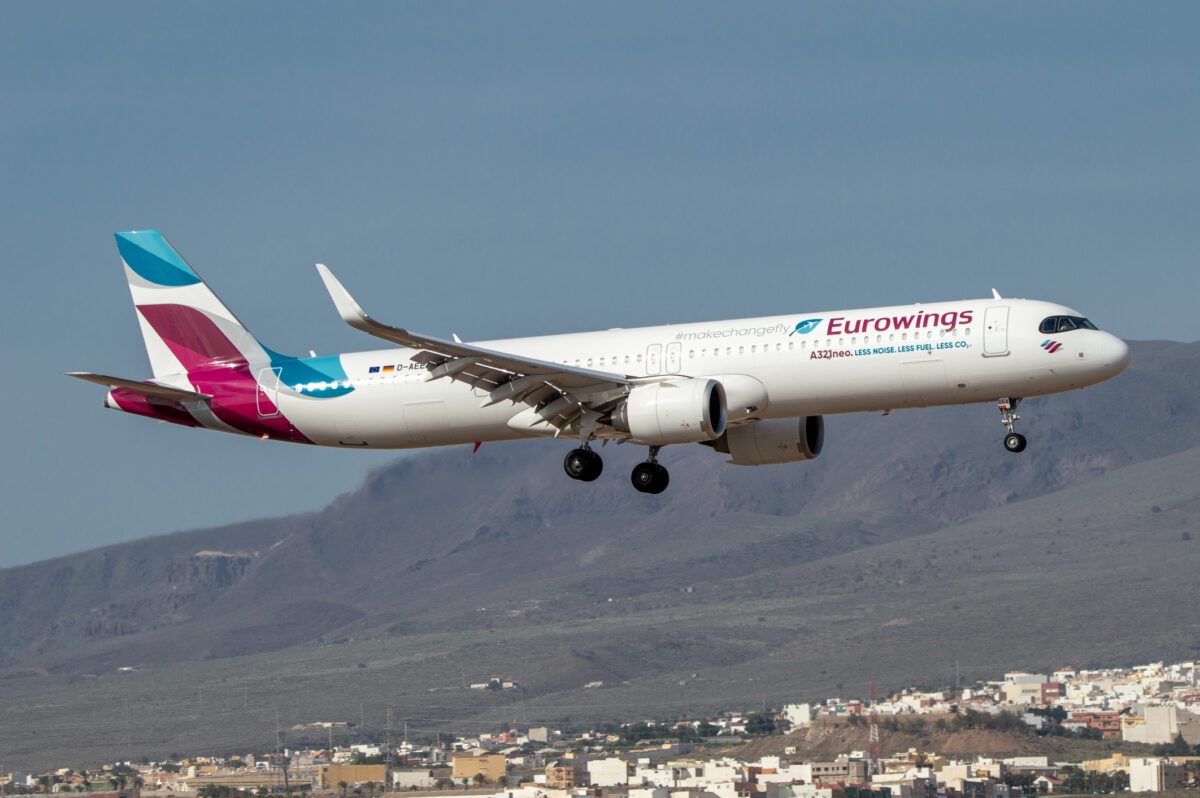
Three passengers sought hospital treatment after several travelers became ill aboard a Eurowings flight from Rhodes to Düsseldorf on Sunday, October 18.

Flight EW9631 was approaching Düsseldorf (DUS), its scheduled destination, when the Airbus A321’s pilots requested priority in the arrival sequence. Airport and municipal emergency services met the aircraft after it landed at about 10 p.m. local time.
Eurowings said the flight carried 212 passengers and seven crew members from Rhodes (RHO). The airline said three affected travelers received medical attention and went to hospitals as a precaution. Düsseldorf’s fire department separately said three passengers were assessed at the airport and two were transported by emergency crews.
Read our stories in your inbox
Two aviation newsletters. Zero fluff.
The remaining passengers were able to continue their journeys. Düsseldorf Airport said the response did not disrupt the airport’s wider operation.
Uncertain Patient Count Prompted Larger Response
Düsseldorf activated a precautionary MANV alert because responders initially did not know how many people aboard would require treatment. The German designation covers incidents in which emergency services may need to manage a large number of patients simultaneously.
The airport fire service positioned eight vehicles at the aircraft, while Düsseldorf’s municipal fire and rescue service provided additional personnel and ambulances. The larger deployment did not reflect a confirmed mass-casualty event; it ensured that sufficient medical capacity was available before responders had assessed the cabin.
Once the aircraft was on the ground, medical personnel examined the affected passengers. The number requiring care proved substantially lower than the initial alert level had allowed for, and the mass-casualty scenario did not materialize.
Fire officials described the symptoms as gastrointestinal. Eurowings has not confirmed a common cause and said it would review the event, including the symptoms observed by the crew during the flight. Reports suggesting a specific virus or food-related illness remained unconfirmed.
Priority Arrival Rather Than a Diversion
The crew’s request was for a prioritized arrival at DUS, not a diversion or emergency landing at an alternate airport. The aircraft was already nearing its destination, allowing the pilots to coordinate medical support on the ground while moving ahead of other arriving traffic.
That distinction matters operationally. A priority arrival can reduce the time before passengers receive treatment without introducing the additional complications of landing at an airport where the airline may have fewer staff, handling arrangements or onward-transport options.
Advance notice also allowed Düsseldorf to assemble responders before the aircraft reached its parking position. With several passengers reporting similar symptoms and the final patient count still uncertain, the airport treated the event as potentially larger until medical teams could board and complete an assessment.
High-Capacity A321 Operated the Flight
The aircraft operating EW9631 was D-AIDT, an Airbus A321-200 from Eurowings’ fleet. The A321 is the longest member of the original A320-family single-aisle lineup and gives the carrier greater seat capacity on heavily traveled leisure services.
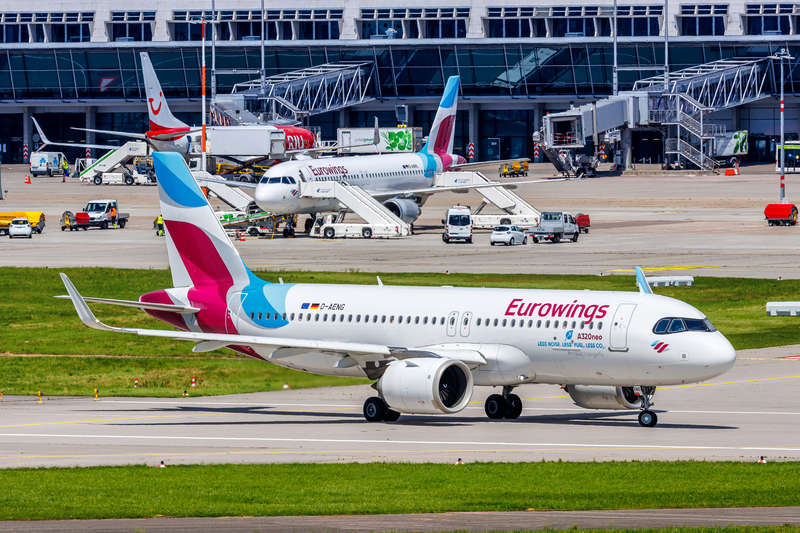
Eurowings lists its Airbus A321 with 226 seats, a maximum range of 2,227 nautical miles and IAE V2500 engines. With 212 passengers aboard EW9631, the flight was carrying the equivalent of nearly 94% of that published seat capacity.
The type is well matched to routes such as Düsseldorf-Rhodes, where demand is concentrated around vacation periods and larger-gauge aircraft can replace additional frequencies. The airline says the A321 carries roughly one-third more passengers than its smaller A320-family aircraft while retaining cockpit and fleet commonality.
The route also has a direct connection to the type’s history at Eurowings. The airline’s first scheduled Airbus A321 service was EW9630 from Düsseldorf to Rhodes on June 3, 2023. The return sector uses the EW9631 flight number involved in Sunday’s medical response.
Rhodes Remains a Core Leisure Market
Eurowings operates the route as part of its substantial Mediterranean leisure program from Düsseldorf. Its published Rhodes-Düsseldorf schedule offers as many as 10 flights a week during periods of stronger demand.
The roughly three-and-a-half-hour sector is typical of the missions for which Eurowings added higher-capacity A321s: established vacation markets with enough traffic to support more than 200 seats on individual departures.
Sunday’s incident did not result from an aircraft problem, and Eurowings reported no effect on the rest of its schedule. The airline’s review centers on the medical symptoms reported aboard and the sequence of events leading to the priority request.
Bottom Line
The response at Düsseldorf shows why crews and airports escalate cautiously when multiple passengers report similar symptoms. Before medical teams enter the cabin, controllers and emergency coordinators have limited information about the number of patients, the severity of their condition and whether more people may become unwell. Mobilizing for the larger possibility avoids losing time if the situation deteriorates.
For Eurowings, the incident also involved one of the largest aircraft in its short- and medium-haul operation on a nearly full leisure flight. More than 200 passengers in a single-aisle cabin can make assessment, access and disembarkation more complex, particularly when responders are dealing with a potentially communicable illness. The crew’s advance request allowed DUS to position medical resources without interrupting the wider schedule.
The central outstanding issue is whether the affected passengers shared a common exposure before or during the journey. Until the airline completes its review or health authorities identify a cause, suggestions of a particular infection should remain separate from the confirmed facts: several passengers became ill, the flight received priority, and three sought further medical examination after landing.
Keep reading FlyMag
Get the Daily Brief in the morning or the Route Watch weekly recap on Fridays. Or both.