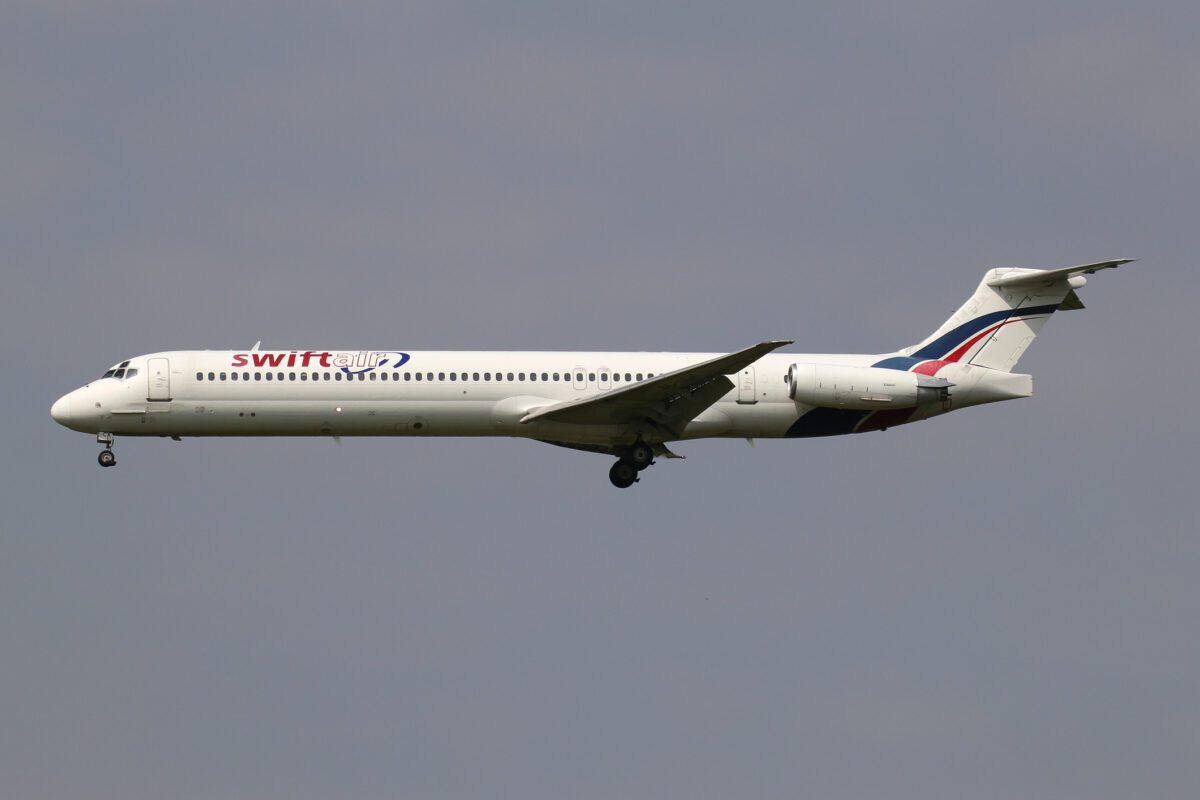
A French court has convicted Spanish carrier Swiftair of involuntary manslaughter over the 2014 loss of Air Algérie Flight AH5017, finding that deficiencies in pilot training and training oversight were directly connected to the accident.

The Paris Criminal Court fined Swiftair €225,000, the maximum available in the case. The McDonnell Douglas MD-83 crashed in Mali on July 24, 2014, killing all 110 passengers and six crew members. Swiftair operated the aircraft for Air Algérie under an ACMI wet-lease contract.
Court Links Training Failures to the Accident
Sébastien Busy, an attorney representing victims’ families and their associations, confirmed the verdict in a statement recorded at the Paris court on September 28.
Read our stories in your inbox
Two aviation newsletters. Zero fluff.
Busy said the court identified several faults in Swiftair’s training and its monitoring of pilot training. It found that the preparation provided to the pilots did not enable them to recognize the stall and that the crew did not make the control inputs required to recover the aircraft.
The court determined that those corporate failings had a sufficiently direct connection to the crash to establish Swiftair’s criminal responsibility. In addition to the fine, it ordered the airline to reimburse costs incurred by the French justice system and ruled on damages involving associations representing victims’ families.
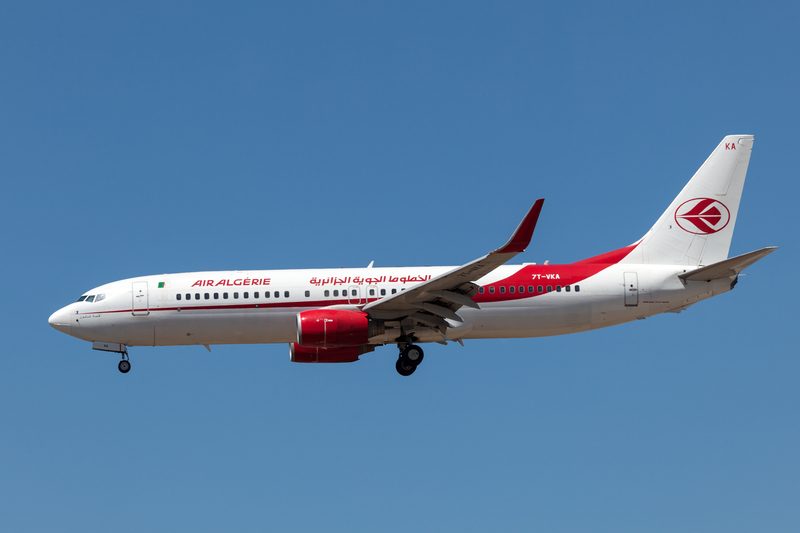
The judgment followed a three-week trial held in Paris in March 2026. Swiftair had been prosecuted as the operator of the aircraft rather than as the airline whose identity appeared on the flight number and passenger itinerary.
AH5017 Stalled at 31,000 Feet
Flight AH5017 departed Ouagadougou (OUA) at night for Algiers (ALG). While climbing and leveling at FL310, the crew made several heading changes to avoid convective weather. The autopilot and autothrottle remained engaged.
The final accident report published by the Malian investigation commission with assistance from France’s BEA found that ice crystals probably obstructed Pt2 pressure sensors on the nose cones of the MD-83’s Pratt & Whitney JT8D-219 engines. The resulting erroneous engine pressure ratio readings caused the autothrottle to command less thrust than was required to maintain speed at FL310.
As the aircraft slowed, the autopilot progressively raised the nose to hold altitude, increasing the angle of attack until the MD-83 stalled. Investigators found that the engine anti-ice systems had not been activated and that the crew reacted late to the loss of speed and erroneous EPR indications.
The crew subsequently did not respond effectively to aerodynamic buffet, the stick shaker or the stall warning. The autopilot remained engaged beyond the onset of the warnings and continued making nose-up commands, aggravating the stall and increasing the control force needed for recovery. The aircraft descended in a steep nose-down attitude and struck the ground about 50 miles southeast of Gossi.
The MD-80’s behavior at high-altitude stall was central to the investigation. Flight-test data showed that buffet and stick-shaker activation could occur with a relatively small margin above the actual stall. The autopilot also lacked protection against slowing below a safe margin and could remain engaged while commanding nose-up inputs after the warning activated.
Training Did Not Reproduce the Accident Scenario
The accident report established a significant difference between Swiftair’s simulator exercises and the conditions encountered by AH5017. The crew had received no approach-to-stall and stall-recovery training since joining Swiftair, and investigators could not establish when either pilot had last completed such training before working for the carrier.
Swiftair’s simulator exercise was conducted in manual flight below FL250. Pilots deliberately reduced thrust and induced the approach to stall after disconnecting the autopilot. On AH5017, the developing upset occurred at FL310 with the automation still controlling the aircraft, leaving the crew to recognize an unexpected loss of energy and disconnect systems that were worsening the condition.
The investigation also found that the simulator’s stick-shaker and stall-warning initiation speeds were lower than the values calculated for the accident flight. Investigators concluded that the crew had not been trained to take immediate manual control and execute the recovery under the startle effect of an uncommanded high-altitude stall.
A similar event had occurred within Swiftair’s operation weeks earlier. On June 8, 2014, another company MD-83 suffered a speed reduction at FL330 with the autothrottle engaged. That crew recognized the problem, descended and activated engine anti-ice before the aircraft stalled, according to the BEA’s investigation record.
The Aircraft and Wet-Lease Operation
The accident aircraft, EC-LTV, was a 1996 McDonnell Douglas MD-83 configured with 165 single-class passenger seats. It had accumulated more than 38,000 flight hours and 32,000 cycles and was powered by two JT8D-219 engines. Investigators found its takeoff weight and balance within approved limits and identified no maintenance or airworthiness condition that contributed to the accident.
The ACMI agreement covered the period from June 20 to September 23, 2014. Swiftair supplied the aircraft, crew, maintenance and insurance, while Air Algérie controlled the flight program. Three Swiftair crews were based in Algiers for the contract, with a relief crew available elsewhere.
The safety investigation identified more than one layer behind the crash. Its findings included inadequate information for operators about Pt2 sensor icing by ice crystals, engine anti-ice procedures that were not adapted to that phenomenon, late stall warnings at cruise altitude and autopilot logic that worsened the upset. The criminal court’s task was different: determining whether conduct attributable to Swiftair constituted an offense and had a legally sufficient connection to the 116 deaths.
Bottom Line
The judgment reinforces that an ACMI operator retains responsibility for the operational system behind a leased aircraft. The marketing carrier may set the schedule and sell the seats, but the company supplying the aircraft and crew remains accountable for qualification, recurrent training, checking and supervision. That distinction is particularly important in seasonal programs assembled around crews who may return to an operator for limited periods each year.
The €225,000 fine is small relative to the scale of the loss, but the significance of the ruling lies in the finding of criminal responsibility. The court moved beyond the crew’s actions in the final minutes and placed part of the causal chain within the operator’s training organization. For airlines, that raises the value of records showing not simply that a regulatory syllabus was completed, but that training realistically addressed the automation state, altitude and startle conditions crews could encounter in service.
The case also shows the difference between an accident investigation’s broad safety analysis and a court’s narrower allocation of legal responsibility. The AH5017 report documented weaknesses involving procedures, aircraft systems, warnings and training. Twelve years later, the Paris judgment determined that Swiftair’s own failings were sufficiently connected to the outcome for a conviction. Any further proceedings will test that reasoning, while the operational lesson remains immediate: stall training must reproduce the conditions in which recognition and recovery are most difficult, not only a predictable simulator setup initiated by the crew.
Keep reading FlyMag
Get the Daily Brief in the morning or the Route Watch weekly recap on Fridays. Or both.