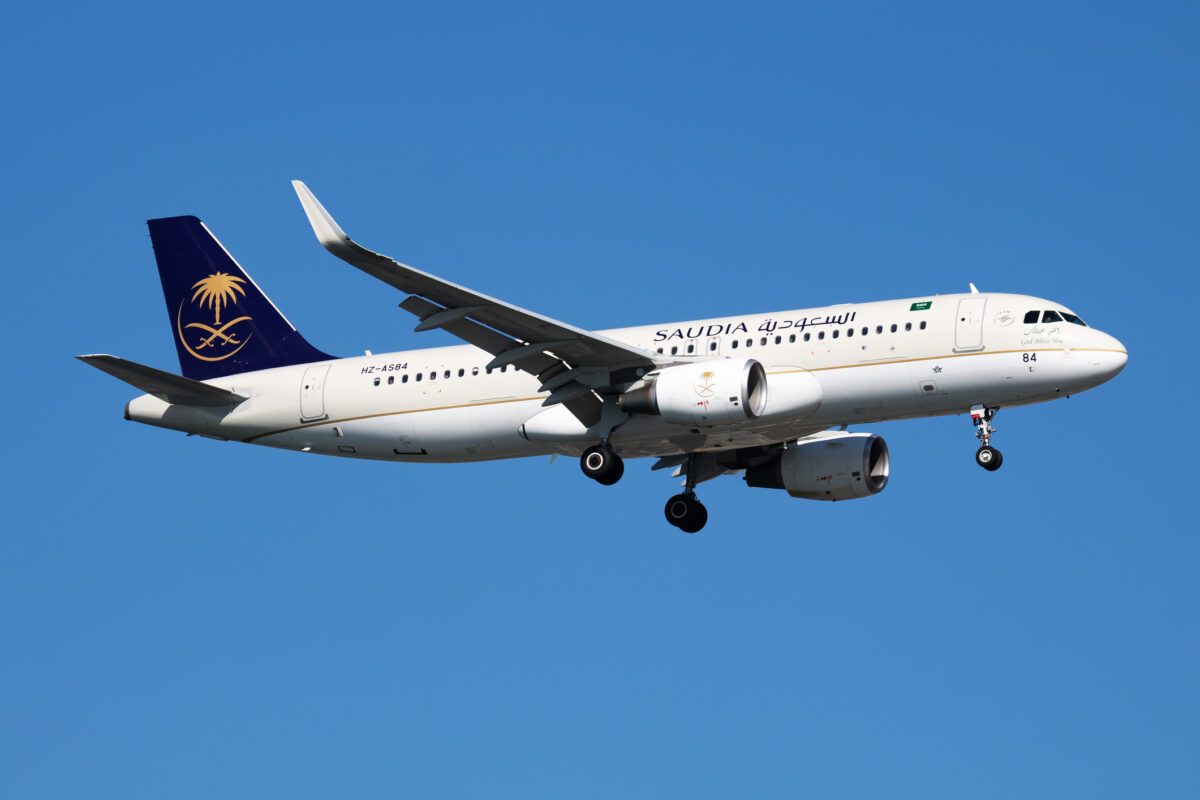
Saudia will begin operating between Muscat International (MCT) and Riyadh King Khalid (RUH) on October 27, 2026, after securing approval for three weekly round trips from Oman’s Civil Aviation Authority.
The authorization, announced through the regulator’s official communications channel, gives the Saudi flag carrier its own nonstop operation between the two capitals. Saudia will join Oman Air and SalamAir in the market.
Read our stories in your inbox
Two aviation newsletters. Zero fluff.
Daytime Schedule on Tuesdays, Thursdays and Saturdays
The initial timetable places the flights on Tuesdays, Thursdays and Saturdays. Saudia flight SV502 is scheduled to leave RUH at 8:55 a.m. and arrive at MCT at 12:05 p.m. local time. The return, SV503, departs Muscat at 1:10 p.m. and reaches Riyadh at 2:45 p.m.
Because Muscat is one hour ahead of Riyadh, the eastbound sector is blocked at two hours and 10 minutes. The westbound flight has a two-hour, 35-minute block time.
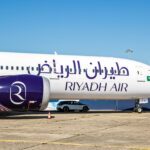
The daytime pattern allows the same aircraft to operate the round trip without an overnight stop in Oman. It also provides a midafternoon arrival in Riyadh, giving Saudia scope to sell onward connections while retaining a schedule that remains practical for capital-to-capital traffic.
The flights appear in Saudia’s published schedule at the start of the northern winter season. The October 27 launch falls two days after the industry timetable changes on October 25, allowing Saudia to introduce the route as part of its wider winter network plan.
At RUH, passengers will use Terminal 2. Saudia moved all of its international operations at the airport to that terminal in February 2026, according to the airline’s terminal advisory.
A320 and A321 Equipment Filed
Current schedule filings show Airbus A320-family aircraft on the route. The Tuesday and Saturday rotations are listed with the Airbus A320, while the Thursday service is filed with the larger Airbus A321.

That mix gives Saudia a straightforward way to vary capacity without changing frequency. The A320 is appropriately sized for a route of roughly 1,190 kilometers, while the A321 provides additional seats on the Thursday rotation using the same pilot qualification and broadly similar airport infrastructure.
Saudia’s fleet listing includes both types, with 37 A320-214s and 21 A321s shown in service. The airline uses the family extensively across domestic and regional sectors, making Muscat a conventional narrowbody assignment rather than a route requiring dedicated aircraft or a long ground turn.
The operation also fits Saudia Group’s longer-term move toward a larger Airbus narrowbody fleet. The group ordered another 105 A320neo-family aircraft in 2024, comprising 12 A320neos and 93 A321neos. The Airbus agreement raised its outstanding A320neo-family order book to 144 aircraft across Saudia and flyadeal.
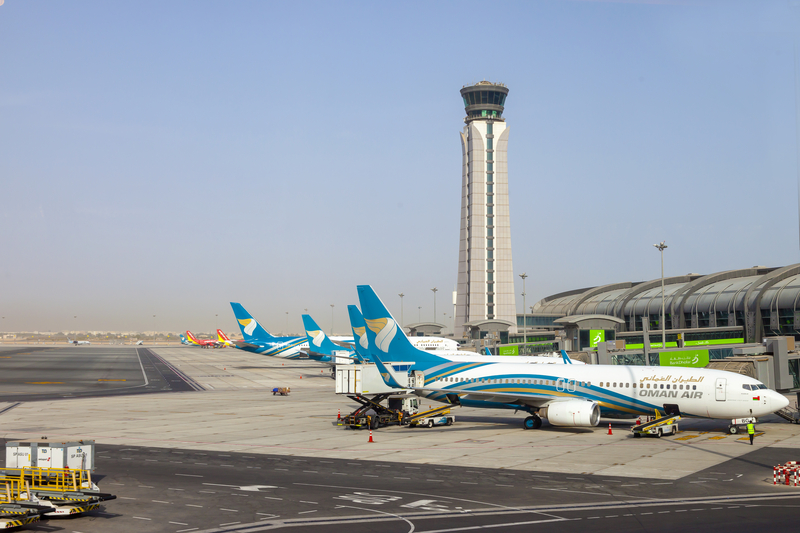
Saudia Becomes the Route’s Third Operator
The route is not an uncontested city pair. Oman Air has a substantial presence between Muscat and Riyadh, while SalamAir gives the market a lower-cost alternative. Saudia’s arrival therefore adds a third operator rather than restoring nonstop access.
Its commercial proposition will extend beyond local passengers. An own-operated service gives Saudia greater control over inventory, premium cabin availability and connections at RUH than a marketing arrangement on another carrier. That matters as Riyadh takes a larger role within Saudia’s international network and the airline builds traffic flows through the Saudi capital.
Three weekly flights represent a measured opening rather than an attempt to challenge the incumbent capacity immediately. The Tuesday-Thursday-Saturday pattern covers the market at regular intervals, although it does not provide the flexibility required by travelers who depend on a daily schedule.
The route also expands an existing Saudia presence in Oman. The airline has previously identified Muscat as part of its network and added Jeddah-Salalah flights, operated with the A320, in June 2025. In its Salalah launch announcement, Saudia described the southern Omani city as its second destination in the country after Muscat.
Approval Clears Oman’s Operating Requirements
The Omani approval is a necessary step before the foreign carrier can establish scheduled service. Oman Airports states that regular operators must coordinate their schedules and obtain a landing permit from the CAA. Its flight approval guidance also identifies MCT as an IATA Level 2 airport, where schedules are facilitated rather than fully slot-coordinated.
For Saudia, the authorization converts a proposed winter timetable into a route with regulatory clearance at the Omani end. The remaining schedule remains subject to the normal possibility of timing or aircraft changes before the October launch.
Bottom Line
Saudia’s entry gives travelers another full-service option between Muscat and Riyadh, but the more important gain is on the Saudi side of the itinerary. An own-operated flight allows the carrier to combine Oman traffic with its expanding Riyadh network, retain the passenger throughout the journey and offer a consistent Saudia product rather than relying solely on another airline’s operation.
The conservative three-weekly launch suggests Saudia is testing how much traffic it can attract from established operators without committing a large amount of capacity. The Thursday A321 assignment is an early indication that the airline expects some variation in demand and wants the ability to add seats through gauge rather than a fourth frequency.
The next measures will be whether the service moves toward daily operation, whether the A321 becomes more prominent and how Oman Air and SalamAir adjust their schedules or fares. Strong connecting traffic at RUH could support an increase relatively quickly; a route driven mainly by local demand is more likely to remain a targeted, three-weekly operation.
Keep reading FlyMag
Get the Daily Brief in the morning or the Route Watch weekly recap on Fridays. Or both.