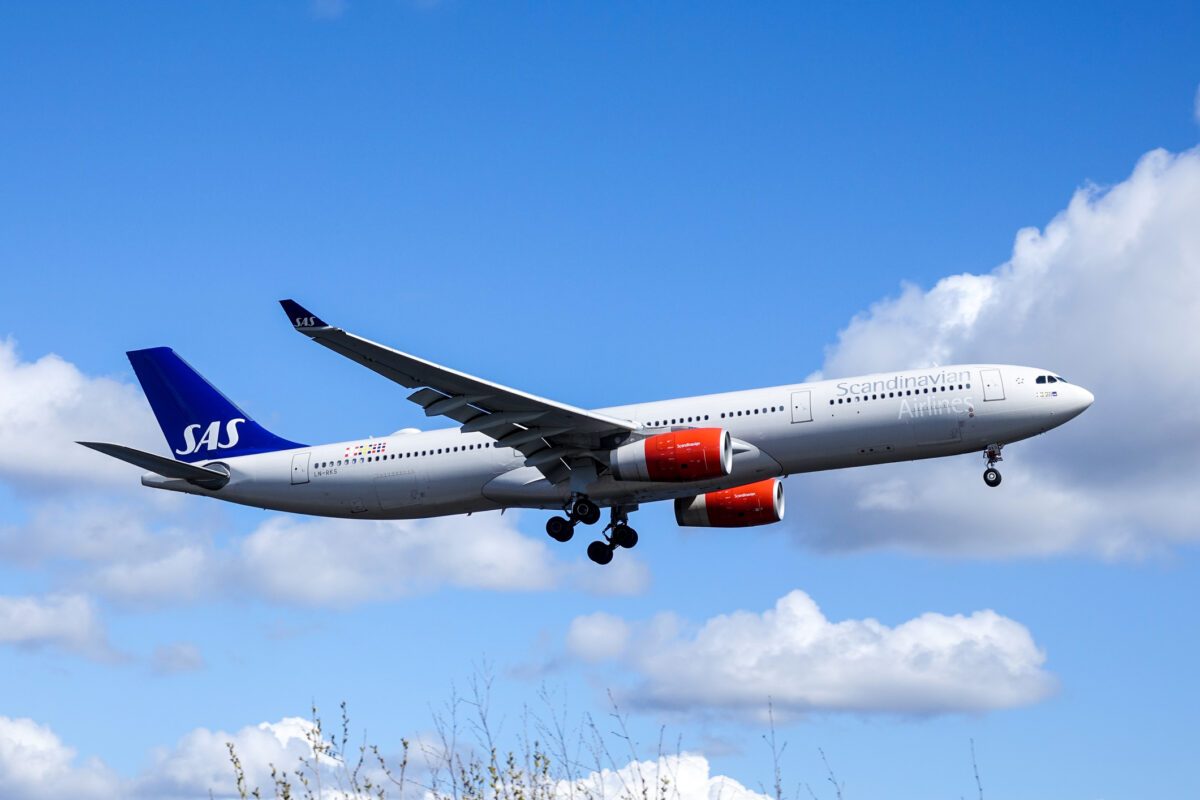
An SAS Airbus A330-300 operating from New York Kennedy (JFK) to Copenhagen (CPH) turned back on Friday, October 23, and landed at Newark (EWR) after the crew encountered a suspected technical problem.

Flight SK916 departed JFK at 7:24 p.m. EDT, 29 minutes behind schedule. The widebody was airborne for three hours and 34 minutes before landing at EWR at 10:58 p.m., according to the flight’s recorded operating history.
SAS told Danish broadcaster TV 2 that the aircraft would undergo a technical inspection and that affected passengers would be rebooked on the next available services to Copenhagen.
Read our stories in your inbox
Two aviation newsletters. Zero fluff.
Flight Returned Before the Atlantic Crossing
SK916 was scheduled to leave JFK at 6:55 p.m. and arrive in Copenhagen at 8:40 a.m. the following morning. The aircraft initially proceeded northeast from New York before reversing course and returning toward the metropolitan area.
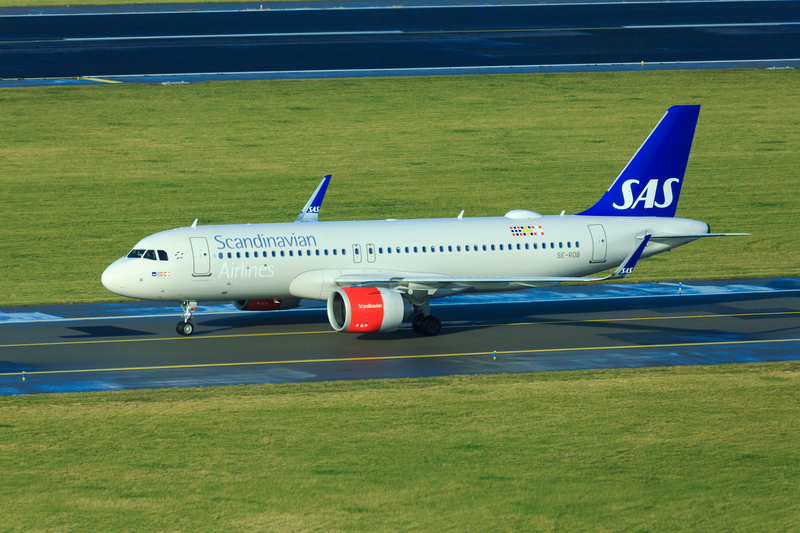
The operating aircraft was LN-RKR, an Airbus A330-343E. Rather than returning to JFK, the crew landed at EWR, where SAS already operates scheduled long-haul flights to Scandinavia. Using an established SAS station gave the airline access to ground handling and an existing Copenhagen departure the following afternoon.
The choice of EWR also avoided positioning the aircraft between airports before it could resume service. SAS has not publicly identified the affected system beyond describing the issue as a possible technical fault.
A transatlantic turnback does not by itself indicate the severity of a defect. Crews must consider how a fault could develop during several hours over the North Atlantic, where diversion options become progressively more limited. Returning while the aircraft remained near North America preserved access to major airports and maintenance support.
LN-RKR Returned to Service the Following Day
LN-RKR remained at Newark overnight and through most of Saturday. It returned to revenue service on October 24 as SK910, SAS’s scheduled EWR-CPH flight, departing at approximately 5:24 p.m., according to the aircraft’s subsequent flight history.
The relatively short interruption suggests the aircraft was released after inspection or corrective work at Newark. Its operation of SK910 also allowed SAS to recover the aircraft directly to Copenhagen rather than operating a separate ferry flight.
LN-RKR is the A330 wearing SAS’s blue 80th-anniversary color scheme. The airline introduced the aircraft’s special livery earlier in 2026 as part of a campaign marking eight decades since its first intercontinental operation. SAS said the aircraft’s first service in the new colors would connect Copenhagen and New York, reflecting the importance of the market in the carrier’s history.
The airline’s anniversary announcement describes an eight-aircraft A330-300 fleet, with each jet configured for 266 passengers. The type remains a core part of SAS’s intercontinental operation alongside the Airbus A350 and A321LR.
A330 Remains Central to SAS Long-Haul Flying
SAS lists its A330-300 with a range of 10,100 kilometers, a 233-ton maximum takeoff weight and Rolls-Royce Trent 772B engines. Its published fleet specifications make it well matched to the roughly 6,200-kilometer New York-Copenhagen sector while retaining useful belly-cargo capacity.

The A330-300 is a 63.7-meter twin-engine widebody with a 60.3-meter wingspan. Airbus advertises the model with a maximum range of 6,350 nautical miles, substantially more than required for the New York route. The manufacturer’s performance data gives the type a typical three-class capacity of 250 to 290 passengers.
For SAS, the aircraft sits between the smaller A321LR and the newer A350-900. Its capacity and cargo volume suit established North American markets where a narrowbody would constrain demand but the larger A350 may not be required on every departure.
Passengers Face Rebooking and Expense Claims
Landing shortly before 11 p.m. left passengers in Newark rather than Copenhagen and required SAS to reconstruct their itineraries. The carrier’s scheduled SK910 departure on Saturday provided one direct recovery option, although rebooking would also depend on available seats and each passenger’s onward itinerary.
Because SAS is an EU airline and the journey was scheduled to arrive in the European Union, the flight falls within the scope of European air passenger protections. Those rules provide for rerouting and care during qualifying disruptions, including accommodation when an overnight stay becomes necessary. Eligibility for fixed compensation depends on the eventual arrival delay and the circumstances behind the technical problem.
SAS provides separate claim channels for disruption expenses, EU261 compensation and delayed baggage on its claims portal. Travelers seeking reimbursement for hotels, meals or ground transportation will need to retain receipts and documentation from the disrupted itinerary.
Bottom Line
The crew’s decision prevented a suspected technical issue from becoming an extended overwater problem. Turning back before committing to the North Atlantic track system is operationally conservative, but it also shifts the challenge from flight safety to aircraft recovery and passenger care.
Newark gave SAS an important advantage: it was already a long-haul station with a scheduled Copenhagen flight and the infrastructure to handle an A330. LN-RKR’s return to service on SK910 the following evening limited the fleet impact and recovered the aircraft directly to the airline’s main intercontinental hub.
For passengers, the quality of the recovery will be measured less by the diversion than by the speed of rebooking, baggage delivery and expense reimbursement. A safe turnback is a successful operational decision; the work after landing determines whether it also becomes a well-managed disruption.