Qantas’ nonstop route between Perth Airport (PER) and Rome Fiumicino Airport (FCO) has become one of the clearest demonstrations that passengers will accept extremely long flights when the alternative is an additional stop in Asia or the Middle East.

The seasonal service lasts approximately 16 hours, covers more than 8,300 miles, and draws more than half of its passengers from Australia’s eastern states. Those travelers already take a domestic flight to Perth before continuing nonstop to Italy, providing Qantas with valuable information about demand, connection patterns, pricing, aircraft utilization, and customer behavior on long European journeys.
That makes Perth–Rome highly relevant to Project Sunrise, Qantas’ plan to connect Sydney directly with London and New York using a specially developed Airbus A350-1000ULR.
Read our stories in your inbox
Two aviation newsletters. Zero fluff.
It does not, however, make the route a secret Project Sunrise “stress test.”
Qantas has already conducted publicly announced Project Sunrise research flights, while Airbus is now performing a separate certification campaign with the new A350-1000ULR. Perth–Rome is better described as a commercial proving ground: a successful scheduled route that helps validate the broader passenger and network assumptions behind nonstop travel between Australia and Europe.
Perth–Rome Has Become One of Qantas’ Most Important Long-Haul Routes
Qantas launched nonstop service between Perth (PER) and Rome Fiumicino (FCO) in June 2022. It was the first scheduled nonstop passenger route connecting Australia with continental Europe.
The airline had previously served Rome as part of multistop services, but it had not operated to the Italian capital since 2003. Rome also held a prominent place on the historic Kangaroo Route, serving as one of the intermediate stops between Australia and London.
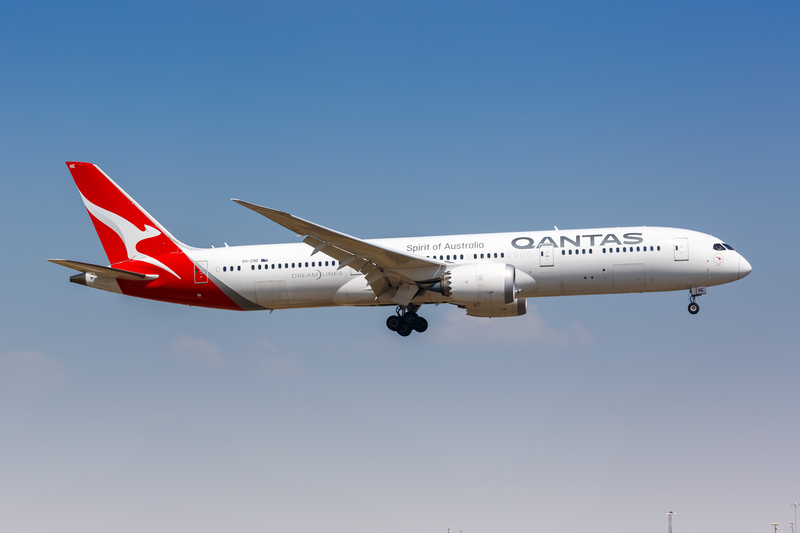
The modern route operates as QF5 from Perth (PER) to Rome (FCO) and QF6 in the opposite direction. Qantas uses the Boeing 787-9 Dreamliner, the same aircraft family that allowed it to open nonstop Perth–London Heathrow service in March 2018.
Qantas said the Rome route had carried more than 70,000 passengers by September 2025. The carrier also described Perth–Rome and Perth–London as two of the most popular flights in its international network.
That passenger total is more meaningful than unverified claims of a specific load factor. Qantas has not publicly released a current audited route-level load factor showing that Perth–Rome consistently exceeds 90%, but its decisions to extend the operating season and add frequency demonstrate that the service has generated strong commercial demand.
Qantas Almost Doubled Its Planned Rome Capacity for 2026
Qantas originally planned to operate Perth–Rome for a longer season in 2026, beginning May 3 and continuing through October 23.
The airline added eight weeks to the seasonal operation and introduced a fourth weekly flight during the peak northern summer period. That expansion represented more than 40 additional services and close to 10,000 additional seats compared with the previous plan.
The original 2026 schedule was:
| Travel period | Planned frequency | Operating days |
|---|---|---|
| May 3–June 26 | Three weekly | Tuesday, Thursday, Sunday |
| June 27–September 26 | Four weekly | Tuesday, Thursday, Saturday, Sunday |
| September 27–October 23 | Three weekly | Tuesday, Thursday, Sunday |
The schedule cited in the original report is therefore largely correct as Qantas’ baseline seasonal plan.
However, it does not fully reflect what happened during 2026.
In March, Qantas announced a temporary international network adjustment in response to conflict and airspace disruption in the Middle East. The airline increased Perth–Rome from as many as four weekly round trips to daily service from mid-April through late July, using Boeing 787s redeployed from parts of its U.S. network.
As a result, passengers traveling during much of July 2026 could find seven weekly Perth–Rome flights rather than the four shown in the original seasonal schedule.
Unless Qantas extends the temporary arrangement, the service can return to its previously filed frequency after the emergency network changes end.
That distinction matters because the daily operation demonstrates that Qantas can scale the route rapidly when demand and aircraft availability justify additional capacity.
More Than Half of Rome Passengers Begin in Eastern Australia
The most relevant figure for Project Sunrise is not simply the number of passengers flying between Western Australia and Italy.
Qantas says more than half of the customers on its Rome flights originate east of Western Australia. The schedule is deliberately built to connect those passengers through Perth (PER) from cities such as Sydney (SYD), Melbourne (MEL), Brisbane (BNE), Adelaide (ADL), and other points in the domestic network.
For many passengers, QF5 effectively functions as an Australia–Europe service rather than a purely Perth–Rome route.
A Sydney traveler can begin the journey at Sydney Kingsford Smith Airport (SYD), continue through Perth (PER), and remain within the Qantas network for the long sector to Rome Fiumicino (FCO). Qantas also uses the QF5 flight number on selected Sydney–Perth–Rome itineraries.
That behavior supports one of Qantas’ central Project Sunrise assumptions: many travelers value avoiding an international stop enough to accept a longer uninterrupted flight.
A passenger traveling through Perth must still make a connection, but that transfer occurs within Australia before the international long-haul segment. Travelers can then fly directly to continental Europe without changing aircraft in Singapore, Dubai, Doha, Abu Dhabi, or another overseas hub.
For some customers, completing immigration and the domestic connection before the longest segment feels simpler than interrupting the journey after 12 or 14 hours to transfer at a foreign airport.
Perth–Rome Tests Passenger Willingness to Stay Airborne
The commercial significance of the route extends beyond raw passenger numbers.
Perth–Rome gives Qantas real-world evidence about how travelers respond to a flight approaching 17 hours. The airline can study booking patterns, premium-cabin demand, meal preferences, passenger movement, sleep behavior, baggage volumes, and the value customers place on eliminating an international connection.
It also provides information about how different groups tolerate the journey.
Business travelers may value the time saved by avoiding a stop. Families may prefer not to wake children, collect carry-on baggage, and move through another terminal. Leisure passengers may accept a long flight when it delivers them directly to Italy at the beginning of a vacation.
The route also lets Qantas measure customer satisfaction over repeated seasons rather than relying only on surveys or limited test flights.
Qantas says its nonstop long-haul services—including Perth to London, Rome, and Paris—record some of the highest customer satisfaction results in its international network. More than 1.7 million passengers have traveled on Qantas’ nonstop long-haul routes since 2018.
Those results give the airline confidence that passengers do not automatically reject flights lasting 16 to 18 hours. The challenge is to offer enough time savings, comfort, and schedule convenience to make the nonstop itinerary preferable to a one-stop alternative.
The Boeing 787-9 Is the Foundation of Qantas’ Perth Strategy
The Boeing 787-9 Dreamliner made Qantas’ current nonstop European network possible.
The aircraft combines long range with considerably fewer seats than the Airbus A380s and Boeing 747s Qantas previously used on many European services. Boeing publishes a maximum range of as much as 8,300 nautical miles for the 787-9, depending on operating configuration and conditions.
Qantas configures its 787-9s with only 236 passengers:
| Cabin | Seats |
| Business | 42 |
| Premium Economy | 28 |
| Economy | 166 |
| Total | 236 |
The Business cabin uses a 1-2-1 layout with direct aisle access, Premium Economy is arranged 2-3-2, and Economy uses a standard 3-3-3 Dreamliner configuration.
The relatively low seat count reduces the number of passengers Qantas must attract on each departure while creating a larger proportion of higher-yield inventory than a dense leisure-focused 787.
Qantas’ Dreamliners are powered by two GE Aerospace GEnx-1B engines. The combination of composite construction, an aerodynamically efficient wing, modern engines, and a moderate-capacity cabin makes the aircraft particularly well suited to long, relatively thin routes such as Perth (PER)–Rome (FCO).
The 787-9 is not capable of operating Qantas’ planned Sydney–London service with a commercially viable passenger and baggage payload. It can, however, test many of the operating principles that Qantas will carry into Project Sunrise.
What Qantas Learns Operationally From Perth–Rome
Every Perth–Rome departure gives Qantas experience managing a long mission from an Australian base.
Dispatchers must calculate fuel requirements using forecast winds, airspace restrictions, weather, passenger and baggage weight, alternate airports, and reserve-fuel requirements. The optimum route can change considerably from one day to the next.
Pilots and cabin crews must remain within approved duty and rest limits. Catering must support a flight that crosses multiple meal periods and time zones. Maintenance planning must account for an aircraft completing a very long sector and then spending several hours away from Qantas’ primary engineering bases.
The airline also gains experience recovering when the operation does not proceed as planned.
A technical problem at Rome Fiumicino (FCO) can strand a specialized long-range aircraft thousands of miles from Australia. A cancellation affects more than 200 passengers who may have limited same-day alternatives. Crew illness, weather, airspace closures, or airport restrictions can disrupt the aircraft’s following rotations.
These are all relevant Project Sunrise lessons.
The scale will be different on Sydney (SYD)–London Heathrow (LHR), but Qantas does not have to build its ultra-long-haul operating knowledge from the beginning. It has been refining those capabilities since launching Perth–London in 2018.
Perth–Rome Is Not a True Project Sunrise Flight Simulation
The similarities should not obscure the major differences between the routes.
Perth–Rome normally takes approximately 16 hours. Qantas’ planned Sydney–London flight may remain airborne for as long as 22 hours, depending on direction, winds, routing, and operating conditions.
An additional four to six hours changes nearly every part of the operation.
The aircraft must carry considerably more fuel. Flight crews require more extensive rest arrangements and carefully structured duty periods. Cabin crews must manage additional meal, sleep, and passenger-service cycles. The airline must account for travelers remaining seated and confined for almost an entire day.
The Sydney–London mission will also cross more time zones and produce a greater circadian disruption than Perth–Rome.
The 787 route can demonstrate that passengers value nonstop travel, but it cannot reproduce the full physiological, regulatory, payload, and crew-management demands of Project Sunrise.
Calling Perth–Rome a technical stress test therefore overstates its role.
Qantas Already Conducted Actual Project Sunrise Research Flights
The airline’s true Project Sunrise research program took place in 2019.
Qantas operated three specially planned nonstop flights from New York and London to Sydney using newly delivered Boeing 787-9s. The aircraft carried only about 40 to 50 passengers and crew because the 787 could not fly those routes nonstop with a normal commercial payload.
The flights were not regular passenger services, and no tickets were sold.
Researchers from the University of Sydney’s Charles Perkins Centre and other organizations monitored participants to study sleep, alertness, movement, meal timing, hydration, cognitive performance, and jet lag.
The London–Sydney research flight remained airborne for 19 hours and 19 minutes. The first New York–Sydney flight took approximately 19 hours and 16 minutes.
Qantas used the data to develop passenger-service concepts and to support discussions with Australia’s Civil Aviation Safety Authority regarding crew fatigue and duty requirements.
Those flights were the Project Sunrise “dry runs.” Perth–Rome is a scheduled commercial service whose operating and customer data provide a different, but still valuable, form of evidence.
The First A350-1000ULR Is Now in Flight Testing
Project Sunrise has moved beyond demand studies and conceptual planning.
The first Airbus A350-1000ULR flight-test aircraft, MSN707, completed its maiden flight from Toulouse-Blagnac Airport (TLS) on June 2, 2026. The aircraft remained airborne for three hours and 43 minutes and climbed above 41,000 feet during the initial sortie.
Airbus equipped the aircraft with approximately five metric tons of specialized monitoring equipment and more than 1,000 sensors. The test campaign is evaluating the aircraft’s new fuel-system architecture, rear center tank, cabin environmental controls, and galley refrigeration equipment.
The A350-1000ULR incorporates an additional 20,000-liter rear center fuel tank that increases its range by approximately 1,000 nautical miles compared with the standard A350-1000.
Airbus expects the aircraft to fly missions approaching 10,000 nautical miles and lasting as long as 22 hours.
That work—not Perth–Rome—is the aircraft certification stress test.
Following the flight campaign, MSN707 will be converted to Qantas’ commercial specifications. A second airframe, which is expected to become the first aircraft delivered to the airline, is scheduled to arrive in April 2027.
Sydney–London Will Launch in October 2027
Qantas has now confirmed that the first Project Sunrise service will connect Sydney Kingsford Smith Airport (SYD) with London Heathrow Airport (LHR) beginning in October 2027.
Tickets are expected to go on sale in February 2027, subject to regulatory approvals, aircraft certification, and delivery. Sydney (SYD)–New York John F. Kennedy International Airport (JFK) will follow, although Qantas has not announced its launch date.
The Sydney–London service will operate alongside Qantas’ existing one-stop Sydney–Singapore–London operation and its Perth–London route.
Qantas says the nonstop service could reduce total journey time by as much as four hours compared with current one-stop itineraries.
London is a logical first destination because of the deep travel market between Australia and the United Kingdom. Demand includes business travel, tourism, international education, family visits, migration-related traffic, and passengers connecting beyond both cities.
New York presents a different opportunity. It would give Qantas its first nonstop service between Australia’s East Coast and the U.S. East Coast while eliminating the current intermediate stop or transcontinental connection.
The A350 Will Carry Almost the Same Number of Passengers as the 787
One of the most interesting comparisons is that Qantas’ A350-1000ULR will carry only two more passengers than its substantially smaller 787-9.
| Aircraft | Qantas capacity | Premium cabins | Principal mission |
| Boeing 787-9 | 236 | Business and Premium Economy | Perth–Europe and other long-haul routes |
| Airbus A350-1000ULR | 238 | First, Business, and Premium Economy | Project Sunrise |
A standard A350-1000 can accommodate approximately 350 to 400 passengers in many airline configurations. Qantas will install only 238 seats, giving its aircraft the lowest seat density of any A350-1000 currently planned for commercial service.
The Project Sunrise layout consists of:
| Cabin | Seats |
| First | 6 |
| Business | 52 |
| Premium Economy | 40 |
| Economy and Economy Plus | 140 |
| Total | 238 |
More than 40% of the aircraft’s seats will be in First, Business, or Premium Economy. That is a much more premium-heavy composition than the 787 used on Perth–Rome.
The low density is not simply a passenger-comfort decision. Limiting the number of occupants, baggage, seats, galleys, and cabin equipment also helps control weight on a route where fuel requirements will be exceptional.
Project Sunrise Requires a Different Cabin Experience
Qantas has designed the A350 cabin around the assumption that passengers may remain aboard for almost 22 hours.
First Class will contain six enclosed suites in a 1-1-1 arrangement. Each suite will include a separate reclining chair and an 80-inch bed, allowing the passenger to sleep without converting the primary seat.
The 52 Business suites will use a 1-2-1 configuration and include sliding privacy doors, direct aisle access, and fully flat beds. Premium Economy will contain 40 seats in a 2-4-2 layout.
The 140-seat Economy cabin will include 42 Economy Plus seats with 34 inches of pitch. Qantas says more than 70% of all seats on the aircraft will provide at least 33 inches of pitch.
A purpose-built Wellbeing Zone will be available between Premium Economy and Economy. The area will include stretch handles, guided movement exercises, a hydration station, and refreshments.
The cabin will also use 12 lighting scenes based on circadian-rhythm research—not the 14 scenes cited in the original report.
The entire product has been influenced by Qantas’ research with the University of Sydney, including lessons from the 2019 nonstop research flights.
Perth–Rome passengers experience a low-density Dreamliner cabin designed for long journeys, but they are not traveling with the specialized space, lighting, service sequence, and premium layout that Qantas is developing for Project Sunrise.
Rome Provides a Useful Test of East Coast Demand
The strongest link between Perth–Rome and Project Sunrise is the number of passengers connecting from eastern Australia.
More than half of the Rome route’s customers are already willing to cross Australia before beginning the nonstop European sector. That suggests a meaningful market exists for removing an overseas connection from the journey.
Project Sunrise will take that idea one step further.
A Sydney-based traveler will no longer need to fly approximately five hours west to Perth before turning toward Europe. The A350 will depart directly from Sydney (SYD) and fly to London Heathrow (LHR).
That could remove several hours of travel time while eliminating a domestic connection.
The Rome data also suggests that European demand from eastern Australia is not limited to London. Travelers are using the Italian capital as a destination and as a gateway to cities elsewhere in Italy and continental Europe.
Qantas previously identified Sicily, Athens, and Barcelona as popular onward destinations for Rome passengers.
That does not mean Sydney–Rome will automatically become a future Project Sunrise route. London provides a substantially larger local market and stronger premium and corporate demand, while Rome remains highly seasonal and leisure-oriented.
It does show that Qantas may eventually have opportunities beyond the initial London and New York services.
Paris, Frankfurt, and Other Cities Remain Possible
When Qantas formally ordered the Project Sunrise aircraft in 2022, it said the A350-1000 would be capable of operating nonstop from Australia to destinations including Paris and Frankfurt.
The airline’s immediate plan has since become more specific: Sydney–London will launch first, and Sydney–New York is confirmed as the next route. No dates have been announced for service to Paris, Frankfurt, Rome, or other secondary Project Sunrise destinations.
The performance of Perth–Rome may influence those future decisions, but several factors will matter.
Qantas must determine whether each city can support enough premium demand, whether a daily or near-daily schedule is possible, and whether the route performs better nonstop than through Perth, Singapore, or a partner hub.
Aircraft availability will also constrain growth. Qantas has ordered 12 A350-1000ULRs, and the first aircraft will be needed to establish reliable Sydney–London and Sydney–New York operations with sufficient maintenance and schedule recovery coverage.
A route may have strong passenger demand without being the best use of an aircraft capable of flying almost anywhere in the world.
Perth Remains Central to Qantas’ European Strategy
Project Sunrise will not make Qantas’ Perth hub obsolete.
Perth is geographically better positioned for Europe than Sydney, allowing the Boeing 787-9 to reach London, Paris, and Rome without requiring the specialized range of the A350-1000ULR.
The western hub also distributes European traffic across multiple Australian gateways. Passengers in Western Australia can travel directly, while customers from the East Coast can choose between connecting in Perth and paying for a future nonstop Project Sunrise service.
Qantas originally planned nearly 300,000 seats between Perth and London, Paris, and Rome during 2026. Temporary schedule changes caused by Middle East airspace disruption have altered parts of that network, but the underlying western-gateway strategy remains intact.
Perth may also provide a lower-cost way to serve continental European markets that cannot immediately support a 22-hour flight from Sydney.
A 16-hour 787 service requires less fuel, fewer crew resources, and less specialized infrastructure than a Project Sunrise mission. Qantas can therefore use Perth for thinner European routes while reserving the A350-1000ULR for the largest nonstop markets from eastern Australia.
Perth Airport Is Preparing for the A350
Qantas and Perth Airport reached a major commercial agreement in 2024 that will eventually consolidate the airline’s domestic and international operations in the Airport Central precinct.
Qantas and Jetstar plan to relocate from the existing Terminal 3 and Terminal 4 complex to a new terminal expected to open in 2031. The airlines plan to add approximately 4.4 million annual seats at Perth by the time the project is complete.
Perth Airport is also upgrading Terminals 3 and 4 during the interim period. The work includes gate modifications capable of accommodating Qantas’ Airbus A350 aircraft.
The agreement also includes a new engineering hangar and a parallel runway, which Perth Airport said was expected to open in 2028 under the original development timeline.
The A350 gate work does not mean Perth will become the primary Project Sunrise launch airport. Sydney (SYD) remains the origin of the first London and New York services.
It does provide Qantas with operational flexibility. Perth could receive A350s on other routes, function as an alternate or recovery station, and eventually support additional long-haul services using either the Project Sunrise aircraft or Qantas’ separately ordered standard A350-1000s.
Rome Is a Commercial Laboratory Rather Than a Certification Test
The phrase “stress test” can refer to several very different activities.
From an aircraft-engineering perspective, Perth–Rome is not testing the structural limits, additional fuel system, environmental controls, or certification performance of the A350-1000ULR. Airbus is conducting that work with instrumented flight-test aircraft in Europe.
From a regulatory perspective, it is not recreating the 20-to-22-hour crew-duty and fatigue conditions expected on Sydney–London or Sydney–New York. The 2019 research flights and Qantas’ discussions with aviation regulators serve that purpose.
From a commercial perspective, however, Perth–Rome is highly informative.
It shows that passengers will buy long nonstop itineraries, that large numbers will connect domestically to reach them, and that a low-density widebody can support a highly specialized Europe route from Australia.
It also gives Qantas repeated experience with everything surrounding an ultra-long-haul flight: catering, crew planning, passenger comfort, baggage handling, aircraft rotations, technical recovery, and connection design.
Calling it a commercial laboratory is therefore justified. Calling it a secret Project Sunrise test is not.
The 2026 Daily Increase Adds Another Layer of Evidence
Qantas’ temporary decision to operate Perth–Rome daily through late July provides an unexpected additional data point.
The airline had planned only three or four weekly services but was able to redeploy Boeing 787 capacity and increase the route to seven weekly flights during a period of strong European demand and Middle East disruption.
That gives Qantas an opportunity to observe how the market responds to daily frequency.
A daily route appeals to a wider group of passengers than a seasonal service operating only several days per week. Travelers can choose more flexible trip lengths, business customers have greater scheduling freedom, and domestic connections can be offered every day.
The experiment is imperfect because the capacity increase resulted partly from geopolitical disruption and aircraft redeployment rather than a normal long-term network decision.
Nevertheless, booking behavior during the daily period can help Qantas estimate whether Rome could eventually support more consistent service—either through Perth or, much later, directly from Australia’s East Coast.
Bottom Line
Qantas’ Perth Airport (PER)–Rome Fiumicino Airport (FCO) route is highly relevant to Project Sunrise, but it is not a secret technical stress test.
The Boeing 787-9 service provides valuable commercial and operational evidence. It shows that passengers will accept a flight of approximately 16 hours, that more than half of the route’s customers will connect from eastern Australia, and that nonstop travel to continental Europe can support additional capacity.
Qantas originally planned three to four weekly Perth–Rome flights during the 2026 season. It temporarily increased the route to daily service from mid-April through late July as it reorganized its international network in response to Middle East conflict and strong European demand.
The airline has carried more than 70,000 passengers on the route since its 2022 launch and added nearly 10,000 seats to its original 2026 plan.
Those results support the broader Project Sunrise business case, particularly the belief that passengers value avoiding an overseas connection.
They do not recreate the technical or human demands of flying nonstop from Sydney Kingsford Smith Airport (SYD) to London Heathrow Airport (LHR).
Qantas’ formal Project Sunrise research consisted of three lightly loaded Boeing 787-9 flights from London and New York to Sydney in 2019. Airbus is now conducting the aircraft certification campaign with an instrumented A350-1000ULR that first flew on June 2, 2026.
The specialized Airbus will carry 238 passengers—only two more than Qantas’ 787-9—but will include six First suites, 52 Business suites, 40 Premium Economy seats, 140 Economy and Economy Plus seats, and a purpose-built Wellbeing Zone.
Qantas plans to begin Sydney–London service in October 2027, with tickets scheduled to go on sale in February. Sydney–New York will follow.
Perth–Rome cannot prove that every secondary European city will support a nonstop flight from Sydney. Rome is seasonal and leisure-heavy, while Project Sunrise must generate substantial premium revenue to cover the cost of an aircraft remaining airborne for as long as 22 hours.
What the route does prove is that Qantas’ nonstop strategy resonates with travelers. Passengers are willing to cross Australia, board a low-density long-range aircraft, and remain onboard for most of a day when the result is a simpler trip to Europe.
Perth–Rome is not the Project Sunrise dress rehearsal. It is one of the strongest commercial signals that the main event may work.