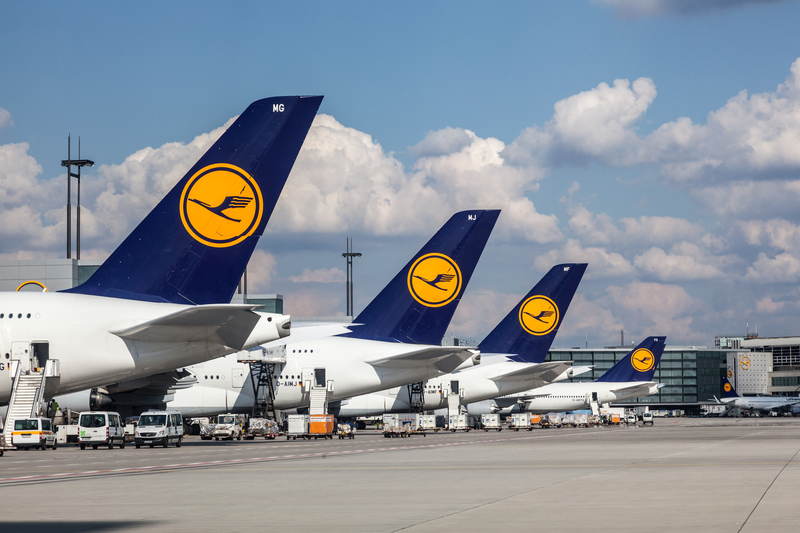
Lufthansa’s German operation is bracing for a sharp, systemwide hit on Thursday, February 12, 2026, after the airline’s pilots’ union Vereinigung Cockpit (VC) and the cabin-crew union UFO announced coordinated strike action. For travelers, the message is straightforward: expect high cancellation risk and network-wide knock-on delays, particularly through Lufthansa’s primary hubs at Frankfurt (FRA) and Munich (MUC)—and not just for passenger flights. VC’s call also targets Lufthansa Cargo, which raises the stakes for time-sensitive freight flows moving through Germany.

While strikes are nothing new in European aviation, this one is structurally painful for Lufthansa because it strikes at the heart of its hub-and-spoke model. FRA and MUC are built around tightly timed “banks” of arrivals and departures. When departures collapse for a day, the impact rarely stays confined to 24 hours—it displaces aircraft and crews, clogs gates, and turns the following day into a recovery operation.
Read our stories in your inbox
Two aviation newsletters. Zero fluff.
What’s being struck, and how wide the impact could spread
VC has called a 24-hour walkout covering Lufthansa flights departing from German airports, which effectively puts much of the airline’s home-market schedule in jeopardy. That scope matters: even if inbound flights from outside Germany operate normally early in the day, many of those aircraft would ordinarily turn and depart again from FRA or MUC—meaning the strike can strand aircraft (and passengers) in the wrong place very quickly.
UFO’s strike call is focused on Lufthansa CityLine cabin crew. CityLine is a critical piece of Lufthansa’s short-haul feed, especially on intra-Germany and near-Europe sectors that funnel passengers into FRA (FRA) and MUC (MUC) for long-haul connections. When regional feed breaks, the hubs don’t just lose flights—they lose connecting passengers, which can force Lufthansa to cancel additional long-haul departures due to misaligned demand and disrupted crew/aircraft rotations.
Airports likely to feel the disruption most acutely include Lufthansa’s hubs Frankfurt (FRA) and Munich (MUC), plus major CityLine-linked stations such as Berlin (BER), Hamburg (HAM), Düsseldorf (DUS), Cologne/Bonn (CGN), Stuttgart (STR), Hanover (HAJ), and Bremen (BRE).
The disputes behind the walkout: pensions and restructuring pressure
VC is framing the pilots’ walkout around a pension and retirement-benefits dispute, arguing that negotiations have stalled after months of discussions. The union has also pointed to an earlier membership vote authorizing strike action, indicating the escalation has been building for some time.
UFO’s CityLine action is tied to Lufthansa’s planned wind-down of CityLine operations and the union’s claim that management has refused to negotiate a collective social plan to protect affected staff. For airline professionals, this is the kind of labor flashpoint that goes beyond pay: it’s about the structure of the airline and where flying is allocated—particularly when groups perceive that capacity is being shifted to new platforms with different cost bases and contract terms.
Why this is operationally messy: hub banking, fleet mix, and cargo constraints
Lufthansa’s German schedule is a multi-layered machine:
-
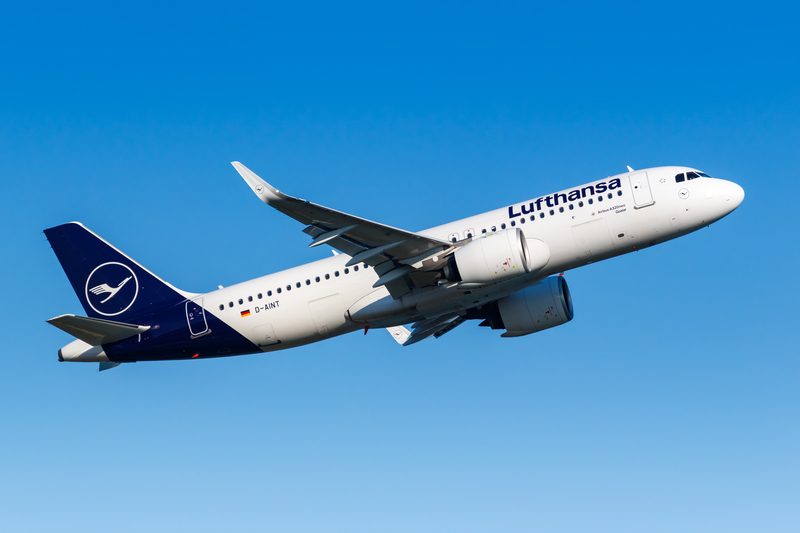
Short-haul feed: largely Airbus A320-family aircraft on dense European rotations, plus CityLine regional lift that keeps the hubs supplied with connecting traffic.
-
Long-haul banks: widebodies such as the Airbus A350-900, Boeing 747-8, Boeing 787-9, and other long-haul types cycling through FRA (FRA) and MUC (MUC) in timed waves.
-
Cargo overlay: Lufthansa Cargo’s long-haul freight operation—commonly centered on the Boeing 777F—is tightly linked to Frankfurt (FRA), where any disruption can cascade into missed cutoffs, delayed transfers, and rolled capacity.
What makes a one-day strike particularly disruptive is the interdependence of these layers. A canceled feeder flight from, say, DUS (DUS) to FRA (FRA) doesn’t just inconvenience a short-haul passenger; it can break a long-haul connection to North America or Asia. Meanwhile, a disrupted cargo departure can force shipments into a backlog that takes days—not hours—to normalize.
What passengers should do if they’re flying Feb. 12
If you have a Lufthansa-issued ticket involving Germany on Thursday, treat this like a probable disruption event, not a remote possibility.
Check your flight status early and frequently, especially if you’re departing FRA (FRA) or MUC (MUC). If your schedule allows it, moving your travel to Wednesday, February 11 or Friday, February 13 can dramatically improve your odds of a stable itinerary—because it keeps you out of the heaviest cancellation window and away from the peak of recovery traffic.
Also remember that when a hub carrier has a large one-day stoppage, reaccommodation gets harder fast: thousands of displaced passengers compete for the same limited pool of seats over the next 48–72 hours. The earlier you rebook, the more options typically remain.
Bottom Line
Lufthansa is headed into a high-impact 24-hour strike on Thursday, February 12, 2026, with pilots’ union VC targeting Lufthansa departures from German airports and UFO adding disruption through a cabin-crew strike at Lufthansa CityLine. Expect the biggest shock at Frankfurt (FRA) and Munich (MUC), with secondary disruption across major German stations including Berlin (BER), Hamburg (HAM), and Düsseldorf (DUS)—and meaningful fallout for Lufthansa Cargo operations moving through Germany. Even if the walkout lasts only a day on paper, the displacement effects across aircraft rotations, crew legality, and hub connections can take longer to unwind.
Keep reading FlyMag
Get the Daily Brief in the morning or the Route Watch weekly recap on Fridays. Or both.