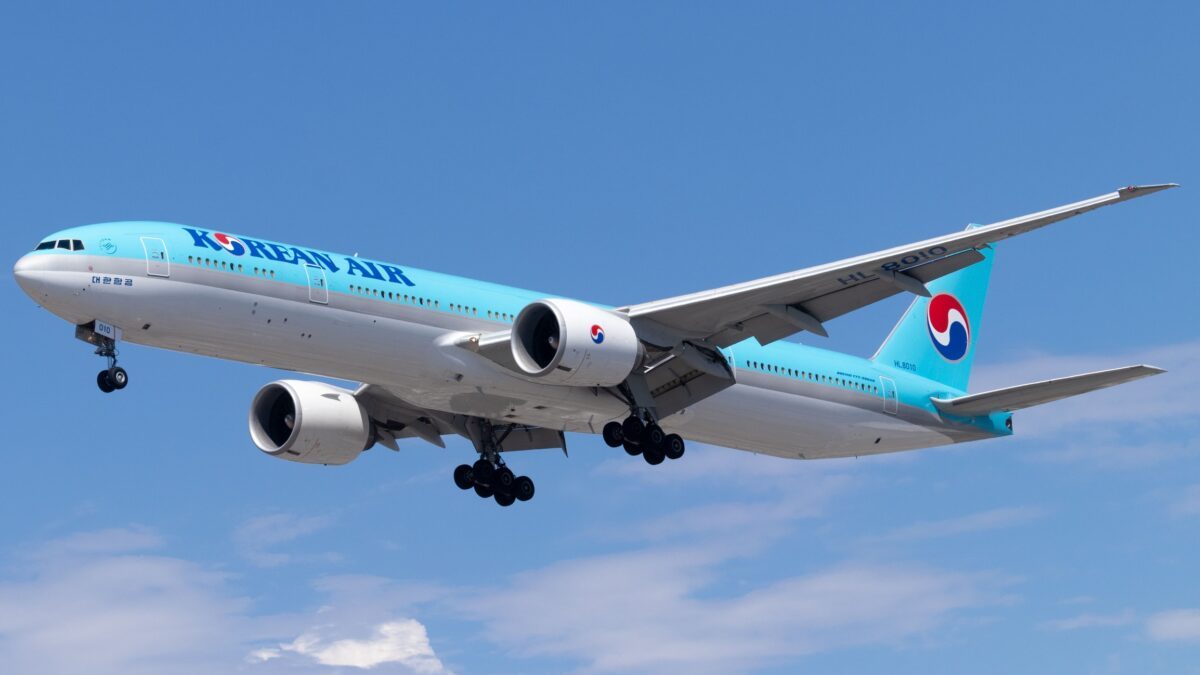
Korean Air launched free Starlink connectivity on September 15, beginning with four modified widebody aircraft and setting an end-2027 target for installation across most of its operating fleet.



The initial group comprises three Airbus A350-900s and one Boeing 777-300ER. Korean Air said the aircraft will primarily operate medium- and long-haul services to the Americas, Europe and Southeast Asia, although they may also appear on shorter routes.
The launch makes Korean Air the first full-service airline in East Asia to place Starlink into passenger service, according to the carrier. It also begins the operational phase of a broader connectivity program covering five airlines within Hanjin Group.
Read our stories in your inbox
Two aviation newsletters. Zero fluff.
Free Access Across the Cabin
The new service is free in every cabin. Passengers connect their device to the aircraft network, open the Korean Air Wi-Fi portal and enter the name and seat number printed on their boarding pass. Access begins after the passenger watches an advertisement, with no separate account registration required.
Korean Air is positioning the system as a full internet product rather than a restricted messaging tier. The airline says the available bandwidth supports video and music streaming, web browsing, messaging, online gaming, file transfers and cloud-based work tools.
Internet-based voice and video calls will remain blocked under the airline’s onboard-use policy. Passengers also will not be permitted to broadcast live video through social media platforms, while access to illegal or insecure websites may be restricted.
The free model represents a significant change from the connectivity product Korean Air introduced in 2023. Its earlier paid service offered separate internet and messaging packages, with prices based on flight length and access duration. A full-flight internet plan on a long-haul sector originally cost $20.95, while full-flight messaging cost $5.95.
Aircraft that have not received Starlink will temporarily retain the existing paid Wi-Fi system. That creates a transitional period in which the price and capabilities available to passengers will depend on the individual aircraft operating their flight.
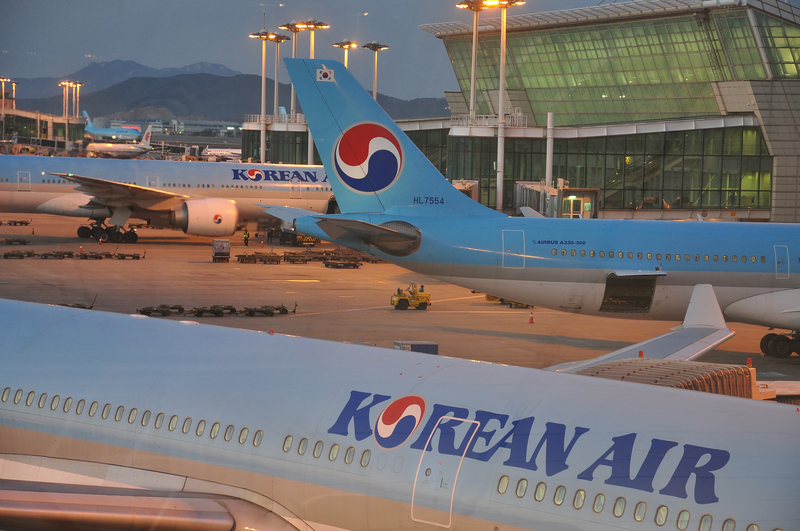
A350 and 777 Lead the Installation Program
Korean Air has started with aircraft that spend substantial time on longer sectors, where reliable connectivity has the greatest passenger value. The initial four installations also allow the airline to assess the product across two different widebody platforms before accelerating modifications through the rest of the fleet.
The airline’s Airbus A350-900 carries 311 passengers, with 28 Prestige Class seats in a 1-2-1 layout and 283 economy seats in a 3-3-3 configuration. Its range and cabin capacity make it suitable for missions from regional Asian services through intercontinental flights to Europe and North America.
The Boeing 777-300ER remains one of Korean Air’s principal long-haul aircraft. The carrier operates the type in several configurations, while 11 aircraft are undergoing a separate cabin modernization program that introduces a 40-seat premium cabin between Prestige and economy. The latest 328-seat layout combines 40 Prestige seats, 40 premium seats and 248 economy seats.
Starting with the A350-900 and 777-300ER also follows the deployment plan Korean Air disclosed when it selected Starlink. Both Korean Air and Asiana Airlines identified the two long-haul types as their first installation priorities.
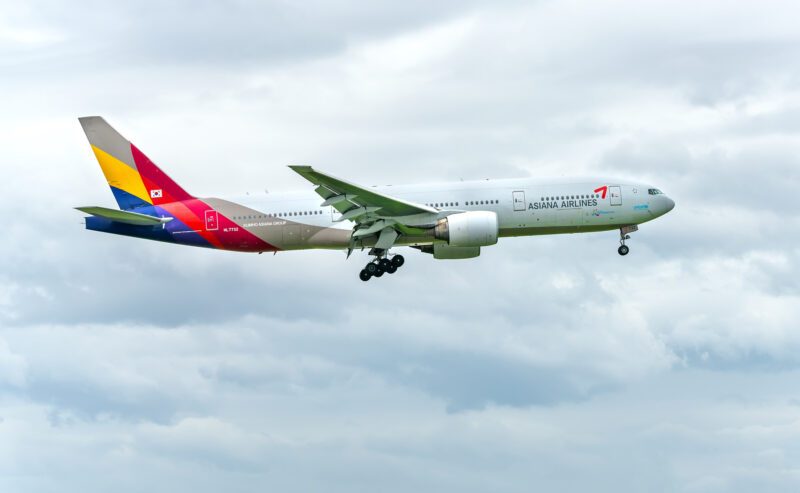
Program Extends Across Five Airlines
The Starlink project reaches beyond Korean Air. In December 2025, the company announced that Korean Air, Asiana Airlines, Jin Air, Air Busan and Air Seoul would adopt the system as the group moves toward a consolidated airline structure.
Korean Air and Asiana plan to complete their installations progressively through the end of 2027. Jin Air is due to begin with its Boeing 737-8 fleet, the type on which the low-cost carrier previously introduced onboard Wi-Fi. The installation sequence for Air Busan and Air Seoul is being handled separately.
Starlink uses a low-Earth-orbit satellite constellation rather than relying solely on satellites in geostationary orbit. The shorter distance between the aircraft and the satellites reduces latency, an important factor for applications such as gaming, cloud platforms and interactive video. Korean Air said during the program’s 2025 announcement that the system could provide aircraft-level data speeds of up to 500 Mbps.
The airline’s move from paid, tiered packages to free connectivity also changes the likely demand profile. Instead of serving a limited group of passengers willing to purchase access, the network must accommodate simultaneous use by travelers across a widebody cabin, including streaming and other bandwidth-heavy activity.
Bottom Line
The first four aircraft make Starlink availability a fleet-assignment issue rather than a dependable network-wide benefit. Passengers on the same route may receive substantially different connectivity products during the conversion period, particularly as Korean Air continues operating its existing paid system on aircraft awaiting modification.
The more consequential decision is to offer the higher-capability product without charging by time, data allowance or cabin. That removes the commercial barrier that has traditionally limited onboard internet usage and turns connectivity into a standard service element. For Korean Air, the result will be a clearer test of network capacity under normal passenger demand rather than under the artificially low usage produced by paid access.
The program also provides an early indication of how Korean Air intends to align the passenger experience across its enlarged airline group. Installation pace will now matter as much as headline speed: the faster Korean Air and Asiana move through their widebody fleets, the sooner free connectivity becomes a consistent part of the combined carrier’s long-haul product.
Keep reading FlyMag
Get the Daily Brief in the morning or the Route Watch weekly recap on Fridays. Or both.