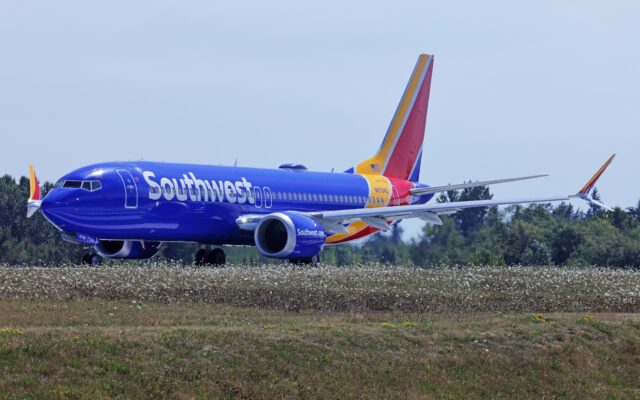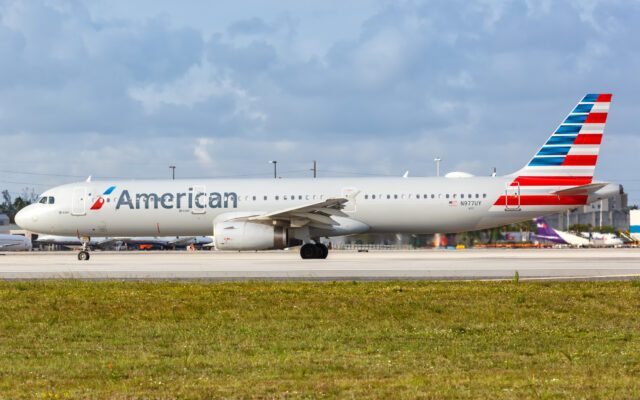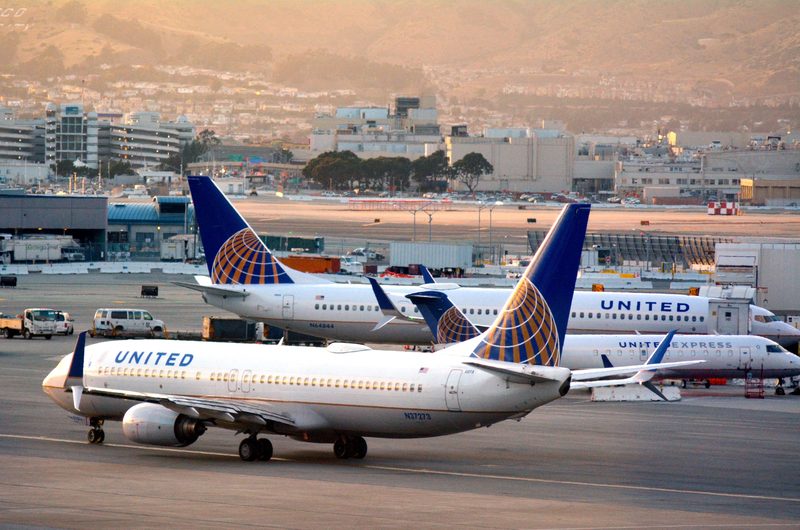
In late February, during a White House meeting tied to Washington Dulles International Airport (IAD), United Airlines CEO Scott Kirby reportedly floated one of the biggest ideas U.S. aviation has heard in years: a combination of United Airlines and American Airlines. If anything like that ever progressed beyond a high-level conversation, it would not simply reshape the domestic competitive map. It would unite the two largest airlines in the world by available capacity and create a carrier with roughly one-third of the U.S. domestic market.

That scale is precisely why the proposal is so striking. On paper, Kirby’s case is easy to understand. Bigger airlines are generally better positioned to absorb fuel shocks, spread fixed costs, and defend premium-heavy international networks. In that sense, a merged United-American would be built for reach. It would combine United’s system strength at Newark Liberty International Airport (EWR), Chicago O’Hare International Airport (ORD), Denver International Airport (DEN), Houston Intercontinental Airport (IAH) and Washington Dulles International Airport (IAD) with American’s fortress network around Dallas/Fort Worth International Airport (DFW), Charlotte Douglas International Airport (CLT), Miami International Airport (MIA), Philadelphia International Airport (PHL), Phoenix Sky Harbor International Airport (PHX), Ronald Reagan Washington National Airport (DCA), New York’s John F. Kennedy International Airport (JFK), LaGuardia Airport (LGA), and Los Angeles International Airport (LAX).
But there is a large difference between strategic logic and regulatory reality. That is where this story becomes much more interesting for airline professionals.
Read our stories in your inbox
Two aviation newsletters. Zero fluff.
A Serious Idea, but Not a Deal in Motion
At this stage, the reported pitch looks more like a test balloon than a transaction underway. There is no indication that United has launched a formal process with American, and neither airline has publicly endorsed the concept. That distinction matters. In airline M&A, the space between an executive floating an idea and a board-backed deal is enormous.
Even so, the context makes the report notable. Kirby has spent years building United into a more assertive international and premium-focused carrier, and he has recently been vocal about how fuel volatility can widen the gap between stronger and weaker airlines. American, meanwhile, has been under more pressure to improve margins and close its profitability gap with United and Delta. In other words, this is not a random rumor detached from industry conditions. It fits a broader debate inside U.S. aviation about whether scale is now becoming an even bigger competitive weapon.
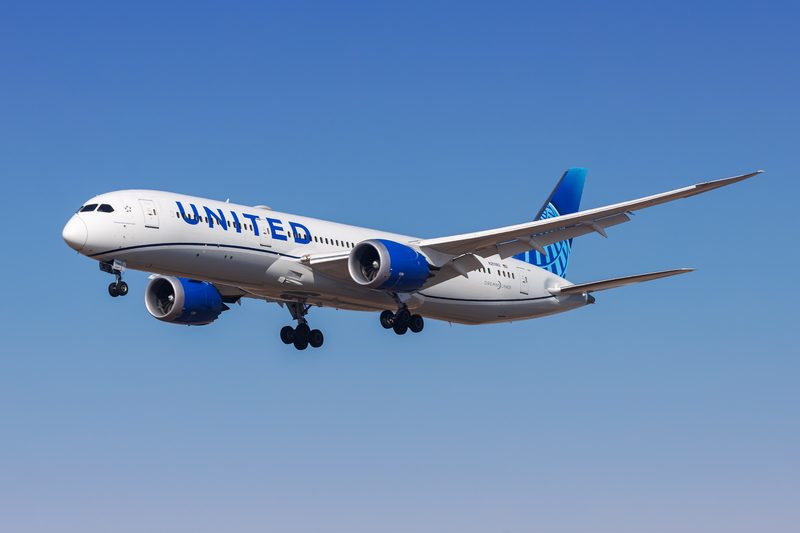
There is also an obvious layer of industry intrigue. Kirby is not an outside observer of American. He previously served as the airline’s president before moving to United. That history alone ensures any talk of a United-American combination will be read as more than idle speculation.
The Airport Map Is Where the Merger Runs Into Reality
For all the fascination around scale, the airport map is where a United-American deal would immediately run into trouble.
Start with Chicago O’Hare International Airport (ORD). United and American are already locked in one of the clearest hub battles in the country there. Fold both into one company, and regulators would be staring at a market where two major competitors become one at a cornerstone airport for both networks.
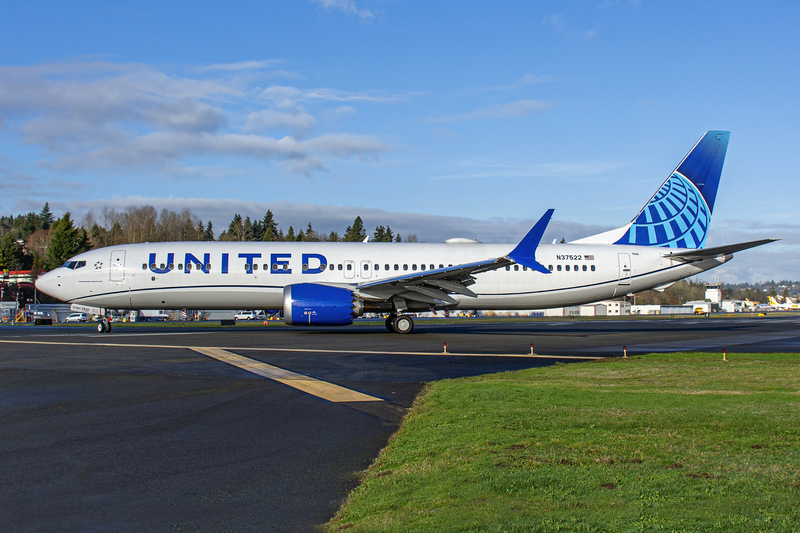
The same logic applies elsewhere. At Los Angeles International Airport (LAX), both carriers maintain major strategic relevance. In the New York region, United’s dominance at Newark Liberty International Airport (EWR) would have to be examined alongside American’s positions at John F. Kennedy International Airport (JFK) and LaGuardia Airport (LGA). Even if regulators do not treat every airport in the metro area as a single market, the concentration questions would be unavoidable.
Then there is the broader structural issue. The U.S. airline business is already highly concentrated. The four largest carriers control the overwhelming majority of domestic traffic, and a United-American combination would push that concentration materially higher. That is why this proposal reads differently from the acquisition of a smaller airline. It is not a matter of adding incremental scale. It is a direct attempt to merge two pillars of the existing system.
For airport planners, corporate travel managers and alliance strategists, that is the real significance here. This is not just a merger question. It is a network-power question.
The Fleet Story Is More Nuanced Than the Headlines Suggest
One of the more interesting operational angles is that the fleets are not a complete mismatch.

At the widebody end, there is meaningful commonality. Both airlines already operate Boeing 787 Dreamliners and Boeing 777-family aircraft on long-haul missions. American’s widebody lineup includes the Boeing 777-200ER, Boeing 777-300ER, Boeing 787-8 and Boeing 787-9. United’s long-haul fleet is broader, with Boeing 777-200 variants, Boeing 777-300ERs, Boeing 787-8s, Boeing 787-9s and Boeing 787-10s, while also still carrying Boeing 767s and Boeing 757s in meaningful numbers.
That matters because long-haul fleet overlap can help on pilot qualification strategy, maintenance planning, parts support and future capital allocation. Airline professionals will immediately notice that a merged carrier would not be trying to reconcile totally unrelated intercontinental fleets.
The short-haul picture is more complicated, but still manageable on paper. American’s mainline domestic fleet is built around the Airbus A319, A320, A321 and A321neo, as well as the Boeing 737-800 and 737 MAX 8. United also operates Airbus A319s, A320s and A321neos, alongside a much larger Boeing 737 family that includes the 737-700, 737-800, 737-900, 737-900ER, 737 MAX 8 and 737 MAX 9. United is also bringing Airbus A321XLR aircraft into its forward fleet plan, while American has already begun adding the A321XLR to its own fleet roadmap.
So the fleet overlap is real. But that should not be mistaken for an easy integration. Airlines are not merged on aircraft commonality alone. They are merged through reservation systems, loyalty-program structures, labor seniority lists, maintenance programs, gate assignments, slot portfolios, airport leases and cabin-product harmonization. A combined fleet may look rational on a slide deck. Operating it cleanly across ORD, EWR, DFW, CLT, IAH, PHL and LAX is another matter entirely.
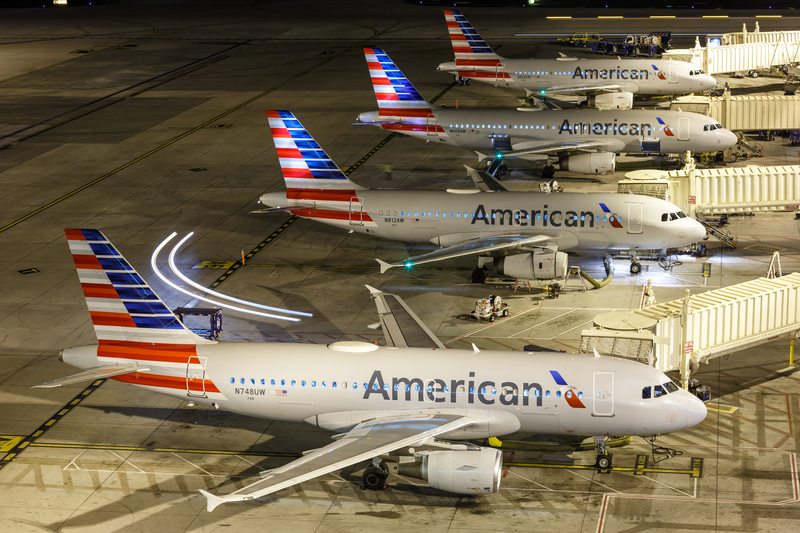
Why American Would Be Seen as the More Motivated Side
From a financial and strategic standpoint, American is the carrier many analysts would view as having more to gain from a combination.
United has entered 2026 from a stronger relative position, with more confidence around premium demand and international strategy. American, by contrast, has been trying to convince investors it can improve returns while carrying a heavier debt burden than its largest rivals. That does not mean American would welcome a merger or that management is pursuing one. It does mean the market naturally sees more asymmetry here than symmetry.
That perception showed up immediately in the stock reaction after the report surfaced. American got the sharper lift. That is usually what happens when investors conclude one side may need the strategic relief more than the other.
Still, that does not make the deal more likely. If anything, it sharpens the core tension. A merger that might appear strategically tempting for one side can still be politically and legally unworkable.
Bottom Line
The headline is irresistible: Scott Kirby reportedly raised the possibility of combining United and American in a White House meeting tied to Washington Dulles International Airport (IAD). But the aviation substance is much more important than the headline.
A United-American tie-up would create the largest airline in the world by capacity. It would combine overlapping long-haul fleets built around Boeing 787 and Boeing 777 aircraft, assemble one of the most powerful hub portfolios ever seen in the U.S. market, and instantly redraw the balance of power at airports such as Chicago O’Hare (ORD), Newark (EWR), Dallas/Fort Worth (DFW), Charlotte (CLT), Miami (MIA), Philadelphia (PHL) and Los Angeles (LAX).
It would also hand regulators a deal that is almost tailor-made to raise questions about competition, pricing power, slots, gates and consumer choice. That is why, for now, this looks far more like a strategic signal than a merger in motion. In boardroom terms, the argument for scale is clear. In Washington terms, the barriers still look immense.
Keep reading FlyMag
Get the Daily Brief in the morning or the Route Watch weekly recap on Fridays. Or both.