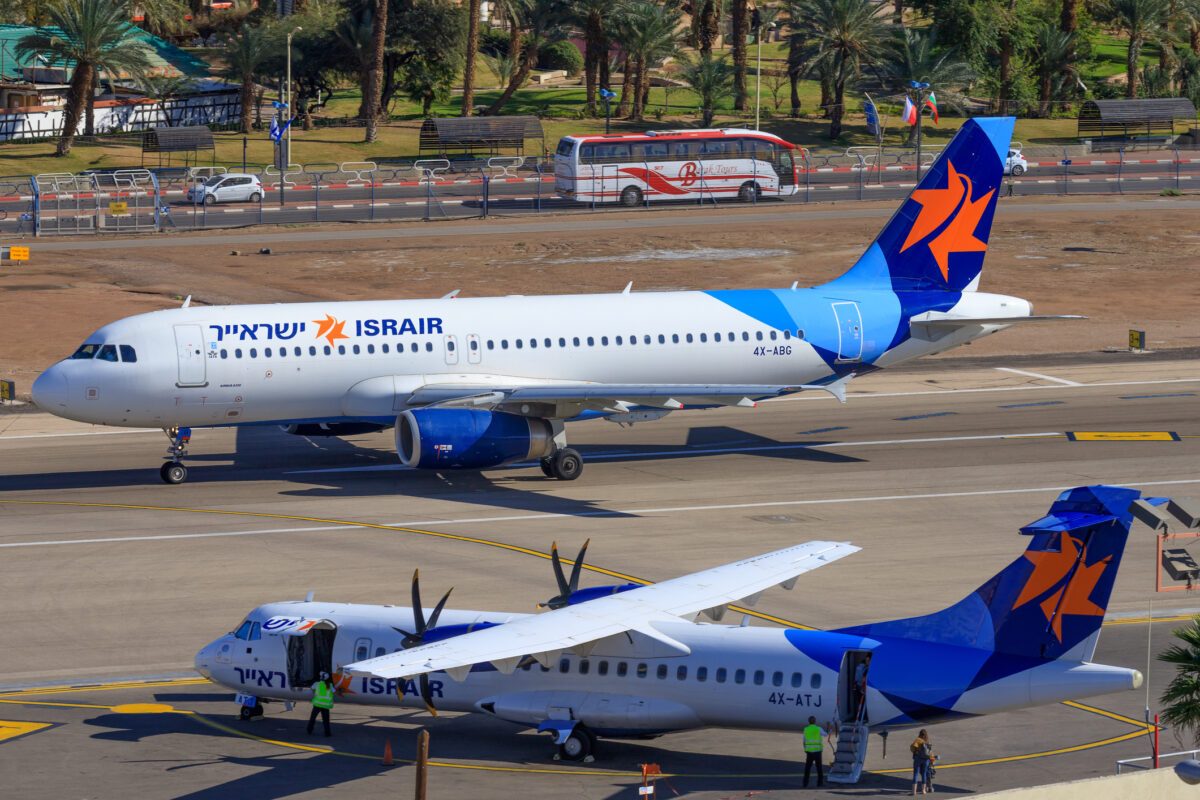
Israir has moved the launch of its Tel Aviv-New York service forward by more than a month, scheduling its first departure from Tel Aviv Ben Gurion (TLV) for September 15, 2026.

The first flight in the opposite direction, from New York John F. Kennedy (JFK) to Tel Aviv, is planned for September 17. Israir had initially opened sales for departures beginning October 19 while it completed the U.S. approval process.
In a September 7 filing to the Tel Aviv Stock Exchange, parent company Israir Group said the airline completed all approvals needed for the route on September 4. The filing confirms that the service will use JFK, establishing Israir’s first scheduled long-haul operation with its newly acquired widebody fleet.
Read our stories in your inbox
Two aviation newsletters. Zero fluff.
Conditional October Launch Replaced by September Start
The revised dates follow a staged regulatory process that allowed Israir to begin selling tickets before it had clearance to operate the flights.

On August 14, the U.S. Department of Transportation authorized the airline to market and sell U.S. services while its final operational approval remained pending. Israir subsequently said in an August 18 securities filing that it would sell seats for travel from October 19.
That arrangement required Israir to offer customers a refund or alternative transportation if the outstanding authorization did not arrive in time. The airline also stated that it intended to advance the operation if it received full approval before October 19.
The September schedule implements that provision. The September 15 launch is 34 days earlier than the date used for the initial sales program and places the first TLV departure in the final weeks of the third quarter.
Israir already held broader economic authority from the U.S. government. Its foreign air carrier permit authorizes scheduled and charter transportation of passengers, cargo and mail between Israel and points in the United States. The remaining work centered on operational clearance for the airline, aircraft and intended areas of operation.

A330 Approval Built in Stages
Israir will operate the route with Airbus A330-243 aircraft, the specific A330-200 variant added to its air operator certificate during the summer.
The airline received updated Israeli operations specifications covering the A330-243 on July 29. A second update, issued August 4, added North America and the North Atlantic to the geographic areas in which Israir could deploy the type, according to the company’s first-half financial report.
Those approvals represented a significant expansion from Israir’s established narrowbody operation. At June 30, the airline was operating eight aircraft itself and using another eight aircraft under wet-lease arrangements. Preparations for the widebody program included recruiting flight crews and adding personnel in maintenance and operations, even as the group reduced staffing elsewhere.
The A330-200 gives Israir a platform designed for long-haul flying rather than an interim aircraft sourced solely for the New York route. Airbus lists the A330-200 with a range of up to 7,250 nautical miles and typical capacity of 210 to 250 passengers, depending on configuration. Its range comfortably supports nonstop TLV-JFK operations while also giving Israir scope to consider other transatlantic and long-range markets.
Two-Aircraft Investment Underpins the Route
Israir signed binding agreements on April 29 to purchase two A330-243s and establish an engine-support program. The aircraft were delivered on May 27 after the airline completed payment of the $74 million purchase price, its financial report said.
The acquisition was funded partly through a $41 million bank loan carrying interest at SOFR plus 2.65%. Israir also received $35 million in advances through an expanded distribution agreement with Israeli travel company Issta.
Under the structure described in Israir’s 2025 annual report, Issta is entitled to an allocation of 40 seats on each commercial flight operated by the two widebodies. The agreement runs for 10 years from the start of A330 operations, giving Israir a committed wholesale distribution channel alongside its direct sales.
The aircraft purchase therefore represents more than a fleet expansion. It changes Israir’s network ceiling, adds a new operating category and commits the airline to a long-term flow of widebody inventory. The carrier has also estimated that its 12-year engine-support agreement, including scheduled shop visits, will cost about $10 million annually.
Launching in September allows Israir to begin generating revenue from that investment sooner than its conditional October timetable contemplated. It also brings the A330s into commercial transatlantic service less than four months after delivery, following the aircraft certification, geographic approvals and U.S. operating process.
Bottom Line
The earlier launch gives passengers another Israeli-operated option between Tel Aviv and New York during a high-demand travel period. For Israir, the move converts a costly fleet project into revenue service before the end of the third quarter and demonstrates that the airline has completed the operational transition from an A320-focused carrier to a mixed narrowbody and widebody operator.
The immediate test will be execution. A two-aircraft long-haul fleet leaves limited room to absorb heavy maintenance or an extended technical disruption, making dispatch reliability, crew availability and spare coverage central to the route’s performance. The Issta seat commitment provides a base of distributed inventory, but Israir will still need to establish sustainable direct demand outside peak travel periods.
New York is the first measure of a broader strategy rather than an isolated route. Israir now has aircraft and Israeli operating authority covering North America, the North Atlantic and other long-range regions. How quickly it builds the JFK schedule, where it deploys the second A330 and whether it adds another long-haul destination will show how far the airline intends to push beyond its traditional short- and medium-haul network.
Keep reading FlyMag
Get the Daily Brief in the morning or the Route Watch weekly recap on Fridays. Or both.