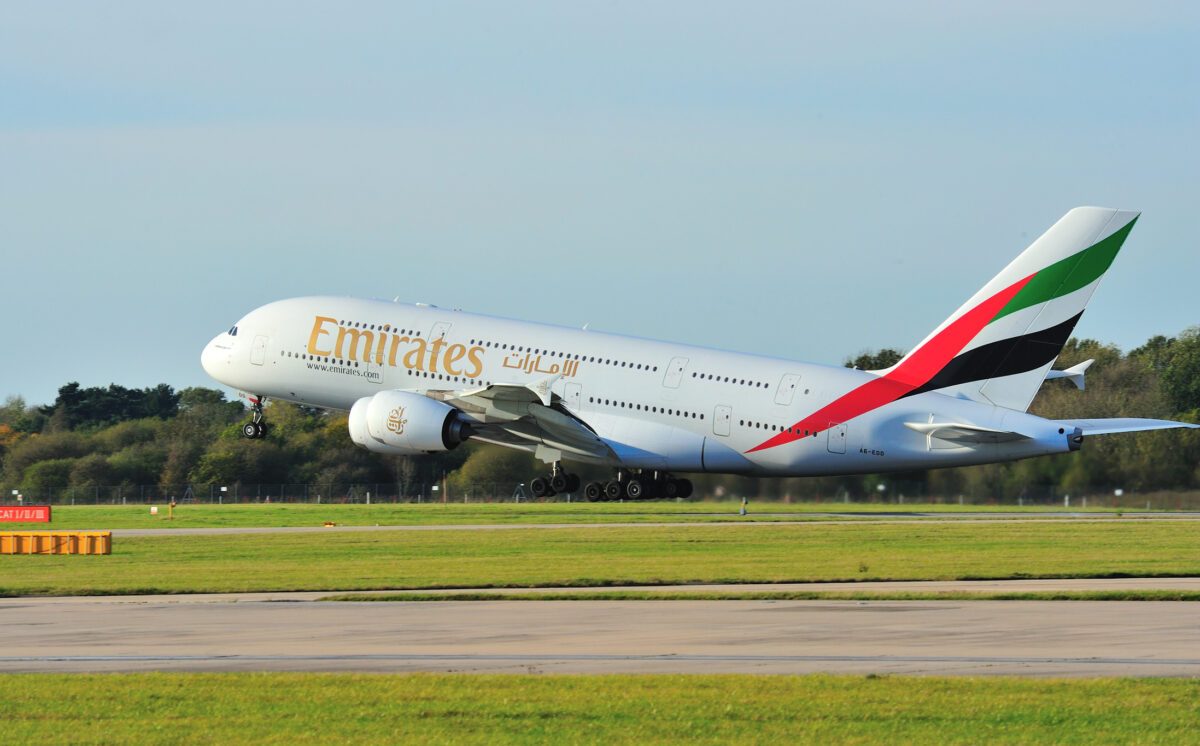
Emirates will introduce daily Airbus A380 service between Dubai (DXB) and Delhi (DEL) on October 25, 2026, adding the Indian capital to the relatively small group of short- and medium-haul markets receiving the airline’s largest aircraft.

The four-class A380 will operate EK512 from Dubai and the returning EK513 from Delhi. Emirates will continue to use retrofitted four-class Boeing 777 aircraft on its other three daily round trips, giving the route Premium Economy across all four frequencies.
The deployment, which Emirates announced on July 9, will make Delhi its third A380 destination in India. The airline already sends the double-decker to Mumbai and Bengaluru.
Read our stories in your inbox
Two aviation newsletters. Zero fluff.
A Larger Aircraft for an Overnight Rotation
EK512/513 is the overnight pairing in Emirates’ Delhi schedule, leaving Dubai late in the evening and returning from DEL in the early morning. The aircraft change puts the greatest concentration of seats on a rotation that can collect connecting passengers from across Emirates’ network before departing DXB.
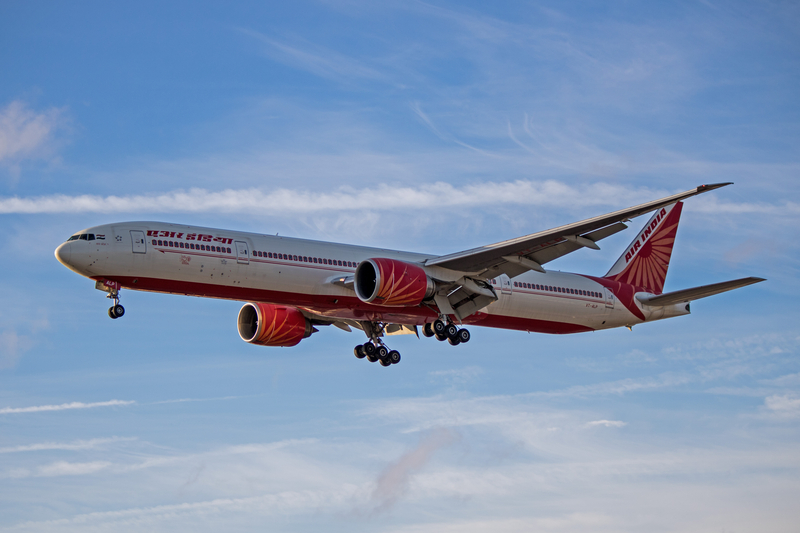
The A380 is most closely associated with long-haul trunk routes, but its economics also suit shorter sectors where traffic volumes are high and additional frequencies are constrained or commercially unnecessary. The Dubai-Delhi block time is about three and a half hours, leaving the aircraft’s range capability largely irrelevant. Its value on this sector lies instead in gauge, cabin segmentation and the ability to move more passengers within an established slot pair.
Emirates’ established four-class A380 configuration has 484 seats: 14 First Class suites, 76 lie-flat Business Class seats, 56 Premium Economy seats and 338 Economy seats. The airline detailed that layout when it introduced the same four-class configuration on its Osaka route.
Premium Economy occupies the front of the main deck in a 2-4-2 layout. Its 56 seats have up to 40 inches of pitch, an eight-inch recline and leg and footrests. First Class and Business Class remain on the upper deck, alongside the A380’s onboard lounge and First Class shower facilities.
That cabin mix matters on Delhi. Emirates is not simply replacing a Boeing 777 with more Economy seats; it is increasing the amount of inventory available in each major market segment while retaining First Class and adding a comparatively large Premium Economy cabin. The A380 also gives the airline a distinct product on one of its four daily departures without reducing cabin consistency elsewhere in the schedule.
Four-Class Service Across the Delhi Schedule
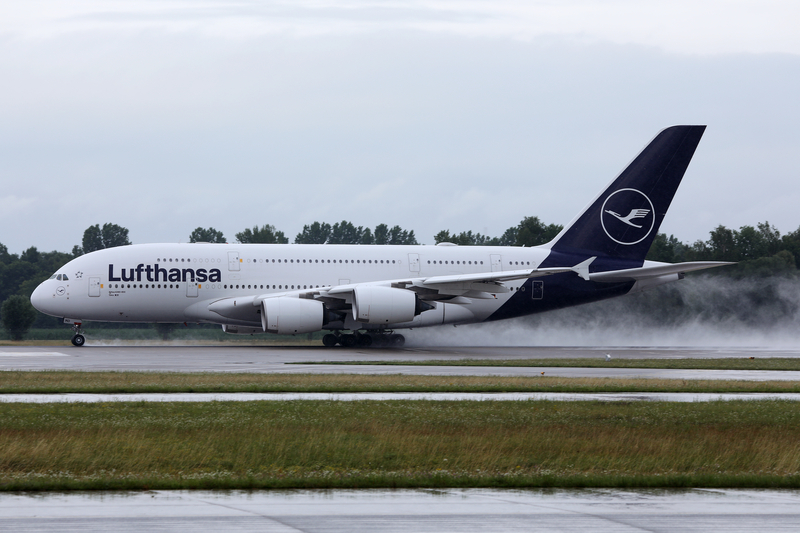
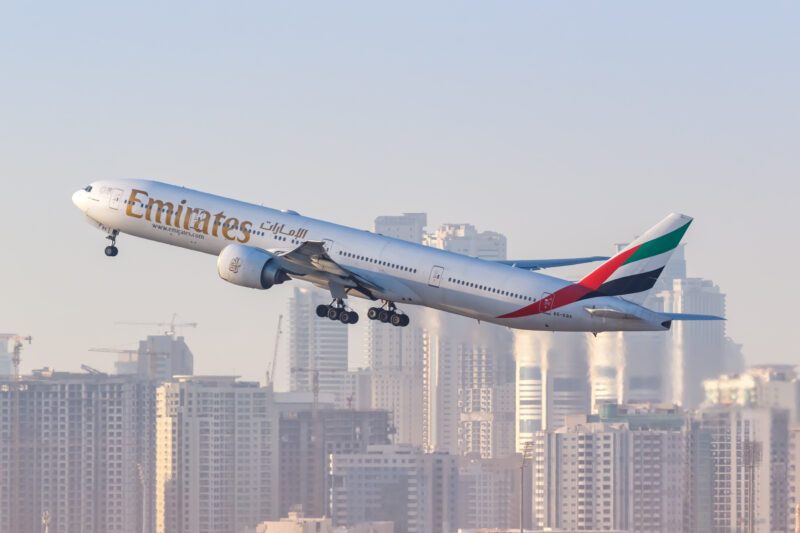
The wider change is the standardization of the Delhi operation around four cabin classes. EK513 will carry Premium Economy on the A380, while the Delhi-originating EK511, EK515 and EK517 will offer it on retrofitted Boeing 777s.
For connecting passengers, the all-frequency rollout removes the need to select one particular departure to book Premium Economy between Delhi and Dubai. It also gives Emirates more flexibility to sell that cabin as part of longer itineraries through DXB, rather than limiting availability according to the aircraft assigned to the Delhi sector.
The deployment forms part of a broader expansion of Emirates’ latest cabins in India. By the end of October, the airline plans to offer Premium Economy on services from Delhi, Mumbai, Ahmedabad, Bengaluru, Kolkata and Kochi. The mix will include retrofitted A380s and Boeing 777s as well as the Airbus A350.
Kolkata is receiving a separate fleet change on October 25. Emirates will replace the Boeing 777 on daily EK570/571 with an Airbus A350, while five additional weekly flights will use a four-class retrofitted 777. Together, those changes will put Premium Economy on all 12 weekly Kolkata-Dubai flights.

Emirates said Premium Economy will be available on close to half of its scheduled weekly India services after the October rollout. Delhi will have it on four daily departures, while the airline lists 22 weekly departures from Mumbai, 12 from Kolkata, nine from Ahmedabad, seven from Bengaluru and two from Kochi with the cabin.
India Remains a High-Volume Emirates Market
Emirates serves nine destinations in India and schedules 167 weekly flights to Dubai. Delhi and Mumbai were part of the carrier’s initial network when operations began in 1985, giving the airline more than four decades of experience in the market.
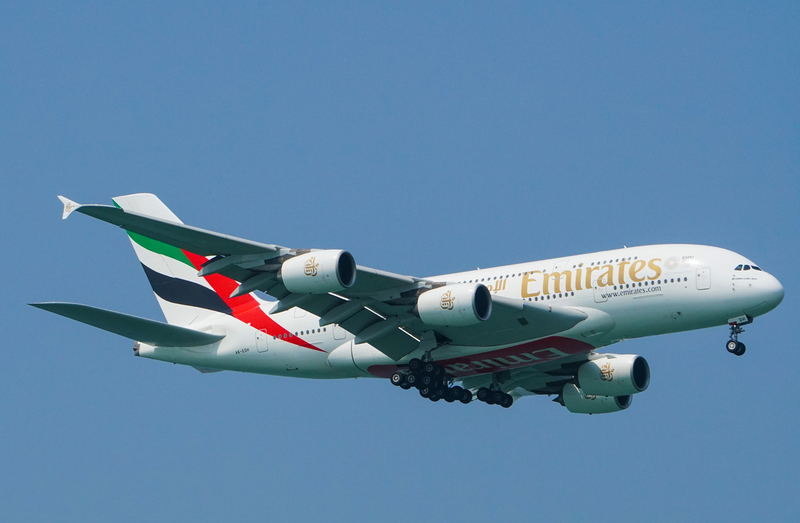
Delhi’s addition also restores a clear three-city structure to Emirates’ A380 operation in India: Mumbai, Bengaluru and Delhi. Each receives one daily superjumbo rotation alongside Boeing 777 services, allowing Emirates to increase capacity selectively rather than convert an entire destination to the larger type.
The strategy is consistent with how Emirates uses the A380 elsewhere. Although the aircraft was designed for high-density long-haul flying, the airline has regularly deployed it on regional and medium-haul routes where traffic can support its seat count. Airbus describes the A380 as the only full-length double-deck passenger aircraft, with two passenger decks totaling about 550 square meters of floor area.
Delhi will also join the A380 network as Emirates continues a major cabin renewal program. The airline is investing $5 billion to refurbish 219 aircraft, including 110 A380s and 109 Boeing 777s. The work is intended to spread Premium Economy through the network while refreshing First Class, Business Class and Economy interiors.
Emirates had completed 93 aircraft refurbishments by April 2026. At the same time, it began accelerating installation of Starlink connectivity on the A380 after returning its first equipped aircraft to Dubai. The airline said that installation uses three antennas and is designed to provide more than 2 Gbps of total aircraft bandwidth, reflecting the connectivity demands created by the type’s large passenger capacity.
Bottom Line
Delhi gains more than an A380 flight. The October change creates a consistent four-class proposition across Emirates’ full schedule, making Premium Economy bookable regardless of which of the four daily departures a passenger chooses. That consistency is particularly useful for connecting traffic, where cabin availability on the shorter feeder sector can determine whether Emirates can sell the same class throughout an itinerary.
For Emirates, the move shows that the A380 remains a capacity-management tool rather than only a long-haul flagship. A daily deployment lets the airline add substantial gauge to one slot pair while preserving the frequency and schedule spread provided by three Boeing 777 rotations. Delhi becomes the third Indian market where demand supports that combination.
The next point to watch is whether the A380 remains confined to EK512/513 or expands further as more aircraft complete refurbishment. For now, Emirates is choosing selective upgauging: one high-capacity rotation, four-class cabins across the timetable and a broader Premium Economy rollout that increasingly ties its India network to the airline’s fleet modernization program.
Keep reading FlyMag
Get the Daily Brief in the morning or the Route Watch weekly recap on Fridays. Or both.