Brussels Airport (BRU) has long been known to airline planners as Belgium’s primary international gateway and a high-volume Schengen hub with a sizeable cargo footprint. In 2025, Belgian customs and prosecutors started describing it differently: a place where organized crime groups are increasingly trying to “buy” access to the baggage and cargo chain—using corrupt insiders to pull narcotics off arriving aircraft before the normal systems can catch it.
Authorities stress that the vast majority of airport employees are honest. The operational problem, they say, is that trafficking networks don’t need “most.” They need a handful of people with airside badges, predictable shifts, and a willingness to exploit the weak seams between an aircraft arriving at BRU and a bag or shipment reaching the secure sorting flow.
The numbers that put BRU on law enforcement’s radar
Belgian customs reported seizing nearly nine tonnes of drugs at BRU in 2025, roughly double the prior year’s total. Cannabis and ketamine were repeatedly flagged as the fastest-growing categories, with enforcement agencies pointing to changing source markets and rapidly evolving concealment methods.
Read our stories in your inbox
Two aviation newsletters. Zero fluff.
Separate policing data from the airport environment also underlines the scale of the challenge: Belgian authorities said they intercepted 123 drug courier cases in 2025 at BRU, with most tied to imports and a smaller portion linked to attempted exports. The pattern matters because it shows BRU being used both as a point of entry and a node in wider European distribution.
The insider play: “rip” crews and baggage-chain manipulation
What’s driving concern isn’t only what arrives at BRU—it’s how quickly criminal networks can try to remove it.
Prosecutors describe a model that is familiar across major airports: insiders embedded in ground operations—baggage handling, ramp support, and other airside roles—who can selectively divert a bag or shipment away from the standard route. The method is often described in Europe as a “rip-on/rip-off” style tactic: narcotics are placed into the travel stream, then extracted by someone who knows exactly where the bag will appear and how to move it without tripping the normal controls.
At BRU, investigators say one of the recurring red flags is unaccompanied luggage—bags that appear on flights without a matching passenger, often originating from high-risk routes. The objective is simple: don’t rely on a courier to walk through a checkpoint if you can retrieve the bag airside.
Belgian prosecutors have also warned that recruitment can be deliberate—some individuals allegedly seek airport employment specifically to offer services to trafficking networks after proving themselves through “test runs.” In Belgian reporting, prosecutors have described payouts that can reach four figures per kilo of cocaine removed, with occasional six-figure splits for a single successful extraction—small money, they argue, compared to the downstream street value.
Where drugs are being hidden — and why aircraft matter
Smuggling through BRU isn’t a single tactic. Authorities describe concealment across:
-
checked passenger baggage
-
air cargo and express freight
-
aircraft interiors (panels, lavatory areas, and other compartments)
-
commingled goods (including perishables and commercial shipments)
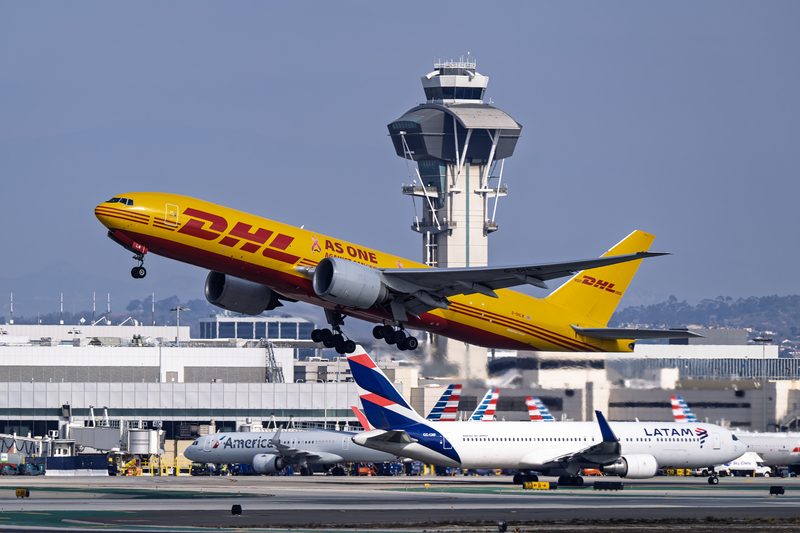
From an aviation perspective, the aircraft types involved tend to reflect the mission profile. Intercontinental arrivals into BRU on widebody passenger aircraft—Airbus A330/A350 families or Boeing 787/777 types—bring large baggage volumes and belly cargo capacity, increasing the number of “hiding places” and the complexity of screening. Meanwhile, freighter operations—typically 747-8F/777F/A330F-class aircraft across the broader European cargo ecosystem—move high-density shipments where concealment can be industrialized. None of this implicates a specific airline; it’s a simple reality of scale: more volume equals more opportunity, and opportunity is what organized networks optimize.
Why cannabis from Thailand and “export” ketamine are part of the same story
Belgian customs has highlighted a surge in cannabis seizures tied to flows from outside Europe, including Thailand after its policy shift on cannabis. At the same time, officials have noted that ketamine trends can look different—with Belgium appearing not just as an import destination but also as a staging point for onward movement.
This import/export split is one reason BRU is now being treated less like a “problem airport” and more like a strategically important gateway: traffickers aren’t only trying to get drugs into Belgium. They’re trying to exploit Belgium’s central geography, transport infrastructure, and connectivity to move product onward.
The Antwerp connection — and what encrypted messaging changed
Investigators increasingly link airport crime at BRU to the same broader criminal landscape that has plagued Belgium’s other major logistics artery: the Port of Antwerp. The common thread is infiltration—corruption aimed at manipulating access-controlled environments where one compromised person can move high-value contraband with minimal time on the clock.
Law enforcement also credits breakthroughs from encrypted messaging investigations—particularly platforms like Sky ECC—for helping identify networks and methods. The catch is that these cases still skew toward the operational layer: couriers, handlers, and facilitators. Pinning down the organizers—the people who finance the shipments, coordinate routing, and launder profits—remains the hardest part.
What “fixing” BRU looks like in real operational terms
Belgian authorities are increasingly framing this as an integrity and financial-crime fight as much as a border-control fight. In practice, the measures that tend to move the needle at airports like BRU include:
-
tighter access control and badge governance (who gets airside access, and why)
-
stronger segregation of duties in baggage and cargo flows
-
targeted integrity screening for high-risk roles and subcontractors
-
CCTV coverage audits focused on blind spots that enable diversion
-
data-led anomaly detection (bags without passengers, irregular routing, unusual handling events)
-
following the money with asset seizures and financial investigations, not just arrests at the ramp
The operational reality is blunt: you can’t screen your way out of an insider problem if the insider is steering items around the screen.
Bottom Line
Brussels Airport (BRU) isn’t becoming a trafficking hotspot because it’s uniquely vulnerable—it’s becoming one because it’s valuable: high volume, complex flows, and constant movement across passenger baggage and cargo streams. Belgian customs’ near-nine-tonne seizure total in 2025 and the growing number of investigations involving airport insiders have turned BRU into a priority front in Europe’s airport-crime battle.
For airlines, airports, and regulators, the lesson is consistent across the continent: the most serious threats to aviation security often don’t look like a dramatic breach. They look like a badge, a shift roster, and a suitcase that never reaches the belt.
Keep reading FlyMag
Get the Daily Brief in the morning or the Route Watch weekly recap on Fridays. Or both.